
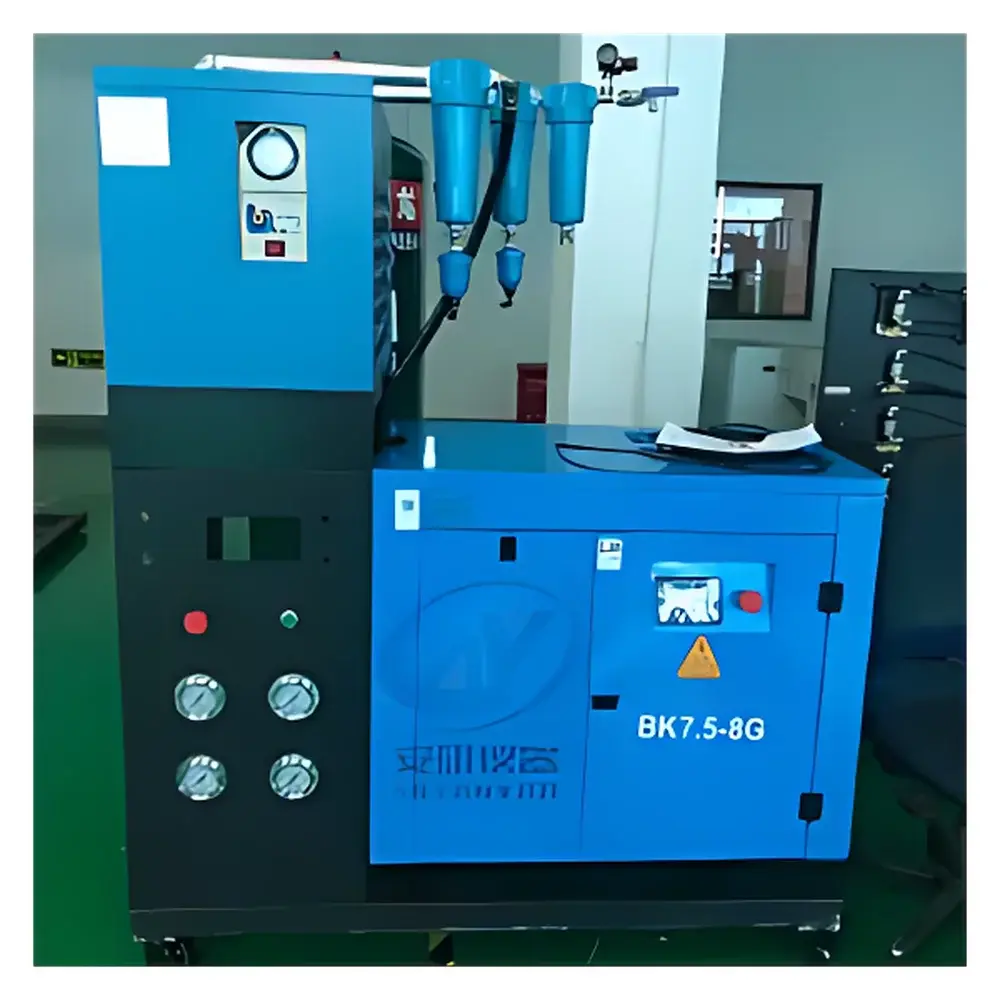
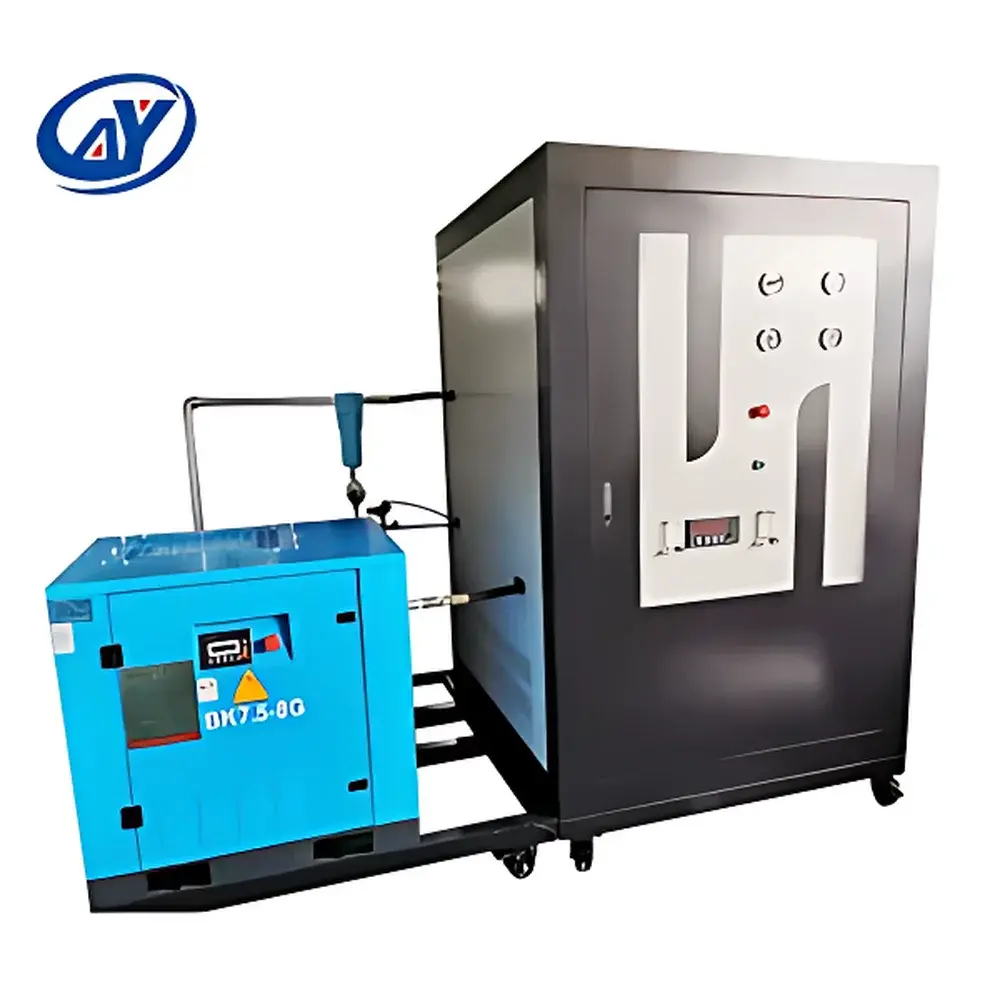
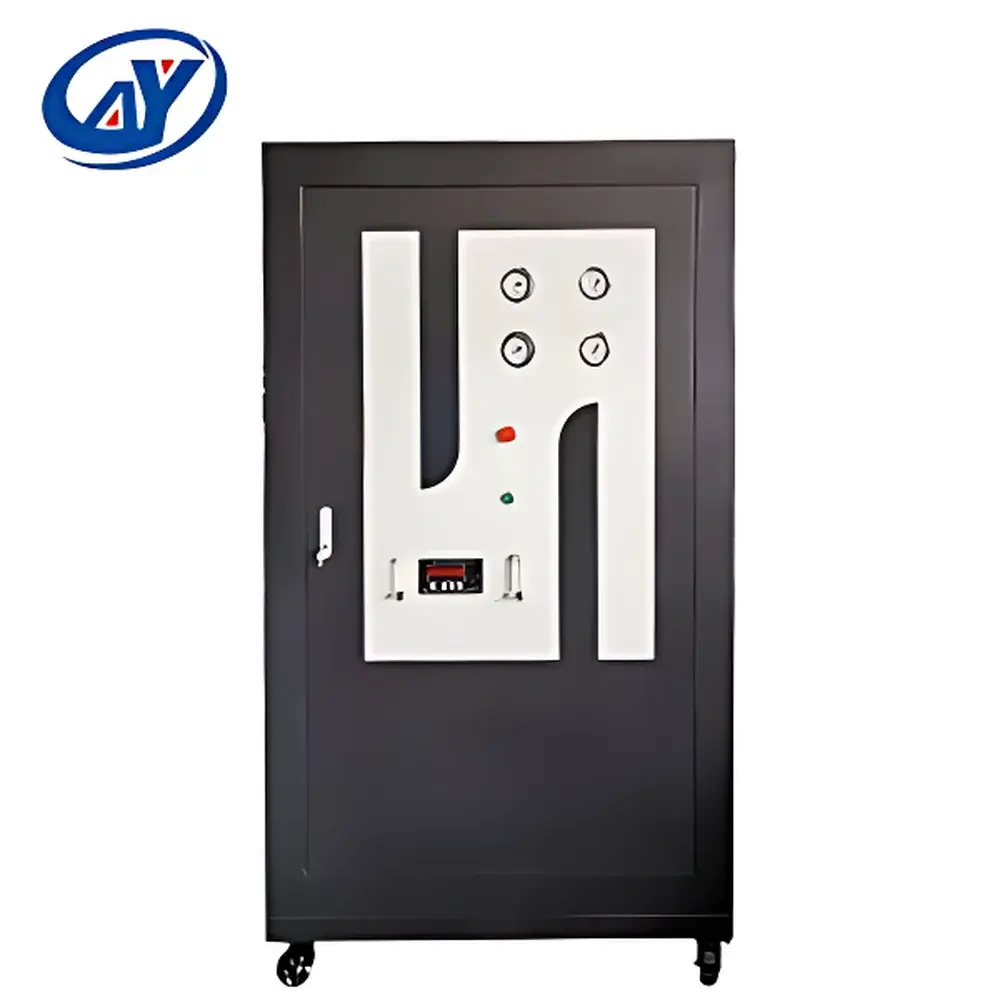
JTONE AYAN-30L PSA Nitrogen Generator with Carbon Molecular Sieve
| Key Features | Pressure Swing Adsorption (PSA) Technology |
|---|---|
| Output Flow | 30 L/min |
| Output Pressure | 0–0.6 MPa |
| Nitrogen Purity | 99% |
| Dew Point | −45 °C |
| Power Consumption | 3200 W |
| Input Voltage | 220 V / 50 Hz or 380 V |
| Dimensions | 500 × 330 × 710 mm (AYAN-30L variant) |
| Compliance | CE-marked design principles, compatible with ISO 8573-1 Class 2 compressed air feed requirements |
Overview
The JTONE AYAN-30L PSA Nitrogen Generator is an engineered solution for on-site, continuous nitrogen supply in laboratory and pilot-scale industrial applications. It employs Pressure Swing Adsorption (PSA) technology—leveraging the kinetic selectivity of carbon molecular sieve (CMS) to separate nitrogen from ambient air. Under elevated pressure, oxygen molecules (kinetic diameter ≈ 0.346 nm) diffuse more rapidly into CMS micropores than nitrogen molecules (kinetic diameter ≈ 0.364 nm), resulting in preferential adsorption of O₂. This differential diffusion rate enables gas-phase nitrogen enrichment during the adsorption phase. Subsequent depressurization (regeneration) releases adsorbed oxygen, restoring CMS capacity without chemical degradation. The system operates with dual parallel adsorption towers, enabling uninterrupted nitrogen delivery while one tower adsorbs and the other regenerates—fully automated via programmable logic controller (PLC) with precise timing sequences.
Key Features
- Robust PSA architecture with twin-bed carbon molecular sieve columns for continuous nitrogen output without downtime.
- Stable 30 L/min nitrogen flow at adjustable pressure up to 0.6 MPa—optimized for reactor blanketing, GC carrier gas, and inert atmosphere synthesis.
- Consistent 99% nitrogen purity (v/v), verified by integrated electrochemical oxygen sensor with real-time digital readout.
- Triple-stage filtration system: coalescing pre-filter (removes oil aerosols ≥0.01 µm), desiccant dryer (achieves −45 °C pressure dew point), and particulate final filter (0.01 µm absolute rating).
- Low-maintenance design: static operation with no moving parts in the adsorption module; only periodic filter element replacement required per ISO 8573-1 maintenance guidelines.
- Modular scalability: additional membrane or PSA modules can be integrated in parallel to extend capacity beyond 30 L/min—ideal for phased lab expansion.
- Energy-efficient operation: 3200 W nominal power draw with intelligent load management; compatible with standard 220 V / 50 Hz or industrial 380 V inputs.
Sample Compatibility & Compliance
The AYAN-30L is designed for use with clean, oil-free, dried compressed air meeting ISO 8573-1:2010 Class 2.2.2 specifications (solid particles ≤ 0.1 µm, water content ≤ 0.1 mg/m³, oil content ≤ 0.1 mg/m³). It complies with electromagnetic compatibility (EMC) directives aligned with IEC 61000-6-2/6-4 and meets essential safety requirements under low-voltage directive 2014/35/EU. While not certified for GMP manufacturing environments, its architecture supports GLP-aligned documentation practices—including audit-ready operational logs, pressure trend recording, and purity traceability. The unit does not require hazardous gas certification (e.g., ATEX) as it generates nitrogen from ambient air without high-pressure storage.
Software & Data Management
The onboard PLC provides local control via a backlit LCD interface with real-time monitoring of inlet pressure, tower differential pressure, outlet flow, and O₂ residual concentration (<1% v/v). All parameters are logged internally for ≥30 days with timestamping. Optional RS-485 Modbus RTU output enables integration into LabVantage, DeltaV, or custom SCADA systems for centralized data acquisition. No proprietary software license is required; configuration is performed via physical keypad navigation. Data export is supported via USB flash drive (FAT32 formatted), generating CSV files compliant with ASTM E2500-13 Annex B for raw data archiving. Audit trail functionality meets FDA 21 CFR Part 11 foundational expectations (user-level access control, electronic signature placeholder, and immutable event logging).
Applications
- Chemical synthesis: Inert blanketing of reactors, distillation columns, and storage vessels during oxidation-sensitive processes involving resins, polymers, or organometallics.
- Gas chromatography: Carrier and detector gas supply for GC-FID, GC-TCD, and GC-MS systems requiring stable 99% N₂ with low hydrocarbon and moisture carryover.
- Materials testing: Controlled-atmosphere thermal analysis (TGA/DSC), powder metallurgy sintering, and semiconductor wafer handling.
- Pharmaceutical R&D: Solvent evaporation under inert conditions, lyophilization support gas, and stability chamber purging.
- Food & beverage labs: Packaging headspace flushing validation and accelerated shelf-life testing protocols.
FAQ
What is the expected service life of the carbon molecular sieve (CMS) under normal operating conditions?
CMS typically maintains ≥95% of initial adsorption capacity for 3–5 years when fed with ISO Class 2 compressed air and operated within specified pressure/temperature ranges.
Can this generator supply nitrogen directly to a GC system requiring 0.2 MPa inlet pressure?
Yes—the regulated outlet pressure is continuously adjustable from 0 to 0.6 MPa, accommodating GC carrier gas manifolds without external pressure boosting.
Is dew point monitoring integrated into the system?
Yes—a chilled-mirror dew point sensor is embedded downstream of the final filter, with continuous display and alarm threshold (−40 °C) configurable via the HMI.
How often must filters be replaced?
Pre-filter elements every 3,000 operating hours; desiccant cartridge every 6,000 hours or when dew point exceeds −40 °C; final particulate filter every 12 months or per ISO 8573-1 verification schedule.
Does the unit include automatic drainage for condensate removal?
Yes—an electrically actuated zero-air-consumption drain trap is installed upstream of the dryer, with self-diagnostic fault reporting on the main display.



