
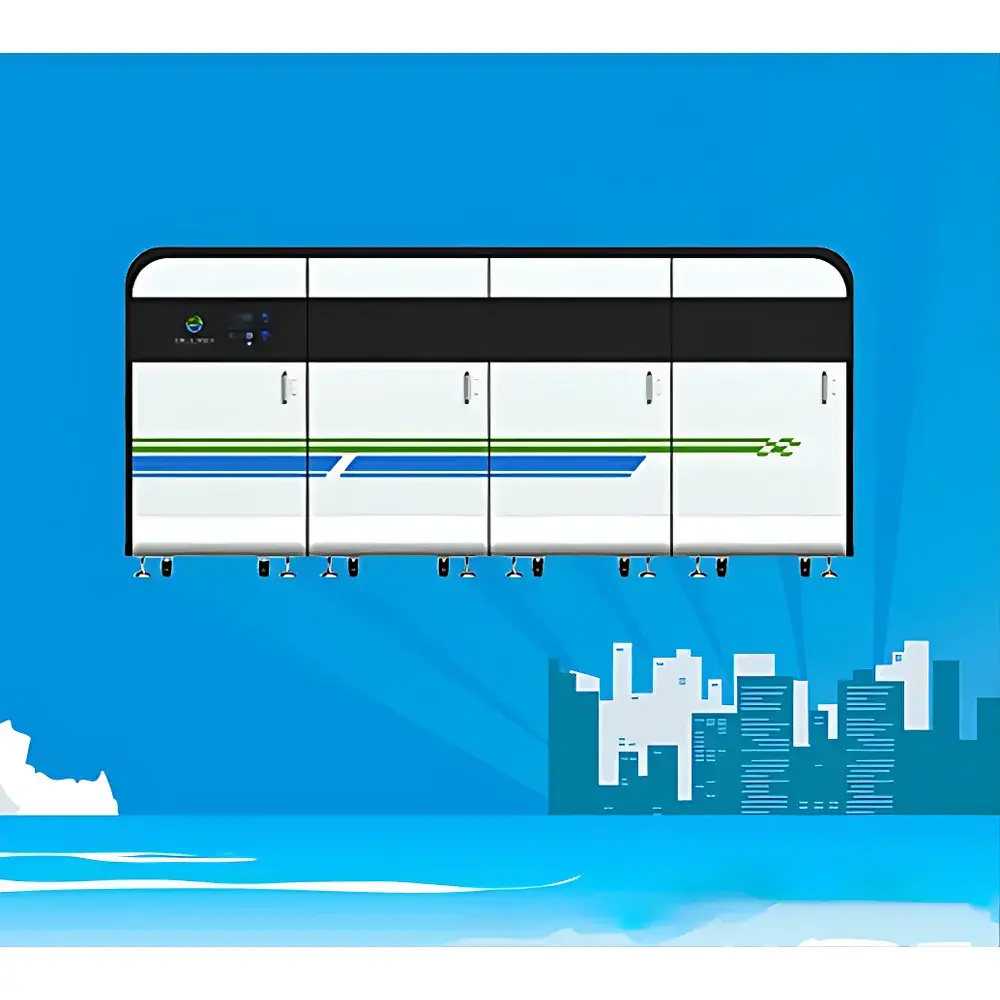
ZHQY ZHFS-2T-T Integrated Laboratory Wastewater Treatment System
| Brand | ZHQY |
|---|---|
| Origin | Beijing, China |
| Manufacturer Type | Direct Manufacturer |
| Product Category | Domestic |
| Model | ZHFS-2T-T |
| Instrument Classification | Wastewater Treatment System |
| Applicable Scope | Comprehensive Laboratory Wastewater |
| Treatment Principle | Coagulation-Flocculation, Oxidation (Electrochemical/Ozone/Photocatalytic), Adsorption, Filtration |
| Daily Treatment Capacity | 2 m³/d |
| Effluent Compliance Standard | GB 8978–1996 “Integrated Wastewater Discharge Standard” (Grade I) |
Overview
The ZHQY ZHFS-2T-T Integrated Laboratory Wastewater Treatment System is an engineered solution designed for the safe, compliant, and efficient on-site treatment of heterogeneous laboratory effluents. Unlike municipal wastewater, laboratory wastewater contains complex, variable, and often hazardous constituents—including heavy metals (Pb²⁺, Hg²⁺, Cd²⁺, Cr⁶⁺, Cu²⁺, Sb³⁺, Fe²⁺, Al³⁺, Mn²⁺), halides, strong acids/bases, organic solvents (e.g., benzene, toluene, xylene, phenols), organophosphorus compounds, pathogenic microorganisms (viruses, chlamydia, mycoplasma, spores), and low-level radionuclides. Direct discharge into municipal sewer networks violates regulatory frameworks in most jurisdictions and poses documented risks to downstream infrastructure, water reclamation plants, and ecological receptors. This system employs a multi-stage, process-integrated architecture grounded in established unit operations: pH adjustment, coagulation-flocculation, dissolved air flotation (DAF), redox-based metal precipitation, advanced oxidation (electrochemical, ozone-catalyzed, UV/TiO₂ photocatalytic), biofilm-mediated biodegradation, granular activated carbon (GAC) adsorption, ultrafiltration/nanofiltration membrane separation, and final disinfection via composite UV-chlorine or peracetic acid dosing. Each stage is hydraulically and chemically sequenced to maximize contaminant removal efficiency while maintaining operational robustness under fluctuating influent composition and flow.
Key Features
- Modular Process Integration: Combines 12 functional units—wastewater collection & equalization, automatic pH regulation, programmable chemical dosing, DAF, heavy metal precipitation, micro-electrolysis, electrochemical oxidation, ozone-catalyzed oxidation, photocatalytic oxidation, immobilized biofilm reactor, dual-stage adsorption/filtration, and membrane polishing—into a single skid-mounted platform.
- Full Automation & Remote Monitoring: PLC-based central control with HMI touchscreen interface enables fully unattended operation; supports Modbus TCP/IP and optional cloud telemetry for real-time status logging, alarm notification, and historical trend analysis.
- Comprehensive Safety Protections: Integrated safeguards include leak detection, ground-fault circuit interruption (GFCI), overpressure/underpressure interlocks, dry-run protection for pumps, liquid level monitoring at all critical sumps, motor thermal overload relays, and automatic shutdown upon parameter deviation.
- Low Operational Footprint: Total power consumption ≤1.8 kW; optimized chemical dosing algorithms reduce reagent usage by up to 35% versus fixed-ratio systems; scheduled auto-cleaning extends membrane and filter life without manual intervention.
- Acoustic & Environmental Integrity: Enclosed design with vibration-damped mounting, corrosion-resistant wetted materials (316L SS, PVDF, EPDM), and acoustic insulation maintains ambient noise <62 dB(A); zero liquid or gaseous secondary emissions; no sludge generation requiring off-site disposal.
- Space-Efficient Deployment: Compact footprint (L×W×H: 2400×1200×1800 mm) allows indoor corridor or utility room installation; pre-assembled and factory-tested—no civil works or multi-tank excavation required.
Sample Compatibility & Compliance
The ZHFS-2T-T is validated for continuous treatment of mixed influent streams typical of academic, pharmaceutical, clinical diagnostic, and industrial R&D laboratories. It accommodates wide dynamic ranges in pH (2–12), conductivity (50–5000 µS/cm), COD (50–1200 mg/L), suspended solids (<500 mg/L), and total coliform counts (>10⁶ CFU/mL). Effluent consistently meets GB 8978–1996 Grade I limits (e.g., COD ≤60 mg/L, NH₃-N ≤15 mg/L, total Cr ≤1.5 mg/L, Pb ≤0.5 mg/L, Hg ≤0.05 mg/L, fecal coliform ≤500 MPN/L) and GB/T 31962–2015 Class A requirements for sewer discharge. System documentation includes full traceability of material certifications, CE-compliant electrical schematics, and audit-ready logs compliant with GLP principles. While not FDA 21 CFR Part 11 certified out-of-box, data export formats (CSV, PDF reports) support integration into validated LIMS environments meeting GxP record retention standards.
Software & Data Management
The embedded control software provides time-stamped event logging (start/stop cycles, alarm triggers, maintenance reminders), real-time display of key parameters (influent/outflow pH, ORP, turbidity, pressure differentials, flow rates), and automated report generation (daily summary, monthly compliance dashboard, annual performance review). All operational data are stored locally on encrypted SD card (≥1 year retention) and optionally synchronized to secure cloud storage via TLS 1.2. Audit trails capture user login/logout, parameter modifications, and manual override actions—enabling full accountability during regulatory inspections. Exported datasets conform to ISO/IEC 17025:2017 Annex A.3 requirements for measurement uncertainty documentation where applicable.
Applications
- University and research institute core facilities handling multi-departmental wastewater streams
- Pharmaceutical QC/QA labs processing solvent washes, titration residues, and stability study effluents
- Hospital clinical laboratories managing blood culture media, histopathology fixatives, and PCR waste
- Environmental testing labs generating heavy metal digestates and pesticide extraction residues
- New laboratory building commissioning where centralized treatment replaces individual sink traps or neutralization tanks
- LEED-certified facility compliance where on-site water reuse (e.g., cooling tower makeup) is targeted
FAQ
What types of laboratories is this system certified for?
It is engineered for general-purpose research, teaching, clinical, and industrial R&D laboratories—no specific regulatory certification (e.g., UL, NSF) is issued, but design and testing align with ISO 14001 environmental management principles and local Chinese environmental approval protocols.
Can the system be scaled beyond 2 m³/d?
Yes—ZHQY offers modular configurations from 0.5 m³/d to 50 m³/d; the ZHFS series uses standardized unit modules permitting parallel train expansion without redesign.
Does it require connection to municipal sewer for backwash or reject streams?
No—the system is fully closed-loop; backwash water is recirculated into the equalization tank; membrane concentrate is internally reprocessed via advanced oxidation, eliminating external discharge points.
How frequently must consumables be replaced?
Activated carbon media: 6–12 months depending on organic load; UF/NF membranes: 24–36 months with proper CIP scheduling; ozone generator electrodes: 18–24 months; all intervals are tracked automatically and flagged via HMI.
Is operator training provided?
Yes—ZHQY delivers on-site commissioning, SOP development support, and two-day operator training covering startup/shutdown procedures, alarm response, routine calibration, and basic troubleshooting.



