
HORIBA RZ-660 In Vivo Skin Raman Spectrometer
| Brand | HORIBA |
|---|---|
| Origin | France |
| Manufacturer Type | Manufacturer |
| Import Status | Imported |
| Model | RZ-660 |
| Price | Upon Request |
| Spectral Range | 680 – 3,800 cm⁻¹ |
| Spatial Resolution | < 5 µm |
Overview
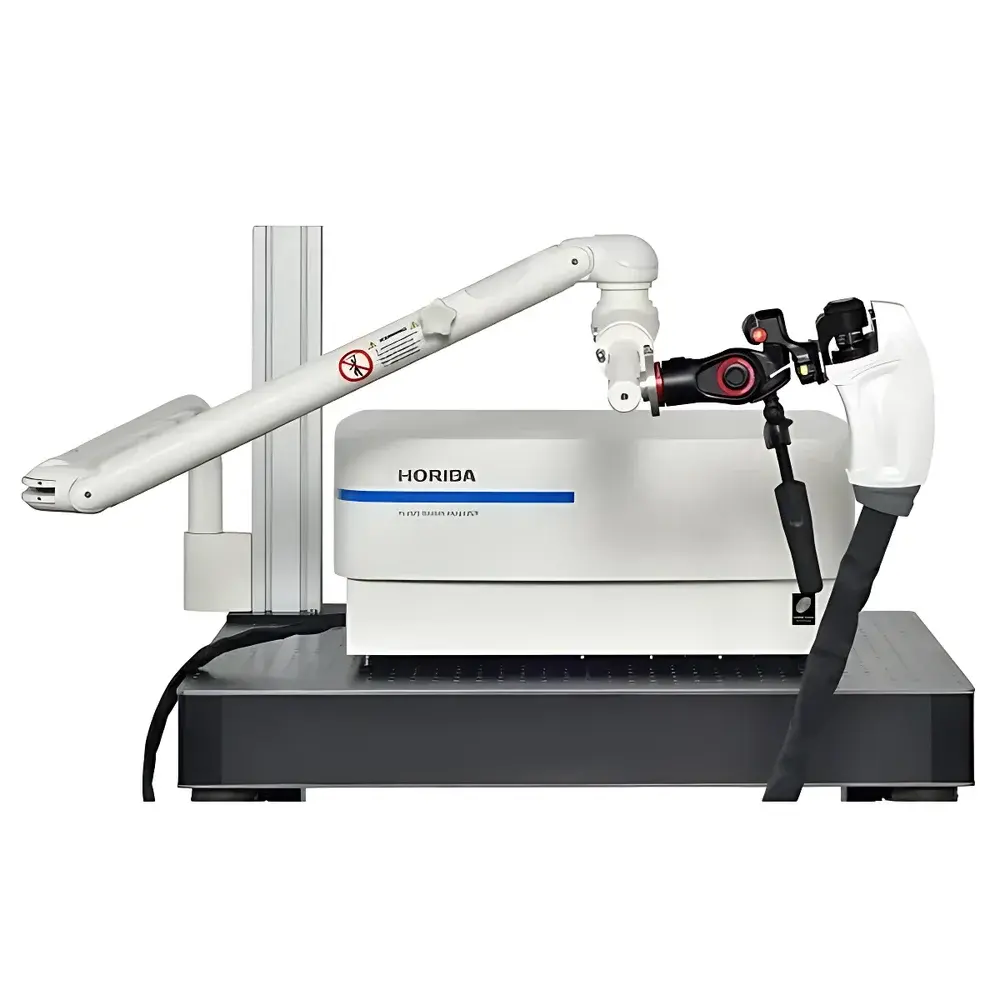
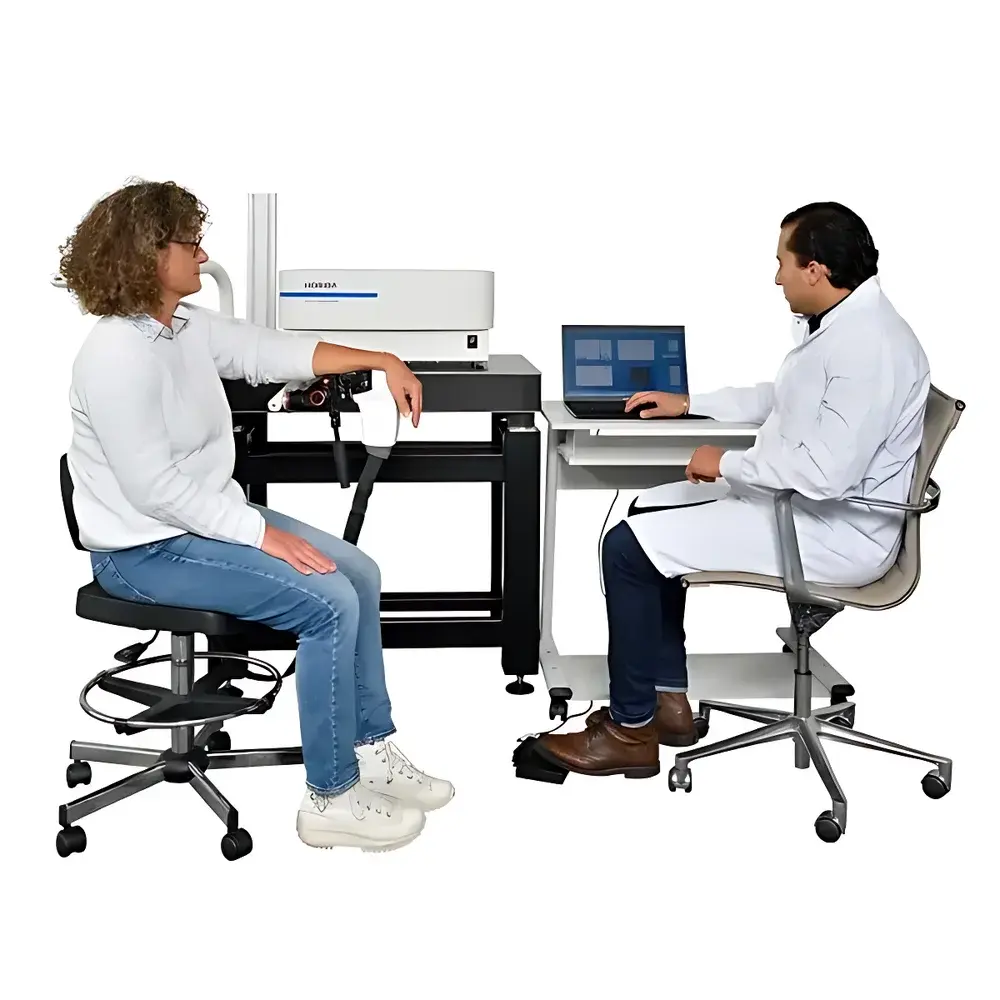
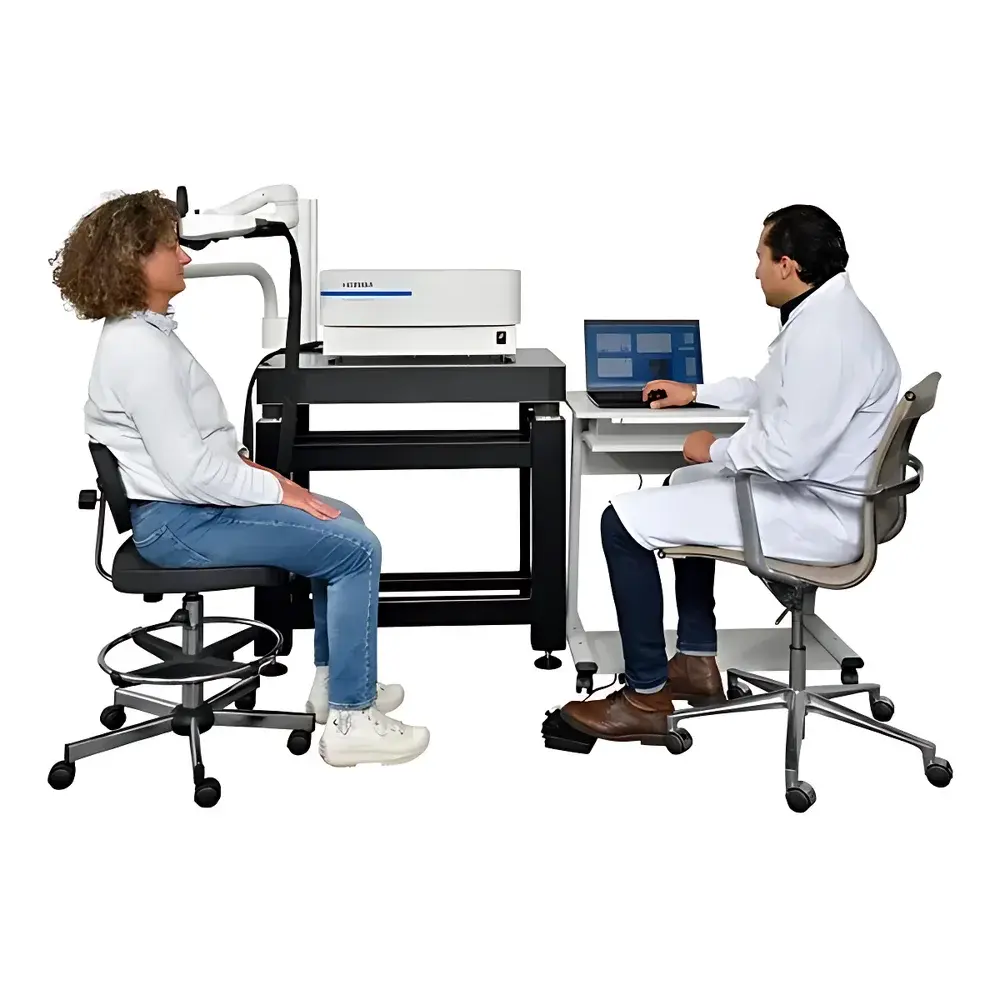
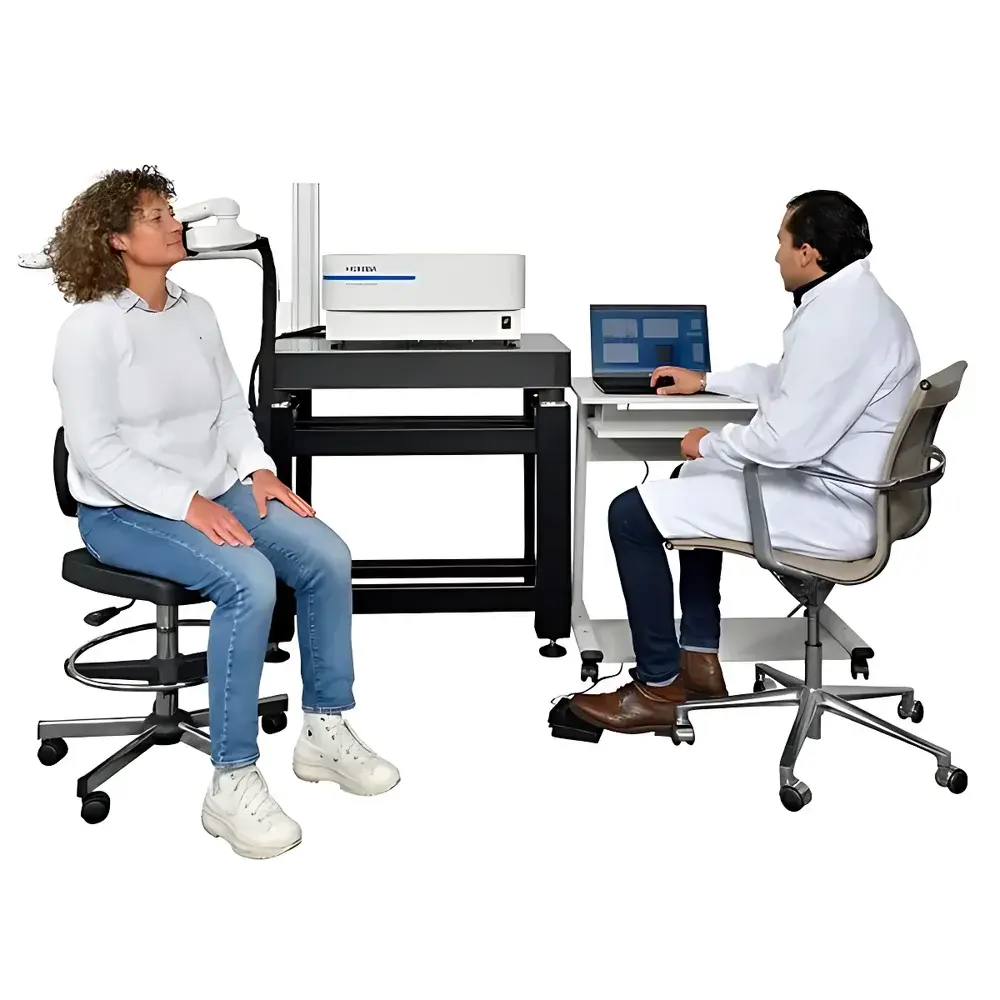
The HORIBA RZ-660 In Vivo Skin Raman Spectrometer is a purpose-built, non-invasive optical instrument engineered for label-free, depth-resolved molecular characterization of human skin in its native physiological state. Operating on the principle of spontaneous Raman scattering, the system delivers high-fidelity vibrational spectra from endogenous biomolecules—including water, lipids, proteins, keratin, and natural moisturizing factors (NMF)—without requiring biopsy, staining, or ex vivo processing. Its core design integrates confocal optics, motorized axial scanning, and a patented coaxial visualization module to enable precise, reproducible spectral acquisition across epidermal and upper dermal layers. Unlike conventional benchtop Raman systems, the RZ-660 is optimized for clinical and translational dermatological research: it features a flexible, ergonomically articulated probe head with 6-degree-of-freedom positioning, allowing full-body access—from facial contours to flexural zones—without repositioning the subject. This architecture supports longitudinal, repeatable measurements under ambient lighting and standard laboratory conditions, aligning with Good Clinical Practice (GCP) and ISO 13485–aligned quality frameworks for medical device–supported research.
Key Features
- Confocal Raman architecture with axial resolution down to < 5 µm, enabling stratified analysis of stratum corneum, viable epidermis, and papillary dermis
- Integrated high-resolution CMOS camera co-aligned with the excitation path for real-time anatomical targeting and spatial registration of spectral acquisition points
- Motorized Z-stage with sub-micron step precision for automated depth profiling (up to 200 µm mechanical penetration depth)
- Single-shot full-spectrum acquisition across 680–3,800 cm⁻¹ using a high-throughput transmission grating spectrometer and back-illuminated CCD detector
- Ergonomic articulating arm with locking joints and adjustable foot platform for operator stability and subject comfort during extended sessions
- Laser safety compliance with IEC 60825-1:2014 Class 1M certification; 785 nm diode laser source with power output ≤ 50 mW at sample interface
Sample Compatibility & Compliance
The RZ-660 is validated for in vivo use on human skin across Fitzpatrick skin types I–VI, with protocols established for volar forearm, cheek, forehead, and dorsal hand sites. It requires no coupling gels or optical contact media, eliminating inter-subject variability introduced by refractive index mismatch. All measurement protocols adhere to ISO 20417:2021 (Medical devices — General requirements for labeling and information to be provided by the manufacturer) and support audit-ready documentation per GLP (Good Laboratory Practice) Annexes. Data acquisition workflows are compatible with FDA 21 CFR Part 11–compliant electronic signature and audit trail configurations when deployed with HORIBA’s LabSpec 6 software suite. The system meets CE marking requirements under the EU Medical Device Regulation (MDR 2017/745) as a Class I non-invasive diagnostic support device.
Software & Data Management
Controlled via HORIBA LabSpec 6 Skin Analysis Edition, the RZ-660 employs a guided workflow interface with role-based user permissions (e.g., technician, principal investigator, data analyst). Each session auto-generates a structured metadata package including subject ID, anatomical site coordinates, probe alignment parameters, ambient temperature/humidity logs, and laser power calibration stamps. Spectral preprocessing includes cosmic ray removal, fluorescence background subtraction (using iterative polynomial fitting), and intensity normalization to internal water peak (1640 cm⁻¹). Advanced modules support multivariate curve resolution (MCR), principal component analysis (PCA), and constrained spectral unmixing for quantitative mapping of water concentration, lipid order (CH₂ scissoring band ratio), NMF abundance (1360–1380 cm⁻¹ region), and active ingredient distribution. Export formats include HDF5 (for MATLAB/Python integration), CSV (for statistical packages), and annotated PNG heatmaps compliant with MIAME standards.
Applications
- Skin hydration profiling: Quantitative depth-resolved water concentration (mol/cm³) derived from O–H stretching band deconvolution (3000–3600 cm⁻¹), enabling correlation with transepidermal water loss (TEWL) and formulation efficacy screening
- Stratum corneum thickness estimation: Determined via inflection point analysis of normalized water gradient curves, validated against histological cross-sections (r² > 0.92, n = 42 subjects)
- Lipid conformational analysis: Monitoring acyl chain ordering via CH₂/CH₃ intensity ratios and gauche/trans band shifts (1060–1150 cm⁻¹), supporting barrier integrity assessment
- Natural moisturizing factor (NMF) mapping: Discrimination of pyrrolidone carboxylic acid (PCA), urocanic acid, and amino acid signatures to evaluate endogenous hydration capacity
- Topical actives penetration kinetics: Time-series tracking of molecular fingerprints (e.g., niacinamide C=O stretch at 1660 cm⁻¹, retinol C=C at 1560 cm⁻¹) across depth intervals
- Sunscreen film uniformity assessment: Spatial mapping of organic UV filters (e.g., avobenzone C=O at 1690 cm⁻¹) and inorganic particle dispersion (TiO₂ phonon modes at 144 cm⁻¹)
FAQ
Is the RZ-660 suitable for regulatory submission studies?
Yes—when operated under documented SOPs and paired with Part 11–enabled LabSpec 6, it supports data packages acceptable for cosmetic safety dossiers (EU CosIng), FDA IND-enabling dermatopharmacokinetic reports, and ISO 10993 biocompatibility assessments.
Can it distinguish between endogenous lipids and topical emollients?
Yes—through spectral library matching and second-derivative analysis, the system resolves characteristic bands for squalene (C=C at 1665 cm⁻¹), ceramides (amide I at 1650 cm⁻¹), and synthetic esters (C=O at 1735 cm⁻¹), enabling source attribution.
What is the minimum required skin surface area for reliable acquisition?
A stable measurement zone of ≥ 2 mm² is recommended; the probe’s 300 µm spot size and real-time imaging allow precise targeting even on curved or mobile surfaces (e.g., eyelid, neck).
Does it require routine recalibration?
Spectral calibration is performed automatically at startup using an internal polystyrene reference; positional calibration is verified monthly using NIST-traceable depth standards.
How is subject motion compensated during depth profiling?
The integrated camera provides real-time visual feedback, while the probe’s passive damping mechanism and low-inertia stage minimize vibration-induced spectral broadening; motion artifacts are further corrected in post-processing using cross-correlation alignment of successive depth scans.





