
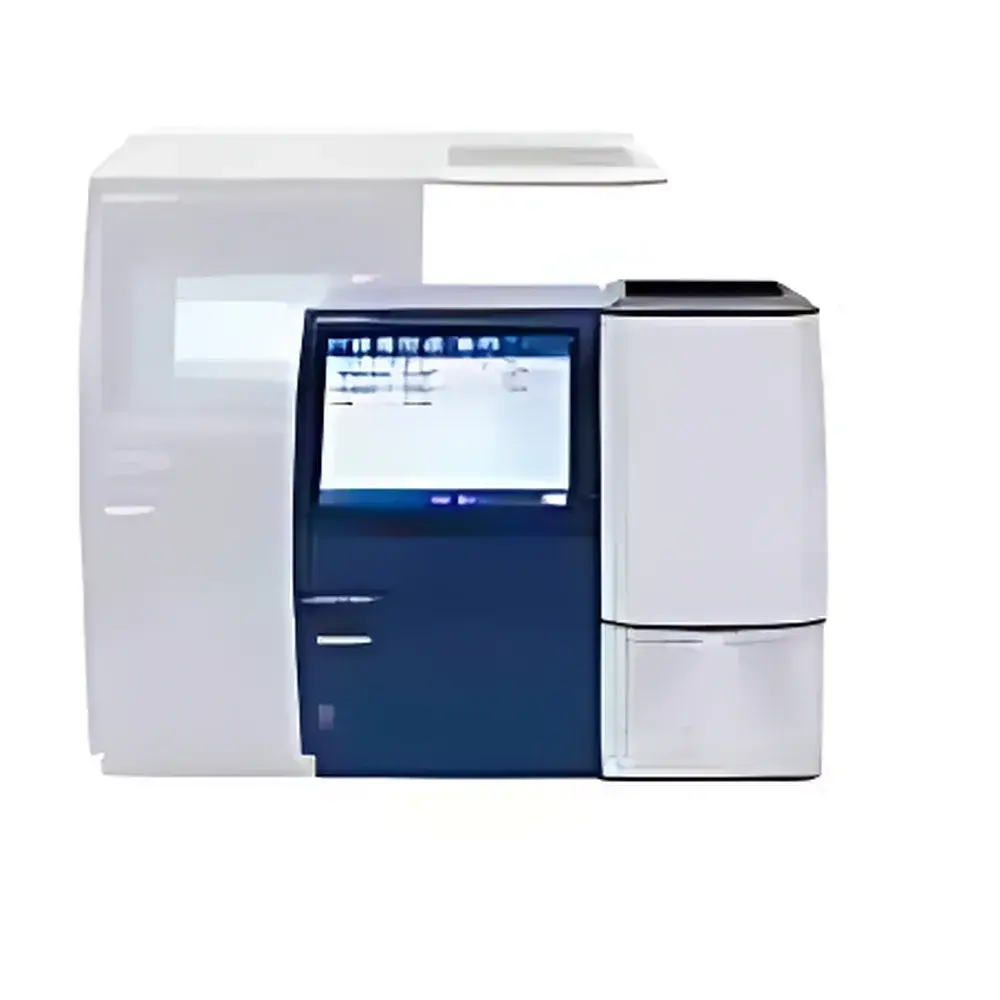
FOSS Infratec Nova Near-Infrared Grain and Flour Analyzer
| Brand | FOSS |
|---|---|
| Origin | Denmark |
| Model | Infratec Nova |
| Instrument Type | Benchtop |
| Analysis Time | 40 s |
| Sample Mass | 5 g |
| Scan Speed | 10 s |
| Wavelength Range | 1100 nm |
| Sample Form | Whole grain or milled flour, no preparation required |
| Calibration Basis | Artificial Neural Network (ANN) with >50,000 reference samples |
Overview
The FOSS Infratec Nova is a benchtop near-infrared (NIR) transmittance analyzer engineered for rapid, non-destructive, and multi-parameter analysis of cereals, oilseeds, and milled products—including wheat, barley, corn, rice, soybeans, peanuts, and flour. It operates on the principle of NIR transmittance spectroscopy in the 1100 nm spectral region, where absorption bands correlate strongly with key compositional attributes such as moisture, protein, fat (oil), starch, wet gluten, fiber, ash, and test weight. Unlike reflectance-based systems, transmittance geometry provides enhanced signal-to-noise ratio and superior repeatability for heterogeneous bulk grains. The Infratec Nova delivers quantitative results in under 40 seconds per sample—20% faster than legacy NIR platforms—without grinding, drying, or chemical reagents. Its robust optical architecture, integrated touchscreen interface, and factory-calibrated ANN models (>50,000 reference samples across global growing regions) ensure metrological consistency across decentralized grain procurement networks, laboratories, and breeding stations.
Key Features
- Benchtop design with compact footprint and low power consumption, suitable for grain elevators, QA/QC labs, and mobile testing units.
- True transmittance NIR optics optimized at 1100 nm, delivering high photometric stability and long-term calibration retention.
- Intuitive 10.1-inch capacitive touchscreen running ISIscan NOVA Touch software—designed for minimal operator training and error-resistant workflow execution.
- Flat, stainless-steel sample chamber with removable funnel and smooth surfaces for rapid cleaning between batches; eliminates cross-contamination risk in high-throughput environments.
- Modular hardware configuration: optional Flour Module (for fine-particle analysis), Test Weight Module (for volumetric density measurement), and STM (Small Test Material) Module for breeding programs requiring ≤2 g sample volumes.
- Embedded Ethernet and USB-C connectivity supporting remote diagnostics, firmware updates, and integration into LIMS or ERP systems via standard TCP/IP protocols.
Sample Compatibility & Compliance
The Infratec Nova accommodates whole kernels (wheat, barley, rye, oats, corn, sorghum, rice, soybean, peanut) and milled products (soft/hard wheat flour, maize meal, oat flour) without size reduction or conditioning. Its transmittance path length is dynamically optimized per sample density and opacity using real-time light transmission feedback. Method validation aligns with AOAC Official Method 987.03 (NIR for cereal protein), ISO 20977:2016 (cereal moisture by NIR), and AACC International Approved Methods 44-19.01 and 39-25.01. All calibrations are traceable to NIST-certified reference materials and comply with GLP requirements for audit readiness. Data integrity features include electronic signatures, time-stamped audit trails, and user-access controls conforming to FDA 21 CFR Part 11 when deployed with validated ISIscan NOVA Touch configurations.
Software & Data Management
ISIscan NOVA Touch is a purpose-built Windows-based application providing guided sample loading, automated calibration verification, real-time spectral visualization, and customizable report generation (PDF/CSV). It supports multivariate calibration management—including ANN model versioning, outlier detection, and prediction confidence scoring. All raw spectra and metadata are stored in an encrypted local database with configurable backup intervals. The software enables seamless export to laboratory information management systems (LIMS) via ODBC or RESTful API endpoints. Audit trail logs record every user action—including method selection, calibration update, result override, and instrument maintenance—ensuring full compliance with ISO/IEC 17025 and GMP documentation standards.
Applications
- Grain receiving and pricing at elevators and cooperatives, enabling real-time moisture/protein-adjusted valuation.
- Quality assurance in flour milling operations, monitoring starch damage, ash content, and gluten quality parameters.
- Plant breeding programs utilizing the STM module for high-throughput phenotyping of small-seed populations.
- Feed formulation laboratories verifying nutrient composition of raw ingredients prior to blending.
- Research institutions conducting NIR method development, spectral library expansion, and chemometric model transfer studies.
- Regulatory testing labs performing routine surveillance of commodity grain specifications per national standards (e.g., USDA FGIS, EU Regulation No 228/2013).
FAQ
Does the Infratec Nova require sample grinding or drying before analysis?
No. It performs non-destructive, whole-kernel or flour analysis without any physical or chemical sample preparation.
Can calibration models be transferred between instruments?
Yes—ANN-based calibrations are portable across Infratec Nova units when operated under identical optical and environmental conditions; FOSS recommends annual inter-instrument verification using certified transfer standards.
Is the system compliant with FDA 21 CFR Part 11 for electronic records?
When deployed with validated ISIscan NOVA Touch software, role-based access control, electronic signatures, and immutable audit trails meet Part 11 requirements for regulated environments.
What maintenance is required for long-term optical performance?
Annual factory recalibration is recommended; daily cleaning of the sample chamber and quartz windows with lint-free wipes and isopropyl alcohol ensures optimal light transmission.
How does the STM module differ from standard analysis mode?
The STM module uses a reduced-diameter sample cup and modified optical path to enable accurate NIR quantification on ≤2 g samples—critical for early-generation breeding trials where material is limited.



