
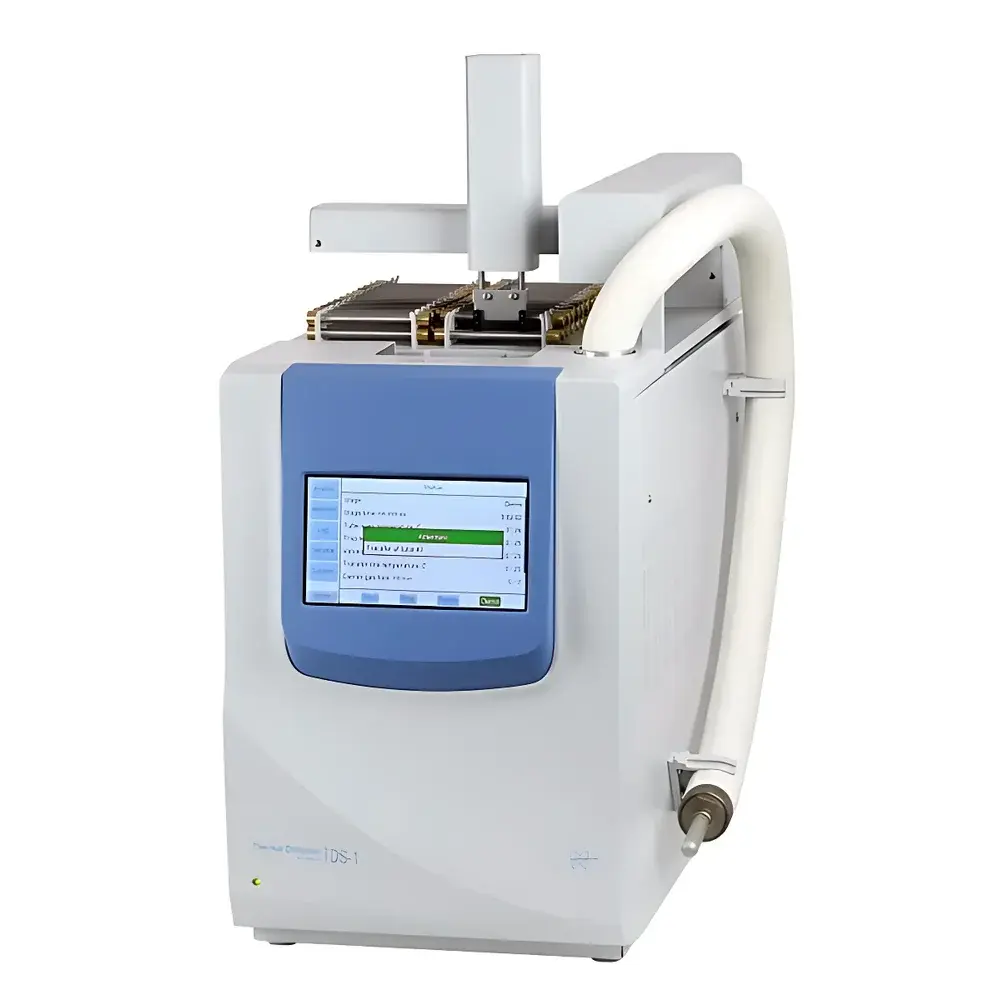
Fulu Chromatec TDA Automated Two-Stage Thermal Desorber
| Brand | Fulu |
|---|---|
| Origin | Russia |
| Manufacturer Type | Original Equipment Manufacturer (OEM) |
| Product Category | Imported Instrument |
| Model | TDA |
| Instrument Type | Two-Stage Thermal Desorber / Thermal Desorption Unit |
| Sample Capacity | 50-position Auto-sampler |
| Sample Tube Format | US Standard Adsorption Tubes (89 mm × OD 6.4 mm) |
| Temperature Control Range | –20 °C to 450 °C |
| Cold Trap Heating Rate | Up to 3000 °C/min |
| Carrier Gas Control | Full Electronic Pressure Control (EPC) |
| System Liner | Fully Inert Flow Path |
| Peak Area Repeatability | RSD ≤ 2% |
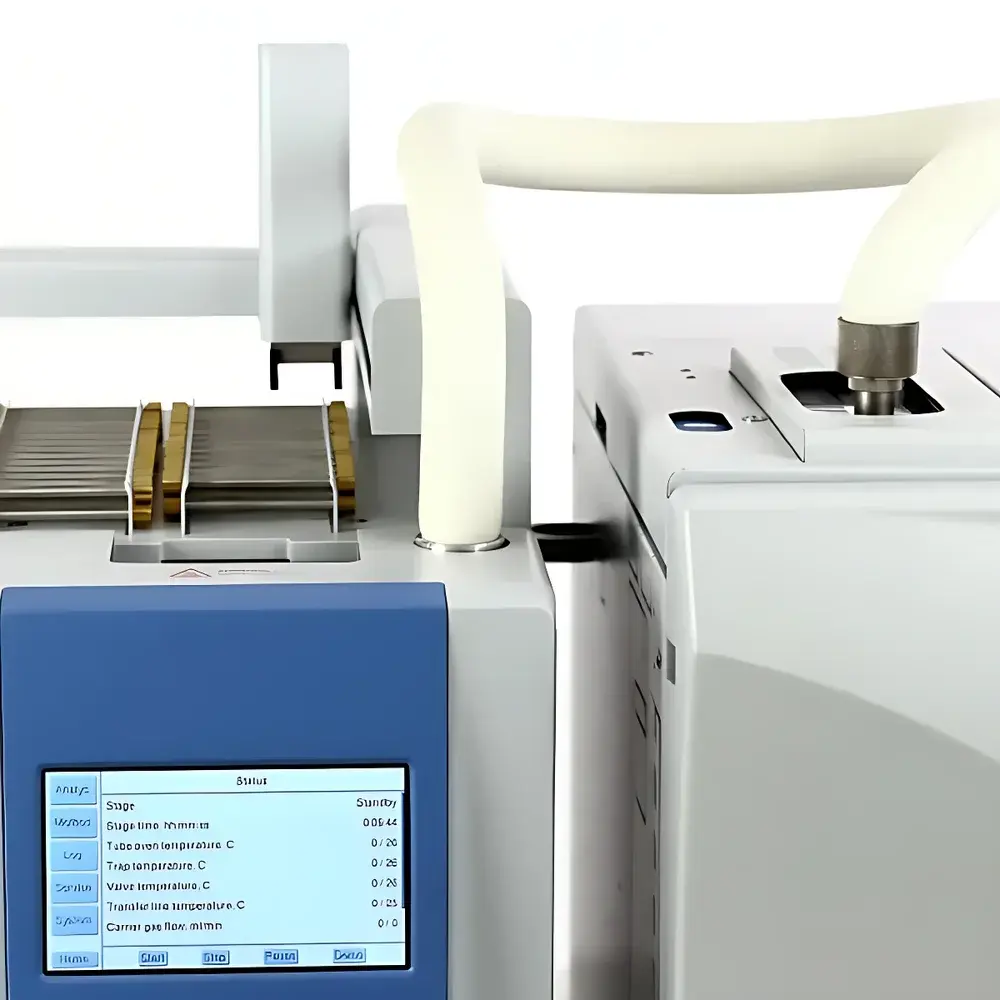
| Operating Interface | Integrated Touchscreen Display |
| Functional Modes | Analysis, Tube Conditioning (Aging), Cold Trap Cleaning, Cold Trap Performance Test |
| Cooling Method | Thermoelectric (No Liquid Nitrogen Required) |
Overview
The Fulu Chromatec TDA Automated Two-Stage Thermal Desorber is a precision-engineered sample introduction system designed for coupling with gas chromatography (GC) and GC–mass spectrometry (GC–MS) platforms. It implements a two-stage thermal desorption principle: first, analytes are thermally released from sorbent-packed tubes under controlled inert gas flow; second, volatile compounds are refocused onto a cryogenically or thermoelectrically cooled trap before rapid thermal desorption into the GC column. This dual-stage process significantly enhances sensitivity, reduces matrix interference, and improves quantitative reproducibility—particularly for trace-level volatile organic compounds (VOCs), semi-volatile organic compounds (SVOCs), and odorants in environmental, occupational hygiene, and product safety applications.
Key Features
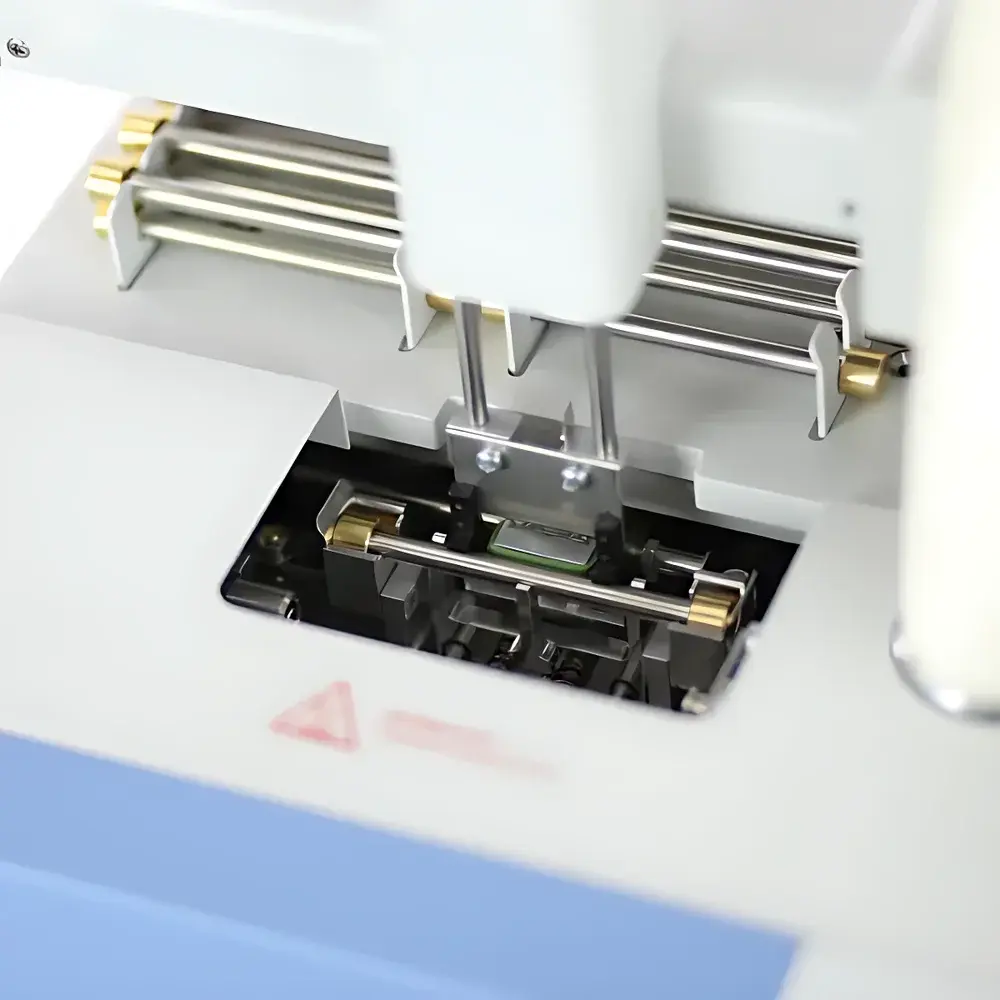
- 50-position automated sample carousel with programmable sequence execution and tube position tracking
- Patented sealed cap design ensures sample integrity during storage, transport, and pre-analysis handling—minimizing analyte loss and cross-contamination
- Horizontal adsorption tube orientation prevents gravitational displacement of sorbent beds or condensed condensates, thereby reducing risk of column blockage and system contamination
- Full electronic pressure control (EPC) for carrier and purge gases enables precise, stable, and repeatable flow regulation across all method steps
- Thermoelectric cooling technology eliminates dependency on liquid nitrogen, delivering reliable cold trap operation from –20 °C to 450 °C with rapid thermal ramping (up to 3000 °C/min)
- Four dedicated operational modes: Analysis, Tube Aging (conditioning), Cold Trap Cleaning, and Cold Trap Diagnostic Test—supporting full lifecycle maintenance and QC verification
- Integrated touchscreen interface displays real-time parameters including temperatures, pressures, valve states, and method progress—enabling intuitive method setup and troubleshooting
- Entire flow path—from sample tube to GC interface—is constructed of ultra-inert materials (e.g., Siltek®-treated stainless steel or fused silica) to minimize catalytic degradation and surface adsorption of reactive analytes
Sample Compatibility & Compliance
The TDA accommodates standard 89 mm × 6.4 mm OD US-format sorbent tubes (e.g., Tenax TA, Carbopack™ series, Carboxen®, or multi-bed configurations), supporting both single- and multi-sorbent packed formats. Its hardware architecture and software logic comply with fundamental requirements for regulated environments: method parameters are stored with timestamped audit trails, and all temperature/pressure setpoints are digitally logged. While the instrument itself does not carry FDA 21 CFR Part 11 certification out-of-the-box, its deterministic control architecture and data export capabilities (CSV, XML) support integration into validated laboratory information management systems (LIMS) operating under GLP or GMP frameworks. Routine performance checks—including cold trap efficiency validation and system blank assessment—align with ASTM D6196, ISO 16017-1, and EPA TO-17 methodologies.
Software & Data Management
The embedded firmware supports method creation, scheduling, and remote monitoring via Ethernet connectivity. All method files include configurable dwell times, ramp rates, flow profiles, and valve sequencing logic. Instrument status logs and run reports are automatically generated and exportable without proprietary software dependencies. Raw parameter logs (temperature, pressure, valve actuation timestamps) are retained onboard for ≥30 days and can be retrieved via USB or network transfer. Optional PC-based software provides advanced reporting templates aligned with ISO/IEC 17025 documentation expectations—including uncertainty estimation inputs and calibration history linkage.
Applications
- Environmental air monitoring: indoor air quality (IAQ), ambient VOC profiling, landfill and industrial fence-line emissions
- Occupational health: workplace exposure assessment per OSHA and NIOSH methods (e.g., NIOSH 1501, 1600)
- Materials testing: emissions screening of building products, automotive interiors, packaging films, and consumer goods (e.g., VOC emission testing per ISO 16000-9)
- Forensic and failure analysis: identification of residual solvents, off-gassing compounds, or degradation markers
- Pharmaceutical packaging: extractables and leachables (E&L) studies compliant with ICH Q5C and USP
FAQ
Does the TDA require liquid nitrogen for cold trapping?
No—the system uses solid-state thermoelectric cooling, enabling operation from –20 °C without cryogens.
Can the TDA be integrated with third-party GC or GC–MS systems?
Yes—it features standard GC interface connections (e.g., 1/16″ stainless steel tubing with VCR/VCO fittings) and supports TTL/RS-232 trigger synchronization.
Is method validation support available?
Yes—application notes and protocol templates for system suitability testing (SST), breakthrough volume assessment, and retention time stability are provided in the user documentation.
What maintenance intervals are recommended for the cold trap and valves?
Cold trap cleaning is performed automatically in dedicated mode; mechanical valve inspection is recommended every 500 runs or quarterly, whichever occurs first.
Are firmware updates provided post-purchase?
Yes—Fulu releases periodic firmware updates addressing performance enhancements and regulatory alignment; updates are delivered via secure download portal with installation guidance.





