
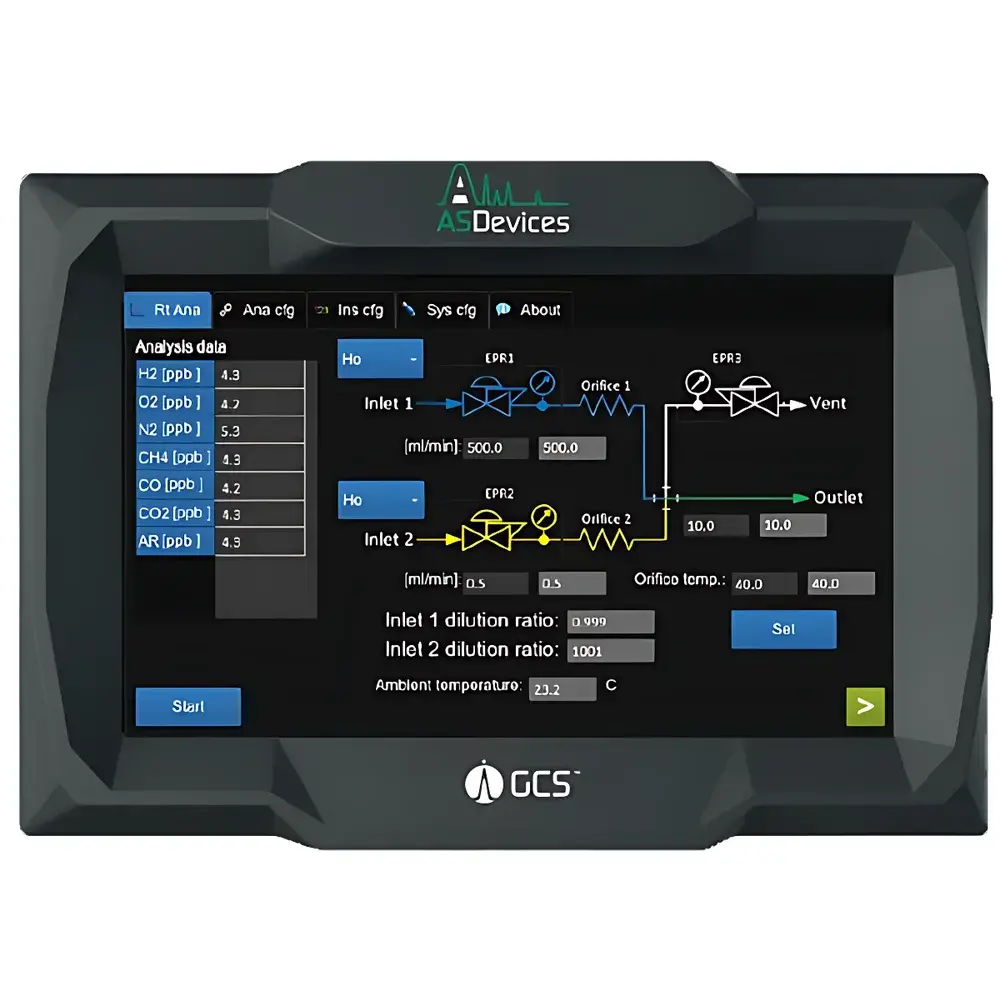
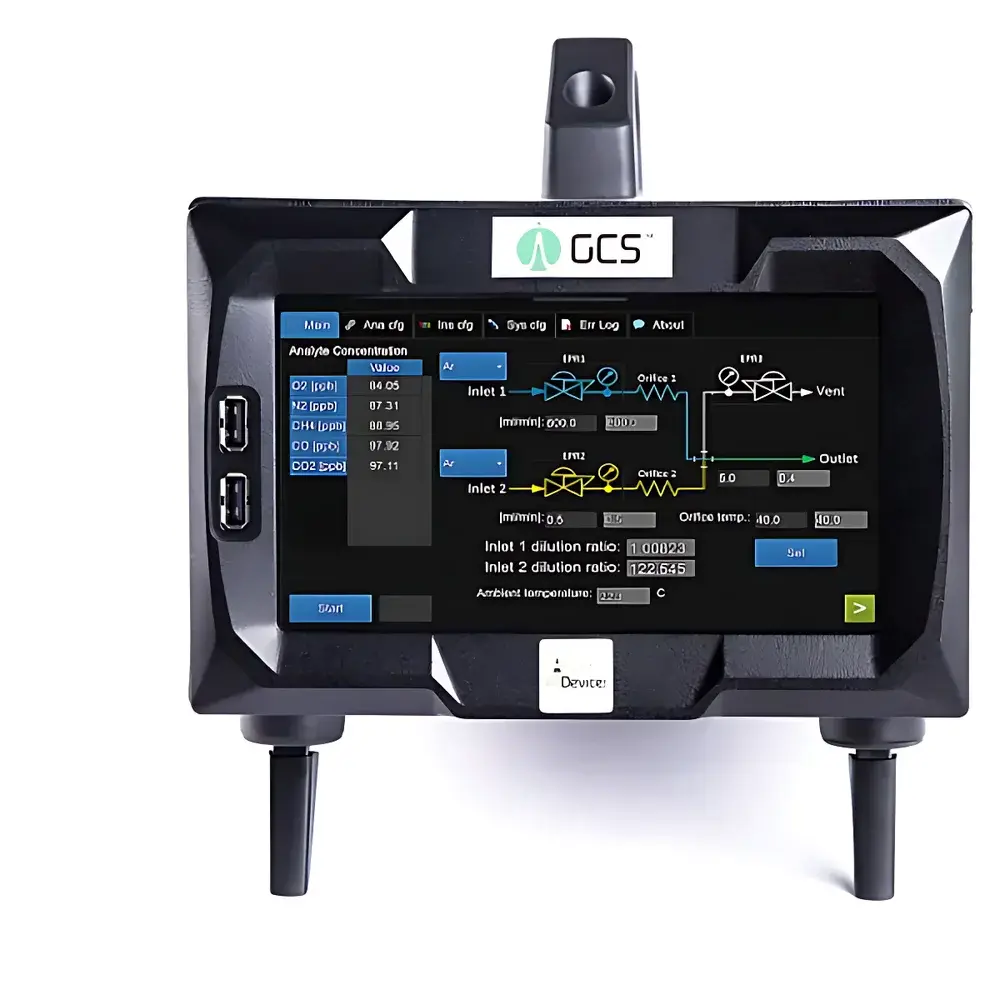
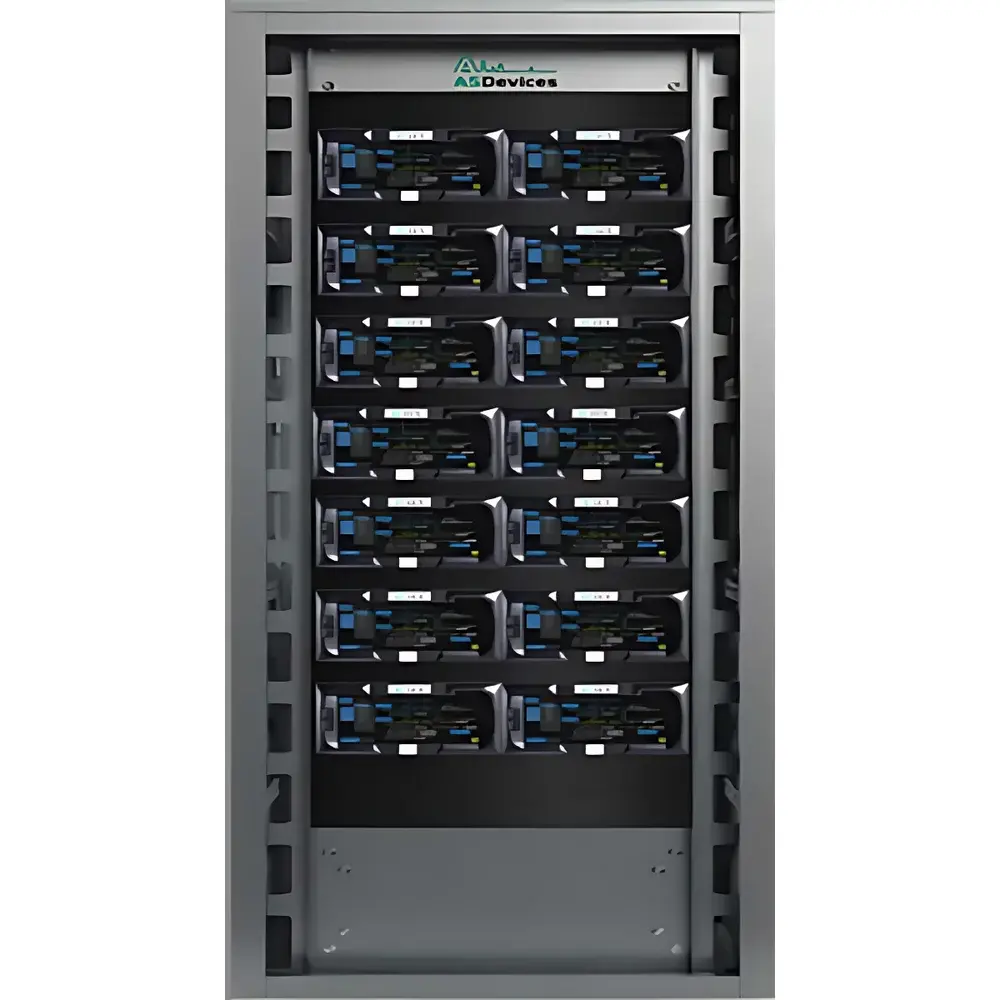
ASD iGCS Sonic Nozzle Dynamic Gas Dilution System
| Brand | ASD |
|---|---|
| Origin | Canada |
| Model | iGCS |
| Dilution Ratio Range | 1:2 to 1:3500 (customizable up to 1:10,000) |
| Accuracy | < 0.5% rel. |
| Pressure Control | High-precision electronic pressure controllers (EPC) with temperature compensation |
| Flow Path Material | Fully welded stainless steel |
| Operating Temperature | Up to 200 °C (heated path option) |
| Configurability | User-selectable sonic nozzles and diluent gases |
| Flow Path Options | Dual direct-coupled EPC configuration or high-integrity bypass EPC version |
Overview
The ASD iGCS Sonic Nozzle Dynamic Gas Dilution System is an engineered solution for traceable, high-fidelity gas dilution in analytical calibration, instrument performance verification, and reference gas generation. It operates on the fundamental physical principle of critical (sonic) flow through precision-machined nozzles—where gas mass flow becomes independent of downstream pressure when the Mach 1 condition is achieved at the nozzle throat. This phenomenon enables absolute, repeatable mass flow determination based solely on upstream stagnation pressure, temperature, and nozzle geometry—eliminating reliance on empirical flowmeter calibration. Designed for laboratories requiring metrological rigor, the iGCS delivers dynamic, real-time dilution without moving parts in the flow path, ensuring long-term stability and minimal drift. Its architecture supports both primary standard generation and secondary calibration workflows compliant with ISO/IEC 17025-accredited environments.
Key Features
- Sonic nozzle-based flow control: Utilizes laser-calibrated, NIST-traceable nozzles manufactured to sub-micron dimensional tolerances—ensuring adherence to ISO 6145-5 (gas mixtures by dynamic volumetric methods) and ASTM D6866 (isotopic dilution applications).
- Wide dilution range: Standard operation from 1:2 to 1:3500; configurable up to 1:10,000 via modular nozzle selection—enabling single-system coverage from percent-level to sub-part-per-trillion (pptv) concentration regimes.
- High metrological accuracy: <0.5% relative uncertainty across full scale, validated per ISO 5725 repeatability and reproducibility protocols; includes integrated temperature-compensated EPCs with ≤0.01% FS pressure stability.
- Material and design integrity: Entire wetted path constructed from electropolished 316L stainless steel with orbital TIG welds—certified leak-tight to ≤1×10⁻⁹ mbar·L/s He (per ISO 15848-1), eliminating adsorption, permeation, or catalytic interference.
- Thermal management: Optional heated flow path (up to 200 °C) prevents condensation of high-boiling analytes (e.g., VOCs, sulfur compounds) and maintains laminar flow conditions for reactive or sticky species.
- Flexible configuration: Supports dual independent EPC architectures—either direct-coupled for maximum response speed or high-integrity bypass mode for zero dead-volume calibration transfer—both field-reconfigurable without tools.
Sample Compatibility & Compliance
The iGCS accommodates a broad spectrum of calibration and challenge gases—including CO, NOx, SO2, O3, NH3, CH4, H2S, and complex VOC blends—without degradation of accuracy or material compatibility. All stainless-steel components meet ASME BPE surface finish requirements (Ra ≤ 0.4 µm), and system design conforms to IEC 61511 functional safety guidelines for SIL-2 capable integration into automated emission monitoring systems (CEMS). The platform supports audit-ready documentation packages aligned with FDA 21 CFR Part 11 (electronic records/signatures) and EU Annex 11 (computerized system validation), including full change control logs and calibration history traceability.
Software & Data Management
Control and monitoring are managed via ASD’s iDILUTE™ software suite—a Windows-based application supporting both local operation and remote SCADA integration via Modbus TCP or OPC UA. The software provides real-time visualization of primary and diluent pressures, calculated mass flow rates, temperature-compensated dilution ratios, and system health diagnostics. All operational parameters are time-stamped and stored in encrypted SQLite databases compliant with GLP/GMP data integrity principles (ALCOA+). Audit trails record user actions, method changes, and calibration events with immutable timestamps—facilitating inspection readiness for EPA Method 205, EN 14181, or ISO 14064-3 verification audits.
Applications
- Primary standard generation for EPA Traceability Protocol (TTP) and EU Reference Measurement Systems (RMS)
- Performance verification of continuous emission monitoring systems (CEMS) per EN 15267 and QA/QC protocols
- Calibration gas production for environmental air quality networks (e.g., EMEP, GAW)
- Method development and validation in regulatory testing laboratories (ISO 16000, ISO 16140)
- Dynamic spiking studies in atmospheric chemistry research and sensor response characterization
- Trace contaminant introduction in semiconductor process gas purity validation
FAQ
What standards does the iGCS comply with for calibration traceability?
The system is designed to support traceability to NIST SRMs and national metrology institutes via ISO/IEC 17025-accredited calibration of its primary pressure and temperature sensors—fully documented in the Certificate of Conformance supplied with each unit.
Can the iGCS be integrated into an existing LIMS or automation framework?
Yes—via native Modbus TCP, OPC UA, or optional analog/digital I/O modules, enabling seamless synchronization with laboratory information management systems and automated calibration workflows.
Is routine recalibration required, and what is the recommended interval?
Annual verification against certified pressure and temperature references is recommended; however, the system’s inherent stability—due to fixed-geometry sonic nozzles—minimizes drift, allowing extended intervals under controlled environmental conditions per ISO/IEC 17025 clause 7.7.
Does the iGCS support humidified or corrosive gas streams?
With appropriate material selection (e.g., Hastelloy C-276 nozzles) and heated path configuration, it handles humidified air and low-concentration acidic gases; full compatibility assessment requires review of specific gas composition and dew point profiles.







