
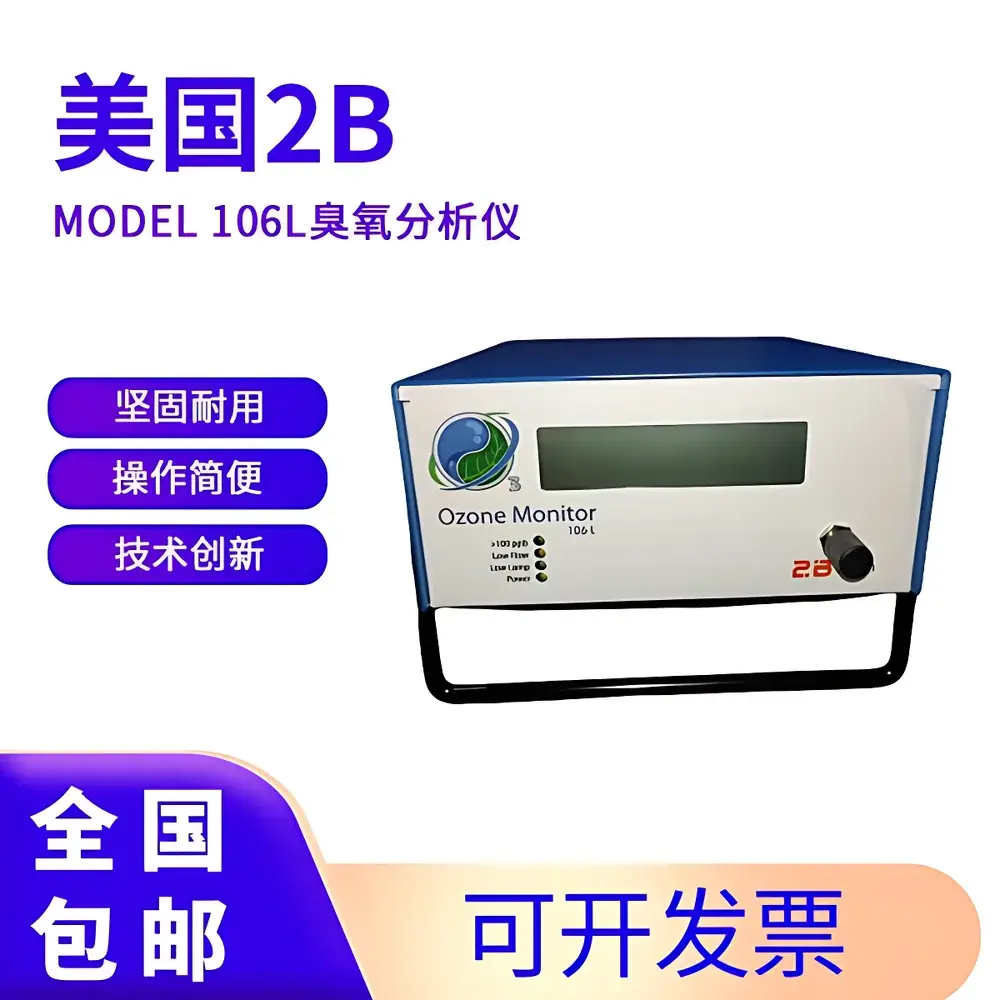
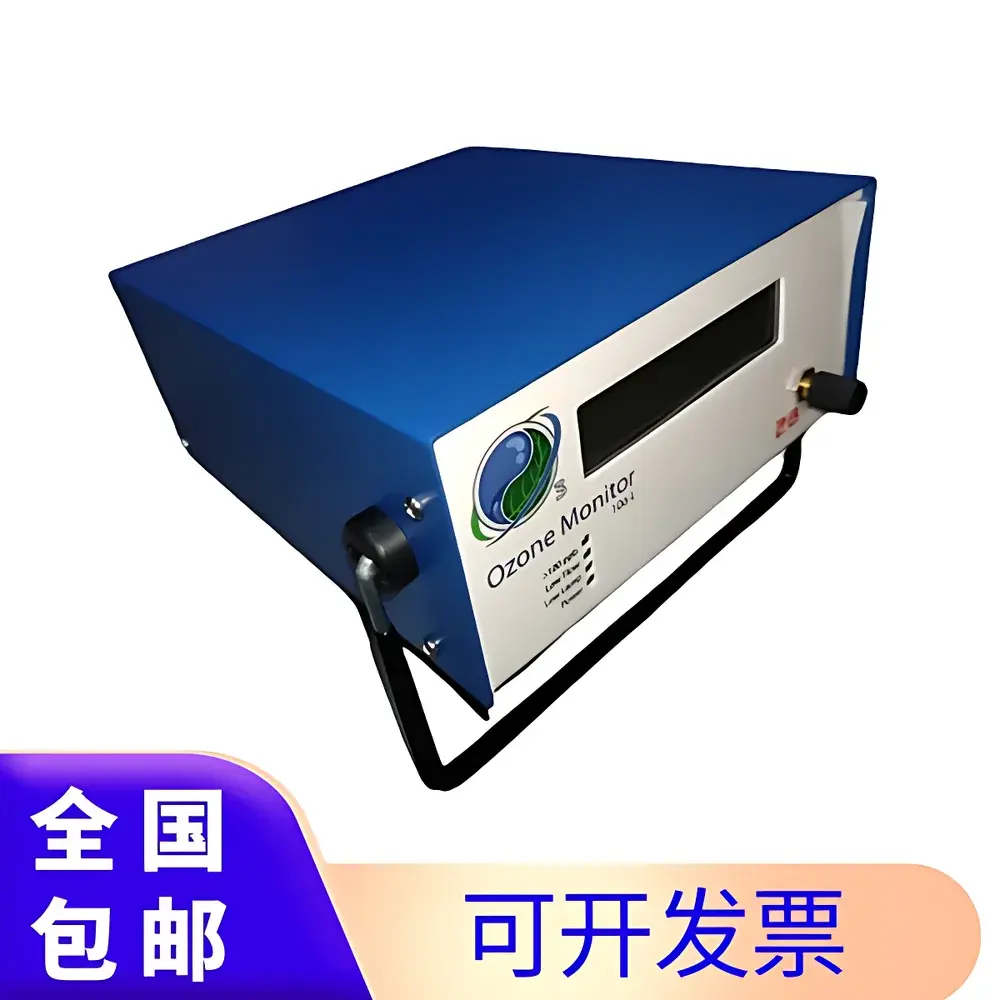
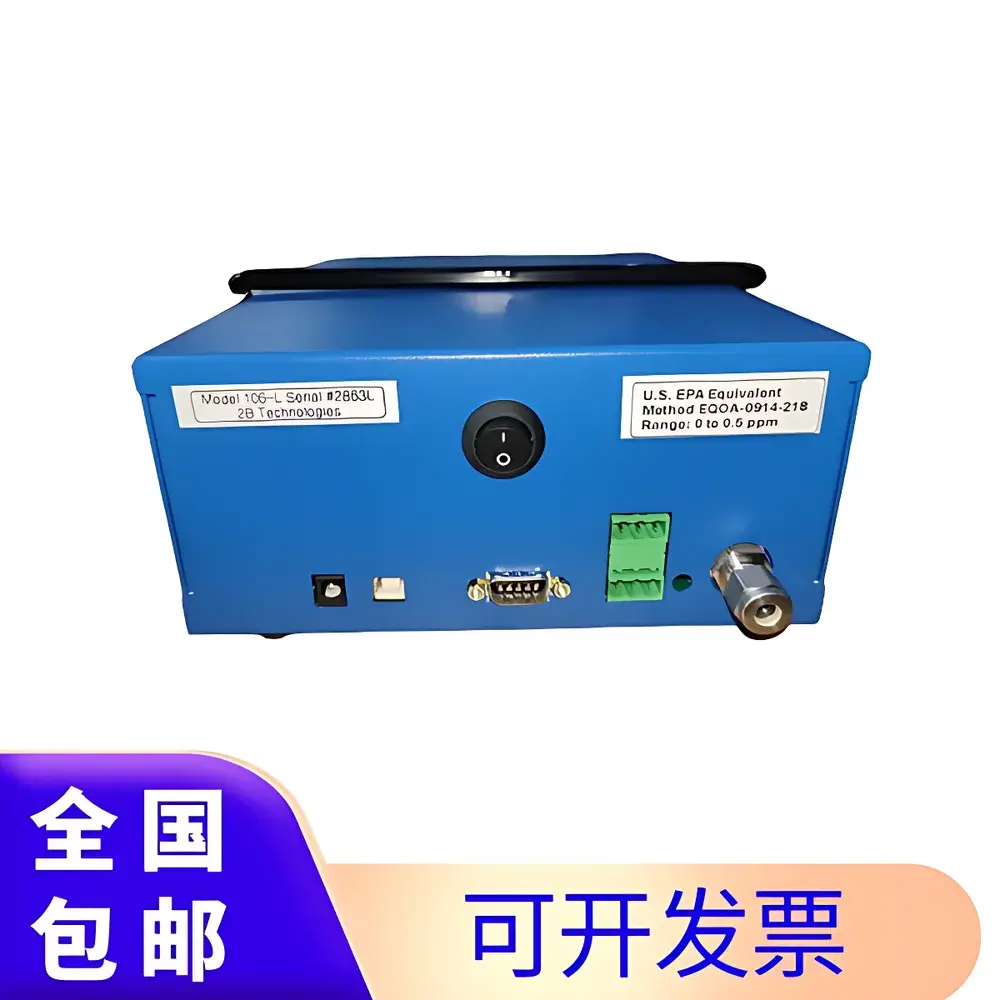
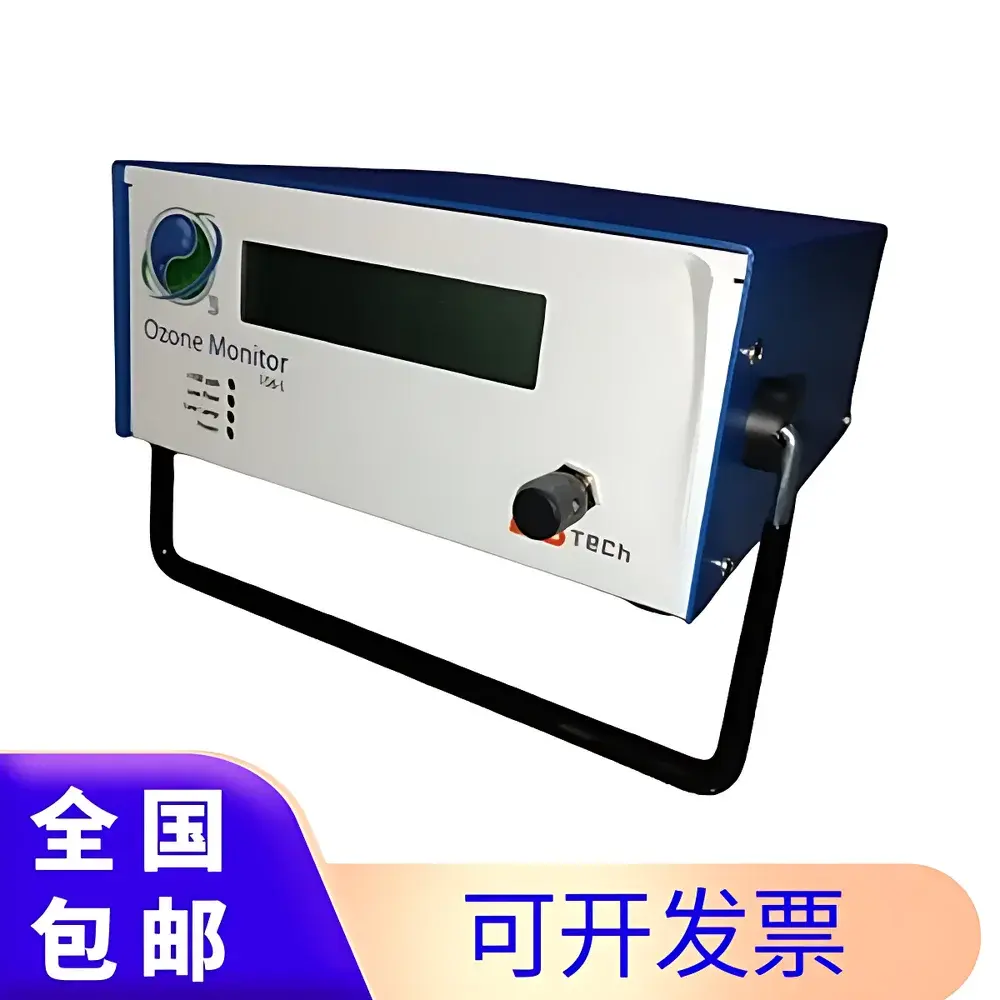
2B Technologies Model 106L Portable UV Absorption Ozone Analyzer
| Brand | 2B Technologies |
|---|---|
| Origin | USA |
| Model | Model 106L |
| Instrument Type | Portable |
| Measurement Range | 1.5 ppbv – 100 ppmv |
| LOD | 1.5 ppbv |
| Response Time | 10 s |
| Zero Drift | ±1 ppbv (24 h) |
| Resolution | 1.5 ppbv |
| Accuracy | ±2 ppbv or ±2% of reading |
| Sampling Flow Rate | ~1 L/min |
| Data Storage | 12,288 points |
| Output Interfaces | USB, RS-232, 0–2.5 V analog, 4–20 mA |
| Power | 12 V DC or 120/240 V AC, 4.2 W |
| Dimensions | 9.5 × 21.0 × 21.6 cm |
| Weight | 2.1 kg |
Overview
The 2B Technologies Model 106L is a portable, laboratory-grade ozone analyzer engineered for high-fidelity atmospheric and industrial ozone monitoring using the well-established principle of ultraviolet absorption at 254 nm. Based on the Beer–Lambert law, the instrument quantifies ozone concentration by measuring the attenuation of UV light passing through a precisely defined optical path—optimized for low-concentration applications (1.5 ppbv to 100 ppmv). Unlike conventional UV ozone analyzers susceptible to water vapor interference, the Model 106L integrates Dew-Line™ humidity compensation—a proprietary Nafion® membrane-based drying system that actively removes water vapor from the sample stream prior to optical detection. This design reduces humidity-induced measurement bias from >100 ppb to <5 ppb across relative humidity ranges up to 95%, ensuring metrological integrity in field-deployed and mobile applications including airborne atmospheric chemistry campaigns, ambient air quality networks, and process control environments.
Key Features
- True portable architecture with integrated battery-ready 12 V DC operation and optional vehicle power adapter—enabling continuous operation during mobile sampling, UAV-mounted deployments, or remote site surveys.
- Dew-Line™ real-time humidity correction technology, eliminating the need for external dryers or manual correction algorithms while maintaining traceable accuracy under variable environmental conditions.
- High-resolution photometric detection with 1.5 ppbv resolution and ±2 ppbv or ±2% of reading accuracy—validated per EPA EQOA-0170-112 and ISO 13964:2022 protocols for ambient ozone monitoring.
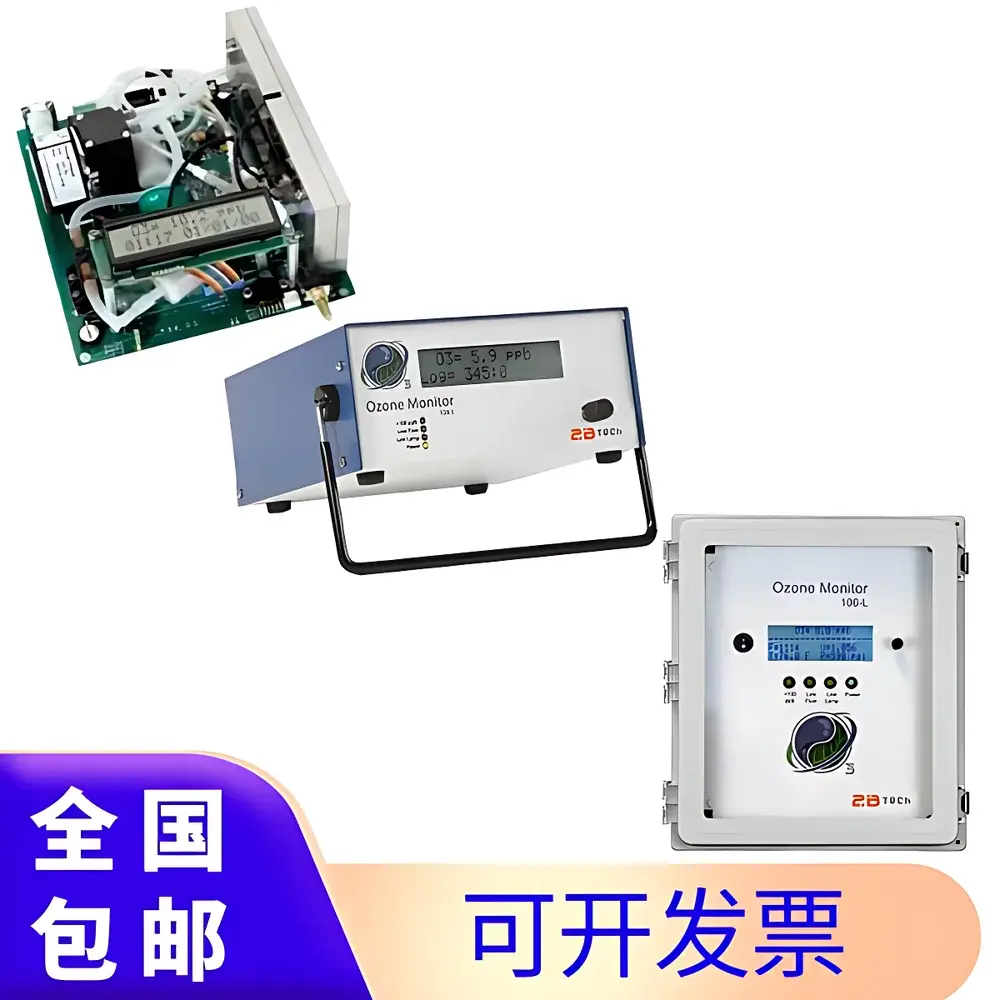
- Compact, ruggedized enclosure (9.5 × 21.0 × 21.6 cm; 2.1 kg) designed for benchtop, wall-mount, or OEM integration—supports bare-board configurations for embedded instrumentation in ozone generators, water treatment skids, or custom environmental sensor nodes.
- Configurable data logging with user-selectable averaging intervals (10 s, 1 min, 5 min, 1 hr), supporting up to 12,288 stored records—sufficient for >1.4 years of hourly averaged data.
- Multi-interface output: simultaneous USB (virtual COM port), RS-232 (TTL/RS-232 selectable), 0–2.5 V analog, and isolated 4–20 mA current loop—facilitating seamless integration into SCADA, PLC, and DAQ systems compliant with IEC 61131-3 and Modbus RTU frameworks.
Sample Compatibility & Compliance
The Model 106L accepts ambient air, compressed gas streams (up to 50 psi for OEM-106-H variant), and humidified effluent without pre-conditioning—thanks to its internal Nafion® dryer and temperature/pressure-compensated photometric engine. It meets critical regulatory and methodological requirements including U.S. EPA Reference Method EQOA-0170-112 for ambient ozone, ASTM D5012–22 for ozone generator output verification, and ISO 13964:2022 for UV absorption-based ozone analyzers. All firmware and calibration routines support audit-trail-capable data management aligned with GLP and 21 CFR Part 11 principles when paired with 2B’s O3Log software. The instrument is CE-marked (EMC Directive 2014/30/EU, RoHS 2011/65/EU) and operates reliably across –10 °C to +40 °C and 10–95% RH non-condensing.
Software & Data Management
O3Log v3.x (Windows/macOS) provides full instrument control, real-time visualization, automated calibration scheduling, and export to CSV, Excel, or NetCDF formats. The software implements time-stamped event logging—including zero/span events, filter replacement alerts, and calibration certificate generation—with digital signature capability for regulatory submissions. Data files include embedded metadata (temperature, pressure, flow rate, humidity-corrected absorbance) compliant with FAIR (Findable, Accessible, Interoperable, Reusable) data principles. For enterprise deployment, the Model 106L supports MQTT and HTTP REST API endpoints via optional Ethernet/WiFi modules—enabling direct ingestion into cloud platforms such as AWS IoT Core or Azure IoT Hub under ISO/IEC 27001-aligned security policies.
Applications
- Ambient air quality monitoring networks (EPA PAMS, EEA AirBase), especially in urban, rural, and background stations requiring low-level ozone detection with high temporal resolution.
- Process control and safety monitoring in ozone generation facilities, pharmaceutical cleanrooms, semiconductor fabrication tools, and food processing sterilization lines.
- Water treatment plant optimization—real-time ozone dosing feedback for primary disinfection, micropollutant oxidation, and bromate minimization in compliance with WHO Guidelines and EU Drinking Water Directive (2020/2184).
- Atmospheric chemistry research—ground-based, mobile lab, and aircraft-mounted campaigns measuring tropospheric ozone gradients, photochemical production rates, and stratosphere–troposphere exchange.
- OEM integration into multi-gas analyzers, environmental sensor pods, and smart city infrastructure where footprint, power efficiency, and long-term stability are critical design constraints.
FAQ
What is the difference between Model 106L, 106M, and 106H?
The Model 106 series comprises three optical path variants optimized for distinct concentration domains: 106L (0–100 ppmv, 1.5 ppbv resolution), 106M (0–1000 ppmv, 10 ppbv resolution), and 106H (0–20 wt%, 0.01 wt% resolution). Each uses a different UV path length and detector gain configuration—enabling coverage across eight orders of magnitude without range-switching artifacts.
Does the Model 106L require periodic calibration with ozone standards?
Yes. While zero stability is maintained within ±1 ppbv over 24 hours, span calibration using NIST-traceable ozone generators or certified permeation devices is recommended every 30–90 days depending on application criticality and regulatory requirements (e.g., EPA 40 CFR Part 58 Appendix A).
Can the instrument operate unattended for extended periods?
Yes. With internal logging enabled and external power supplied, the Model 106L supports continuous operation for >1 year when configured for 1-hour averaging. Battery backup (optional) extends field autonomy to 8–12 hours.
Is the Dew-Line™ system serviceable in the field?
The Nafion® dryer module is sealed and maintenance-free for ≥12 months under typical ambient conditions. Replacement cartridges are available as field-service kits (P/N: DL-CARTRIDGE-106) with documented installation procedures and post-replacement verification protocols.
How does altitude affect measurement accuracy?
The Model 106L applies real-time barometric pressure and temperature compensation per the ideal gas law. Uncorrected altitude errors (e.g., ~14% at 1000 m elevation) are fully mitigated by its integrated pressure sensor and firmware algorithm—verified per ISO 13964 Annex B.
Related Products







