
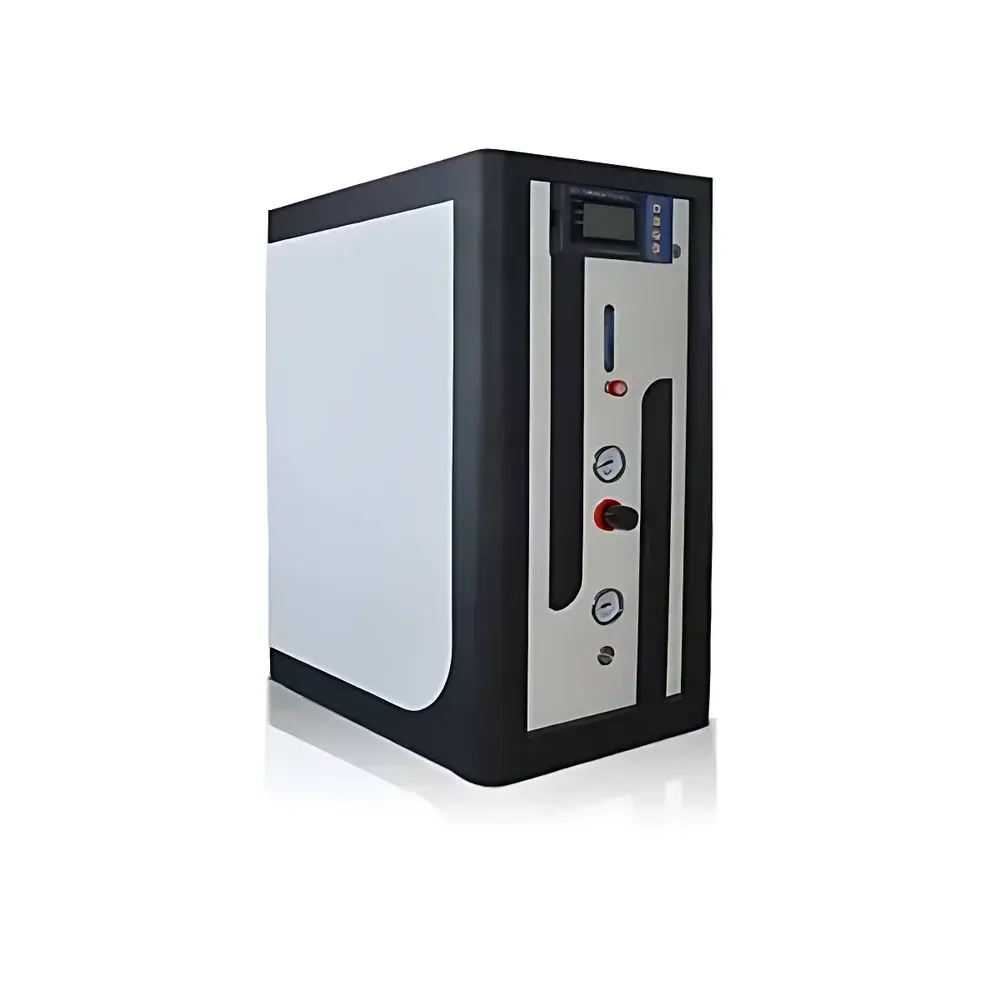
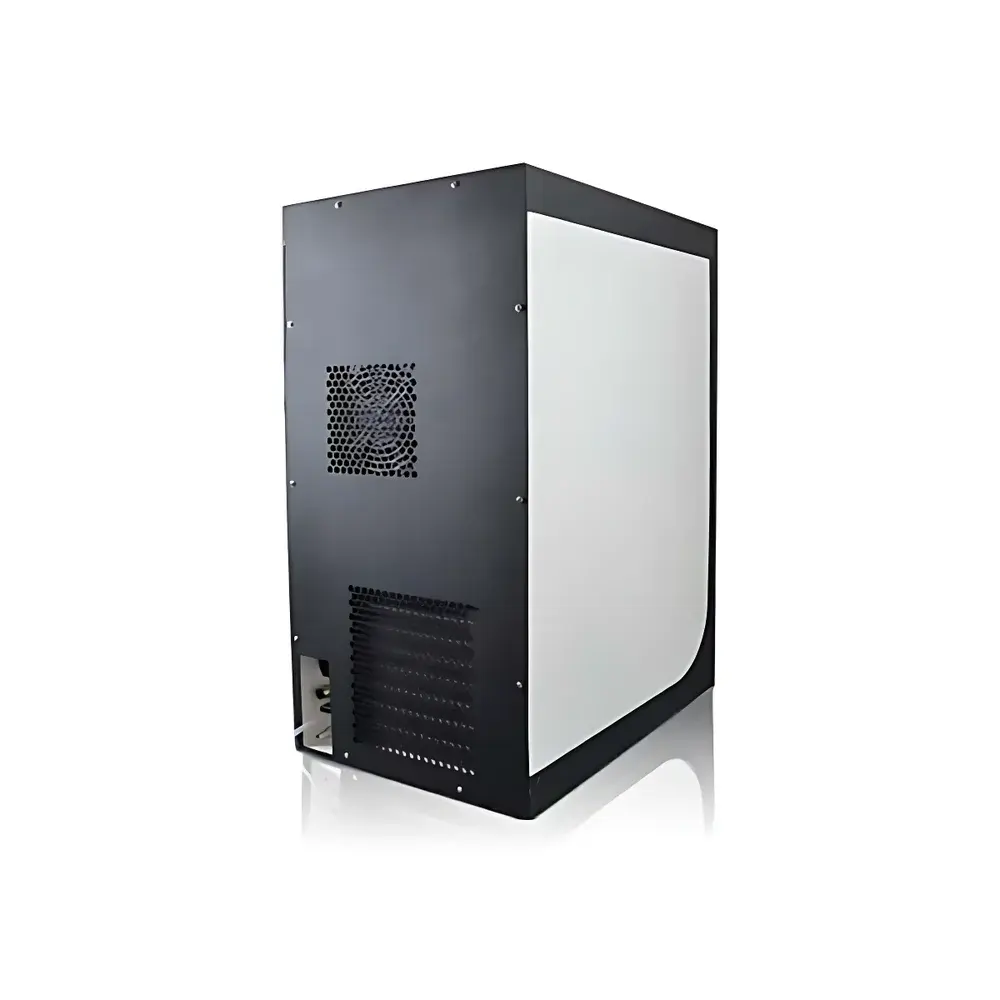
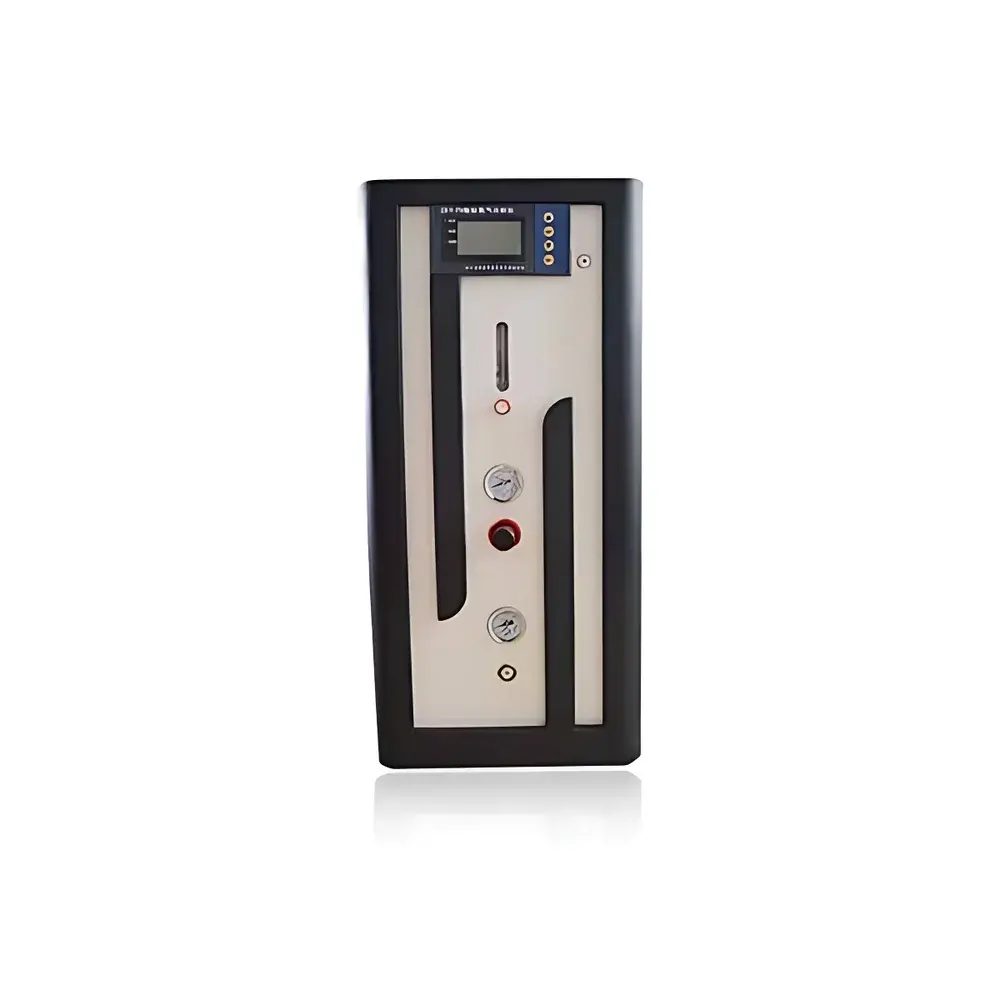
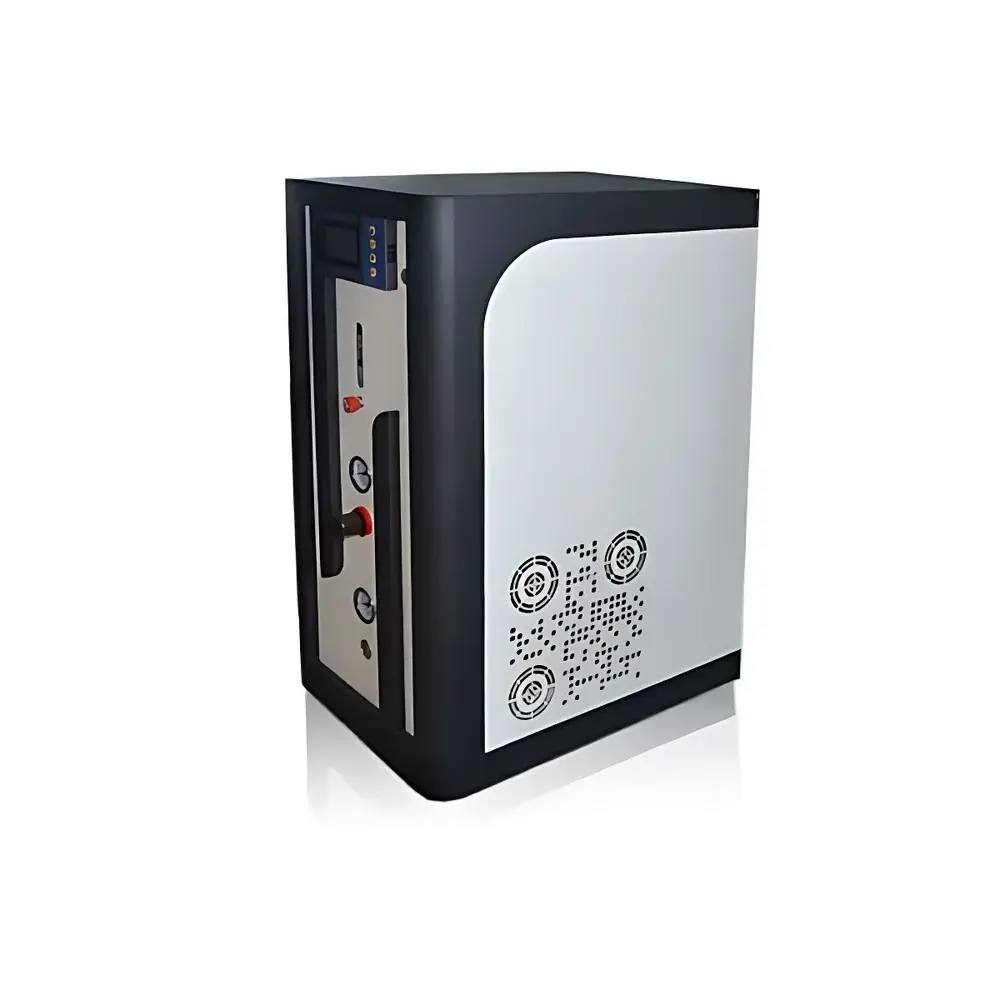
Anyan AYAN-30L High-Flow Membrane Nitrogen Generator for GC
| Brand | Anyan |
|---|---|
| Origin | Zhejiang, China |
| Model | AYAN-30L Membrane Nitrogen Generator |
| Nitrogen Generation Principle | Hollow-Fiber Membrane Separation |
| Output Flow Rate | 30 L/min |
| Output Pressure | 0.3 MPa |
| Nitrogen Purity | 99–99.9% |
| Dew Point | −40 °C |
| Filtration | Triple-Stage (Particulates < 0.01 µm |
| Power Consumption | 3200 W |
| Input Voltage | 380 V AC |
| Dimensions | 400 × 300 × 1300 mm |
Overview
The Anyan AYAN-30L High-Flow Membrane Nitrogen Generator is an engineered solution for laboratories requiring continuous, on-demand nitrogen supply at flow rates up to 30 L/min and purity levels between 99.0% and 99.9%. Unlike cryogenic or pressure swing adsorption (PSA) systems, this generator employs hollow-fiber membrane separation technology—where compressed ambient air is passed through selectively permeable polymeric membranes that allow oxygen, water vapor, and CO₂ to diffuse outward more rapidly than nitrogen, resulting in a nitrogen-enriched permeate stream. This principle delivers stable, maintenance-light operation without consumable adsorbents or periodic regeneration cycles. Designed specifically for gas chromatography (GC) carrier gas, purge gas, and detector (e.g., ECD, NPD) support, the AYAN-30L eliminates dependency on high-pressure cylinders while maintaining ISO 8573-1 Class 2:2:2 air quality compliance post-filtration. Its integrated buffer tank ensures pressure stability during transient demand spikes typical in multi-instrument GC labs.
Key Features
- Hollow-fiber membrane module sourced from South Korea—engineered for long-term flux stability and resistance to hydrocarbon fouling.
- Triple-stage filtration system: coalescing pre-filter (0.1 µm), activated carbon adsorber (removes oil vapor and trace VOCs), and ultrafine particulate filter (<0.01 µm, ≤0.003 mg/m³ oil/water aerosol).
- Digital real-time display of nitrogen purity (%N₂), output flow (L/min), and system pressure (MPa)—calibrated against trace oxygen electrochemical sensors with ±0.1% accuracy.
- Dual independent pressure regulation: primary stage for compressor discharge pressure control; secondary stage for precise instrument-line pressure delivery (adjustable 0–0.6 MPa).
- Integrated 12-L buffer tank with ASME-certified safety relief valve (set at 0.8 MPa) and pressure-hold logic to minimize compressor cycling.
- Microprocessor-based controller with automated start-up sequence, thermal overload protection, low-flow shutdown, and self-diagnostic fault logging (e.g., filter saturation, membrane differential pressure drift).
- Modular chassis design (400 × 300 × 1300 mm) optimized for floor-standing installation beneath fume hoods or alongside GC workstations—no external venting or cooling required.
Sample Compatibility & Compliance
The AYAN-30L is validated for use with all major GC platforms requiring nitrogen carrier gas—including Agilent, Thermo Fisher, Shimadzu, and PerkinElmer systems—as well as nitrogen-sensitive detectors (ECD, NPD, TCD). Its output meets ASTM D6349-20 specifications for GC-grade nitrogen (O₂ ≤ 10 ppmv, H₂O ≤ 1 ppmv dew point −40 °C, total hydrocarbons ≤ 0.1 ppmv). The unit complies with IEC 61000-6-3 (EMC emissions) and IEC 61000-6-2 (immunity), and its electrical architecture conforms to CE Low Voltage Directive 2014/35/EU. While not intrinsically safe for Zone 1 hazardous areas, it satisfies general laboratory safety requirements per NFPA 55 and OSHA 1910.101 when installed in ventilated, non-classified spaces.
Software & Data Management
The embedded controller supports RS-485 Modbus RTU communication for integration into centralized lab infrastructure monitoring systems. Logged parameters—including runtime hours, cumulative flow volume, purity deviation alerts, and filter service intervals—are exportable via USB-C port in CSV format. Audit-trail functionality records all operator-initiated parameter changes and system events with timestamps, supporting GLP-compliant documentation. No proprietary software is required; data ingestion is compatible with LabVantage, STARLIMS, and custom SCADA interfaces. Firmware updates are performed offline via encrypted firmware packages verified with SHA-256 checksums.
Applications
- GC carrier gas supply for capillary column analysis (isothermal and temperature-programmed runs).
- Purge-and-trap sample introduction systems requiring inert, dry nitrogen sweep gas.
- Electron capture detection (ECD) where oxygen and moisture must be minimized to preserve baseline stability.
- Nitrogen blanketing during solvent evaporation in sample prep workflows.
- Calibration gas dilution systems requiring stable, low-oxygen background gas.
- Long-duration unattended analyses (e.g., environmental monitoring, pharmaceutical stability testing) where cylinder replacement would introduce operational risk.
FAQ
What is the expected service life of the membrane module?
Under continuous operation at rated flow and inlet air meeting ISO 8573-1 Class 4:4:4 specifications, the membrane stack typically maintains ≥95% of initial separation efficiency for ≥15,000 operating hours (≈1.7 years @ 24/7), with no scheduled replacement required.
Can this generator supply multiple GC instruments simultaneously?
Yes—when configured with a manifolded distribution panel and appropriately sized stainless-steel tubing (¼″ OD, ≤15 m total length), the AYAN-30L reliably serves up to three mid-range GC systems with combined peak demand ≤25 L/min.
Does the unit require external cooling or ventilation?
No. The compressor and membrane housing operate within ambient lab temperatures (10–35 °C); heat dissipation is passive via convection fins—no dedicated exhaust ducting is needed.
How often must filters be replaced?
Pre-filter and activated carbon elements are rated for 6,000 hours or 12 months (whichever occurs first); the final particulate filter requires replacement every 3,000 hours under typical lab air conditions.
Is the nitrogen output compliant with USP for pharmaceutical residual solvent analysis?
Yes—when operated with clean, oil-free compressed air feed and maintained per manufacturer schedule, output meets USP requirements for nitrogen used in GC methods (O₂ ≤ 10 ppm, H₂O ≤ 1 ppm, total hydrocarbons ≤ 0.1 ppm).
Related Products



