
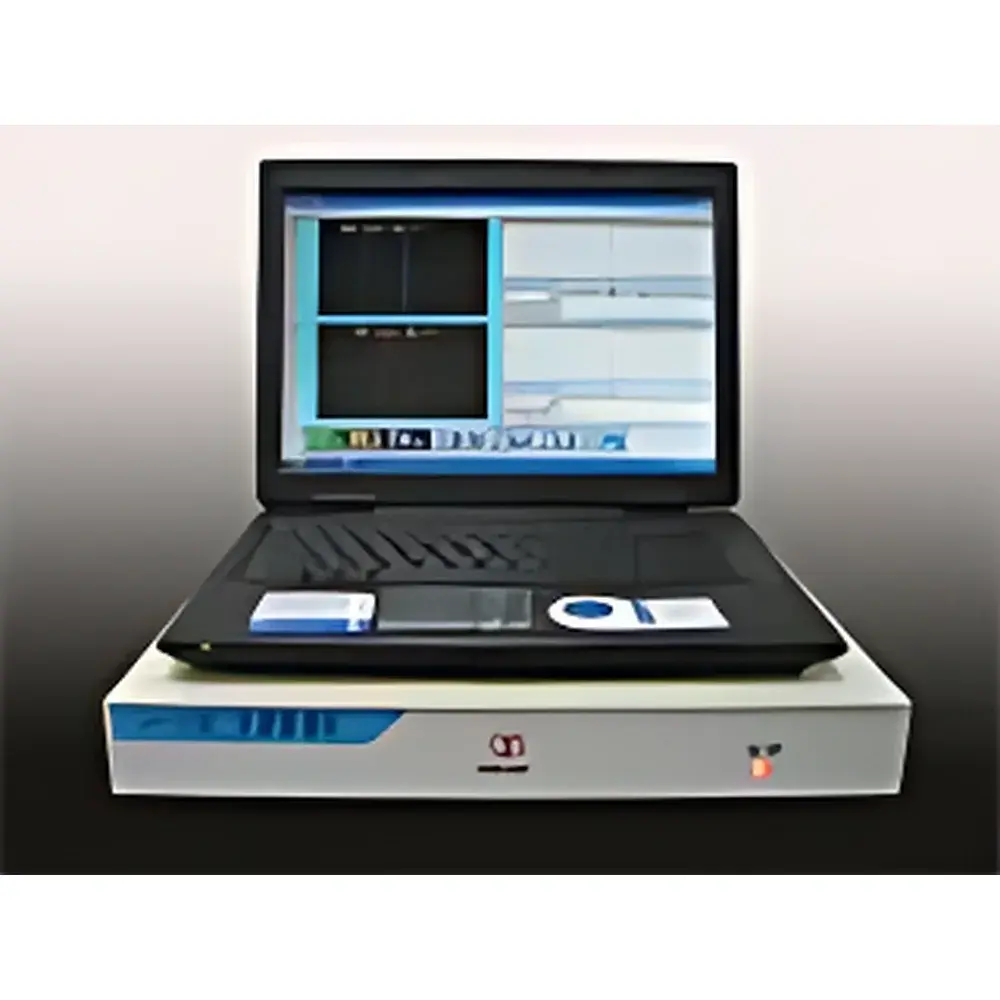
Chengyi JP-2E Oscilloscopic Polarograph
| Brand | Chengyi |
|---|---|
| Origin | Sichuan, China |
| Manufacturer Type | Authorized Distributor |
| Country of Origin | China |
| Model | JP-2E |
| Price Range | USD 4,200 – 7,000 |
| Sensitivity | <5×10⁻⁸ mol/L (Cd²⁺, linear sweep polarography) |
| Resolution | <32 mV |
| Anti-interference Ratio (pre-reduction substances) | >20,000:1 |
| Repeatability Error | <0.4% |
| Range Switching Error | <0.4% |
| Current Range | 15 nA – 400 µA F.S., 23 programmable ranges |
| Polarization Potential | ±4000 mV, min. step 2 mV |
| Scan Rate | 50–1000 mV/s |
| Scan Amplitude | 50–1000 mV |
| Cycle Time | 2–22 s |
| Power Supply | AC 220 V ±10%, 50 Hz |
| Weight | ~15 kg |
Overview
The Chengyi JP-2E Oscilloscopic Polarograph is a benchtop electrochemical analyzer engineered for high-fidelity voltammetric trace analysis in regulated and research-grade laboratory environments. Based on classical dropping mercury electrode (DME) polarography and modern digital signal acquisition, the JP-2E implements linear sweep polarography (LSP), differential pulse polarography (DPP), square-wave voltammetry (SWV), anodic/cathodic stripping voltammetry (ASV/CSV), and cyclic voltammetry (CV), with real-time first- and second-derivative transformation capabilities. Its core measurement principle relies on controlled-potential electrolysis at a renewable mercury surface, where diffusion-controlled faradaic current is quantitatively related to analyte concentration via the Ilkovic equation. Designed for reproducible micro-molar to sub-nanomolar detection—validated at <5×10⁻⁸ mol/L for Cd²⁺ under LSP—the instrument supports rigorous quantitative workflows in environmental monitoring, metallurgical QA/QC, pharmaceutical impurity profiling, and food safety testing.
Key Features
- Computer-controlled potentiostat with integrated oscilloscope display and real-time polarogram rendering
- 23-step programmable current range (15 nA – 400 µA F.S.), enabling seamless adaptation across trace and bulk concentration regimes
- Precise polarization control: ±4000 mV range with 2 mV resolution and programmable scan rates (50–1000 mV/s)
- Automatic compensation for capacitive and residual (charging) currents, enhancing signal-to-noise ratio in low-current measurements
- Onboard waveform analysis: automated peak height, half-wave potential (E₁/₂), and peak width extraction from raw or derivative polarograms
- Three validated quantitative methods: calibration curve, standard addition, and single-point standard comparison—with regression statistics (R², slope, intercept) displayed and exportable
- Non-volatile data retention: all experimental parameters, method configurations (up to five user-defined + one universal), and acquired curves are saved automatically—even during power interruption
Sample Compatibility & Compliance
The JP-2E accommodates aqueous and mixed-aqueous electrolyte solutions compatible with mercury-based electrodes, including acidic (e.g., 0.1 M HCl, 1 M HNO₃), buffered (acetate, phosphate), and supporting electrolyte systems (KCl, KNO₃). It supports direct analysis of digested soil extracts (Mo, W, Sn), biological tissue homogenates (leaf Mo), food colorants (azo dyes), and environmental water matrices (Pb, Zn, Cd in wastewater). Method protocols align with ASTM D3559 (lead in water), ISO 8692 (freshwater toxicity testing), and USP <798> guidelines for electrochemical impurity verification. While not FDA 21 CFR Part 11–certified out-of-the-box, its audit-trail-capable software architecture permits configuration for GLP/GMP-compliant environments when deployed with validated IT infrastructure and procedural controls.
Software & Data Management
The JP-2E operates via Windows-native application software providing full method development, instrument control, and post-acquisition processing. All polarograms are rendered in vector format with multi-color overlay support for comparative analysis. Raw current-potential datasets export directly to CSV or Excel-compatible formats; metadata (timestamp, operator ID, method name, instrument serial) is embedded. Curve libraries support versioned storage, recall, annotation, and batch statistical summarization (mean E₁/₂, %RSD, LOD estimation). Software enforces parameter locking per method and logs all user actions—including calibration events, range changes, and manual edits—to a timestamped activity log. Exported reports comply with ISO/IEC 17025 documentation requirements when paired with lab-specific SOPs.
Applications
- Multi-element sequential determination in geological samples (e.g., simultaneous W/Mo or Pb/Zn quantification in ore leachates)
- Trace heavy metal speciation in soil and plant tissues per EPA Method 7063 (cadmium, lead, thallium)
- Quality control of food-grade synthetic dyes (e.g., tartrazine, sunset yellow) via reduction wave analysis
- Pharmaceutical intermediate purity assessment (e.g., aniline derivatives in API synthesis streams)
- Environmental compliance testing: Cd²⁺ and Pb²⁺ in drinking water per WHO provisional guidelines (≤3 µg/L)
- Academic electrochemistry instruction: demonstration of diffusion-controlled kinetics, electron transfer reversibility, and adsorption effects
FAQ
What electrode configurations are supported?
The JP-2E is optimized for the classical dropping mercury electrode (DME) and static mercury drop electrode (SMDE); it also supports solid electrodes (e.g., glassy carbon, platinum) with appropriate accessory modules.
Is method validation support included?
Yes—the software includes built-in tools for linearity assessment (5–7 point calibration), limit of detection (LOD) calculation (3σ/slope), and precision evaluation (%RSD across n=6 replicates). Validation templates follow ICH Q2(R2) principles.
Can the instrument be integrated into a LIMS environment?
Raw data files (ASCII-based .POL format) and summary exports (.XLSX, .CSV) are LIMS-ready; API-level integration requires third-party middleware compliant with HL7 or ASTM E1384 standards.
What maintenance is required for long-term stability?
Routine maintenance includes weekly DME capillary cleaning, monthly reference electrode refilling (Ag/AgCl, 3 M KCl), and annual calibration verification using certified Cd²⁺ and Pb²⁺ standards traceable to NIST SRM 3108.
Does the system meet electromagnetic compatibility (EMC) requirements for EU labs?
The JP-2E complies with EN 61326-1:2013 (industrial EMC) and carries CE marking for laboratory use within the European Economic Area.




