
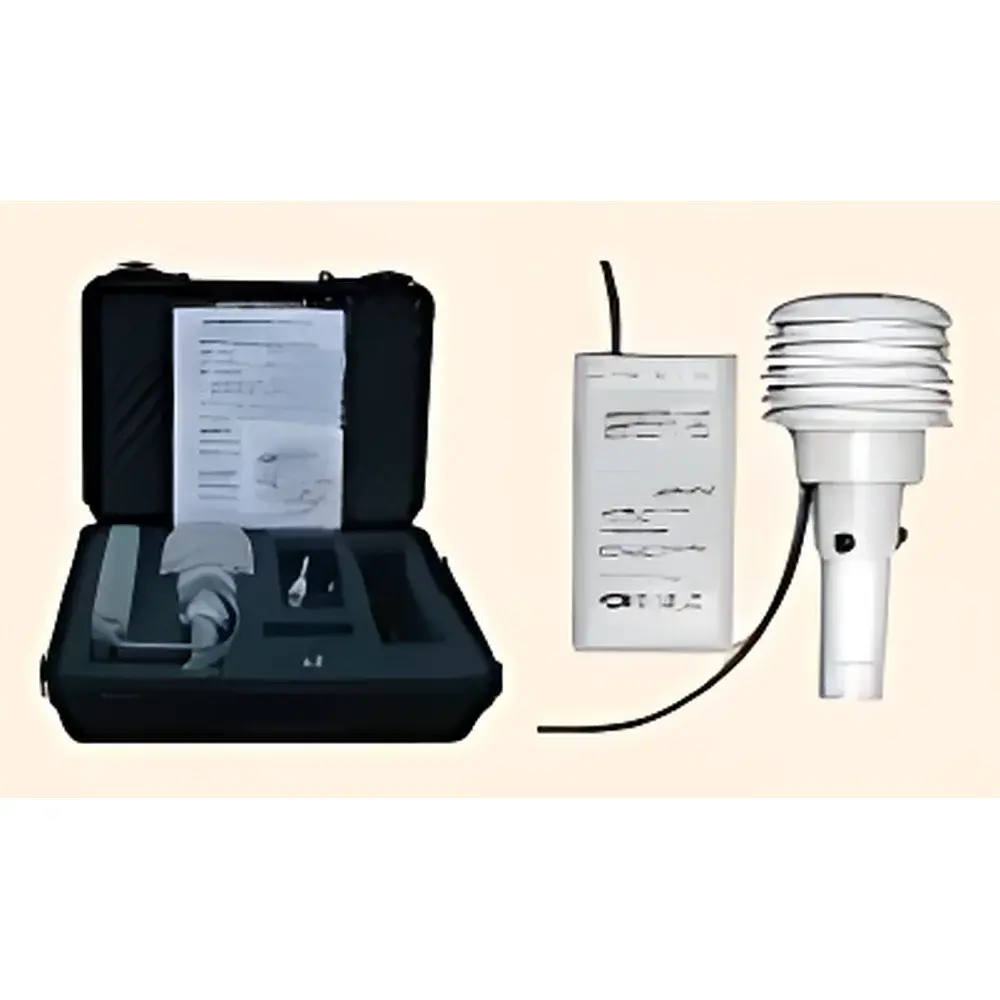
BGI deltaCal DC1 and tetraCal TC5 Portable Environmental Flow, Temperature & Pressure Calibrators
| Brand | BGI |
|---|---|
| Origin | USA |
| Model | deltaCal DC1 & tetraCal TC5 |
| Flow Range (deltaCal) | 1.5–19.5 L/min |
| Flow Range (tetraCal) | 0.1–30.0 L/min |
| Operating Temperature | −30 °C to +55 °C |
| Barometric Pressure Range | 400–800 mmHg (534–1066 hPa) |
| Temperature Measurement Range | −40 °C to +55 °C |
| Power | 4×AA batteries (20 hr) or universal 120/240 VAC adapter |
| Certifications | NIST-traceable calibration, ISO 9001 certified, compliant with U.S. EPA PM2.5/PM10 field verification requirements |
Overview
The BGI deltaCal DC1 and tetraCal TC5 are portable, NIST-traceable environmental calibrators engineered for high-accuracy field and laboratory verification of volumetric flow, ambient temperature, and barometric pressure in air and particulate matter (PM) sampling systems. Both instruments employ a precision-machined Venturi tube as the primary flow-sensing element—distinguished by >90% pressure recovery efficiency under low-pressure, high-altitude conditions—enabling true volumetric flow measurement without reliance on iterative correction algorithms or empirical compensation tables. This physical principle ensures metrological integrity across dynamic environmental gradients, including sub-zero temperatures (−30 °C), low atmospheric pressures (<400 mmHg), and variable humidity—conditions routinely encountered during FRM (Federal Reference Method) and FEM (Federal Equivalent Method) compliance audits for PM2.5 and PM10 samplers. Unlike orifice-based or thermal mass flow calibrators, the deltaCal and tetraCal deliver direct, real-time volumetric flow readings traceable to SI units via NIST’s primary standards, satisfying the stringent requirements of U.S. EPA 40 CFR Part 53, ISO 12103-1, and EN 12341 for gravimetric aerosol monitoring.
Key Features
- True volumetric flow calibration using a NIST-characterized Venturi tube—no moving parts, no zero drift, no recalibration required between uses
- Simultaneous real-time measurement of volumetric flow rate, ambient temperature, barometric pressure, and (on deltaCal) filter housing temperature
- Field-deployable rugged design: IP54-rated enclosure, −30 °C to +55 °C operational envelope, and battery-powered operation (20 hours on 4×AA alkaline cells)
- Integrated data logging with timestamped records; USB interface and proprietary software for CSV export, trend analysis, and audit-ready report generation
- Automatic range adaptation (tetraCal only): seamless transition across 0.1–30.0 L/min without manual scaling or sensor switching
- Compliance-ready documentation: each unit ships with NIST-traceable calibration certificate, ISO 9001 quality system documentation, and full uncertainty budget per ANSI/NCSL Z540-1
Sample Compatibility & Compliance
The deltaCal DC1 is optimized for FRM-compliant PM2.5 and PM10 samplers operating within 2–20 L/min, including BGI PQ-series, Thermo Fisher TEOM, and Met One BAM instruments. The tetraCal TC5 extends compatibility to ultra-low-flow applications (0.1 L/min), supporting personal exposure monitors (e.g., SKC IOM, Gilian GilAir), multi-stage impactors (Andersen, MOUDI), and high-flow DICOT (50 L/min) systems via optional flow adapters. Both calibrators meet U.S. EPA requirements for field verification under 40 CFR Part 53 Appendix A and Appendix C, support GLP/GMP audit trails through time-stamped calibration logs, and comply with FDA 21 CFR Part 11 when used with validated software configurations. They are referenced in ASTM D6330 (Standard Practice for Calibration of Low-Flow Air Samplers) and ISO 17025-accredited laboratories routinely use them for internal instrument qualification.
Software & Data Management
The included calibration management software supports Windows OS and provides secure, version-controlled data handling. Users can configure automatic calibration intervals, define pass/fail thresholds per EPA method criteria (e.g., ±2% flow accuracy for PM2.5 samplers), and generate PDF reports with embedded metadata—including operator ID, GPS coordinates (via optional Bluetooth module), calibration date, and environmental conditions at time of verification. All data files include cryptographic hash signatures to prevent tampering, fulfilling ALCOA+ (Attributable, Legible, Contemporaneous, Original, Accurate, Complete, Consistent, Enduring, Available) principles required under regulatory inspections. Audit logs record every parameter change, file export, and user login event—fully compliant with 21 CFR Part 11 electronic record requirements when deployed in validated environments.
Applications
- Field verification of FRM/FEM PM2.5 and PM10 samplers prior to and after scheduled maintenance cycles
- Performance validation of low-flow personal sampling pumps used in occupational hygiene assessments
- Calibration of multi-nozzle impactors and cascade impactors under variable altitude and temperature conditions
- Verification of continuous emission monitoring systems (CEMS) sample probe flow controllers
- Supporting ISO 17025 proficiency testing for environmental testing laboratories accredited to ISO/IEC 17025:2017
- Training and method development in university atmospheric science programs and EPA regional training centers
FAQ
Are deltaCal and tetraCal suitable for high-altitude calibration above 3,000 meters?
Yes. Both calibrators are explicitly designed for operation at barometric pressures as low as 400 mmHg (≈5,500 m elevation), maintaining traceability through NIST’s low-pressure flow standard facility.
Do these calibrators require annual recalibration?
While not mandatory annually, BGI recommends recalibration every 12 months or after 200 field verifications—whichever occurs first—to maintain NIST-traceable uncertainty statements per ISO/IEC 17025.
Can tetraCal TC5 be used to verify samplers with flow rates exceeding 30 L/min?
No. The tetraCal TC5 is rated for 0.1–30.0 L/min (volumetric). For higher flows, users must apply manufacturer-approved flow dividers or consult BGI for custom Venturi configurations.
Is the Venturi tube user-serviceable?
Yes. The Venturi assembly is accessible without tools; cleaning requires only isopropyl alcohol and lint-free swabs—no disassembly of pressure transducers or electronics.
Does the software support automated report generation for regulatory submissions?
Yes. Preconfigured templates align with EPA Form 2510 and EU EEA reporting formats; all generated reports include digital signatures, calibration certificate references, and uncertainty budgets.
Related Products







