
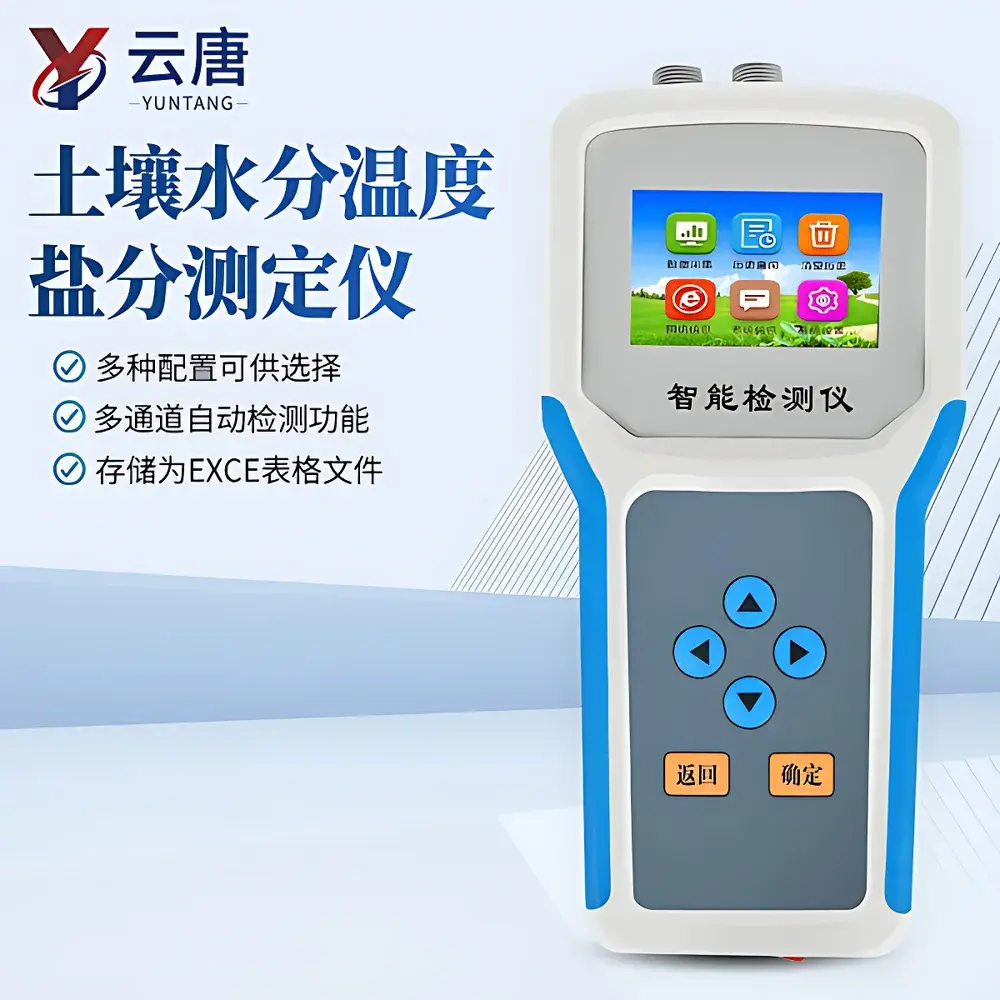
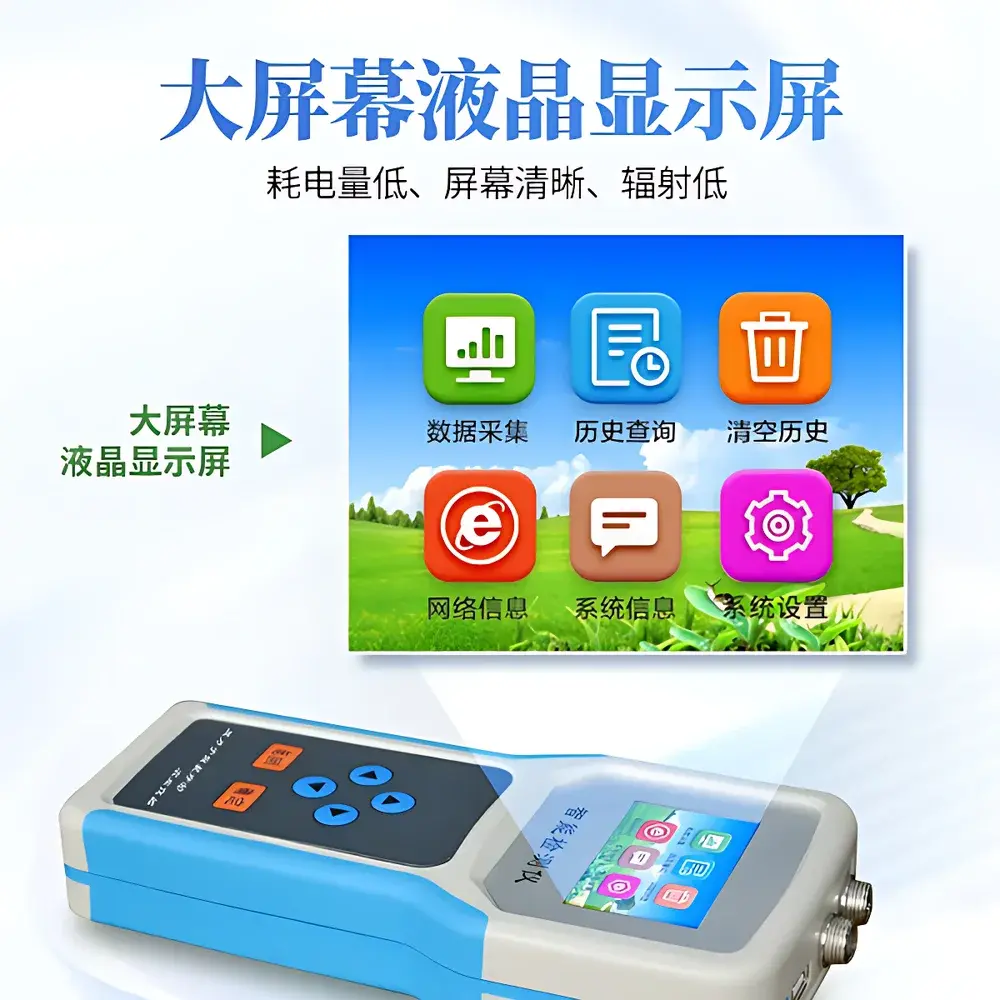
Yuntang YT-TY / YT-WSYP Integrated Soil Moisture, Temperature, EC and pH Meter
| Brand | Yuntang |
|---|---|
| Origin | Shandong, China |
| Manufacturer Type | Direct Manufacturer |
| Origin Category | Domestic (China) |
| Model | YT-TY / YT-WSYP |
| Price Range | USD 280 – 380 |
| Measurement Parameters | Volumetric Water Content (0–100 % m³/m³, ±2 % accuracy in 0–50 % range), Soil Temperature (−40 to +120 °C, ±0.2 °C), Electrical Conductivity (0–20 mS/cm, ±2 %), pH (0–14, ±0.2), Resolution: 0.1 % (moisture), 0.1 °C (temp), 0.1 mS/cm (EC), 0.1 (pH) |
| Sensor Integration | Tri-functional probe (moisture/temperature/EC), separate temperature-compensated pH composite electrode |
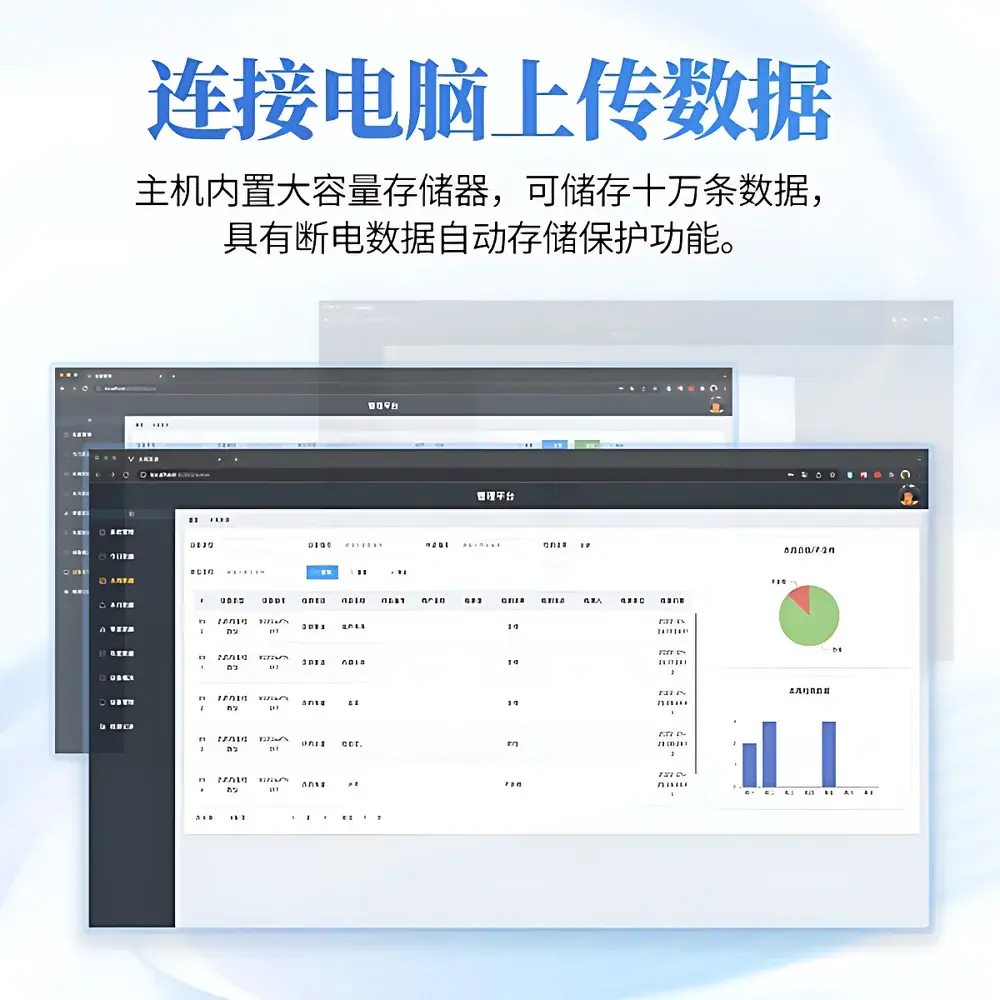
| Data Logging | Up to 300,000 records, user-configurable sampling interval, auto-recognition of connected sensors |
| Connectivity | USB data export, optional 4G module for cloud upload to agricultural IoT platform |
| Power | Rechargeable Li-ion battery + AC adapter |
| Dimensions | 10 × 21 × 3.5 cm |
| Compliance | Designed for field-deployable environmental monitoring per ISO 11277 (soil physical analysis), ASTM D5891 (soil moisture by TDR/FDR principles), and GLP-aligned data integrity practices |
Overview
The Yuntang YT-TY / YT-WSYP Integrated Soil Moisture, Temperature, EC and pH Meter is a field-portable, multi-parameter environmental sensor system engineered for high-reproducibility in-situ soil characterization. It operates on frequency-domain reflectometry (FDR) principles for volumetric water content measurement, combined with precision thermistor-based temperature sensing, conductometric determination of electrical conductivity (EC), and potentiometric pH assessment using a temperature-compensated glass-composite electrode. Unlike single-parameter handheld meters, this instrument integrates four critical soil health indicators into a unified acquisition workflow—enabling concurrent, time-synchronized readings across heterogeneous field sites. Its compact form factor and dual-power architecture (rechargeable Li-ion + AC input) support extended unattended deployment in remote agricultural plots, forest understories, watershed monitoring stations, and ecological research transects. The device is calibrated against NIST-traceable reference standards and validated per ASTM D5891 for moisture measurement uncertainty and ISO 11277 for soil physical property reporting consistency.
Key Features
- Tri-functional FDR probe co-measuring volumetric water content (m³/m³), soil temperature (°C), and bulk electrical conductivity (mS/cm) within a single stainless-steel housing—minimizing spatial sampling variance.
- Separate pH composite electrode with built-in automatic temperature compensation (ATC), ensuring stable calibration drift <0.01 pH unit/hour under field thermal gradients.
- Intelligent sensor auto-detection: Plug-and-play interface recognizes connected probe types and applies parameter-specific scaling algorithms without manual configuration.
- Configurable logging protocol: Sampling intervals from 1 minute to 24 hours; local storage capacity of 300,000 timestamped records with embedded low-battery warning and power-fail recovery.
- Optional 4G LTE module enables encrypted, TLS-secured transmission of time-series datasets to cloud-hosted agricultural decision platforms—supporting MQTT/HTTP(S) protocols and OAuth2 authentication.
- USB-C interface for direct data extraction; exported CSV/Excel files include metadata headers (sensor ID, UTC timestamp, GPS coordinates if paired, calibration epoch).
Sample Compatibility & Compliance
The YT-TY / YT-WSYP is validated for mineral soils (sand to clay loam), organic substrates (peat, compost), and amended horticultural media. It is not intended for highly saline (>30 mS/cm) or frozen soils. Probe insertion depth ranges from 5 to 20 cm, with minimal disturbance due to its 16-mm cylindrical profile. All measurements adhere to internationally recognized methodological frameworks: moisture quantification follows ASTM D5891 (FDR-based soil water content); EC values are reported as bulk conductivity at 25 °C, referenced to ISO 11265; pH measurements comply with ISO 10390 and EPA Method 9045D. The instrument’s firmware implements audit-trail logging per GLP requirements—recording operator ID, calibration events, and sensor swap history. While not FDA 21 CFR Part 11 certified out-of-box, raw data export formats are compatible with validated LIMS environments requiring electronic signature workflows.
Software & Data Management
The included Windows-compatible desktop software provides full traceability for field data curation. Users can visualize temporal trends via interactive line charts, apply statistical filters (moving average, outlier removal), and generate ISO-compliant summary reports (mean, SD, CV%, min/max). Critical threshold alerts are configurable per parameter—exceeding limits triggers color-coded cell highlighting in spreadsheet views and optional email/SMS notifications when integrated with the cloud platform. Data export supports UTF-8 encoded CSV, XLSX, and XML schemas compliant with FAO’s WaPOR database ingestion specifications. Firmware updates are delivered via signed binary packages, with SHA-256 hash verification to ensure integrity.
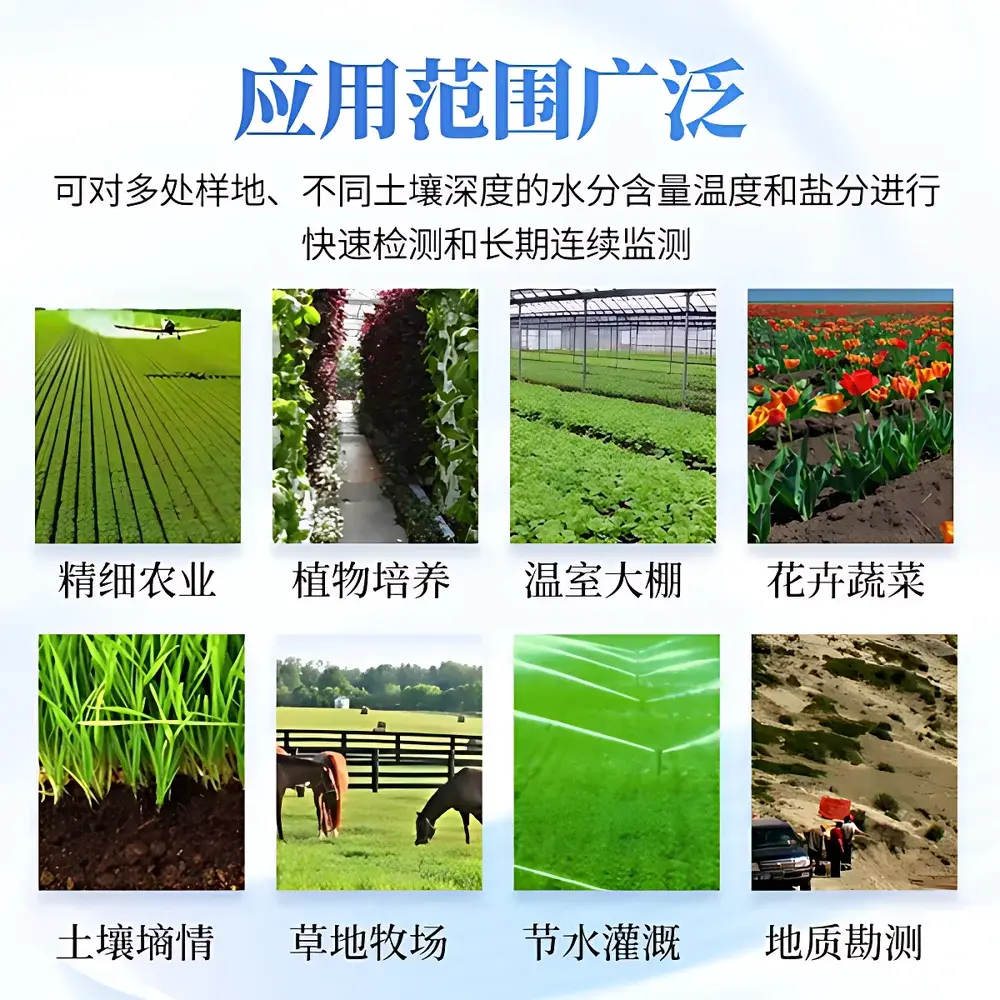
Applications
- Irrigation scheduling in precision agriculture: Real-time moisture–EC–temperature correlation identifies optimal watering windows and prevents leaching in drip/fertigation systems.
- Soil health monitoring for carbon sequestration projects: Long-term tracking of moisture dynamics informs modeling of microbial respiration rates and SOM decomposition pathways.
- Ecological restoration: Quantifying pH–EC–moisture gradients across reclamation sites supports native species selection and amendment strategy validation.
- Environmental impact assessment: Baseline surveys prior to construction or mining activities establish pre-disturbance soil hydrochemical profiles per ISO 14015 guidelines.
- Academic pedagogy: Used in undergraduate soil physics labs for hands-on validation of van Genuchten model parameters and solute transport simulations.
FAQ
What calibration standards are required for routine maintenance?
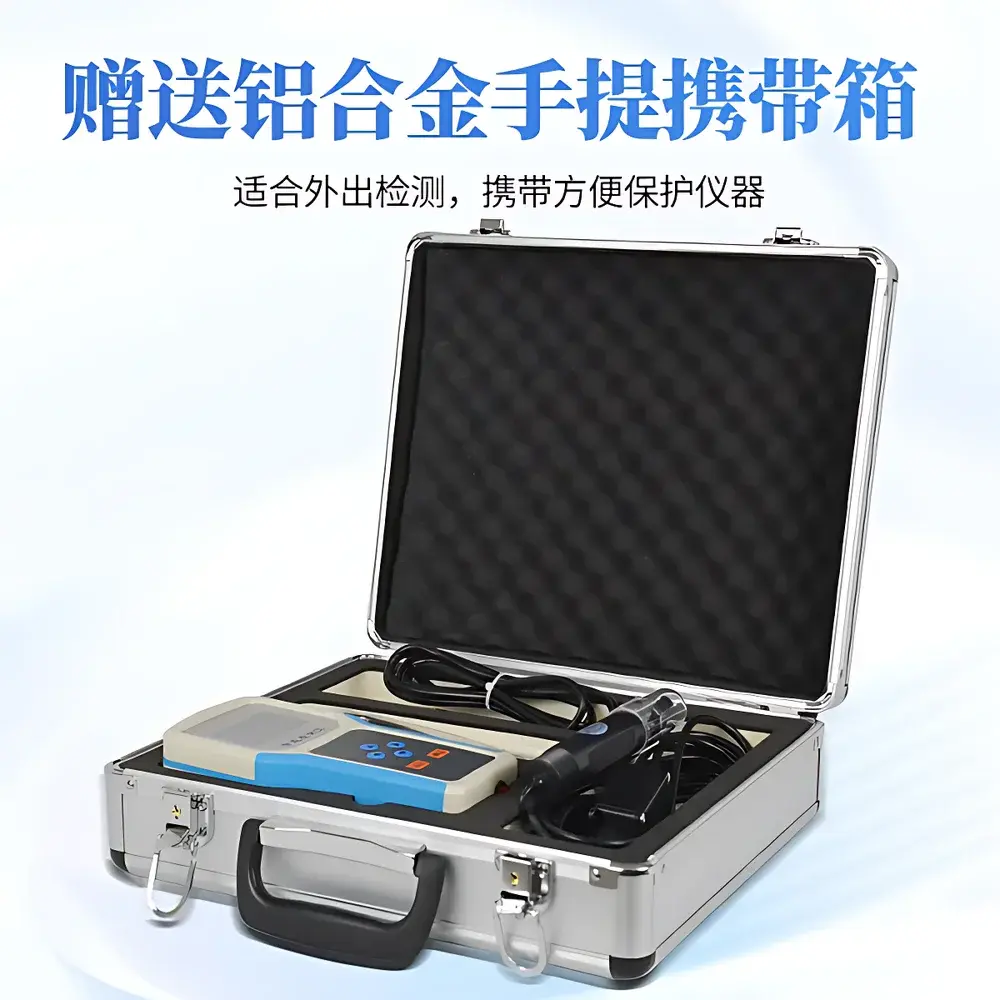
Factory calibration is performed using NIST-traceable reference soils (certified gravimetric moisture, buffer solutions pH 4.01/7.00/10.01, KCl standard solutions for EC). Field recalibration is recommended every 6 months or after 500 insertions—using the included calibration kit (pH buffers, EC standard, moisture reference gel).
Can the device operate continuously outdoors for >30 days?
Yes—when powered by the 12,000 mAh Li-ion battery and configured for 15-minute sampling intervals, typical runtime exceeds 35 days. Optional solar charging kits extend operation indefinitely in sun-exposed locations.
Is GPS geotagging supported natively?
The base unit does not include GNSS hardware, but it accepts external NMEA 0183 serial input from Bluetooth-enabled GPS receivers (e.g., Garmin GPS 19x HVS). Geotagged data fields populate automatically during USB sync.
How is data security handled in the cloud platform?
All transmissions use TLS 1.3 encryption; stored datasets reside in SOC 2 Type II–compliant cloud infrastructure. Role-based access control (RBAC) enforces read/write permissions per user group, and all API calls are logged for compliance auditing.
Does the instrument meet CE or FCC electromagnetic compatibility requirements?
Yes—certified to EN 61326-1:2013 (EMC for laboratory equipment) and FCC Part 15 Subpart B (Class B digital device), with test reports available upon request for regulatory submission.
Related Products







