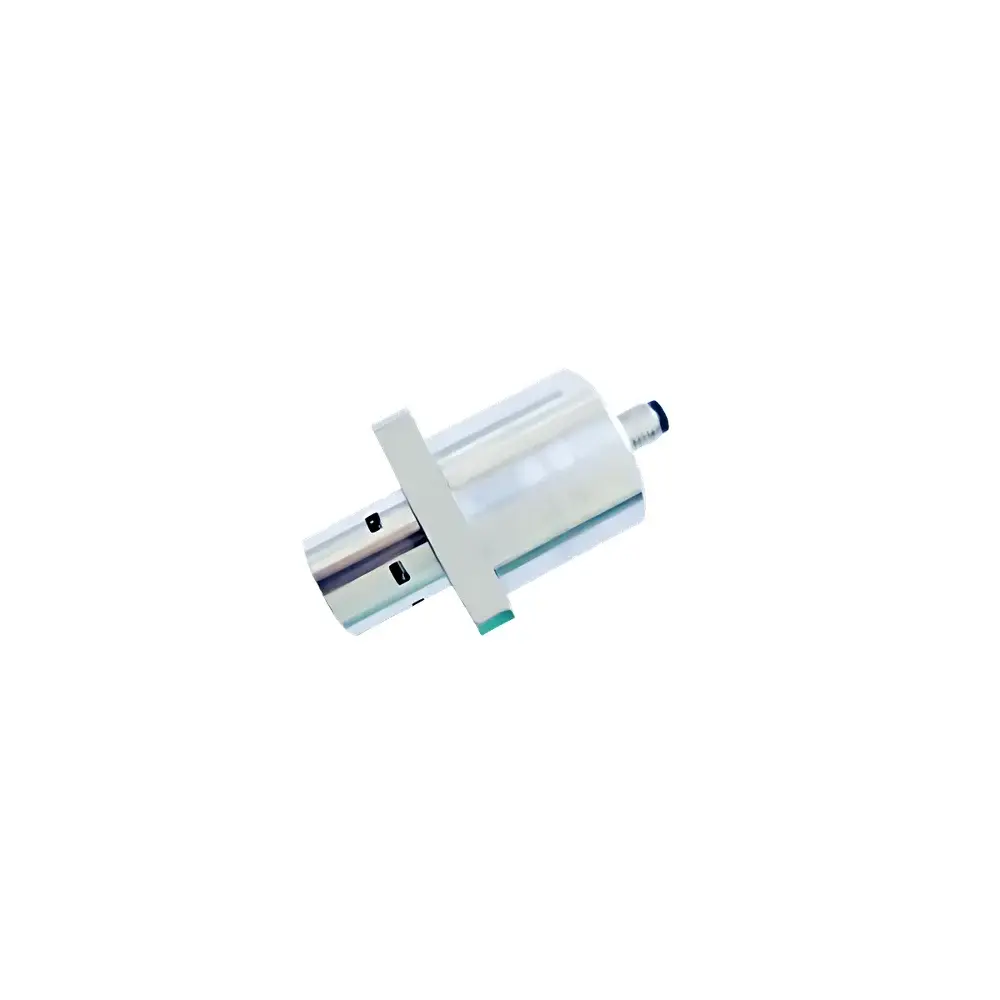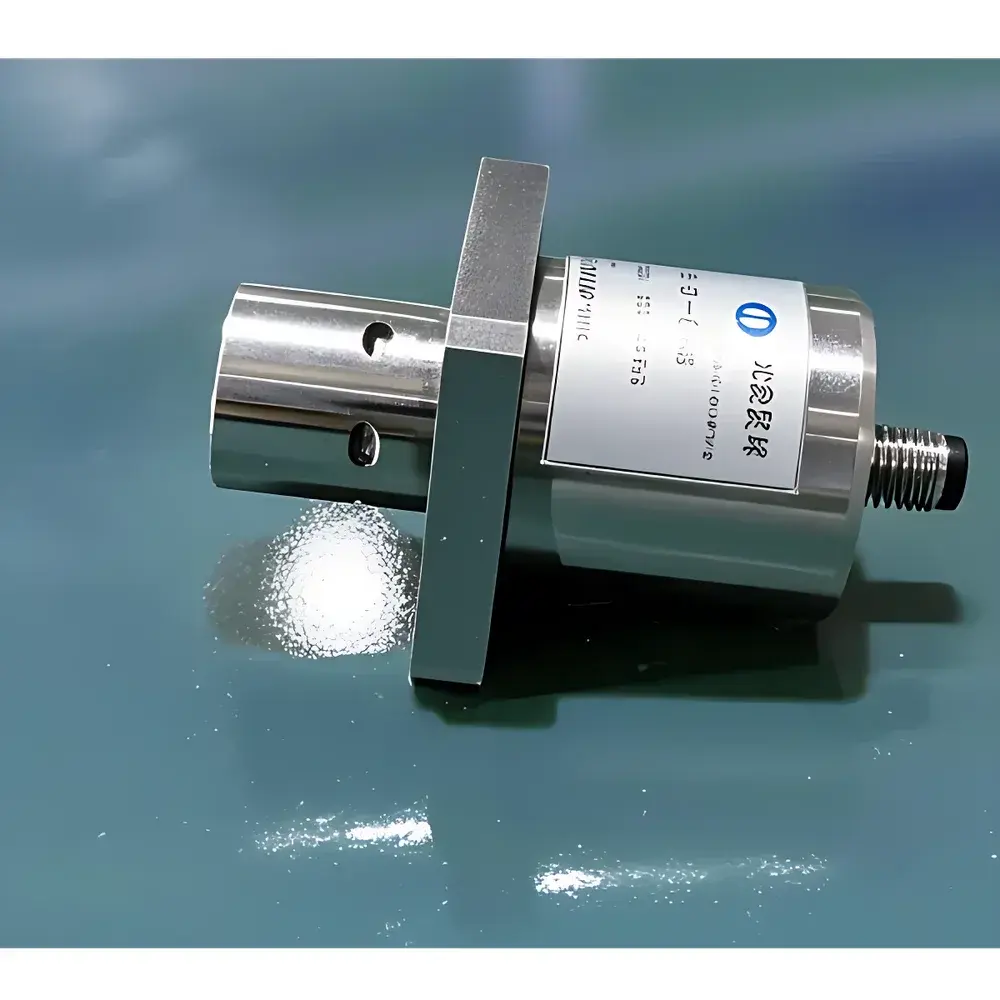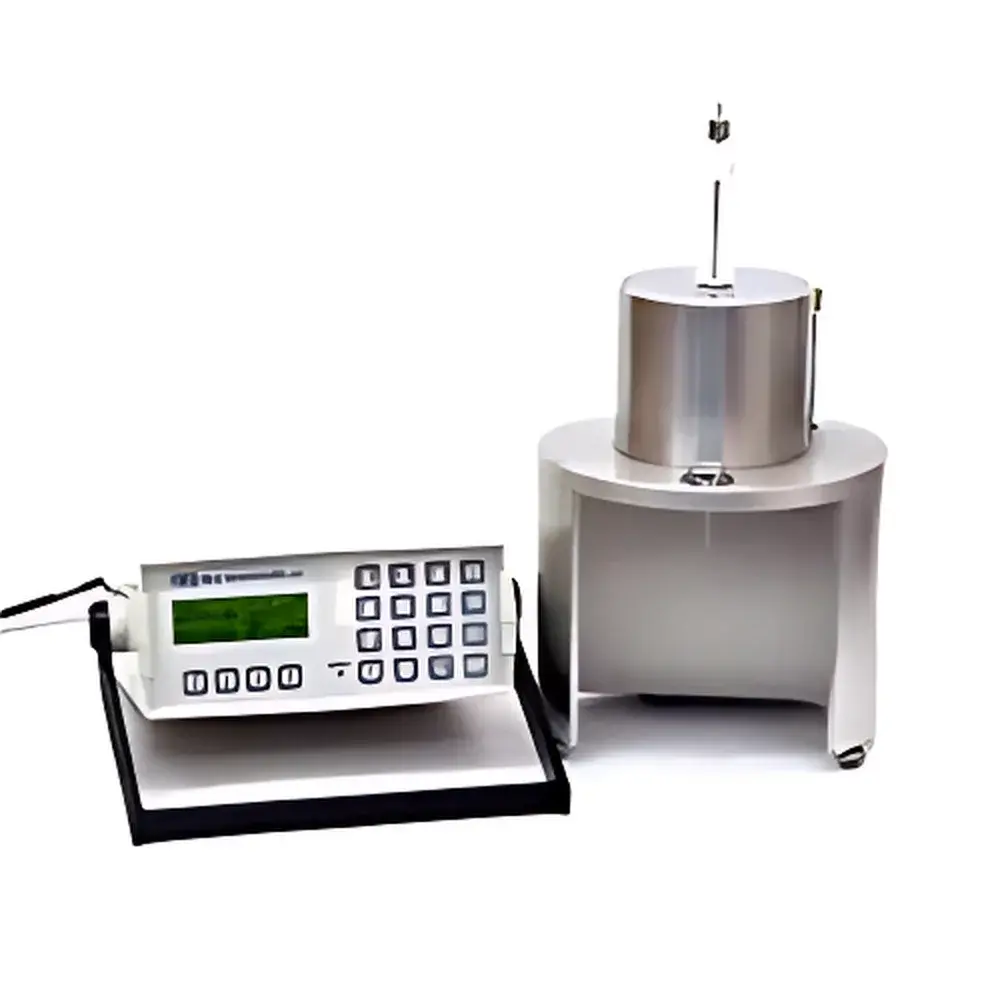
SBS DV-100 Disposable Falling-Needle Viscometer
| Brand | SBS |
|---|---|
| Origin | USA |
| Model | DV-100 |
| Viscosity Range | 0.7–10⁶ cP (mPa·s) |
| Temperature Range | 0–100°C |
| Accuracy & Repeatability | <1% |
| Sample Volume | 4.5 cm³ |
| Needle Material | Aluminum, Titanium, or Stainless Steel |
| Needle Density Range | 6–130 g/cm³ |
| Falling-Time Resolution | 0.001 s |
| Instrument Weight | 7.3 kg |
| Interface | RS-232 |
| Sample Tube | Disposable (reusable up to 30×) |
Overview
The SBS DV-100 Disposable Falling-Needle Viscometer is a precision-engineered instrument designed for absolute viscosity measurement of both Newtonian and non-Newtonian liquids using the falling-body principle. It operates on a well-established hydrodynamic principle: a calibrated metal needle falls under gravity through a fixed vertical column of sample fluid contained within a disposable insert tube. The terminal velocity—or equivalently, the time required for the needle to traverse a defined distance—is directly related to the fluid’s dynamic viscosity via Stokes’ law and its extensions for non-spherical geometries and finite-wall corrections. Unlike rotational or capillary viscometers, the DV-100 requires no calibration with reference oils; viscosity is derived from first principles using needle geometry, density, fluid temperature, and measured fall time—enabling traceable, SI-based absolute measurements. Its design eliminates mechanical wear by featuring only one moving part—the falling needle—making it inherently robust and maintenance-free over extended operational life.
Key Features
- Falling-needle methodology delivers absolute viscosity without reliance on calibration standards or shear-rate-dependent assumptions
- Integrated Peltier-based temperature control ensures stable thermal conditions across the full 0–100°C range, critical for temperature-sensitive formulations (e.g., polymer melts, pharmaceutical suspensions, and edible oils)
- Digital microprocessor console with RS-232 serial interface enables direct data logging to PC or printer; supports time-stamped, audit-ready output compliant with GLP/GMP documentation requirements
- High-resolution Hall-effect sensors coupled with an embedded magnet in the needle provide automatic, contactless timing resolution down to 0.001 seconds
- Interchangeable needle sets (aluminum, titanium, stainless steel) allow optimization for low-, medium-, or high-viscosity fluids while maintaining consistent geometric ratios
- Disposable polypropylene sample tubes (4.5 mL capacity) prevent cross-contamination between samples; validated for up to 30 reuses under controlled cleaning protocols
- Self-contained system requires no external pumps, baths, or ancillary hardware—ideal for QC labs, field deployment, and regulated manufacturing environments
Sample Compatibility & Compliance
The DV-100 accommodates a broad spectrum of liquid samples including aqueous and organic solutions, emulsions, suspensions, molten polymers, and biological fluids. Its ability to measure yield stress (via extrapolation of apparent viscosity vs. shear rate curves generated using multiple needle densities), intrinsic viscosity, and zero-shear-rate viscosity makes it particularly suitable for characterizing thixotropic, pseudoplastic, and viscoelastic systems. The instrument conforms to core principles outlined in ASTM D1200 (for efflux cup methods, adapted contextually), ISO 2555 (viscosity determination by falling-ball method), and USP <911> (rheological characterization of semisolid dosage forms). Data acquisition and storage support FDA 21 CFR Part 11 compliance when paired with validated third-party software for electronic signatures and audit trails.
Software & Data Management
SBS provides optional Windows-compatible software that interfaces with the DV-100 via RS-232 to automate multi-needle density sweeps, generate viscosity vs. temperature profiles, and compute yield stress using Casson or Bingham plastic models. Raw data files include metadata such as timestamp, ambient pressure, operator ID, needle serial number, and thermal equilibrium status. Export formats include CSV and XML for integration into LIMS platforms. All software modules undergo version-controlled release cycles with documented change logs, satisfying internal validation requirements for regulated laboratories operating under ISO/IEC 17025 or ICH Q5C guidelines.
Applications
- Quality control of industrial lubricants, transformer oils, and hydraulic fluids per ASTM D445 and D7042
- Routine viscosity screening of pharmaceutical syrups, gels, and ophthalmic solutions during formulation development
- Monitoring thermal degradation kinetics of thermoplastics and reactive resins during processing
- Characterization of sedimentation behavior in pigment dispersions and colloidal suspensions
- Teaching laboratories requiring hands-on demonstration of fundamental rheological concepts without complex setup
- On-site verification of batch-to-batch consistency in food manufacturing (e.g., sauces, dressings, dairy concentrates)
FAQ
Does the DV-100 require periodic recalibration?
No—its falling-needle design yields absolute viscosity values based on physical constants (needle density, geometry, gravitational acceleration) and measured fall time; calibration is not required provided needle dimensions and density are certified.
Can the instrument measure yield stress directly?
It does not output yield stress as a single-point reading, but enables its calculation by performing sequential measurements with needles of varying densities and fitting the resulting shear stress–shear rate data to established rheological models.
Is the disposable tube truly single-use?
The tube is supplied as disposable but has been validated for up to 30 clean, residue-free uses with appropriate solvents and drying protocols; reuse beyond this limit may compromise dimensional stability and measurement reproducibility.
What temperature accuracy is maintained during operation?
The Peltier module maintains fluid temperature within ±0.2°C of setpoint at steady state, verified with NIST-traceable immersion probes during factory acceptance testing.
How is compliance with regulatory data integrity standards ensured?
All firmware versions log immutable timestamps and sensor diagnostics; when used with validated software, full audit trails—including user actions, parameter changes, and data exports—are retained for ≥36 months per ALCOA+ principles.