
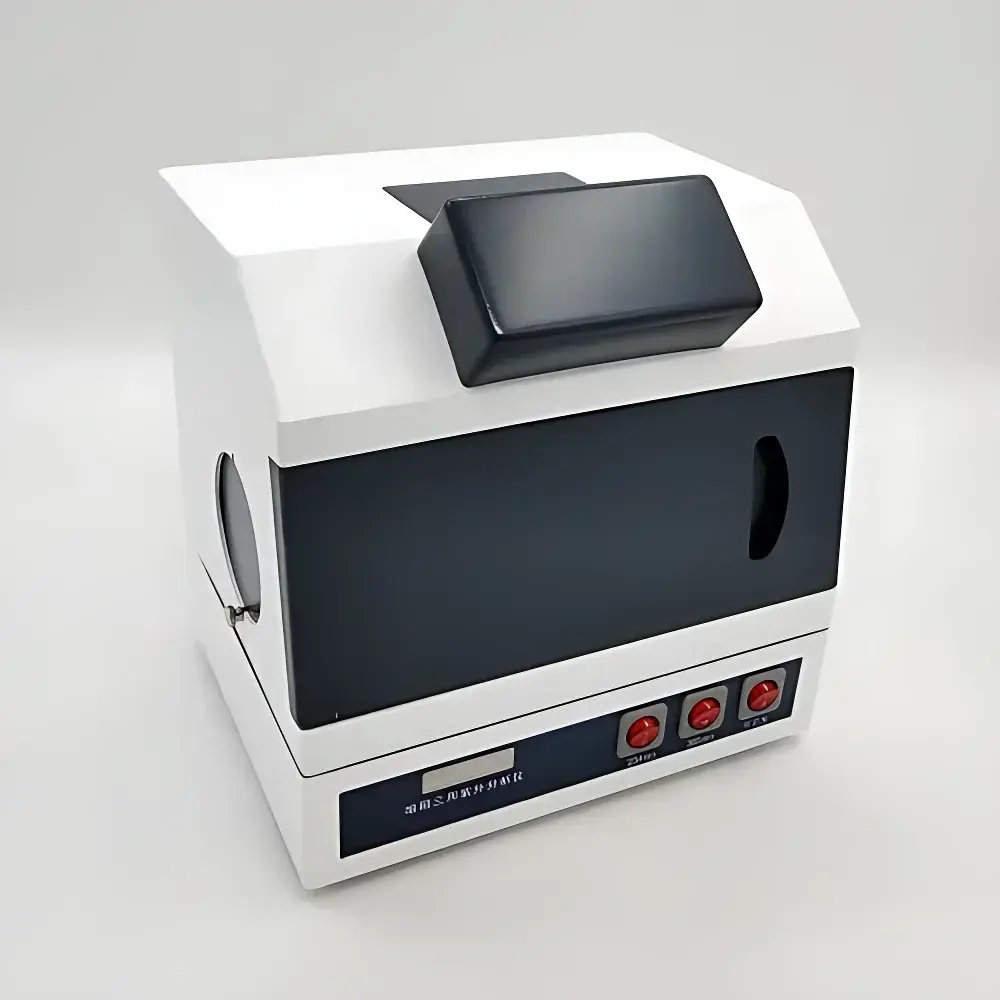
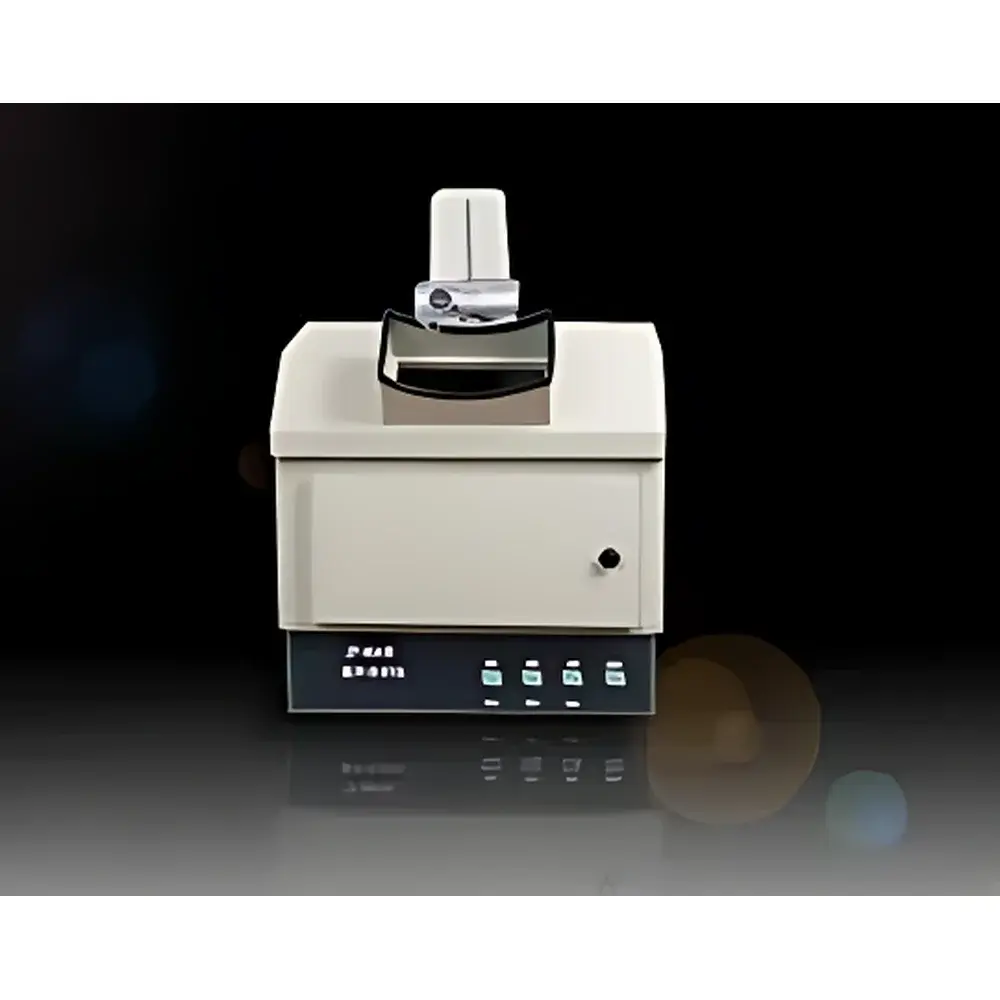
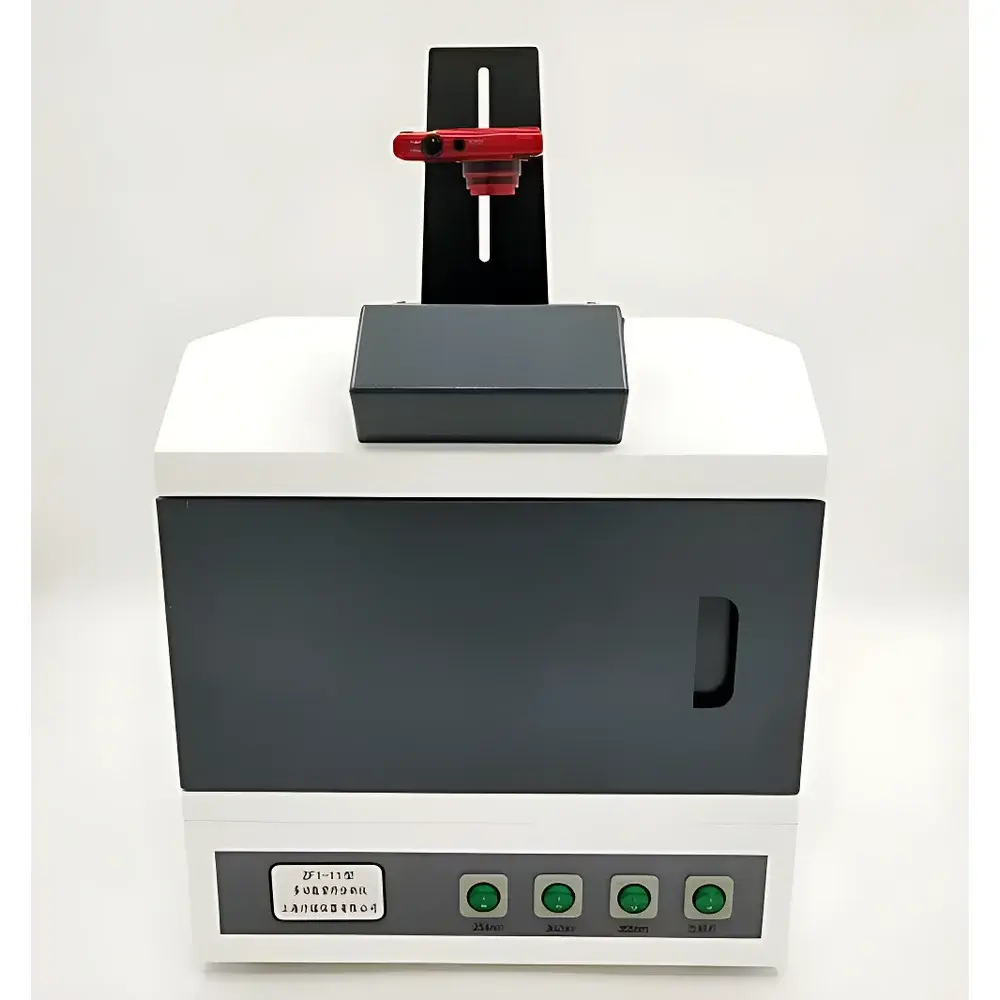
Hanuo ZF-1B Darkroom-Style Triple-Function UV Analyzer
| Brand | Hanuo |
|---|---|
| Origin | Shanghai, China |
| Model | ZF-1B |
| Instrument Type | Darkroom-style transilluminator |
| Wavelength Options | 254 nm (short-wave UV), 365 nm (long-wave UV), and visible light (4W) |
| UV Filter Glass Dimensions | 200 × 50 mm |
| UV Lamp Power | 6 W (each for 254 nm and 365 nm) |
| Input Voltage | 220 V AC |
| Compliance | Designed for laboratory-grade qualitative fluorescence visualization under controlled ambient conditions |
| Intended Use | Gel documentation, fluorescent compound screening, forensic sample inspection, and thin-layer chromatography (TLC) analysis |
Overview
The Hanuo ZF-1B Darkroom-Style Triple-Function UV Analyzer is a compact, benchtop fluorescence visualization system engineered for routine qualitative detection of ultraviolet-excitable compounds in life science and industrial laboratories. Operating on the principle of fluorescence excitation and emission, the instrument integrates three distinct illumination modes—254 nm short-wave UV, 365 nm long-wave UV, and white visible light—within a light-tight darkroom enclosure. This configuration eliminates ambient interference, enabling high-contrast visualization of nucleic acids stained with ethidium bromide or SYBR dyes, proteins labeled with fluorescent tags, and small-molecule analytes in chromatographic separations. Unlike open-frame transilluminators, the ZF-1B’s enclosed design ensures operator safety by minimizing direct UV exposure and supports reproducible imaging conditions essential for comparative gel analysis and documentation workflows.
Key Features
- Triple-wavelength illumination system: Independently switchable 254 nm (6 W), 365 nm (6 W), and visible white light (4 W) sources for versatile excitation across common fluorophores.
- Integrated darkroom enclosure: Rigid opaque housing with hinged viewing lid and built-in safety interlock to prevent accidental UV exposure during operation.
- Optimized optical path: Precision-cut 200 × 50 mm UV-transmitting filter glass ensures uniform intensity distribution and minimal spectral bleed between bands.
- Thermally stable lamp assembly: Low-power UV cold-cathode fluorescent lamps reduce heat buildup, preserving thermolabile samples such as agarose gels and TLC plates during extended observation.
- Modular power architecture: 220 V AC input with internal current regulation; compatible with standard laboratory power circuits without external transformers or stabilizers.
- Ergonomic sample placement: Flat, non-reflective black acrylic base plate facilitates alignment of electrophoresis gels, TLC plates, and forensic swabs under consistent illumination geometry.
Sample Compatibility & Compliance
The ZF-1B accommodates standard electrophoretic formats including mini-gels (up to 10 × 10 cm), TLC plates (20 × 20 cm), and cut-out gel fragments for excision. It supports common nucleic acid stains (e.g., ethidium bromide, GelRed™, SYBR® Safe), protein fluorescent dyes (e.g., Deep Purple™), and native fluorophores in pharmaceuticals and food contaminants (e.g., aflatoxins, riboflavin, quinine). While not certified for quantitative densitometry or GLP-compliant reporting, the instrument meets basic laboratory safety expectations for Class I UV devices per IEC 62471:2006 (Photobiological Safety of Lamps and Lamp Systems). Its design aligns with routine use requirements outlined in ASTM D7213 (Standard Practice for Fluorescence Detection in Thin-Layer Chromatography) and supports documentation practices referenced in ISO/IEC 17025:2017 for method validation in testing laboratories.
Software & Data Management
The ZF-1B operates as a standalone visualization tool without embedded digital imaging hardware. It is intended for integration with third-party documentation systems—including DSLR cameras, scientific CCD imagers, or smartphone-based capture rigs—mounted externally above the viewing window. Users may employ widely adopted open-source or commercial software (e.g., ImageJ, Fiji, AlphaView SA, or GelAnalyzer) for post-acquisition contrast adjustment, annotation, and comparative band intensity assessment. The unit does not include proprietary firmware, network connectivity, or audit-trail functionality; therefore, it is not subject to FDA 21 CFR Part 11 requirements. However, when used within documented SOPs alongside validated imaging peripherals, it supports traceable recordkeeping compliant with GLP and GMP-aligned quality control environments.
Applications
- Molecular biology: Rapid post-electrophoresis visualization of DNA/RNA bands in agarose and polyacrylamide gels; verification of PCR products, restriction digests, and cloning constructs.
- Pharmaceutical QC: Qualitative assessment of fluorescent impurities in APIs, excipients, and dosage forms; support for identity testing in USP Fluorescence Spectroscopy and monograph-based TLC methods.
- Food safety screening: Detection of mycotoxins (e.g., aflatoxin B1), synthetic dyes, and adulterants in raw agricultural commodities and processed foods.
- Forensic science: Examination of latent biological evidence (e.g., semen, saliva) treated with fluorescein or other UV-enhanced reagents; fiber and document authenticity verification.
- Materials science: Identification of fluorescent additives in polymers, rubber compounds, and coatings; evaluation of UV stabilizer efficacy in textile and plastic samples.
FAQ
Is the ZF-1B suitable for quantitative fluorescence densitometry?
No. It is designed for qualitative visualization only. Quantitative analysis requires calibrated imaging systems with pixel-intensity linearity, background subtraction algorithms, and NIST-traceable standards.
Can the unit be used with ethidium bromide-stained gels under UV 254 nm?
Yes—254 nm excitation is optimal for ethidium bromide–DNA complexes. However, prolonged exposure may cause DNA damage; limit illumination time to ≤60 seconds per gel for downstream applications such as cloning.
Does the ZF-1B include a camera or image capture capability?
No. It functions solely as an illumination platform. External imaging devices must be configured separately for documentation.
What safety certifications does this instrument carry?
It complies with general electrical safety standards for laboratory equipment (IEC 61010-1) and UV radiation hazard classification per IEC 62471. No CE or UL listing is provided; users must implement local institutional UV safety protocols.
Is the filter glass replaceable, and are alternate wavelengths available?
The 200 × 50 mm filter is fixed and optimized for 254/365 nm transmission. Custom filters (e.g., 302 nm or 470 nm blue-light variants) are not supported by the OEM design.




