
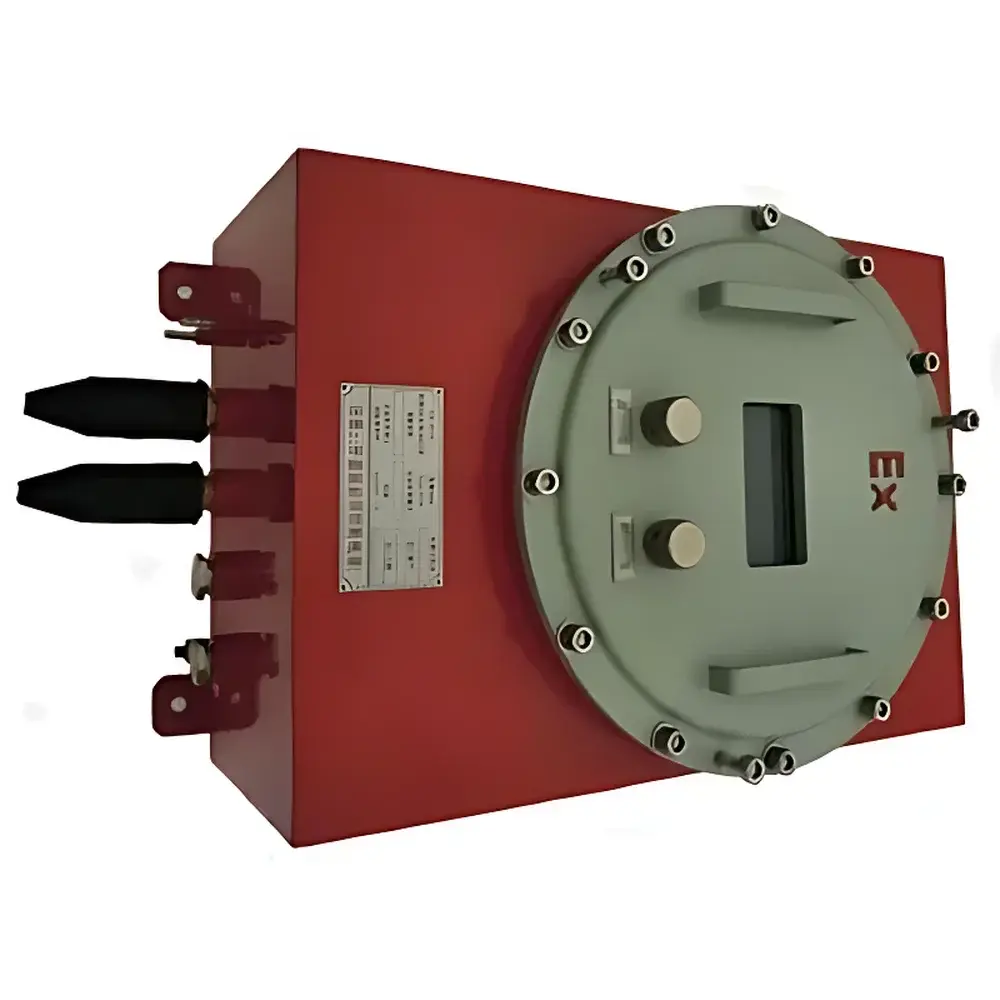
Junfang Lihua GXH-1050D Explosion-Proof Infrared Flue Gas Analyzer
| Brand | Junfang Lihua |
|---|---|
| Origin | Beijing, China |
| Manufacturer Type | Authorized Distributor |
| Product Origin | Domestic (China) |
| Model | GXH-1050D |
| Price Range | USD 1,400 – 7,000 |
| Instrument Type | Continuous Emission Monitoring System (CEMS) |
| Measurement Principle | Non-Dispersive Infrared (NDIR) |
| Accuracy | ≤ ±1% F.S. |
| Repeatability | ≤ ±1% F.S. |
| Response Time (T₀–T₉₀) | ≤ 15 s |
| Zero Drift | ≤ ±1% F.S. / 24 h |
| Span Drift | ≤ ±1% F.S. / 24 h |
| Linearity Error | ≤ ±1% F.S. |
| Detection Gases | CO, CO₂, CH₄, C₃H₈, H₂, O₂ |
| Minimum Range | 0–100 ppm |
| Maximum Range | 0–100% v/v |
| Flow Rate | 0.5–3 L/min |
| Operating Temperature | 0–40 °C |
| Relative Humidity | ≤ 90% RH (non-condensing) |
| Power Supply | 220 V ±10%, 50 Hz ±0.5 Hz, 150 W |
| Output Signals | 0–20 mA, 4–20 mA, 0–10 mV, 1–5 V (load ≤ 600 Ω, isolated) |
| Display | Digital concentration readout with dual-range capability (ppm and % v/v) |
Overview
The Junfang Lihua GXH-1050D Explosion-Proof Infrared Flue Gas Analyzer is a certified intrinsically safe NDIR (Non-Dispersive Infrared) analyzer engineered for continuous, real-time measurement of combustible and non-combustible gases in hazardous industrial environments. Designed in strict compliance with GB 3836.1–2010 (equivalent to IEC 60079-0) for explosion-proof electrical equipment, the GXH-1050D integrates a single-tube, dual-compartment optical cell—where one half serves as an analysis chamber and the other as a sealed reference chamber filled with high-purity nitrogen. A modulated infrared source (6.25 Hz) alternately irradiates both compartments; absorption by target gas molecules in the analysis side generates a differential thermal signal detected by a highly stable deuterated triglycine sulfate (DTGS) pyroelectric detector. Signal processing includes phase-sensitive demodulation, bandpass filtering, and multi-stage amplification—ensuring linear, low-drift DC output proportional to gas concentration across full-scale ranges from 0–100 ppm to 0–100% v/v. The instrument meets the functional safety requirements for use in Zone 1/21 classified areas and supports long-term deployment in boiler stacks, incinerator exhaust ducts, chemical process vents, and biogas upgrading facilities.
Key Features
- Explosion-proof certification per GB 3836.1–2010 (IEC 60079-0 compliant), suitable for Zone 1 and Zone 21 hazardous locations
- Robust NDIR optical architecture with dual-path single-cell design—eliminates alignment drift and reduces calibration frequency
- Pyroelectric DTGS detector with integrated temperature stabilization, delivering <±1% F.S. repeatability and <±1% F.S. zero/span drift over 24 hours
- Fast T₀–T₉₀ response time of ≤15 seconds under nominal flow conditions (0.5–3 L/min)
- Dual-range digital display supporting simultaneous ppm and % v/v readouts, configurable via front-panel interface
- Standard analog outputs (4–20 mA, 0–20 mA, 1–5 V) with galvanic isolation and load-insensitive performance up to 600 Ω
- Modular electronics architecture: separate preamplifier, main amplifier, and temperature-controlled power supply for field serviceability
Sample Compatibility & Compliance
The GXH-1050D is validated for direct in-situ or extractive measurement of CO, CO₂, CH₄, C₃H₈, H₂, and O₂ in flue gas streams containing particulates ≤10 µm, moisture ≤90% RH (non-condensing), and operating temperatures from 0 to 40 °C. It conforms to national emission monitoring standards including HJ 75–2017 and HJ 76–2017 for CEMS performance verification in China. While not pre-certified to EN 15267 or EPA Method 10, its NDIR methodology aligns with ASTM D6522 (for CO/CO₂), ISO 12039 (for CO/CO₂ in flue gas), and ISO 21087 (for CH₄ in biogas). The analyzer supports GLP-compliant operation through user-accessible calibration logs and timestamped zero/span records—facilitating internal QA audits and regulatory reporting.
Software & Data Management
The GXH-1050D operates as a standalone field instrument with no embedded PC or proprietary software dependency. All configuration—including range selection, output scaling, alarm thresholds, and unit preference—is managed via front-panel keypad navigation with LCD feedback. Calibration data (zero point, span point, date/time stamp) are stored in non-volatile memory and retrievable via serial RS-232 (optional) or analog output diagnostics. For integration into central SCADA or DCS systems, the 4–20 mA outputs comply with IEC 61131-3 signal conditioning protocols and support HART-compatible smart transmitters when paired with external interface modules. Audit trails meet basic FDA 21 CFR Part 11 readiness criteria for electronic record retention—provided external logging infrastructure is deployed.
Applications
- Continuous monitoring of combustion efficiency and pollutant emissions in coal-, gas-, and biomass-fired boilers
- Real-time composition analysis of landfill gas and anaerobic digester biogas (CH₄/CO₂/H₂ balance)
- Process safety surveillance in petrochemical flare stacks and hydrogen production units
- Regulatory compliance reporting for municipal solid waste incinerators under local environmental protection bureau mandates
- Quality control in syngas generation and catalytic reforming processes where O₂ breakthrough detection is critical
FAQ
What certifications does the GXH-1050D hold for hazardous area use?
It carries GB 3836.1–2010 certification for flameproof enclosure (Ex d) and intrinsic safety (Ex ib), permitting installation in Zone 1 (gas) and Zone 21 (dust) environments.
Can the instrument measure oxygen without electrochemical sensors?
No—the O₂ channel uses a paramagnetic or zirconia-based sensor (model-dependent); the NDIR module measures only IR-active gases (CO, CO₂, CH₄, C₃H₈, H₂).
Is field calibration possible without manufacturer tools?
Yes—zero calibration with high-purity N₂ and span calibration with certified gas mixtures can be performed using the front-panel interface and standard gas cylinders.
Does the analyzer support Modbus RTU or Ethernet communication?
Not natively—but optional RS-485/Modbus RTU interface modules are available as add-on accessories for PLC integration.
What maintenance intervals are recommended for long-term CEMS operation?
Optical window cleaning every 3 months, detector verification every 6 months, and full system calibration per HJ 75–2017 quarterly requirements.







