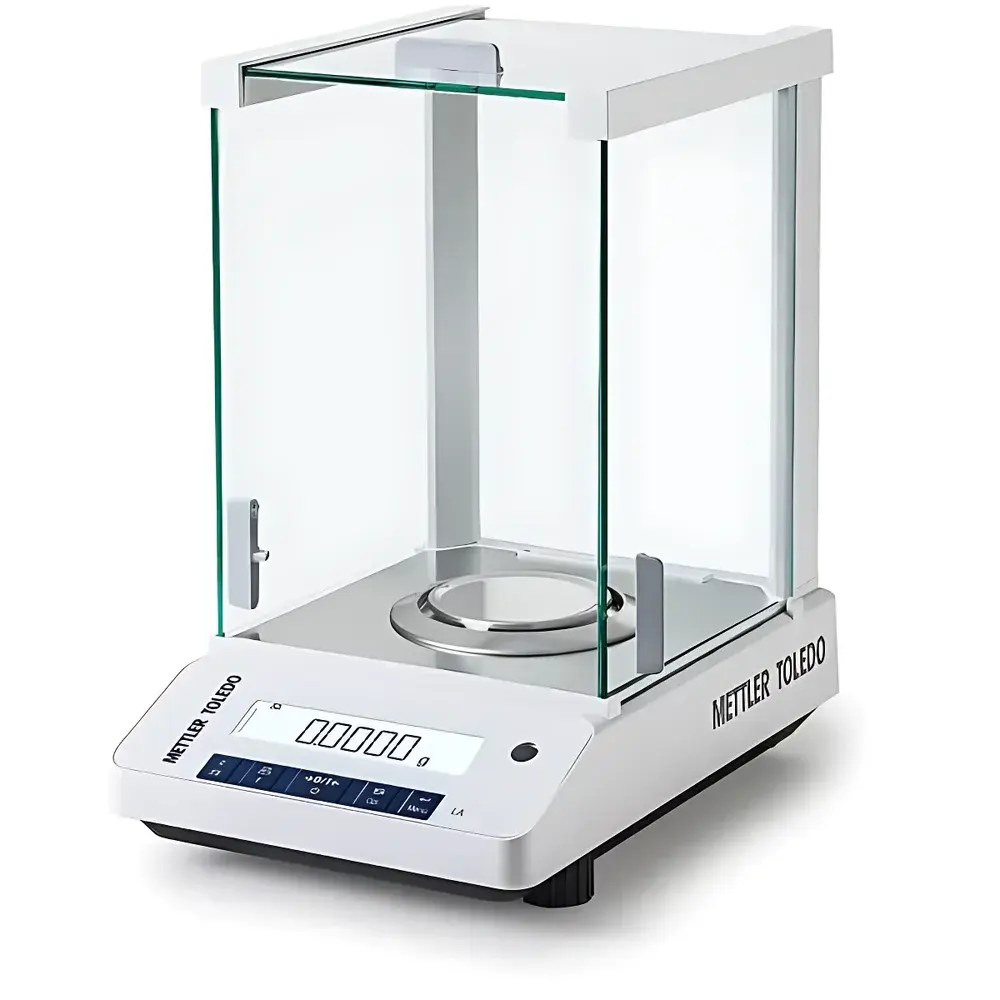
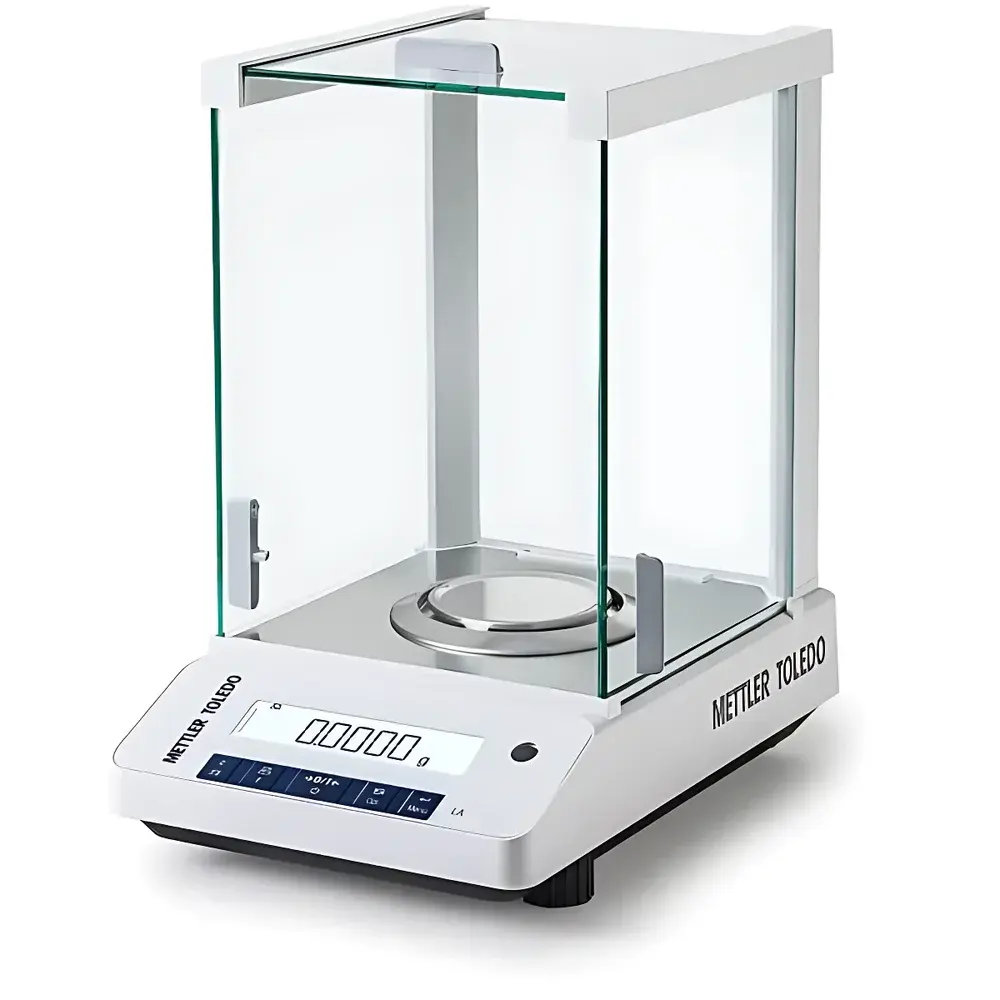
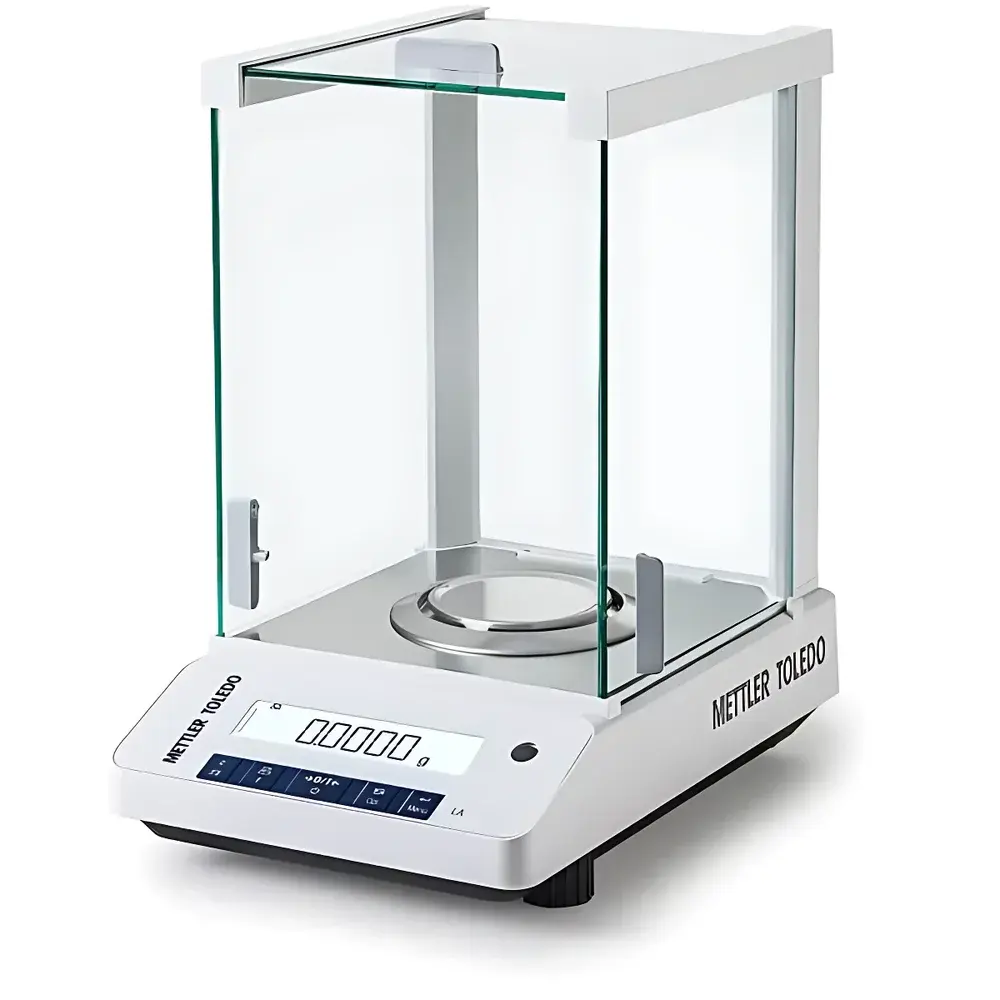
METTLER TOLEDO LA204/A Analytical Balance
| Brand | METTLER TOLEDO |
|---|---|
| Origin | Shanghai, China |
| Model | LA204/A |
| Instrument Type | Analytical Balance |
| Maximum Capacity | 220 g |
| Readability | 0.1 mg |
| Accuracy (Linearity) | ±0.2 mg |
| Repeatability | ≤0.08 mg |
| Calibration | Internal motorized calibration with built-in weights |
| Weighing Units | g, mg, kg, oz, ct, etc. |
| Draft Shield | Integrated glass draft shield |
| Compliance | Designed to support GLP/GMP documentation requirements and ISO/IEC 17025-compliant workflows |
Overview
The METTLER TOLEDO LA204/A Analytical Balance is a high-precision laboratory instrument engineered for routine analytical weighing tasks requiring reproducible sub-milligram resolution. Operating on electromagnetic force compensation (EMFC) principle, the balance delivers stable and drift-compensated measurements by dynamically balancing the gravitational force of the sample against a precisely controlled electromagnetic field. With a readability of 0.1 mg (100 µg) and a maximum capacity of 220 g, the LA204/A bridges the functional gap between ultra-micro and standard analytical balances—enabling accurate quantification of small-mass reference standards, pharmaceutical actives, catalysts, and prepared samples without compromising on load flexibility. Its robust mechanical architecture, combined with temperature-stabilized sensor electronics and intelligent environmental compensation algorithms, ensures consistent performance across typical laboratory conditions (20–25 °C, 40–60% RH). The balance is designed for integration into regulated environments where traceable, auditable, and repeatable mass measurement is foundational to method validation and quality assurance protocols.
Key Features
- Electromagnetic force compensation (EMFC) transducer delivering high linearity and long-term stability
- Internal motorized calibration system with integrated reference weights—activated via single-button press or scheduled automatic execution
- Integrated glass draft shield with optimized airflow geometry to minimize convective disturbances while maintaining ergonomic access
- Intelligent levelControl™ system with visual bubble indicator and adjustable feet for rapid, reliable leveling verification
- Multi-unit weighing interface supporting g, mg, kg, oz, ct, and % modes—configurable per user profile
- RS232 and optional USB interfaces compliant with industry-standard data export formats (e.g., ASCII, Sartorius-compatible, or custom delimiter)
- Auto-tare, auto-zero tracking, and programmable stabilization time to accommodate volatile or static-prone samples
Sample Compatibility & Compliance
The LA204/A accommodates a broad range of sample types—from hygroscopic powders and low-density polymers to dense metal alloys—within its 220 g capacity and 120 mm diameter pan geometry. Its draft shield design meets ISO 9001 and ISO/IEC 17025 recommendations for minimizing environmental influence on weighing results. While not certified for USP or ASTM E898 compliance out-of-the-box, the balance supports implementation of documented calibration and performance verification procedures required under GxP frameworks. When paired with METTLER TOLEDO’s Good Weighing Practice™ (GWP®) Verification software, users can generate audit-ready reports covering repeatability, eccentricity, linearity, and sensitivity tests—fully traceable to national metrology institutes (e.g., NIST, PTB). The device operates within Class I (non-hazardous) environments and conforms to IEC 61010-1 safety standards.
Software & Data Management
Data integrity is maintained through configurable output protocols that support both real-time serial transmission and batch export. The balance integrates natively with METTLER TOLEDO LabX® software (optional), enabling centralized instrument management, electronic signature capture, and 21 CFR Part 11–compliant audit trails—including user authentication, change history, and tamper-proof result archiving. For standalone operation, the built-in memory stores up to 99 weighing records with timestamps, operator IDs (via password-protected login), and unit metadata. All exported data include measurement uncertainty estimates derived from factory calibration certificates and in-use performance verification logs.
Applications
- Quantitative preparation of calibration standards and reference materials in QC laboratories
- Weighing of active pharmaceutical ingredients (APIs) and excipients during formulation development
- Sample loading for ICP-MS, HPLC, and thermal analysis instrumentation where mass accuracy directly impacts detection limits
- Quality control of raw materials and finished products per ISO 80000-1 and EURACHEM guidelines
- Teaching laboratories requiring intuitive operation, error-resistant workflow design, and pedagogical transparency in measurement uncertainty concepts
<li gravimetric analysis in inorganic and organic chemistry workflows (e.g., precipitation, titration, stoichiometric synthesis)
FAQ
What does “0.1 mg readability” mean in practice?
It indicates the smallest increment the display can resolve—i.e., the balance reports mass values in steps of 0.0001 g. This corresponds to the industry-standard “four-decimal-place” analytical precision.
Is internal calibration sufficient for ISO/IEC 17025 accreditation?
Internal calibration verifies instrument function but does not replace external verification using traceable standards. Accredited labs must perform periodic external checks using class E2 or better weights per ISO/IEC 17025 clause 6.4.10.
Can the LA204/A be connected to LIMS or ELN systems?
Yes—via RS232 or USB-to-serial adapters, the balance supports direct integration with most Laboratory Information Management Systems (LIMS) and Electronic Lab Notebooks (ELN) using configurable ASCII output templates.
Does the balance meet FDA 21 CFR Part 11 requirements?
Out-of-the-box, it provides foundational controls (user passwords, audit trail logging). Full Part 11 compliance requires deployment with LabX® software and appropriate procedural controls (e.g., role-based access, electronic signatures, archive retention policies).
How often should performance verification be performed?
Frequency depends on usage intensity and risk assessment; typical intervals range from daily (high-risk QC environments) to weekly (research labs), aligned with ISO/IEC 17025 §6.4.11 and USP .