
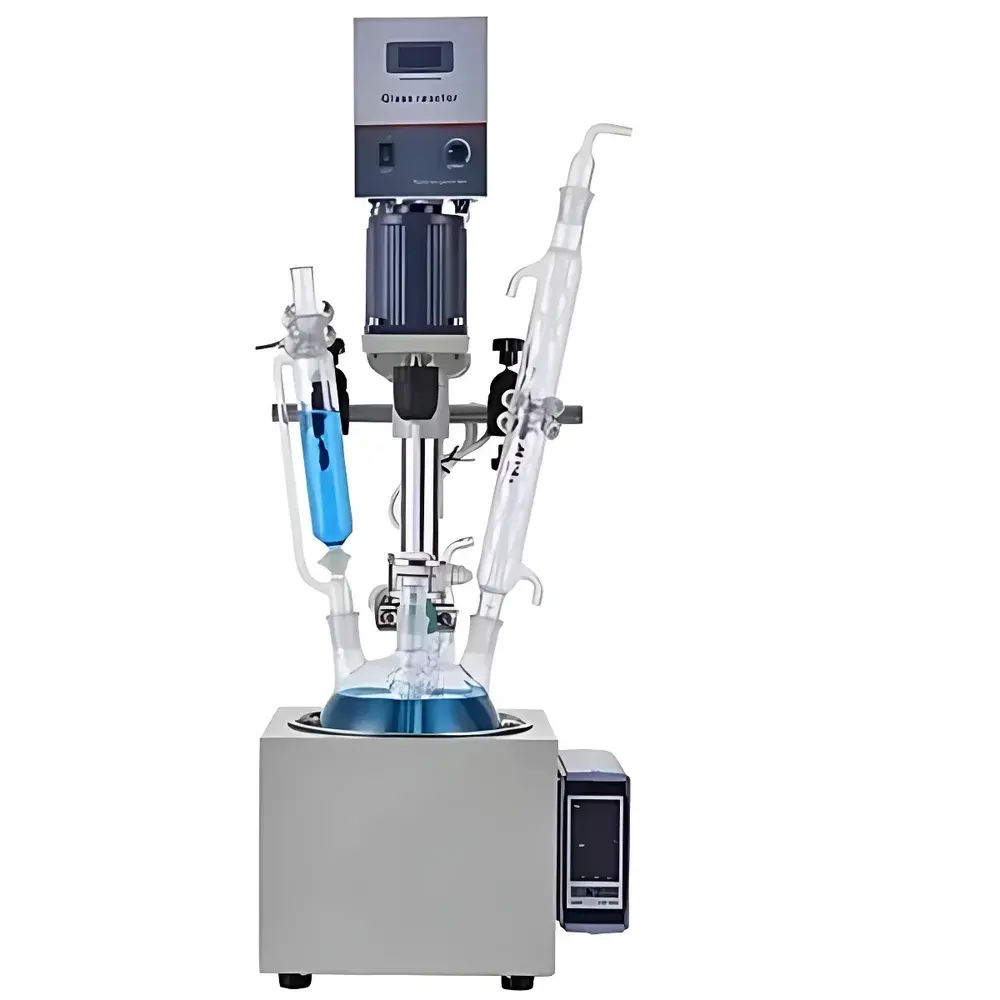
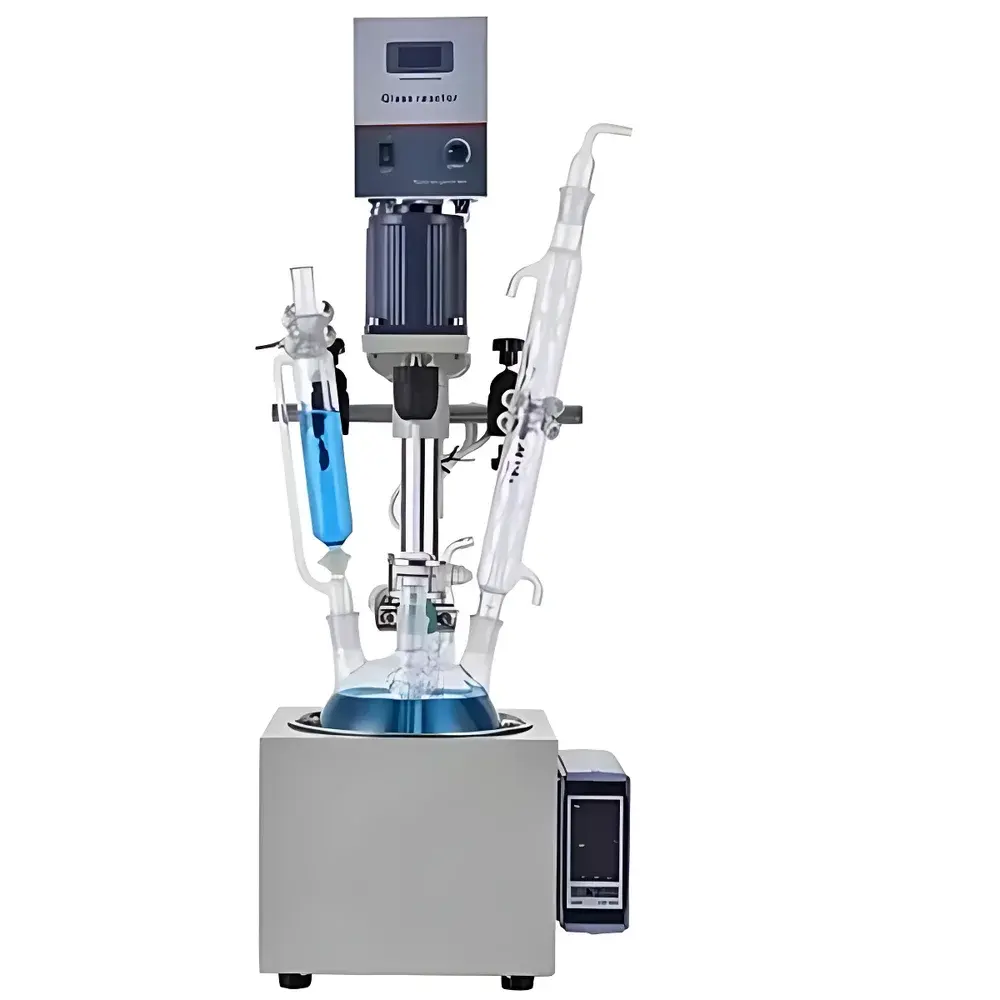
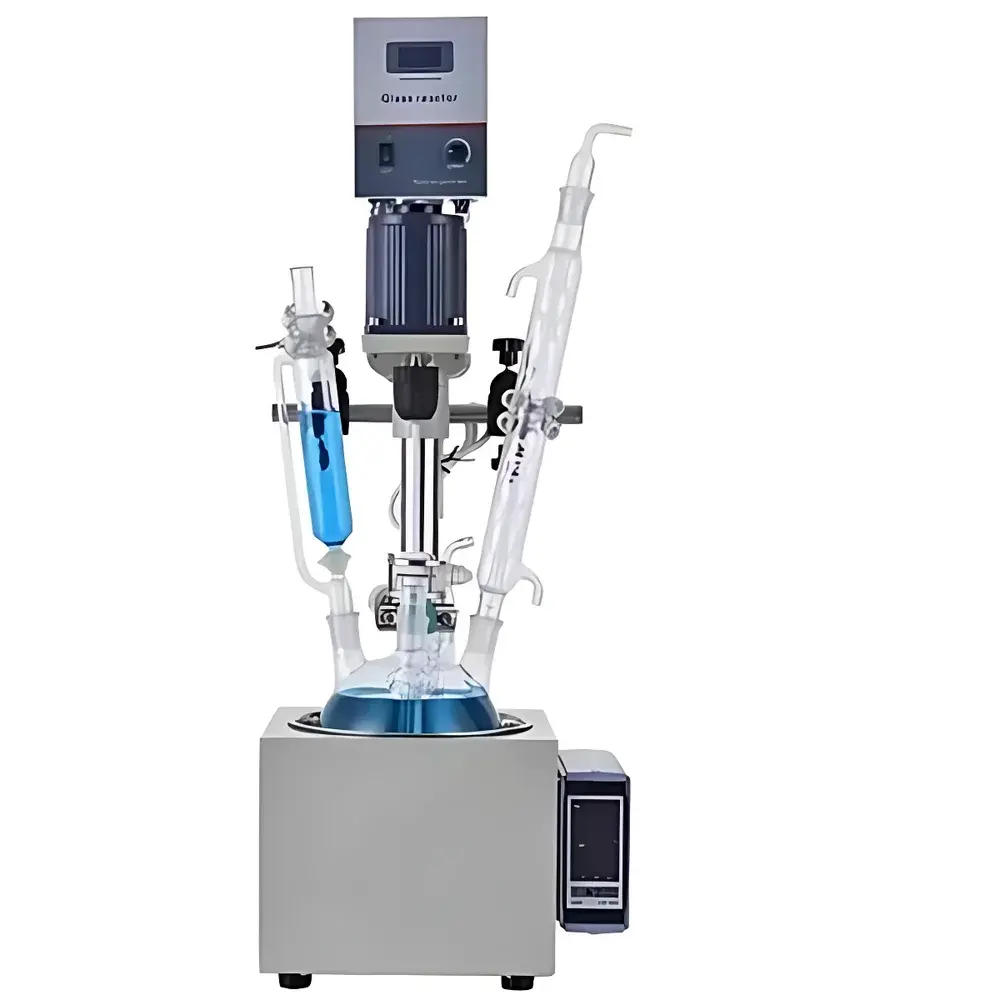
Gongyi Yuyi YDF Series Single-Layer Glass Reactor (1L, 2L, 3L, 5L)
| Brand | Gongyi Yuyi Instrument |
|---|---|
| Origin | Henan, China |
| Manufacturer Type | Authorized Distributor |
| Country of Origin | China |
| Model | YDF-1L, YDF-2L, YDF-3L, YDF-5L |
| Motor Power | 40 W |
| Speed Range | 0–800 rpm (digital display) |
| Material | GG-17 borosilicate glass |
| Vacuum Rating | −0.098 MPa |
| Operating Pressure | Negative pressure (up to −0.098 MPa gauge) |
| Electrical Supply | 220 V AC |
| Sealing | PTFE components |
| Stirring Assembly | PTFE-coated impeller |
| Temperature Control | Compatible with external oil/water bath (not integrated) |
Overview
The Gongyi Yuyi YDF Series Single-Layer Glass Reactor is a compact, modular laboratory-scale reaction system engineered for controlled chemical synthesis, solvent evaporation, reflux condensation, and concentration under ambient or reduced pressure conditions. Unlike jacketed reactors, the YDF design relies on external thermal management—typically via a compatible thermostatic oil or water bath—to deliver precise, uniform temperature control across the reaction vessel. Its single-layer GG-17 borosilicate glass construction provides high transparency for real-time visual monitoring of reaction progress, phase separation, crystallization, or emulsion formation. The reactor operates under vacuum down to −0.098 MPa (≈ 2 mbar abs), enabling low-temperature distillation, moisture-sensitive reactions, and solvent removal without thermal degradation. Designed for benchtop use in R&D labs and pilot-scale process development, the YDF platform supports GLP-aligned workflows when paired with validated external baths and calibrated instrumentation.
Key Features
- Borosilicate glass vessel (GG-17) with ≥ 95% optical clarity, thermal shock resistance up to 200 °C, and chemical inertness toward most organic solvents, acids, and bases.
- PTFE-sealed stirring assembly with adjustable shaft height and concentricity alignment mechanism—ensures stable operation at speeds from 0 to 800 rpm with minimal vibration or wobble.
- Digital speed controller with LED display and soft-start functionality to prevent torque overload during startup.
- Integrated PTFE stopcocks and ground-glass joints (standard ISO 29/32 or 24/29 taper options) for leak-tight connections to condensers, addition funnels, or vacuum manifolds.
- Compact footprint and modular layout—facilitates integration into fume hoods and compatibility with standard lab infrastructure including vacuum pumps, cold traps, and digital thermometers.
- No internal heating elements—eliminates hot-spot risk and enables safe operation with flammable or oxygen-sensitive reagents when used with non-sparking external baths.
Sample Compatibility & Compliance
The YDF reactor accommodates homogeneous and heterogeneous mixtures—including suspensions, slurries, and viscous solutions—within its 1 L to 5 L working volume range. Its open-top configuration (with optional reflux condenser) allows easy charging, sampling, and cleaning. All wetted parts are constructed from Class A borosilicate glass and fluoropolymer materials compliant with USP and ISO 10993-5 for non-cytotoxicity. While the reactor itself carries no CE or UL certification as a standalone unit (due to reliance on external thermal sources), it meets general laboratory equipment safety expectations per IEC 61010-1 when operated with certified baths and properly grounded power supplies. Users conducting regulated work (e.g., pharmaceutical intermediates or food-grade extracts) should validate bath temperature uniformity, vacuum stability, and seal integrity per internal SOPs aligned with ISO/IEC 17025 or FDA 21 CFR Part 11 data integrity requirements.
Software & Data Management
The YDF reactor does not include embedded firmware or proprietary software. Temperature, pressure, and agitation parameters are monitored and controlled externally using third-party devices—such as programmable thermostatic baths with RS485/Modbus output, digital vacuum gauges with analog voltage signals, or standalone data loggers. This architecture supports flexible integration into existing lab informatics systems (e.g., LabArchives, DeltaV, or custom SCADA). For audit-ready documentation, users may configure external controllers to generate timestamped CSV logs with traceable calibration metadata—fulfilling basic ALCOA+ principles (Attributable, Legible, Contemporaneous, Original, Accurate) required under GMP/GLP environments.
Applications
- Controlled solvent evaporation and concentration of heat-labile natural extracts (e.g., botanical oils, enzyme solutions).
- Atmospheric and vacuum-assisted fractional distillation of multi-component organic mixtures.
- Catalytic hydrogenation and Grignard reactions under inert atmosphere (when coupled with gas inlet adapters).
- Crystallization studies requiring precise supersaturation control via gradual cooling or anti-solvent addition.
- Process optimization for fine chemical synthesis—including residence time distribution analysis and kinetic profiling.
- Educational demonstrations of phase equilibria, Raoult’s law deviations, and azeotropic behavior.
FAQ
Is the YDF reactor suitable for pressurized reactions?
No. The YDF series is rated exclusively for negative-pressure operation up to −0.098 MPa. It is not designed or tested for positive pressure applications.
Can I use this reactor with corrosive halogenated solvents?
Yes—GG-17 glass exhibits excellent resistance to HCl, HF (dilute), and chlorinated hydrocarbons; however, prolonged exposure to molten alkali metals or anhydrous fluorine compounds is not recommended.
What vacuum pump specifications are recommended?
A two-stage rotary vane pump capable of reaching ≤ 0.1 mbar ultimate vacuum is sufficient for most applications; for moisture-sensitive chemistry, pairing with a cold trap is advised.
Does the reactor include a condenser or heating bath?
No. The YDF unit is supplied as a bare reactor vessel with stirrer and sealing components. External thermostatic baths and condensers must be selected separately based on thermal range and capacity requirements.
How is temperature measured inside the reaction mixture?
Via an optional PTFE-sheathed Pt100 probe inserted through a dedicated port—connected to an external thermometer or controller with 0.1 °C resolution.





