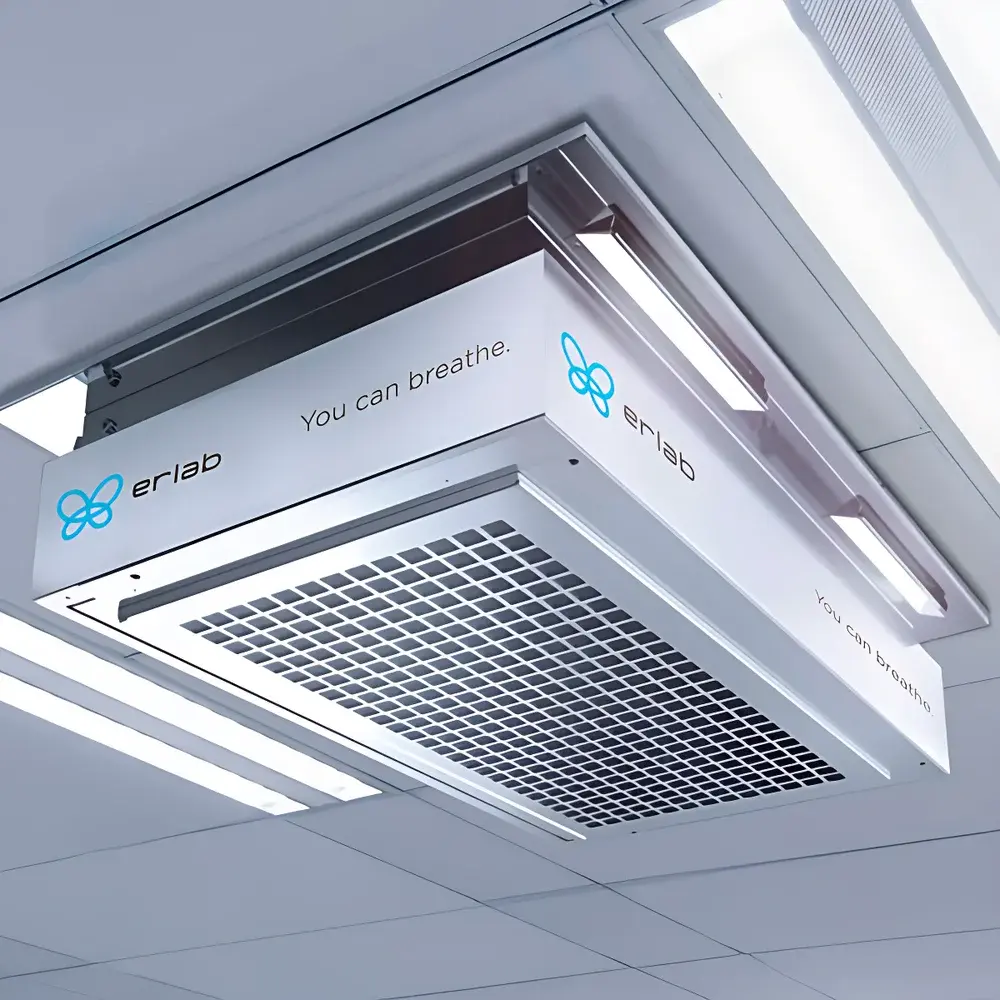
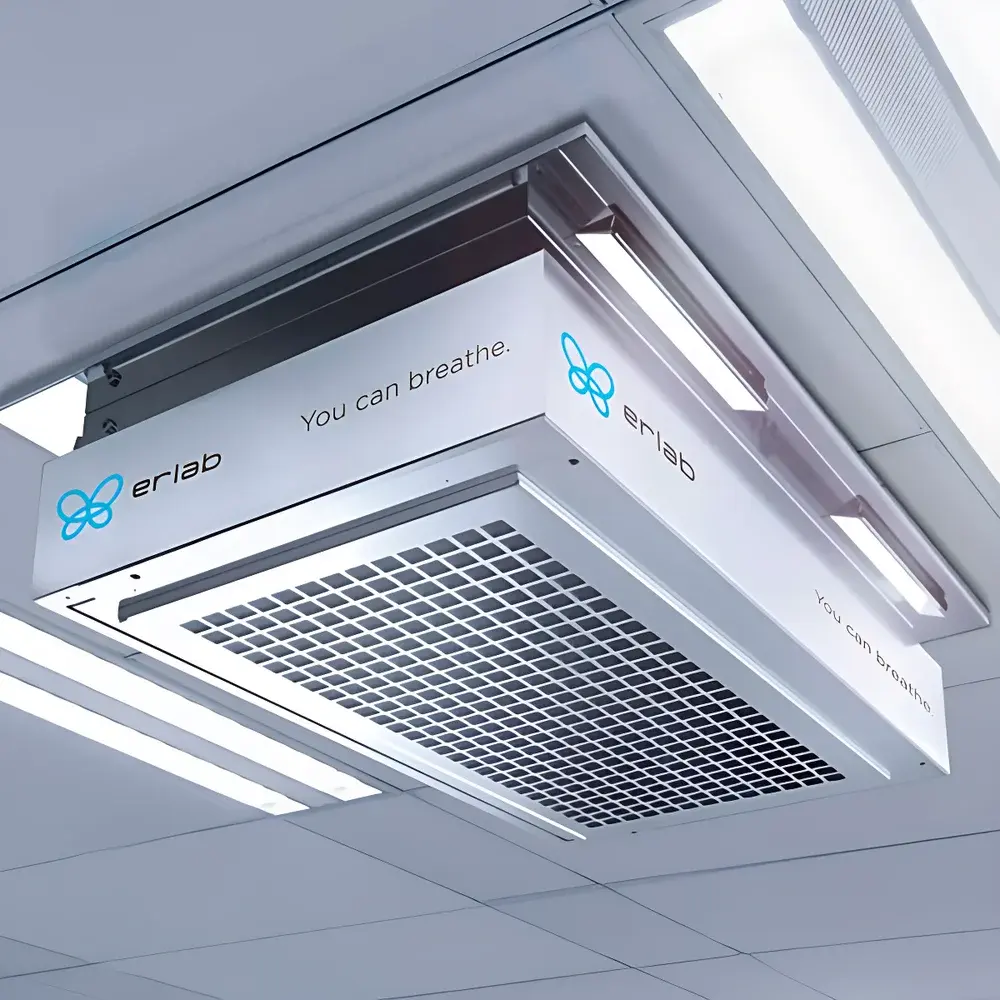
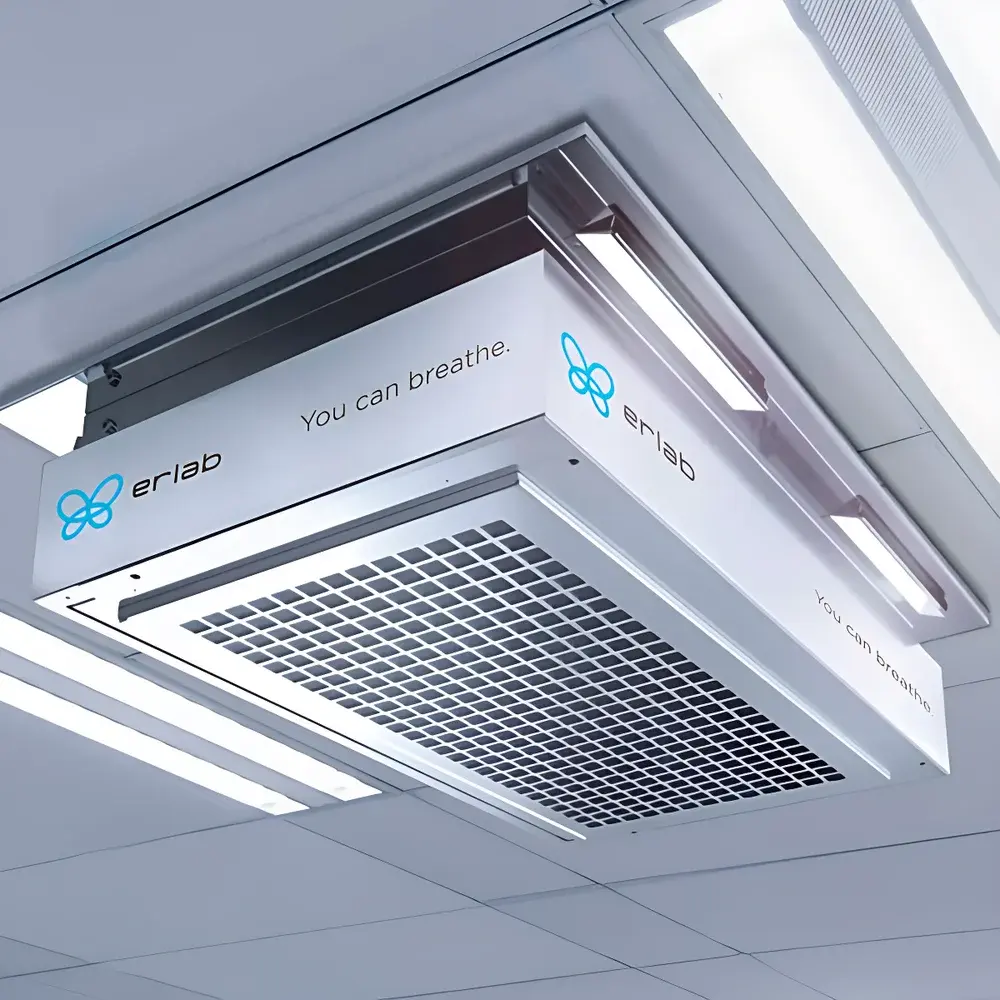
Erlab Halo Smart P Air Purification System
| Brand | Erlab |
|---|---|
| Origin | Shanghai, China |
| Manufacturer Type | Authorized Distributor |
| Product Origin | Domestic (China) |
| Model | Halo Smart P |
| Pricing | Available Upon Request |
Overview
The Erlab Halo Smart P Air Purification System is a high-performance, ductless air cleaning solution engineered specifically for laboratory environments where chemical fume containment, particulate removal, and continuous indoor air quality (IAQ) management are critical. Unlike conventional HVAC-dependent ventilation strategies, the Halo Smart P operates as a self-contained recirculating unit that draws ambient lab air through a multi-stage filtration matrix—comprising pre-filters, activated carbon media, and high-efficiency particulate air (HEPA) or ultra-low penetration air (ULPA) grade filters—capturing volatile organic compounds (VOCs), acid gases, solvents, nanoparticles, and bioaerosols at the source. Its core principle relies on adsorption kinetics and mechanical interception, ensuring no secondary emissions, catalytic reactions, or ozone generation. Designed for laboratories seeking energy-efficient IAQ control without increasing building air exchange rates (AER), the Halo Smart P reduces HVAC load by up to 70% compared to traditional 100% outside-air systems—supporting LEED-certified facility goals and ISO 14644-1 Class 5–8 cleanroom-equivalent ambient conditions.
Key Features
- Smart IoT-enabled monitoring via Erlab Connect mobile application—real-time display of VOC concentration (ppb), PM2.5/PM10 levels, filter saturation status, and airflow velocity (m³/h)
- Modular, field-replaceable filter cartridges with RFID-tagged life-cycle tracking and predictive replacement alerts
- Patented “AirPath” laminar flow chamber design ensuring uniform air distribution and ≥99.995% particle capture efficiency down to 0.1 µm (ULPA-rated configuration)
- 29.5-inch (750 mm) extended-length filter media enabling high volumetric throughput (up to 650 m³/h) while maintaining low pressure drop (<120 Pa at rated flow)
- Quiet operation at ≤48 dB(A) in Eco Mode; fully compliant with ISO 7235 for laboratory noise emission standards
- Plug-and-play installation—no ductwork, wall penetrations, or structural modifications required; suitable for Class II biosafety cabinets, analytical labs, and teaching facilities
Sample Compatibility & Compliance
The Halo Smart P is validated for continuous operation in environments handling common laboratory contaminants including acetone, methanol, formaldehyde, hydrochloric acid vapor, ammonia, and airborne spores (e.g., Aspergillus niger). It meets EN 1822-1:2022 (HEPA/ULPA classification), ASTM D5197-22 (formaldehyde adsorption capacity), and ISO 16000-23 (indoor air VOC sampling methodology). Filter performance data is traceable to third-party testing per ISO 16890 and ISO 10121-1. The system supports GLP-compliant audit trails when integrated with Erlab Connect Cloud—recording timestamped sensor logs, user access events, and maintenance interventions in accordance with FDA 21 CFR Part 11 requirements.
Software & Data Management
Erlab Connect is a secure, cloud-hosted platform accessible via iOS/Android apps or web dashboard. It provides configurable alarm thresholds (e.g., VOC > 50 ppb triggers SMS/email alert), historical trend graphs (30-day rolling storage), and exportable CSV reports for internal QA reviews or external accreditation submissions (e.g., ISO/IEC 17025). All firmware updates are delivered over-the-air with SHA-256 signature verification. Role-based access control (RBAC) allows lab managers to assign permissions for viewing, calibration, or service initiation—ensuring separation of duties and regulatory readiness.
Applications
- Chemistry teaching labs reducing reliance on constant-volume fume hoods
- Pharmaceutical QC laboratories maintaining ISO 14644-1 background cleanliness during stability testing
- Histology and pathology suites mitigating xylene and formalin vapors
- Electron microscopy rooms protecting sensitive instrumentation from hydrocarbon contamination
- Shared research cores requiring rapid reconfiguration between solvent-intensive and particle-sensitive workflows
FAQ
Does the Halo Smart P eliminate the need for fume hoods?
No—it complements but does not replace primary containment devices such as fume hoods or gloveboxes. It serves as secondary ambient air purification for residual vapors and particles escaping local exhaust systems.
What is the recommended filter replacement interval?
Under typical academic lab usage (8 hrs/day, moderate solvent load), carbon filters require replacement every 6–9 months; ULPA filters last 12–18 months. Actual lifespan is dynamically calculated by Erlab Connect based on real-time adsorption saturation modeling.
Can the system be integrated into a building management system (BMS)?
Yes—via Modbus TCP or BACnet/IP protocol gateways (optional hardware module), enabling centralized monitoring of multiple Halo units alongside HVAC and fire safety subsystems.
Is ozone generation tested and certified?
Independent testing per UL 867 confirms zero detectable ozone output (<0.005 ppm) under all operating conditions—fully compliant with OSHA PEL and WHO indoor air guidelines.