
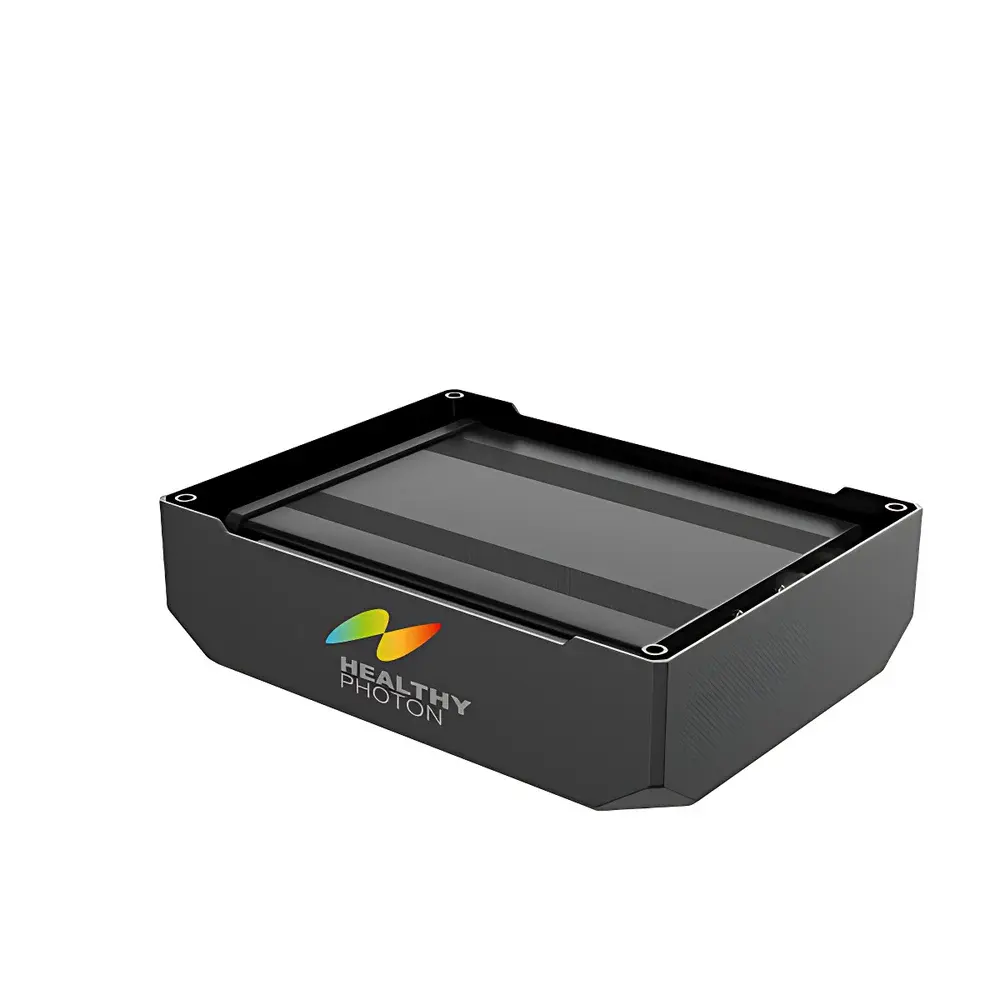
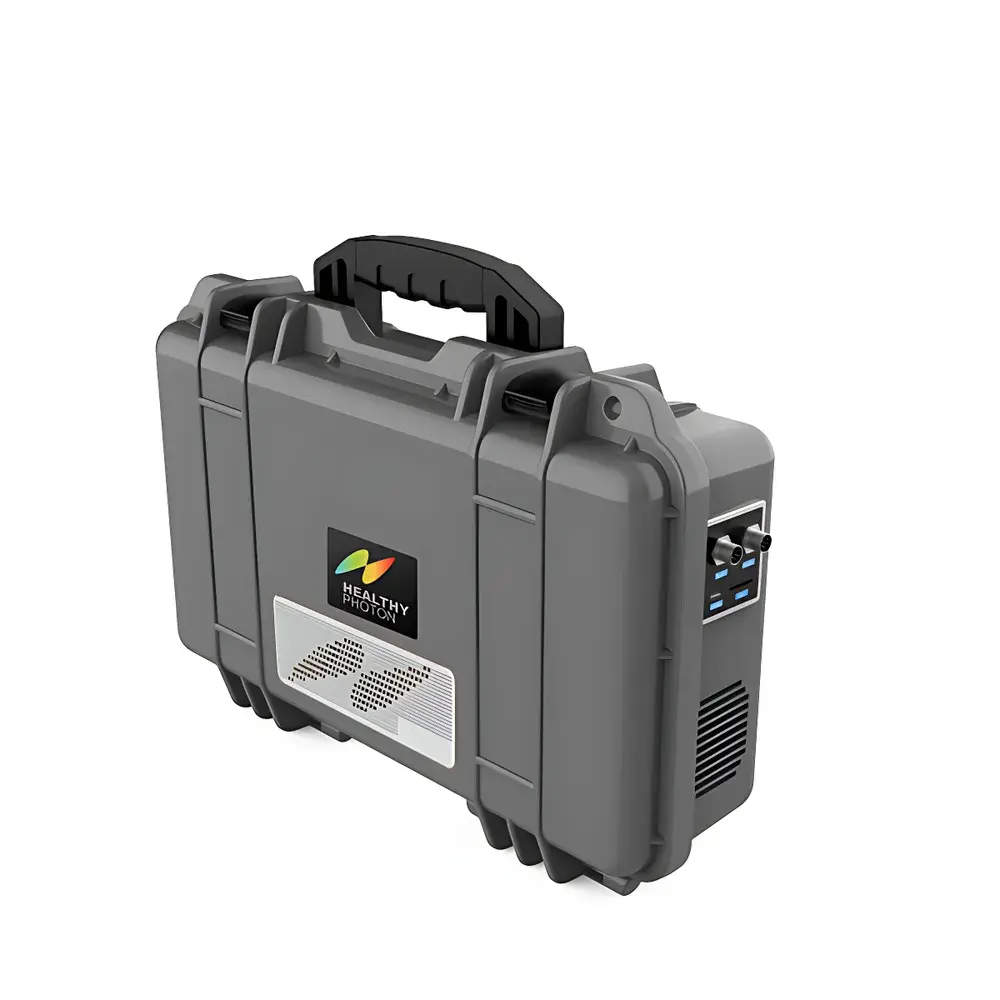
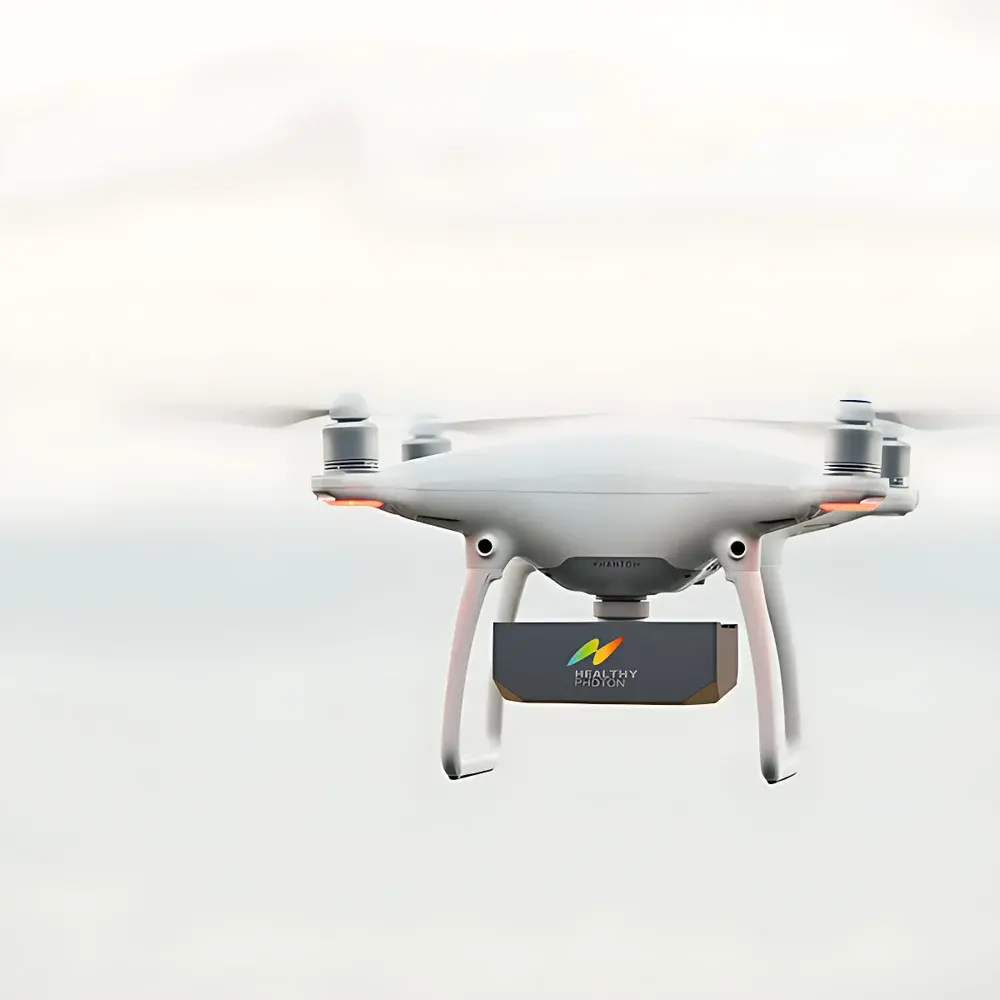
AeroNose HT400 High-Precision Ozone Analyzer
| Brand | AeroNose |
|---|---|
| Origin | Zhejiang, China |
| Manufacturer Type | Original Equipment Manufacturer (OEM) |
| Instrument Type | Portable |
| Measurement Range | 0.1 ppb – 100 ppm |
| Detection Limit | ±1% of reading @ 100 ppb – 100 ppm |
| Response Time | 40 sec @ 500 ppb |
| Zero Drift Compensation | Automatic dual-channel switching |
| Resolution | 1% of Full Scale (F.S.) |
| Analog Output Options | 4–20 mA / 0–1 VDC / 1–5 VDC (selectable) |
| Data Update Interval | 0.1 sec – 25,500 min (configurable) |
| Sampling Flow Rate | 1.0–1.5 L/min (integrated pump) |
| Operating Temperature | 0–40 °C |
| Power Supply | DC 12 V, 1.5 A max. |
| Weight | 1.5 kg (including ozone scrubber and particulate filter) |
| Communication Interface | USB (for real-time temperature, pressure, and concentration logging) |
| Alarm Outputs | LED indicators for particle filter status, light source health, ozone scrubber saturation, and calibration due date |
Overview
The AeroNose HT400 High-Precision Ozone Analyzer is a portable, field-deployable instrument engineered for trace-level ozone (O₃) quantification in ambient air, indoor environments, industrial process streams, and calibration laboratories. It employs dual-beam ultraviolet absorption spectroscopy at 254 nm — a NIST-traceable physical principle compliant with EPA Method EQOA-0123 and ISO 13964 — to deliver stable, interference-free measurements across a dynamic range spanning from sub-part-per-trillion (ppt) background levels up to 100 ppm. Unlike electrochemical or semiconductor-based sensors, the HT400 eliminates cross-sensitivity to NO₂, SO₂, VOCs, and humidity through optical path stabilization, temperature-controlled cuvette design, and real-time photometric drift correction. Its compact architecture integrates a precision mass flow controller, thermally regulated UV lamp, and dual photodiode detection system — all calibrated against primary standard ozone generators traceable to NIST SRM 2687b.
Key Features
- Sub-ppb detection capability: Minimum detectable concentration of 0.1 ppb with signal-to-noise ratio >100:1 under controlled conditions
- Automatic zero compensation: Dual-channel optical referencing enables continuous baseline correction without manual zeroing or external zero gas
- Integrated sampling system: Onboard diaphragm pump maintains stable 1.0–1.5 L/min flow; includes particulate filter, desiccant dryer interface, and replaceable ozone scrubber for background subtraction
- Field-serviceable calibration: Supports user-performed span and zero verification using certified ozone standards; full calibration history logged with timestamp, operator ID, and environmental metadata
- Robust environmental tolerance: Operates reliably from 0–40 °C and 10–95% RH (non-condensing); internal thermal management ensures <±0.02 °C cuvette temperature stability
- Digital and analog I/O: USB interface for real-time data streaming and firmware updates; configurable 4–20 mA or voltage outputs compatible with SCADA, DCS, and PLC systems
Sample Compatibility & Compliance
The HT400 is validated for use with ambient air, cleanroom exhaust, medical sterilization chamber effluent, and food-grade packaging atmospheres. It meets applicable requirements for regulatory reporting under U.S. EPA Ambient Air Monitoring Guidance (40 CFR Part 58, Appendix A) and EU Directive 2008/50/EC for ozone monitoring networks. All factory calibrations are documented in NIST-traceable certificates issued per ISO/IEC 17025:2017 — including uncertainty budgets derived from lamp intensity drift, photodetector linearity, and path-length repeatability. The instrument supports GLP-compliant audit trails: every measurement event records ambient temperature, static pressure, flow rate, lamp intensity, and detector gain — all time-stamped to UTC with microsecond resolution.
Software & Data Management
The included Basic Software Suite provides local configuration, real-time waveform visualization, and CSV export of time-series concentration data with metadata embedding (e.g., GPS coordinates if external module connected). Advanced Software Option extends functionality to automated multi-point calibration protocols, statistical process control (SPC) charting per ASTM E2587, and 21 CFR Part 11-compliant electronic signatures with role-based access control. All raw spectral data (absorbance vs. wavelength) is preserved for post-acquisition reprocessing. Firmware updates retain full backward compatibility with legacy calibration files and historical datasets.
Applications
- Ambient air quality monitoring networks (AQMS) requiring compliance-grade ozone data for national reporting
- Indoor air quality assessment in hospitals, laboratories, and clean manufacturing facilities
- Validation of ozone-based disinfection cycles in pharmaceutical water systems and HVAC ductwork
- Research on tropospheric ozone chemistry, including photolysis rate studies and VOC oxidation kinetics
- Calibration transfer between reference-grade laboratory analyzers and field-deployed sensor arrays
- Food processing safety audits where residual ozone must be verified below FDA-recommended thresholds (≤0.1 ppm)
FAQ
Does the HT400 require external zero gas for routine operation?
No. The instrument performs automatic zero compensation via internal optical referencing and does not consume zero-grade air or nitrogen during normal operation.
Can the HT400 be integrated into an existing industrial control system?
Yes. Analog outputs (4–20 mA or 0–1 VDC) are configurable for direct connection to PLCs or DCS; USB communication supports Modbus RTU over CDC ACM for programmable logic integration.
What maintenance intervals are recommended for field deployment?
Particulate filters should be replaced every 3 months in urban environments; ozone scrubbers require replacement after 200 hours of cumulative exposure above 1 ppm; lamp lifetime exceeds 12,000 hours with gradual intensity decay compensated in software.
Is the calibration certificate accepted by regulatory agencies?
Yes. Each unit ships with a NIST-traceable calibration report issued under ISO/IEC 17025 accreditation, listing expanded uncertainty (k=2) for all measured points across the operational range.
How is humidity managed during sampling?
The HT400 does not include an internal dryer; users must supply pre-dried sample gas (dew point ≤ −20 °C) via external desiccant or refrigerated dryer to prevent condensation in the optical cell.
Related Products







