
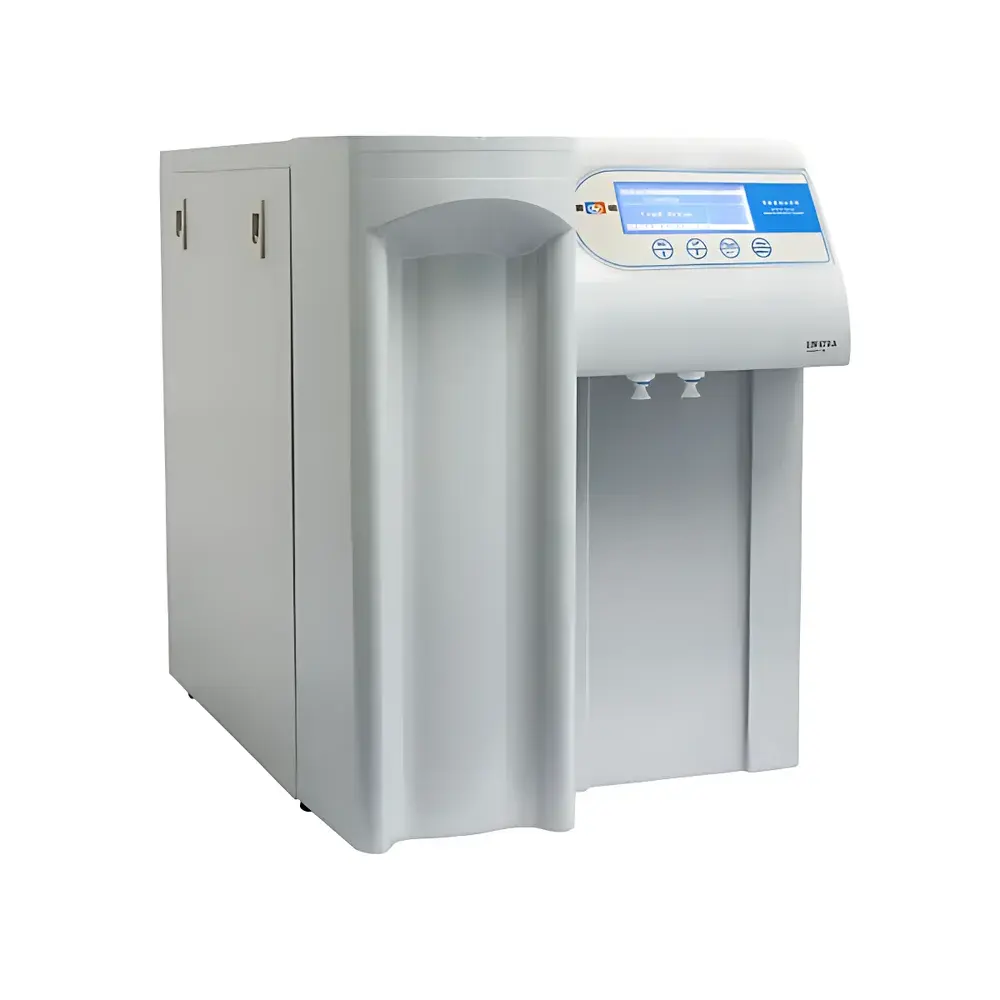
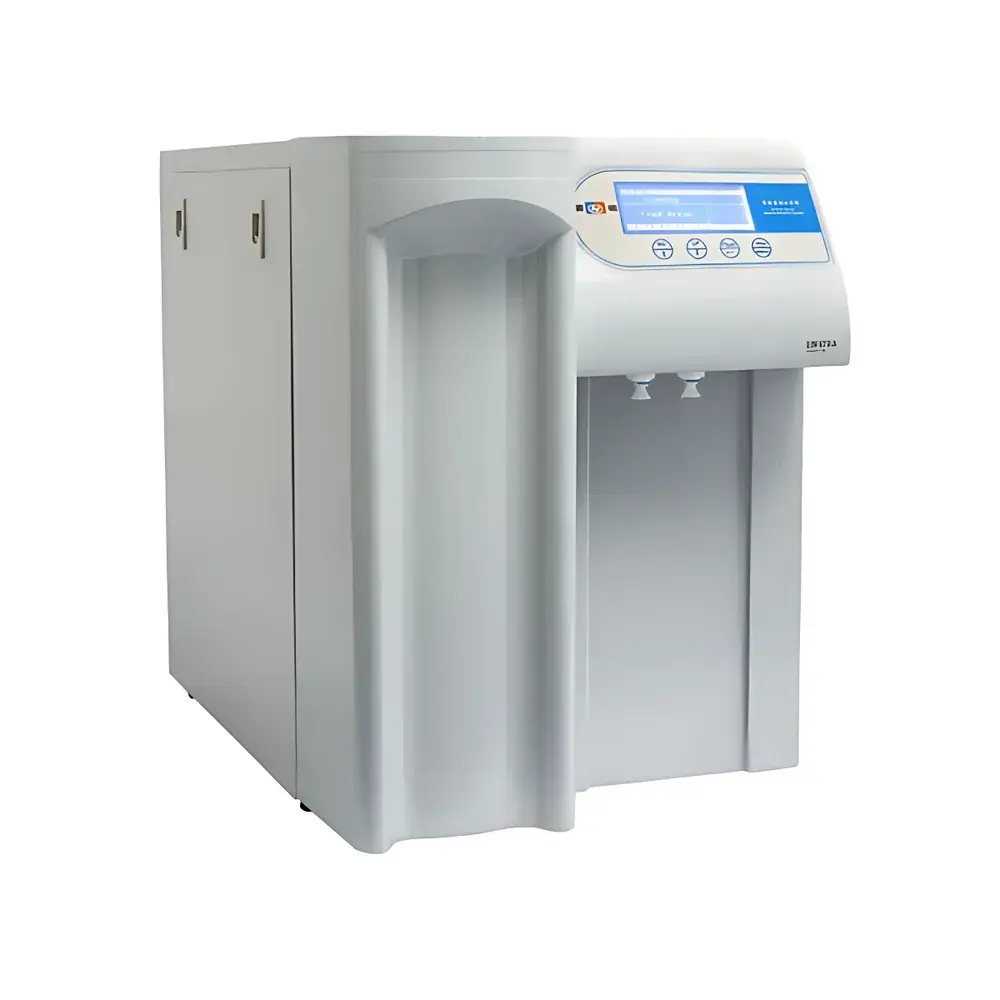
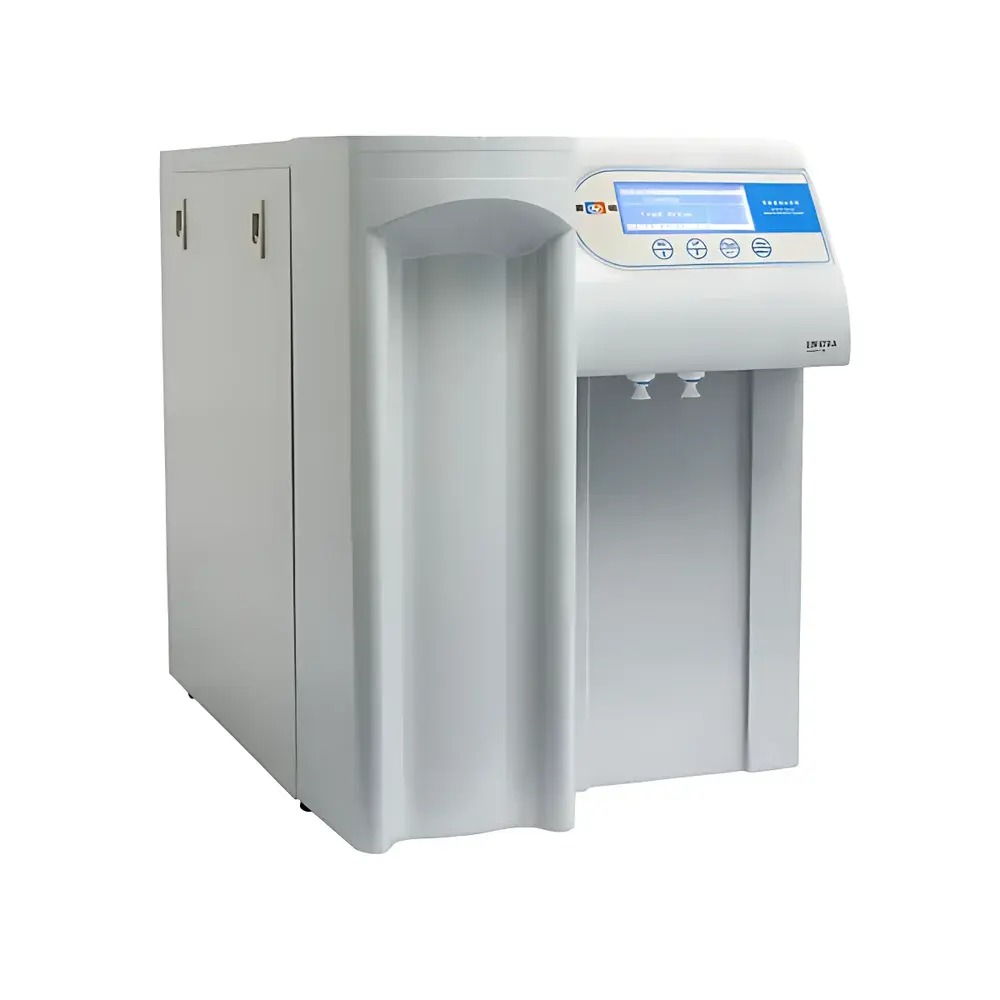
Leichi UPW Laboratory Ultra-Pure Water System
| Brand | Leichi |
|---|---|
| Origin | Shanghai, China |
| Manufacturer Type | Authorized Distributor |
| Product Origin | Domestic (China) |
| Model | Leichi UPW |
| Pricing | Available Upon Request |
| Purified Water Grade | ASTM Type I / ISO 3696 Grade 1 |
| Resistivity | 18.2 MΩ·cm at 25 °C |
| Heavy Metals & Soluble Silica | <0.1 ppb |
| Total Organic Carbon (TOC) | <3 ppb |
| Microbial Count & Endotoxins | <0.001 EU/mL |
| Particles (>0.1 µm) | <1 particle/mL |
Overview
The Leichi UPW Laboratory Ultra-Pure Water System is an integrated, multi-stage water purification platform engineered for precision-critical applications in analytical laboratories, pharmaceutical QC, molecular biology, and semiconductor R&D. It employs a sequential purification architecture combining activated carbon prefiltration, high-rejection reverse osmosis (RO), dual-stage ion exchange, and dual-wavelength ultraviolet oxidation to consistently deliver Type I ultrapure water meeting or exceeding ASTM D1193-20, ISO 3696:1987, and CLSI EP21-A guidelines. The system operates on a closed-loop, recirculating distribution design with continuous monitoring—ensuring stable resistivity ≥18.2 MΩ·cm, TOC ≤3 ppb, and endotoxin levels below 0.001 EU/mL—without reliance on post-generation polishing cartridges or manual intervention.
Key Features
- Integrated pre-treatment module with granular activated carbon (GAC) and polypropylene (PP) depth filtration—removes free chlorine, particulates (>5 µm), and colloidal matter to protect RO membrane integrity and extend service life.
- Configurable RO architecture: single-membrane, dual-membrane, or two-pass RO options using Dow FilmTec™ LE or BW series membranes—achieving >99.8% rejection of monovalent ions, >99.99% removal of bacteria, pyrogens, and sub-100 Da organic contaminants.
- Dual-column purification train: high-capacity mixed-bed ion exchange resin (Type I, nuclear-grade polisher grade) ensures stable 18.2 MΩ·cm output; resin volume optimized for extended service intervals under typical lab load profiles (≥6–12 months depending on feedwater quality).
- Dual-wavelength UV oxidation: 254 nm lamp for microbial inactivation; 185 nm lamp generating hydroxyl radicals for advanced oxidation of low-MW organics—reducing TOC to <3 ppb with reproducible performance across varying feedwater TOC loads (10–500 ppb).
- Triple-sensor conductivity monitoring: includes temperature-compensated ultra-low-range sensor (cell constant 0.01 cm⁻¹) dedicated to ultrapure water measurement, plus upstream and RO-permeate sensors for real-time process diagnostics and predictive maintenance alerts.
- Compact integrated pressure storage tank (15–30 L, stainless steel 316L-lined) minimizes footprint while maintaining stable delivery pressure (0.2–0.4 MPa) and enabling peak-demand response without flow interruption.
- Final 0.22 µm hydrophilic PES membrane filter installed at point-of-use—retaining viable microorganisms and sub-micron particles; validated per ASTM F838-22 for bacterial retention efficiency (log reduction value ≥7).
- Flood detection system with capacitive moisture sensors at base pan and tubing junctions—triggers audible/visual alarm and initiates automatic shutdown and pump isolation within <2 seconds of leak initiation.
Sample Compatibility & Compliance
The Leichi UPW system is validated for compatibility with ultratrace elemental analysis (ICP-MS, GF-AAS), HPLC mobile phase preparation, cell culture media formulation, and ELISA reagent dilution. All wetted materials—including housing, tubing, valves, and resin vessels—comply with USP Class VI biocompatibility requirements and are certified extractables-free per ISO 10993-12. System validation documentation supports IQ/OQ protocols aligned with GMP Annex 1 (EU), FDA 21 CFR Part 211, and ISO/IEC 17025:2017 laboratory accreditation standards. Data integrity features include audit-trail-enabled event logging (power cycles, sensor calibrations, cartridge replacements) compliant with ALCOA+ principles.
Software & Data Management
The embedded control interface provides real-time graphical display of resistivity, TOC, UV transmittance, flow rate, and pressure differentials across all stages. Historical data (72-hour rolling buffer, exportable via USB or RS-485) is timestamped and temperature-compensated. Optional Ethernet connectivity enables integration into centralized lab infrastructure management platforms (e.g., LabVantage, STARLIMS) via Modbus TCP or OPC UA. All calibration events, alarm logs, and maintenance records are digitally signed and retain full traceability for GLP/GMP audits.
Applications
- Preparation of standards and blanks for ICP-MS, HR-ICP-MS, and LC-MS/MS quantification
- Mobile phase and sample diluent preparation for UHPLC and preparative HPLC
- Buffer formulation for protein purification (SEC, IEX, AEX) and monoclonal antibody manufacturing
- Media and reagent preparation for primary neuronal cultures and stem cell expansion
- Calibration solution preparation for clinical chemistry analyzers (e.g., Roche Cobas, Siemens Atellica)
- Wafer rinse water in microelectronics cleanroom environments requiring particle-free, low-metal content water
FAQ
What feedwater quality is required for optimal UPW performance?
The system is designed for municipal tap water (chlorinated, hardness ≤200 ppm CaCO₃, SDI ≤5). Pre-treatment is mandatory for well water or high-TDS sources; optional softener or dechlorination modules are available.
How often must consumables be replaced?
Pre-filters: every 3–6 months; RO membrane: 2–3 years (dependent on feedwater chlorine and silt density index); ion exchange columns: 6–12 months (monitored via real-time resistivity decay trend). Replacement intervals are logged automatically.
Does the system support 21 CFR Part 11 compliance?
Yes—the optional networked configuration includes electronic signatures, role-based access control, and immutable audit trails for all critical operational parameters and user actions.
Can the UPW be connected to multiple points-of-use?
Yes—via sanitary SS316L loop distribution with recirculation pump and inline UV; maximum loop length: 30 m (with ≤1.5 m/s velocity and <0.5 °C temperature rise).
Is third-party certification available for water quality verification?
Leichi provides factory-issued Certificate of Conformance (CoC) with batch-specific test data; optional UKAS-accredited third-party verification (per ISO/IEC 17025) is available upon request.



