
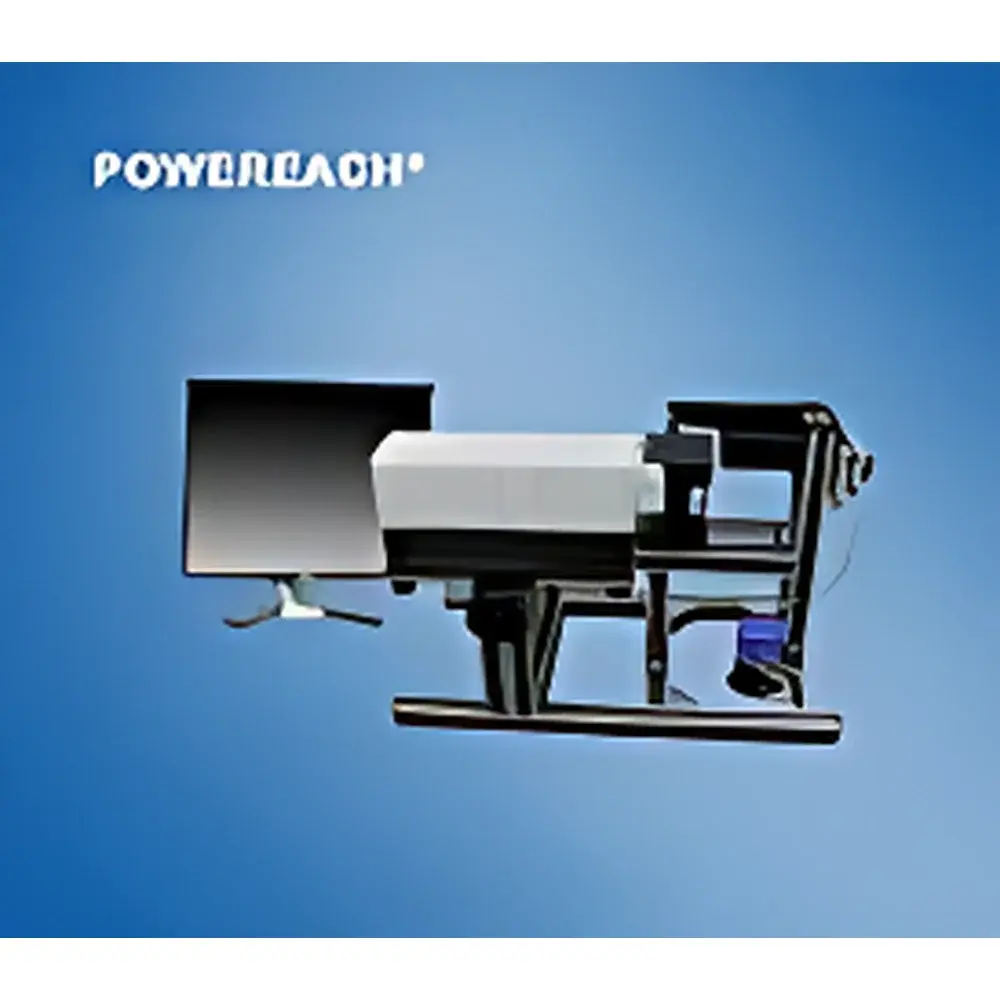
JJ2000B2 Dual-Mode Rotating Drop Interfacial Tensiometer & Static Drop Contact Angle Analyzer
| Origin | Shanghai, China |
|---|---|
| Manufacturer Type | Authorized Distributor |
| Origin Category | Domestic (China) |
| Model | JJ2000B2 |
| Pricing | Available Upon Request |
Overview
The JJ2000B2 Dual-Mode Rotating Drop Interfacial Tensiometer & Static Drop Contact Angle Analyzer is a precision-engineered instrument designed for quantitative characterization of interfacial thermodynamics and wetting behavior at liquid–liquid and liquid–solid boundaries. It operates on two complementary physical principles: (1) the rotating drop method—based on centrifugal distortion equilibrium of a denser droplet suspended in a less-dense continuous phase—to determine interfacial tension (IFT) and surface tension (ST) across an ultra-broad dynamic range; and (2) static sessile drop imaging under gravity or controlled rotation to quantify contact angle (CA) via axisymmetric drop shape analysis (ADSA). This dual-capability architecture enables correlative investigation of interfacial energy and solid surface wettability within a single platform—critical for formulation science, enhanced oil recovery (EOR) screening, and functional material development. The system integrates a high-stability motorized rotation stage, Peltier-assisted temperature control (RT+5 °C to 80 °C), and a calibrated video microscopy subsystem with real-time image acquisition at 30 fps and 768×576 pixel resolution.
Key Features
- Dual-mode operation: Simultaneous or independent measurement of interfacial/surface tension (1×10⁻⁵–100 mN/m) and static contact angle (0°–180°) using shared optical path and synchronized software control.
- Ultra-low interfacial tension capability: Optimized rotating drop geometry and sub-pixel edge detection enable reliable IFT quantification down to 10−5 mN/m—essential for evaluating ultralow-tension surfactant systems in chemical EOR applications.
- Precision motion control: Motorized rotation stage with speed range 1,000–10,000 rpm and ±0.1% speed stability; integrated tachometric feedback ensures reproducible centrifugal field generation.
- Thermal regulation: Built-in Peltier heating module with ±0.1 °C temperature stability over 0–100 °C range; optional external bath integration supports extended low- or high-temperature protocols.
- Digital imaging subsystem: Standard BMP output format; adjustable magnification (up to >100 pixels per hair-width equivalent); 0.001 mm spatial resolution for droplet profile digitization.
- Unified Windows-based control interface: Real-time parameter adjustment (rotation speed, temperature setpoint, exposure time); automated image capture, storage, and export via RS-232 serial link and RCA video interface.
Sample Compatibility & Compliance
The JJ2000B2 accommodates standard 2 mm and 6 mm inner-diameter quartz capillary cells, compatible with aqueous, organic, and multiphase fluid systems—including viscous polymer solutions, microemulsions, and thermoresponsive formulations. Its mechanical and thermal design conforms to ISO 1409:2016 (plastics—determination of surface tension of plastics by the rotating drop method) and ASTM D971 (standard test method for interfacial tension of oil against water by the rotating drop method). While not pre-certified for regulated environments, the system supports GLP-compliant workflows through audit-trail-enabled data logging, timestamped BMP image archives, and user-accessible raw parameter files—facilitating traceability in QC/QA laboratories operating under ISO/IEC 17025 or internal SOP frameworks.
Software & Data Management
The proprietary Windows application provides intuitive graphical workflow navigation, real-time droplet contour fitting, and automated tension/angle calculation using Young–Laplace equation solvers. All acquired images are saved as uncompressed BMP files with embedded metadata (timestamp, RPM, temperature, camera settings). Measurement results—including tension values, contact angles, droplet dimensions, and confidence metrics—are exported in CSV format for downstream statistical analysis (e.g., ANOVA, trend modeling). The software supports multi-user permission levels and allows configuration locking for validated methods, aligning with basic requirements for FDA 21 CFR Part 11 readiness when deployed with supplementary electronic signature and change-control procedures.
Applications
- Enhanced oil recovery (EOR): Screening of alkali-surfactant-polymer (ASP) and low-salinity flooding formulations via ultra-low IFT mapping and reservoir rock wettability assessment.
- Colloid & interface science: Quantitative evaluation of surfactant efficiency, micellization thresholds, and emulsion stability mechanisms.
- Coatings & inks: Correlation of surface tension hysteresis with substrate adhesion, leveling behavior, and defect formation during drying.
- Agrochemical formulation: Optimization of pesticide dispersion, foliar retention, and cuticular penetration through dynamic contact angle profiling.
- Biomedical materials: Characterization of hydrophilic/hydrophobic balance on polymer scaffolds, diagnostic sensor surfaces, and drug delivery carriers.
FAQ
What is the minimum measurable interfacial tension with the JJ2000B2?
The instrument achieves reliable measurements down to 1×10⁻⁵ mN/m under optimized conditions—requiring high-purity quartz cells, vibration-isolated mounting, and appropriate density-matched phase selection.
Can the system measure contact angle under elevated temperature or pressure?
Temperature control is supported from RT+5 °C to 80 °C using the integrated Peltier module; pressure control is not natively supported, though custom high-pressure cell integration is feasible with third-party adaptation.
Is calibration traceable to national standards?
The system includes factory calibration routines for rotation speed (via optical tachometer) and temperature (PT100 sensor); users may perform periodic verification using NIST-traceable reference fluids (e.g., diethylene glycol for surface tension, water/glycerol mixtures for density matching).
Does the software support automated batch processing of multiple samples?
Yes—the application permits predefined measurement sequences with variable RPM ramps, dwell times, and temperature profiles, enabling unattended operation for comparative studies across formulation libraries.
What video output format does the system use for third-party image analysis?
All captured frames are stored as standard 24-bit BMP files with no compression artifacts, ensuring compatibility with MATLAB, ImageJ/Fiji, and commercial ADSA platforms for advanced contour modeling or machine learning–based feature extraction.



