D&A ES-J120D Density Balance
| Brand | D&A |
|---|---|
| Origin | Tianjin, China |
| Manufacturer Type | Authorized Distributor |
| Product Category | Domestic |
| Model | ES-J120D |
| Instrument Type | Density-Specific Analytical Balance |
| Maximum Capacity | 120 g |
| Readability | 0.1 mg |
| Repeatability | ±0.1 mg |
| Density Resolution | 0.0001 g/cm³ |
| Weighing Chamber Height | 210 mm |
| Pan Diameter | Φ90 mm |
| Operating Temperature Range | 13–25 °C |
| Operating Humidity Range | 20–85% RH (non-condensing) |
| Stabilization Time (Avg.) | ≤2.5 s |
| Warm-up Time | 30–60 min |
| Power Supply | 220 V AC / 50 Hz input |
| RS232 Baud Rates | 300, 600, 1200, 2400, 4800, 9600 |
| Construction | Stainless Steel Density Accessories |
| Compliance | Designed for GLP/GMP-aligned workflows, supports ASTM D792, ISO 1183, and USP <841> density determination protocols |
Overview
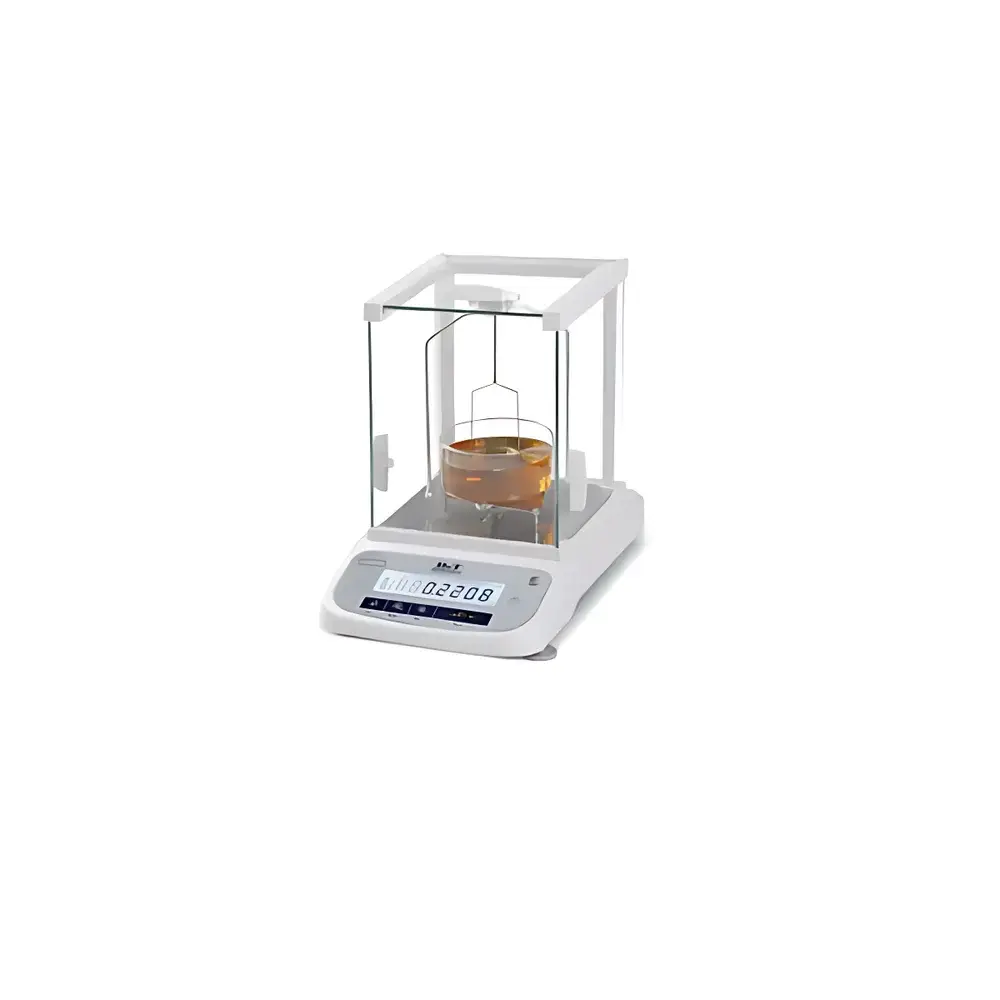
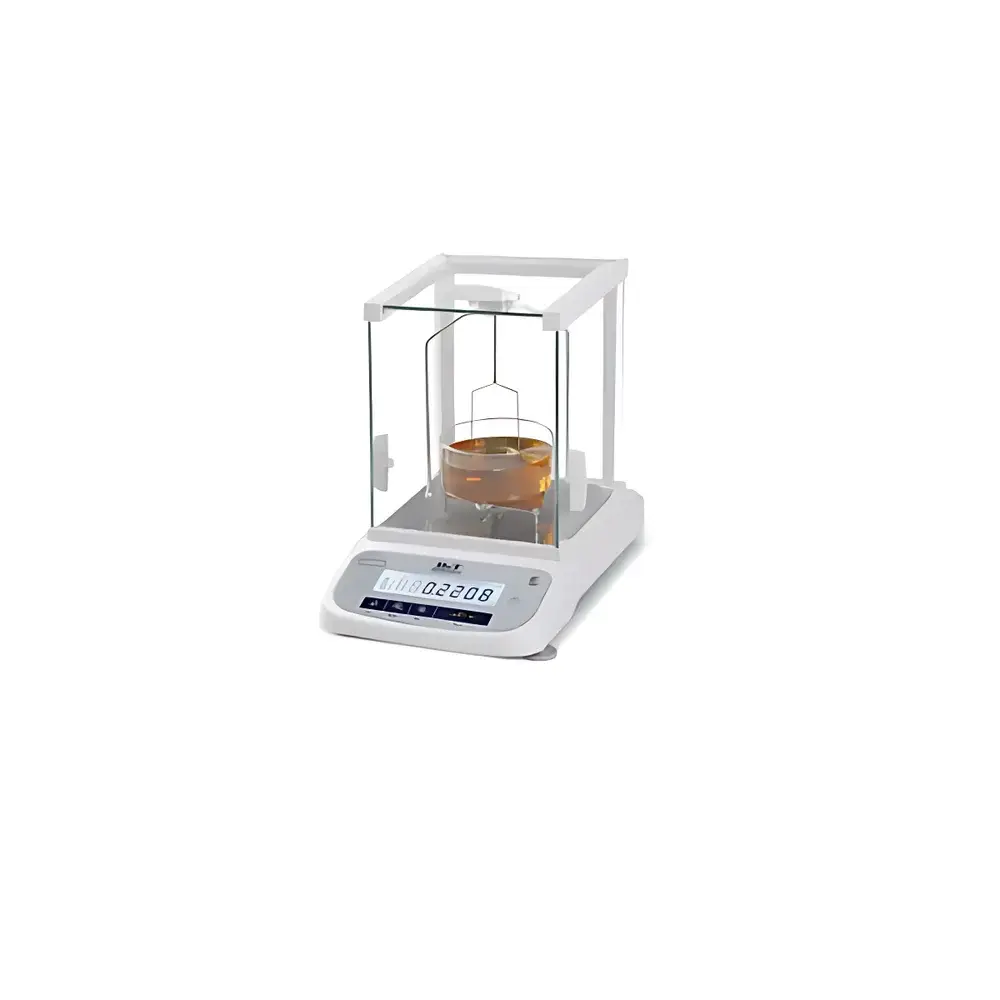
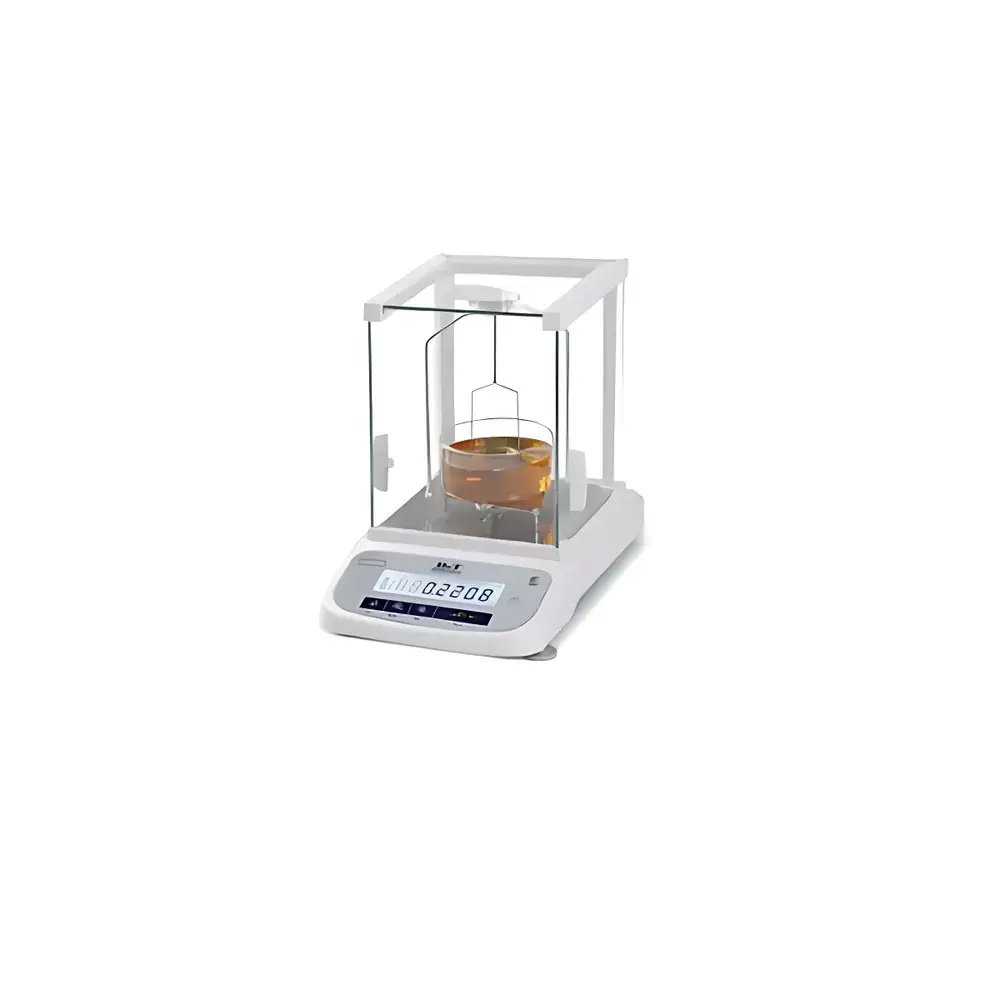
The D&A ES-J120D Density Balance is a high-precision analytical balance engineered specifically for rapid, direct-density determination of solid and liquid samples in regulated and research laboratory environments. Built upon electromagnetic force compensation (EMFC) technology, it delivers stable, drift-resistant weighing performance with sub-milligram resolution and high reproducibility. Unlike general-purpose analytical balances, the ES-J120D integrates dedicated hardware and firmware for density measurement — including dual environmental compensation (temperature and humidity), a calibrated stainless-steel density kit, and preloaded solid/liquid density calculation algorithms compliant with ISO 1183-1 (Plastics), ASTM D792 (Standard Test Methods for Density and Specific Gravity of Plastics), and USP (Density of Liquids). Its compact chamber design (210 mm height, Φ90 mm pan) accommodates standard density pycnometers and sinker assemblies while maintaining optimal draft-free conditions. The device operates within a tightly controlled ambient envelope (13–25 °C, 20–85% RH non-condensing), ensuring metrological integrity during extended calibration and measurement cycles.
Key Features
- Electromagnetic force compensation (EMFC) sensor with 0.1 mg readability and ≤±0.1 mg repeatability — optimized for high-stability density workflows.
- Integrated temperature and humidity sensors enabling real-time environmental compensation, reducing drift induced by ambient fluctuations.
- Direct-read density mode: calculates and displays solid or liquid density (g/cm³) to 0.0001 g/cm³ resolution without manual computation or external software.
- Triple-mode operation: standard weighing, piece counting, and dedicated density measurement — switchable via intuitive front-panel interface.
- Transparent removable glass draft shield (height: 210 mm) for unobstructed sample visibility and simplified cleaning; compatible with routine decontamination protocols.
- Full stainless-steel density accessories (sinker, wire, sample holder) — corrosion- and oxidation-resistant for long-term use with aggressive solvents and saline solutions.
- RS232 serial interface (configurable baud rates: 300–9600) supporting bidirectional communication with PCs, LIMS, or thermal printers — enables automated data capture and audit-trail generation.
- GLP/GMP-ready firmware architecture: time-stamped weight logs, user ID prompts, and optional password protection align with 21 CFR Part 11 requirements when integrated into validated systems.
Sample Compatibility & Compliance
The ES-J120D supports density analysis of granular solids (e.g., polymers, metal powders, ceramics), irregularly shaped objects (via Archimedean immersion), and homogeneous liquids (e.g., electrolytes, solvents, pharmaceutical formulations). Minimum recommended sample mass is 10 g for optimal signal-to-noise ratio in density mode. The balance complies with mechanical and electrical safety standards per IEC 61010-1 and meets essential metrological criteria outlined in OIML R76-1 for Class I analytical balances. Its firmware implements traceable density algorithms aligned with ISO 1183-1 (solids), ISO 1183-2 (foams), and ASTM D1505 (density gradient column method validation benchmarks). All density calculations are performed internally using stored reference values for water density at user-defined temperatures (15–30 °C), eliminating external interpolation errors.
Software & Data Management
No proprietary software installation is required: raw weight data and calculated density values are transmitted directly via ASCII-formatted RS232 packets. Each transmission includes timestamp (YYYY-MM-DD HH:MM:SS), operator ID (if enabled), balance ID, mode identifier (e.g., “DEN-S” for solid density), gross/net weight, and final density result. When connected to laboratory information management systems (LIMS) or electronic lab notebooks (ELN), the ES-J120D supports structured data ingestion for audit-ready reporting. Optional third-party drivers (e.g., LabX-compatible adapters) enable seamless integration into regulated environments requiring full 21 CFR Part 11 compliance — including electronic signatures, change history, and secure user role assignment.
Applications
- Quality control laboratories verifying polymer density specifications per ISO 1872-2 and ASTM D1248.
- Materials science departments characterizing sintered metal densities and porosity in R&D settings.
- Pharmaceutical formulation units measuring excipient bulk density and API suspension density for dissolution modeling.
- Academic teaching labs performing undergraduate density experiments with real-time visualization and statistical repeatability assessment.
- Metallurgical testing facilities validating alloy composition via density deviation from theoretical values.
- Agricultural research centers assessing seed viability and grain moisture content through correlated density shifts.
FAQ
What density standards does the ES-J120D support?
It implements algorithms compliant with ISO 1183-1 (solid plastics), ISO 1183-2 (cellular plastics), ASTM D792 (plastics and elastomers), and USP (liquid density in pharmaceutical contexts).
Can the balance be calibrated with external weights?
Yes — internal calibration is supported via built-in motorized mechanism; external calibration (using Class E2 or better weights) is also possible and documented in the calibration log.
Is the RS232 interface compatible with modern Windows/macOS systems?
Yes — when used with a certified USB-to-RS232 adapter, the balance communicates reliably with terminal emulators (e.g., Tera Term) and custom Python/Node.js data acquisition scripts.
Does the device store measurement history internally?
No — it transmits data in real time only; local storage requires external logging via connected PC or printer.
What is the recommended warm-up time before density measurements?
30–60 minutes under stable ambient conditions (13–25 °C, low air turbulence) is required to achieve thermal equilibrium of the EMFC sensor and minimize zero drift.