
RongYueChen Integrated Laboratory Furniture Design & Planning Service
| Brand | RongYueChen |
|---|---|
| Origin | Shanghai, China |
| Manufacturer Type | Authorized Distributor |
| Country of Origin | China |
| Model | Integrated Laboratory Furniture Design Service |
| Pricing | Upon Consultation |
Overview
RongYueChen Integrated Laboratory Furniture Design & Planning Service is a comprehensive, engineering-led architectural and functional consultancy service tailored for new construction, renovation, or expansion projects in research, quality control, clinical, pharmaceutical, and industrial testing laboratories. Unlike standalone furniture procurement, this service applies systems engineering principles to align laboratory infrastructure with scientific workflow, safety compliance, spatial ergonomics, and long-term operational sustainability. The design process integrates architectural planning, mechanical-electrical-plumbing (MEP) coordination, HVAC and fume extraction engineering, and human-centered workstation layout—ensuring that every element—from benchtop height to exhaust airflow velocity—is validated against internationally recognized standards including ISO/IEC 17025, ANSI/AIHA Z9.5, and local fire and occupational health codes. This foundational phase directly influences data integrity, personnel safety, equipment longevity, and regulatory audit readiness.
Key Features
- End-to-end design integration covering architectural layout, structural load allowances, utility routing (gas, vacuum, compressed air, deionized water), and electrical zoning (including dedicated circuits for sensitive instrumentation)
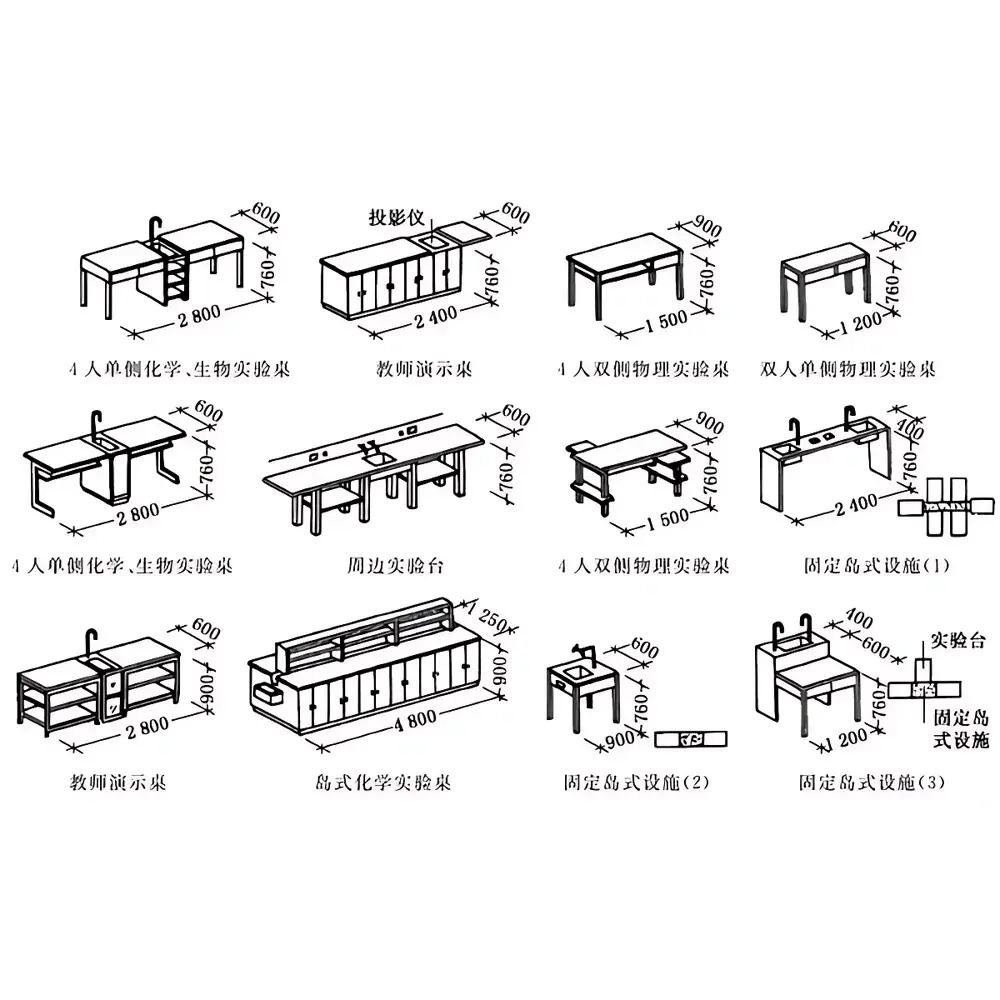
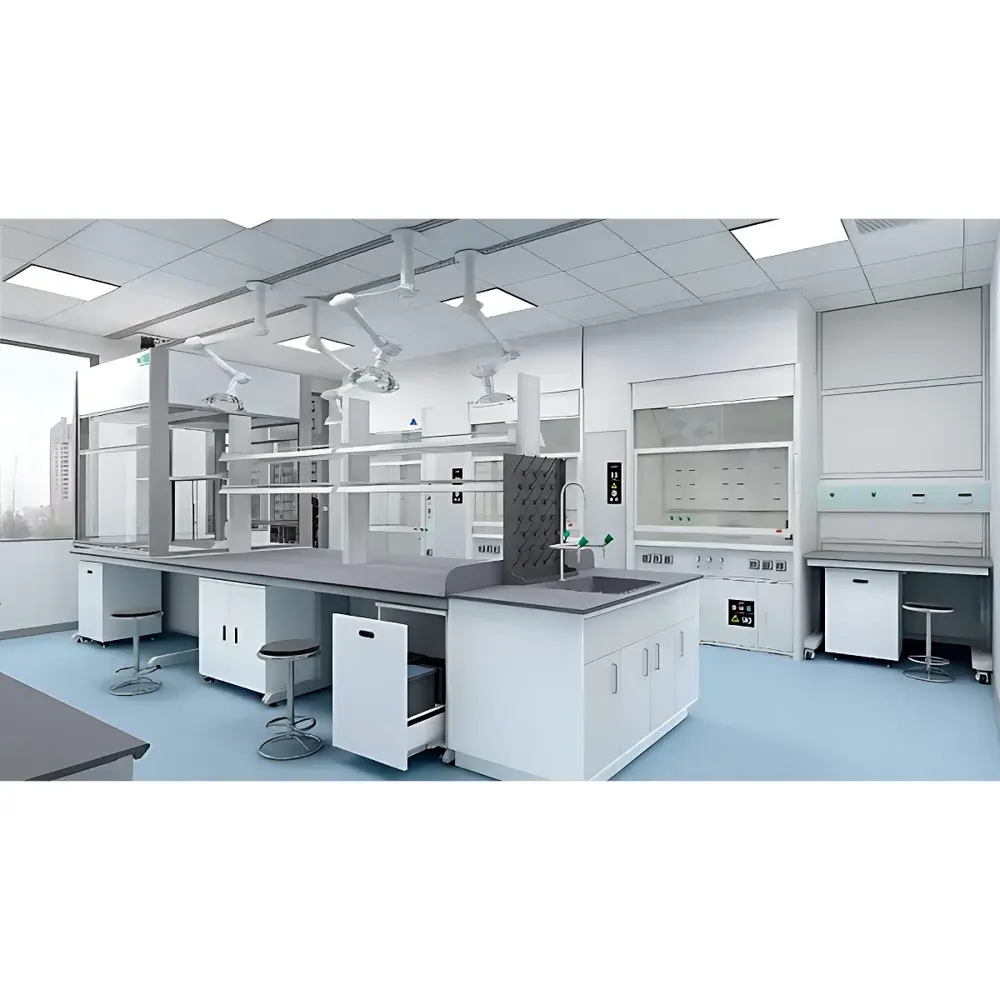
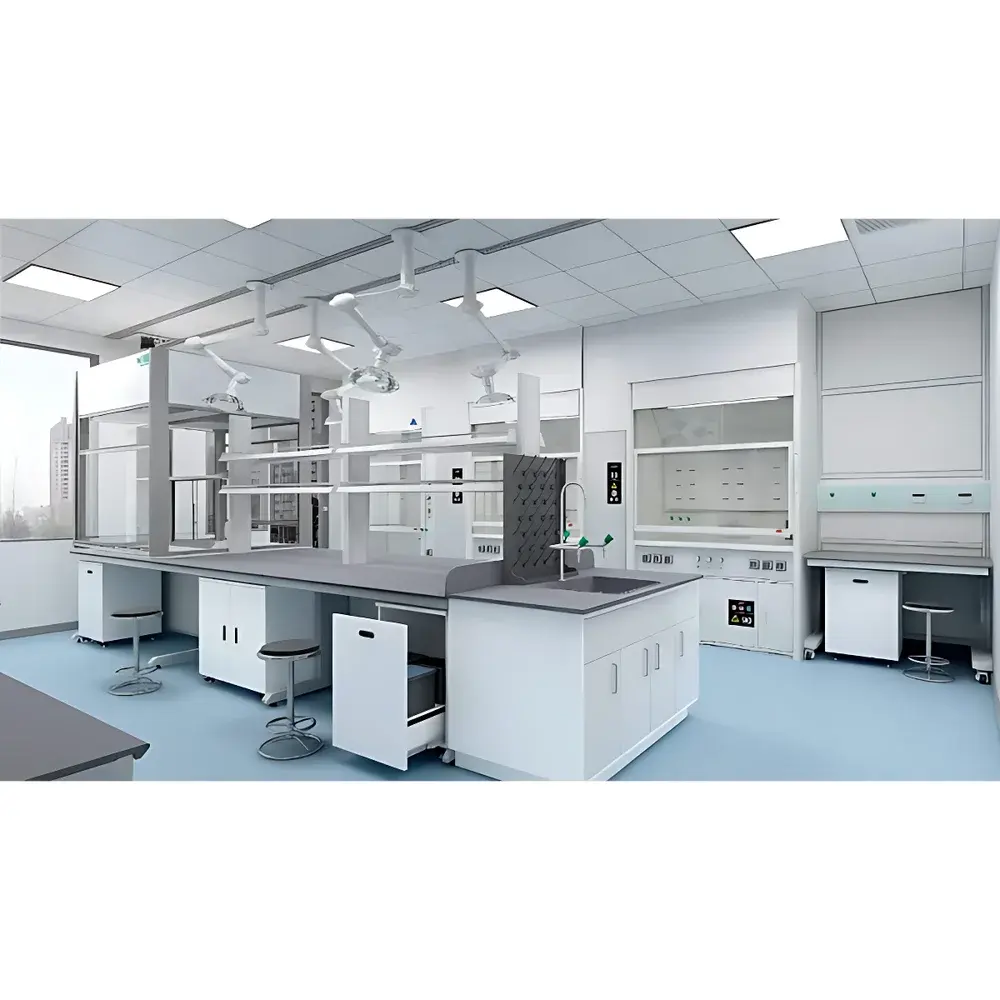
- Customizable laboratory furniture systems: central workstations (steel-wood or all-steel construction), perimeter benches, corner units, and specialized storage cabinets—including chemical-resistant reagent cabinets, ventilated flammable storage cabinets (per NFPA 30 and OSHA 1910.106), gas cylinder enclosures with seismic bracing, and acid/corrosive storage units with PP or epoxy-coated interiors
- Fume hood and ventilation system engineering: specification of ducted and ductless hoods (PP, stainless steel, fiberglass-reinforced plastic), capture velocity validation, airflow balancing, and stack discharge compliance; integration with scrubber towers, axial fans, and acoustic attenuation components
- Ergonomic optimization: bench heights (720–860 mm adjustable), knee clearance dimensions, monitor arm positioning, and task lighting integration aligned with ISO 6385 and EN 614-1 human factors guidelines
- Modular scalability: standardized mounting interfaces, cable management raceways, and utility pendants designed for future reconfiguration without structural modification
Sample Compatibility & Compliance
The design methodology accommodates diverse laboratory typologies—including wet chemistry, metallurgical sample preparation (crushers, ball mills, ash furnaces), elemental analysis suites (ICP-OES, ICP-MS, AAS), and precision weighing environments (analytical balance rooms with vibration isolation). All furniture structures comply with GB/T 3325–2017 (Chinese national standard for metal laboratory furniture) and incorporate fire-retardant substrates meeting ASTM E84 Class A surface burning criteria. Ventilation systems are engineered to achieve face velocities of 0.4–0.6 m/s per ANSI Z9.5 and maintain <1 ppm containment for hazardous vapors during full-load operation. Layouts support GLP/GMP documentation requirements by enabling clear separation of pre-analytical, analytical, and post-analytical zones.
Software & Data Management
Design deliverables include dimensionally accurate 2D floor plans (AutoCAD DWG/DXF), photorealistic 3D renderings (Revit/BIM-compatible), and interactive walkthrough models for stakeholder review. All documentation is archived with version control, revision timestamps, and change logs to satisfy internal QA traceability and external audit requirements (e.g., FDA 21 CFR Part 11–aligned record retention protocols). BIM models embed metadata for MEP clash detection, material specifications, and maintenance scheduling—facilitating seamless handover to contractors and facility managers.
Applications
This service supports academic research labs requiring flexible reconfiguration; pharmaceutical QC labs needing strict segregation between raw material handling and finished product testing; mining/metallurgical labs integrating heavy-duty sample prep equipment with dust suppression; and environmental testing facilities managing hazardous waste streams. It is equally applicable to ISO 14644-compliant cleanrooms, biosafety level 2 (BSL-2) containment labs, and forensic evidence processing suites where chain-of-custody spatial logic is critical.
FAQ
Does the service include structural engineering certification for custom bench loads?
Yes—load-bearing capacity calculations and anchoring specifications are provided for all fixed furniture installations, with optional third-party structural review.
Can designs accommodate future upgrades to automated liquid handlers or robotic arms?
Affirmative. Utility pathways, power redundancy, and floor loading allowances are pre-engineered for robotic integration per ISO 8553 and IEC 61508 functional safety frameworks.
Is ventilation system performance validated via commissioning reports?
All installed ventilation systems undergo TAB (Testing, Adjusting, Balancing) with certified airflow measurements, hood face velocity mapping, and tracer gas containment testing per ASHRAE 110.
Are material safety data sheets (MSDS/SDS) included for all specified finishes and coatings?
Yes—epoxy resin, phenolic resin, stainless steel 304/316, and polypropylene components are supplied with full SDS documentation compliant with GHS and REACH regulations.



