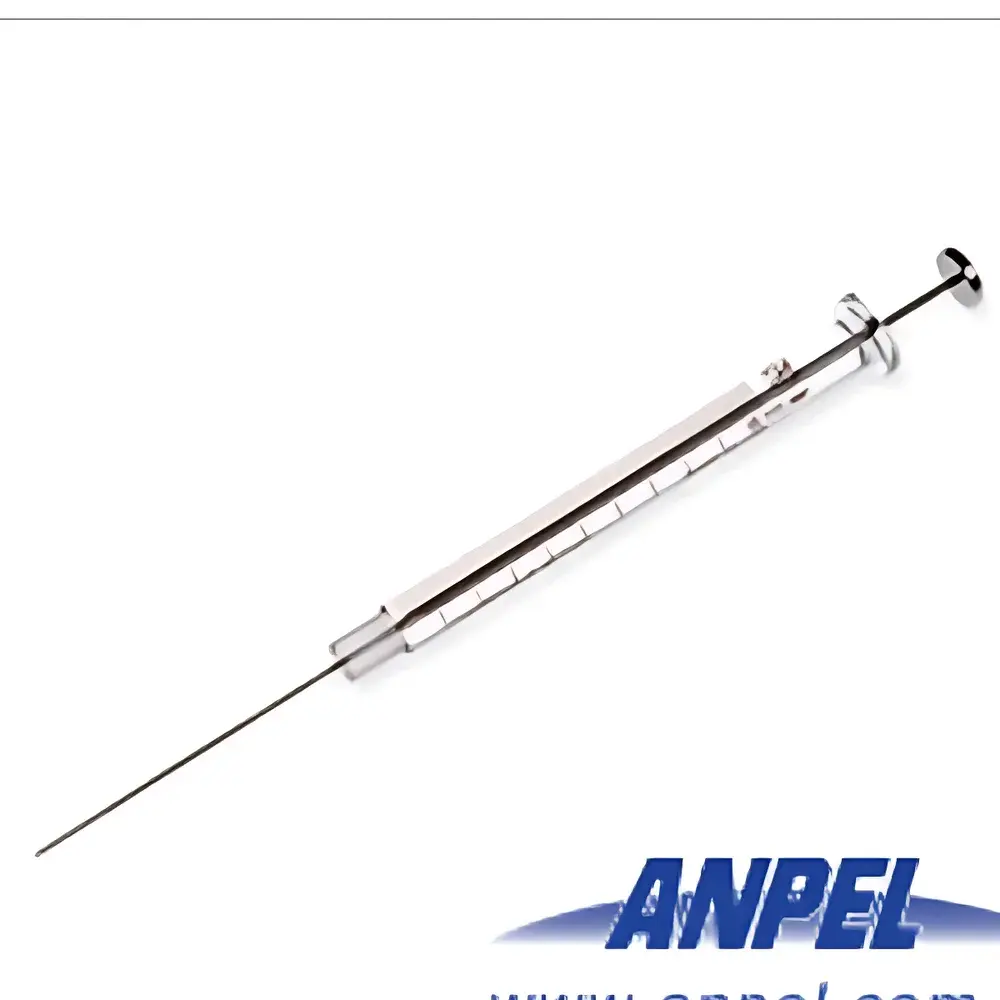
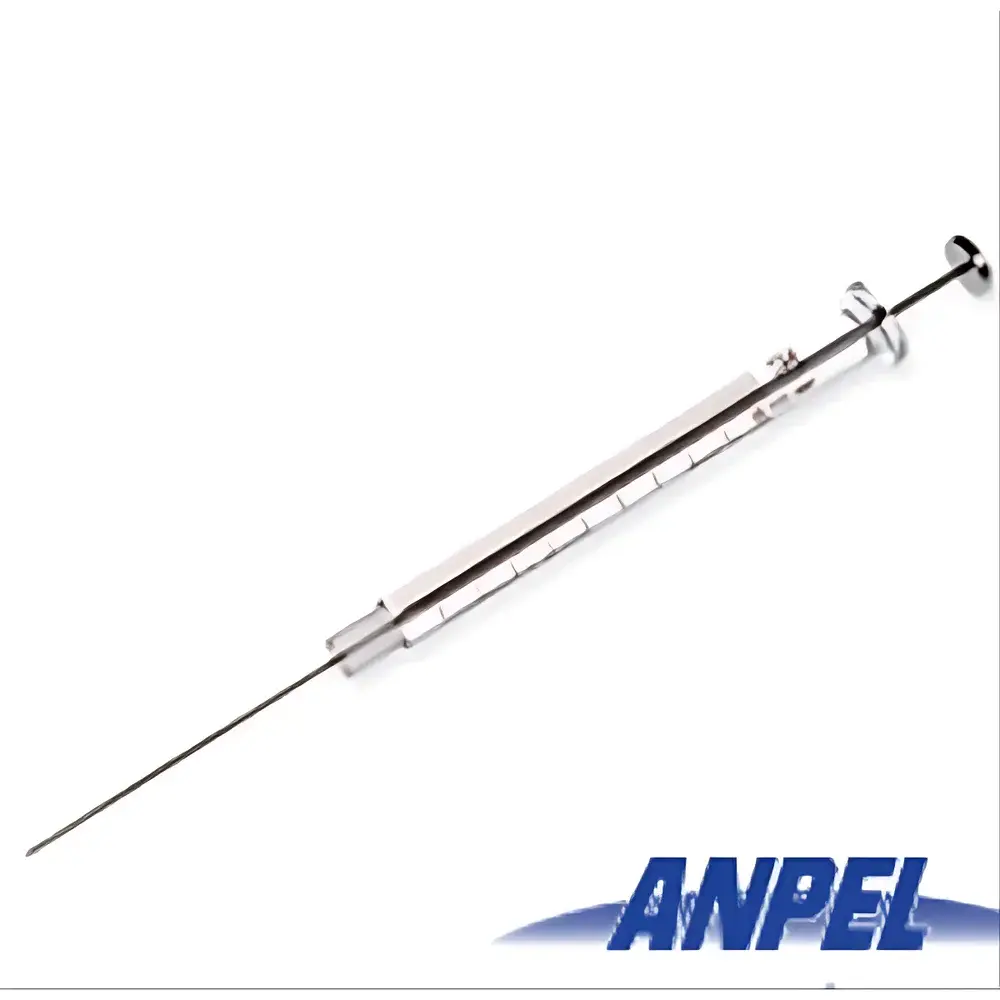
Hamilton 1700 Series N-Type Gas-Tight Syringe, Model GFGJ-81000
| Brand | Hamilton |
|---|---|
| Origin | USA |
| Model | GFGJ-81000 |
| Capacity | 10–500 µL |
| Needle Gauge Options | 26s (OD 0.47 mm, ID 0.13 mm), 22s, 22 (OD 0.72 mm, ID 0.41 mm), 25 |
| Needle Length | 2 in (51 mm) |
| Volume per Inch (26s) | 0.26 µL/in |
| Volume per Inch (22) | 3.35 µL/in |
| Type | N-type (fixed needle, gas-tight plunger seal) |
Overview
The Hamilton 1700 Series N-Type Gas-Tight Syringe (Model GFGJ-81000) is a precision-engineered manual syringe designed for accurate and reproducible sample introduction into gas chromatography (GC), headspace analysis, and other analytical systems requiring leak-free liquid or gaseous sample handling. Built on Hamilton’s legacy of high-fidelity fluid handling, the 1700 Series employs a proprietary PTFE-coated stainless steel plunger with a fluoropolymer sealing system to achieve true gas-tight performance across its full operational range. Unlike Luer-lock or removable-needle variants, the N-type configuration features a permanently affixed needle—optimized for consistent dead-volume control, minimal carryover, and long-term dimensional stability under repeated thermal cycling and solvent exposure. This design eliminates variability introduced by needle attachment torque or alignment drift, making it especially suitable for quantitative GC methods where injection repeatability and method transferability are critical.
Key Features
- Gas-tight integrity: Validated for pressures up to 100 psi and compatible with volatile organic compounds (VOCs), permanent gases (e.g., H2, O2, CO), and corrosive solvents including chlorinated and polar aprotic media.
- N-type fixed-needle architecture: Needle is laser-welded to the barrel, ensuring zero axial play and eliminating plunger wobble—critical for automated injector compatibility and manual push/pull consistency.
- High-precision glass barrel: Borosilicate glass with laser-etched scale (±1% volumetric accuracy per ASTM E542), calibrated at 20 °C, traceable to NIST standards.
- Chemically resistant components: Plunger tip and seal utilize chemically inert polyimide-reinforced PTFE; barrel interior is passivated to prevent adsorption of active analytes (e.g., amines, acids, metals).
- Modular needle options: Interchangeable needle gauges (26s, 22s, 22, 25) allow optimization for viscosity, volatility, and inlet liner geometry—26s (0.47 mm OD / 0.13 mm ID) minimizes sample dispersion for trace-level injections; 22 (0.72 mm OD / 0.41 mm ID) supports higher flow rates for viscous or particulate-containing samples.
Sample Compatibility & Compliance
The GFGJ-81000 complies with key regulatory and methodological requirements for analytical laboratories operating under GLP, GMP, and ISO/IEC 17025 frameworks. Its gas-tight performance meets ASTM D3795 (standard test method for determination of vapor pressure of petroleum products) and USP material compatibility guidelines. The syringe is routinely validated in pharmacopeial methods (USP , EP 2.2.46) for residual solvent analysis and impurity profiling. All materials contacting sample—barrel, plunger, needle, and seal—are extractables-tested per USP and meet FDA 21 CFR Part 177 requirements for food-contact and pharmaceutical use. Batch-specific certificates of conformance and calibration reports are available upon request for audit readiness.
Software & Data Management
While the GFGJ-81000 is a manual syringe and does not integrate firmware or onboard electronics, it is fully compatible with laboratory data management systems (LIMS) and electronic lab notebooks (ELN) through standardized documentation workflows. Users may assign unique asset IDs, log calibration history, and record usage logs—including needle replacement dates, cleaning protocols, and observed deviations—within compliant digital records. For labs implementing 21 CFR Part 11 compliance, Hamilton provides template SOPs for syringe qualification (IQ/OQ), preventive maintenance scheduling, and traceable calibration procedures aligned with Annex 11 principles. Audit trails for syringe-related activities can be maintained within validated ELN platforms such as LabWare LIMS or Thermo Fisher SampleManager.
Applications
- Quantitative injection of calibration standards and unknowns in capillary GC and GC-MS analyses.
- Headspace sampling for volatile compound profiling in environmental water, soil extracts, and polymer leachates.
- Manual injection into thermal desorption units and purge-and-trap concentrators.
- Preparation of certified reference material dilutions in metrology labs accredited to ISO/IEC 17025.
- Method development for high-boiling-point analytes requiring precise volume delivery without phase separation or vapor lock.
FAQ
What distinguishes the N-type from the RN or LT-type Hamilton syringes?
The N-type features a permanently attached needle, whereas RN (Removable Needle) and LT (Luer Tip) variants allow needle interchangeability. N-type offers superior positional repeatability and lower dead volume, ideal for automated injectors and high-precision manual work.
Is the GFGJ-81000 suitable for use with aggressive solvents like DMSO or TFA?
Yes—the PTFE-plunger seal and passivated borosilicate barrel provide robust resistance to DMSO, trifluoroacetic acid (TFA), and other highly polar or acidic solvents when used within recommended temperature limits (–20 °C to +60 °C).
How often should the syringe be recalibrated?
Annual calibration is recommended for routine QC use; however, calibration frequency must be justified per risk assessment and aligned with internal SOPs—especially when used in regulated environments or for measurements affecting batch release decisions.
Can this syringe be autoclaved?
No—autoclaving will degrade the fluoropolymer seal and compromise gas-tight integrity. Sterilization, if required, should be performed using ethylene oxide (EtO) or vaporized hydrogen peroxide (VHP), followed by full functional verification.
Does Hamilton provide traceable calibration certificates with this model?
Yes—NIST-traceable calibration certificates (including uncertainty budgets per ISO/IEC 17025) are available as an optional add-on at time of order or as a post-purchase service.
Related Products