
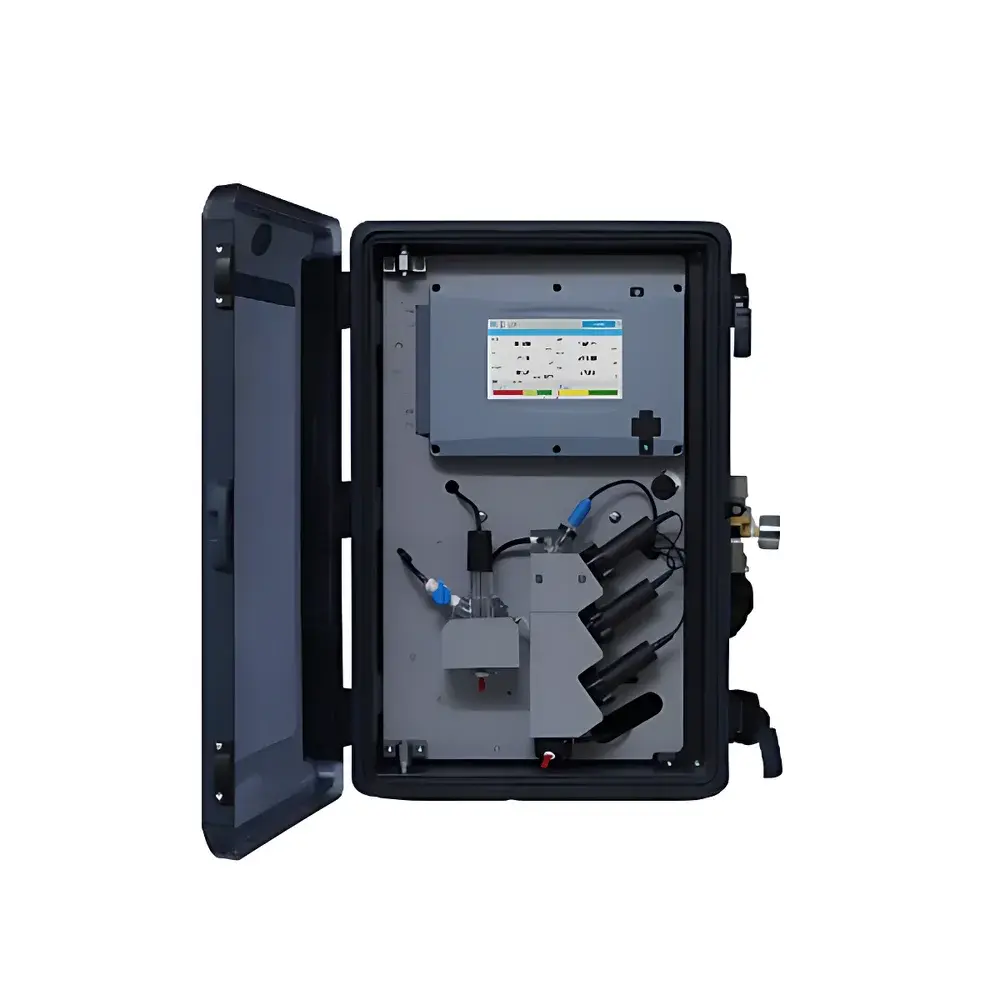
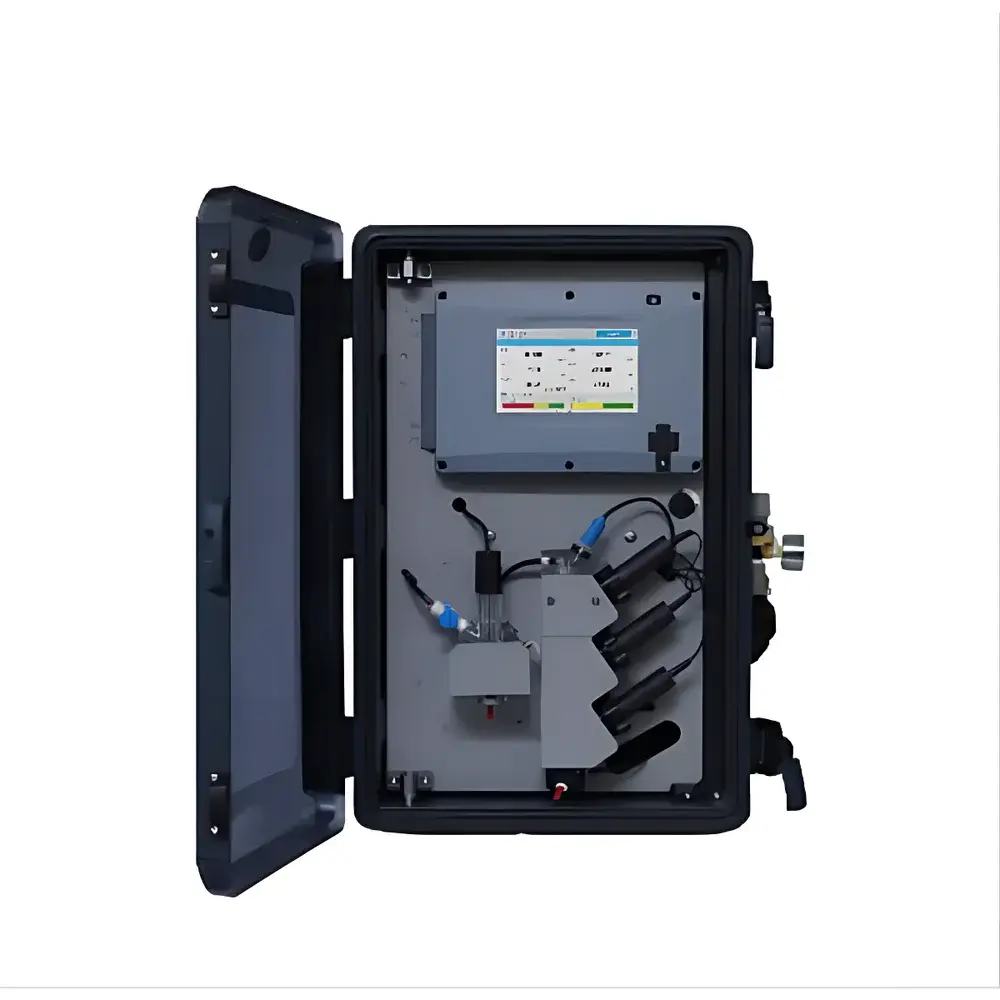
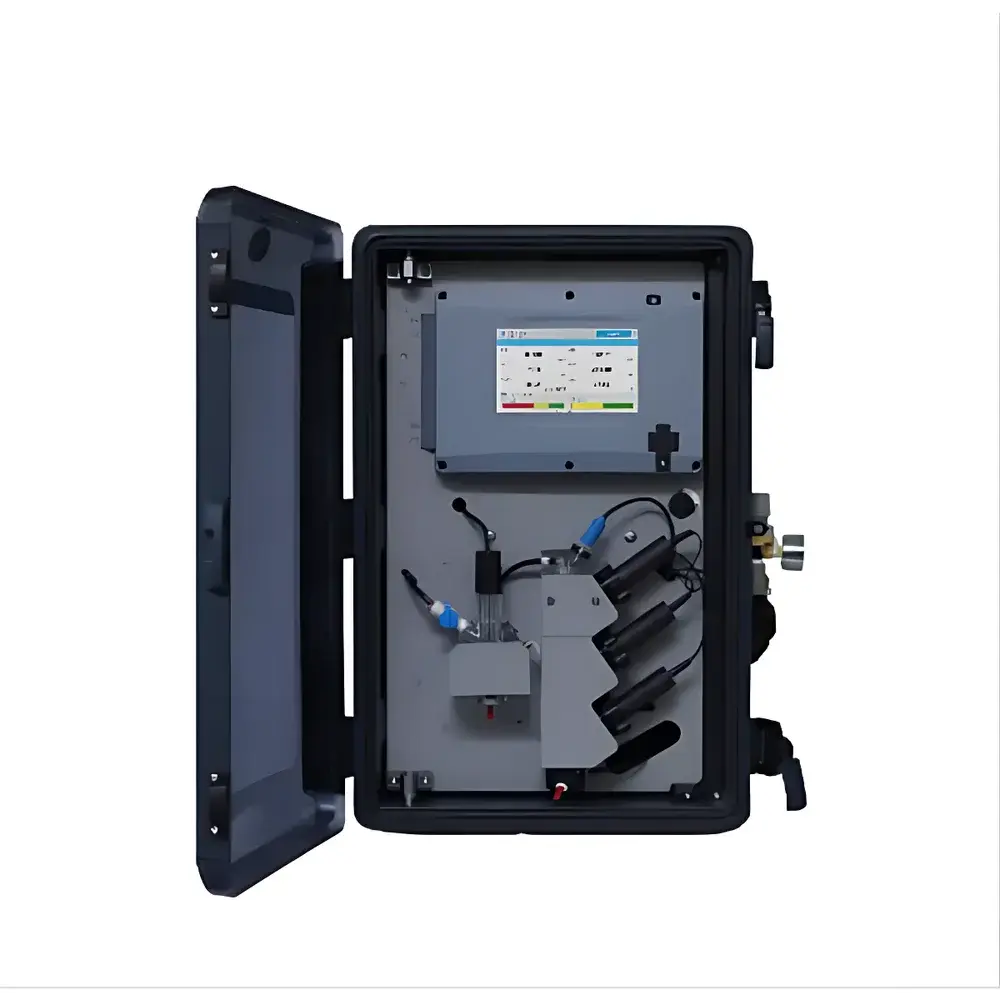
Hach MS5100 Multi-Parameter Online Water Quality Analyzer
| Brand | Hach |
|---|---|
| Origin | Shanghai, China |
| Manufacturer Type | Authorized Distributor |
| Origin Category | Domestic (China) |
| Model | MS5100 |
| Instrument Type | Online Water Quality Analyzer |
| Measurement Principle | Electrochemical Detection (Free Chlorine & Chlorine Dioxide), Nephelometry (Turbidity), Potentiometric (pH & ORP), Conductometric (Conductivity) |
| Measured Parameters | Free Chlorine, Chlorine Dioxide, Turbidity, pH, ORP, Conductivity, Temperature |
| Measurement Ranges | Free Chlorine: 0–10 mg/L as Cl₂ |
| Chlorine Dioxide | 0–5 mg/L |
| Repeatability | Free Chlorine: ±1% or ±0.01 mg/L (whichever is greater) |
| Chlorine Dioxide | ±1.5% or ±0.01 mg/L (whichever is greater) |
| Detection Limit | 0.008 mg/L Cl₂ (at 25 °C) |
| Accuracy | ±10% (4–5 mg/L Cl₂ range) |
| Sample Temperature Range | 5–40 °C |
| Operating Humidity | 0–90% RH (non-condensing) |
| Dimensions | 342 mm × 329 mm × 177 mm |
Overview
The Hach MS5100 Multi-Parameter Online Water Quality Analyzer is an integrated, rack-mountable instrumentation platform engineered for continuous, real-time monitoring of critical water quality parameters in municipal drinking water distribution systems, wastewater treatment effluent streams, and industrial process water loops. It employs a combination of validated electrochemical, nephelometric, potentiometric, and conductometric measurement principles—each aligned with established ASTM and ISO reference methodologies—to deliver stable, field-deployable performance under variable hydraulic and environmental conditions. The analyzer simultaneously quantifies free chlorine and chlorine dioxide via membrane-free amperometric sensors, turbidity via 90° scattered-light nephelometry compliant with ISO 7027, pH and ORP via dual-junction glass and Ag/AgCl electrodes with automatic temperature compensation, and conductivity via four-electrode conductivity cells to minimize polarization effects. Its compact footprint (342 × 329 × 177 mm) and modular flow cell architecture support rapid integration into existing SCADA-controlled monitoring stations without requiring major civil or piping modifications.
Key Features
- Integrated seven-parameter monitoring: free chlorine, chlorine dioxide, turbidity, pH, ORP, conductivity, and temperature—measured concurrently from a single sample stream.
- Patented serial-flow hydraulic design minimizes total sample consumption while maintaining laminar flow profiles required for reproducible electrochemical and optical measurements.
- Self-cleaning free chlorine sensor with programmable automatic cleaning cycle extends maintenance intervals up to 30 days under typical municipal application conditions.
- Modular, snap-fit electrochemical flow cells enable tool-free disassembly for electrode inspection, calibration verification, and fouling mitigation—reducing mean time to repair (MTTR) to under 15 minutes.
- Flanged pH, ORP, and conductivity electrodes utilize double O-ring seals and pressure-balanced reference junctions to ensure long-term stability in fluctuating pressure environments.
- Dynamic water-saving mode adjusts sample flow rate in real time based on analytical demand and system pressure—reducing average water consumption by up to 65% versus fixed-flow alternatives.
Sample Compatibility & Compliance
The MS5100 is designed for use with potable water, filtered surface water, clarified secondary effluent, and low-turbidity industrial process streams (up to 100 NTU). All wetted materials—including fluoropolymer-lined flow cells, PEEK sensor housings, and platinum/gold working electrodes—meet NSF/ANSI Standard 61 requirements for drinking water system components. Turbidity measurement conforms to ISO 7027:2016 (nephelometric method); free chlorine and chlorine dioxide detection follows EPA Method 334.0 principles for amperometric residual analysis. The instrument’s firmware supports audit-trail logging per FDA 21 CFR Part 11 requirements when deployed in regulated utilities operating under GLP or GMP frameworks. Calibration verification records, sensor diagnostics, and alarm event timestamps are stored locally with optional secure export via Modbus TCP or HART-IP protocols.
Software & Data Management
Data acquisition and system configuration are managed through Hach’s proprietary Insight™ Web Interface—a responsive HTML5-based platform accessible via standard web browsers on desktops, tablets, or mobile devices. The interface provides real-time trend visualization, configurable alarm thresholds (with hysteresis), multi-level user access control (operator, technician, administrator), and automated report generation (PDF/CSV) compliant with ISO/IEC 17025 documentation standards. All raw sensor outputs—including millivolt signals, temperature-compensated conductivity values, and raw photodiode current readings—are timestamped at 1-second resolution and retained onboard for ≥30 days. Optional cloud synchronization enables remote diagnostic support and predictive maintenance alerts based on historical drift trends and cleaning cycle frequency.
Applications
- Municipal drinking water disinfection control at clearwell outlets and booster station injection points.
- Chlorine dioxide dosing optimization in food processing rinse water systems.
- Real-time turbidity and pH monitoring upstream of membrane filtration units in advanced water reclamation plants.
- ORP and conductivity trending for corrosion potential assessment in closed-loop cooling water systems.
- Compliance reporting for regulatory submissions under the U.S. Safe Drinking Water Act (SDWA) and EU Drinking Water Directive (2020/2184).
FAQ
What is the minimum detectable concentration for free chlorine?
The detection limit is 0.008 mg/L as Cl₂ at 25 °C, verified per EPA Method 334.0 validation criteria.
Does the MS5100 require reagent addition for chlorine measurement?
No—free chlorine and chlorine dioxide are measured using membrane-free amperometric sensors; no chemical reagents, buffers, or carrier solutions are consumed during operation.
Can the analyzer operate in outdoor enclosures with ambient temperature fluctuations?
Yes—when installed in NEMA 4X-rated cabinets with active thermal management, the MS5100 maintains specification compliance across 5–40 °C sample temperature and 0–90% non-condensing relative humidity.
How often must the turbidity sensor be cleaned manually?
Under typical low-fouling conditions (e.g., filtered surface water), manual cleaning is recommended every 90 days; the integrated air-bubble removal chamber significantly reduces scattering artifacts caused by entrained gas.
Is third-party calibration certification available?
Hach-certified calibration services include traceable NIST-standard verification for all primary sensors, with full documentation provided in accordance with ISO/IEC 17025:2017 requirements.
Related Products







