
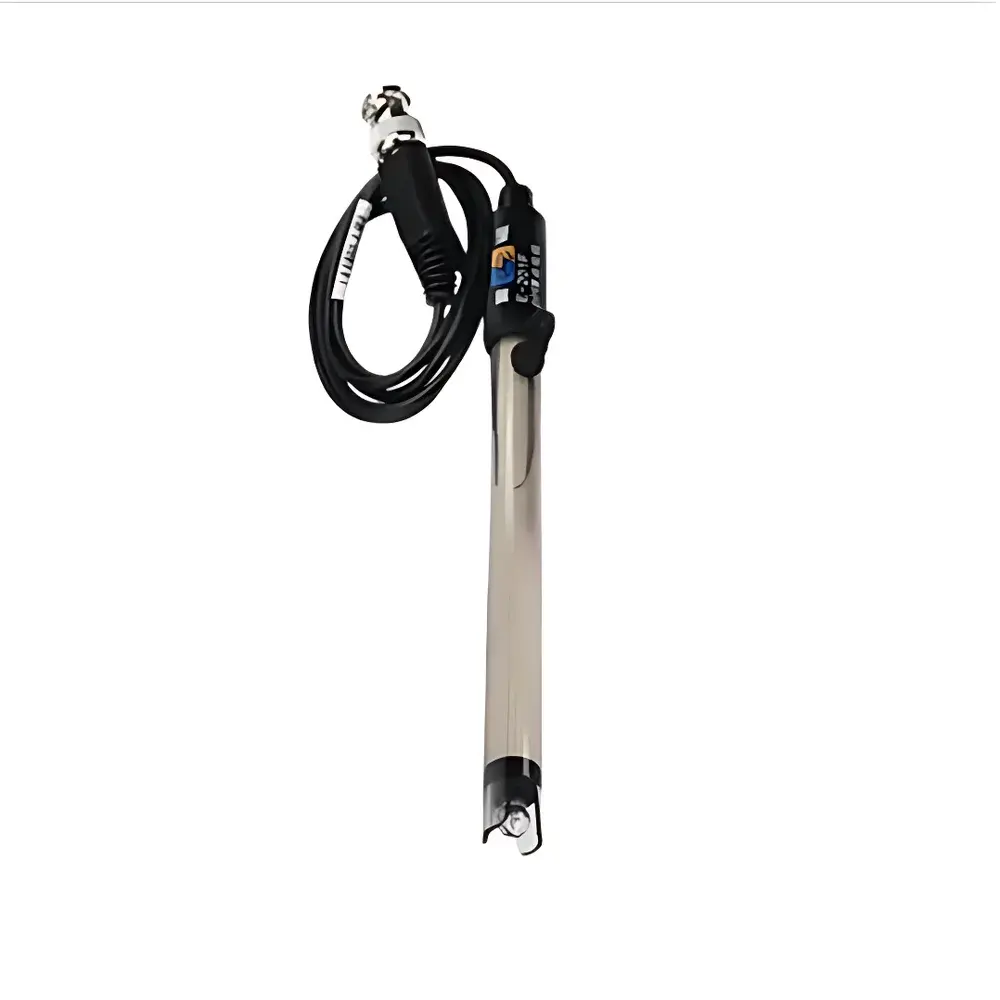
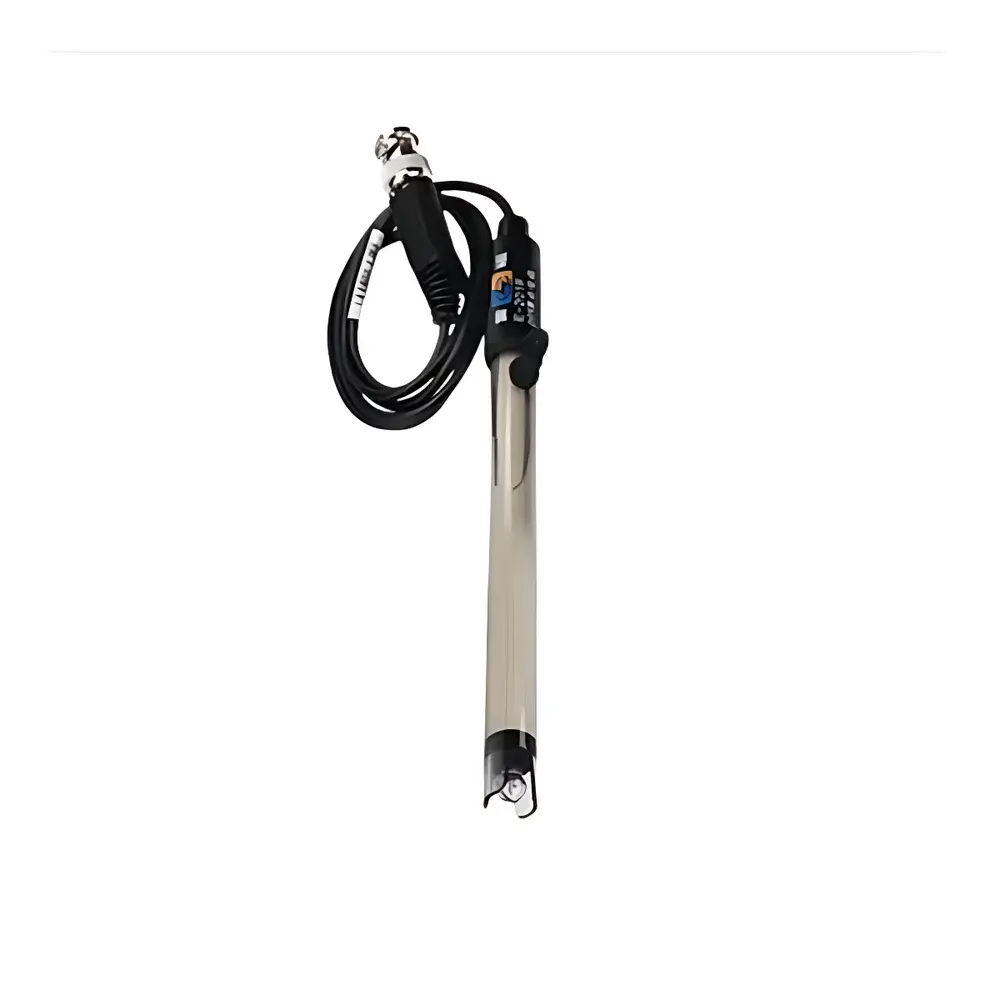
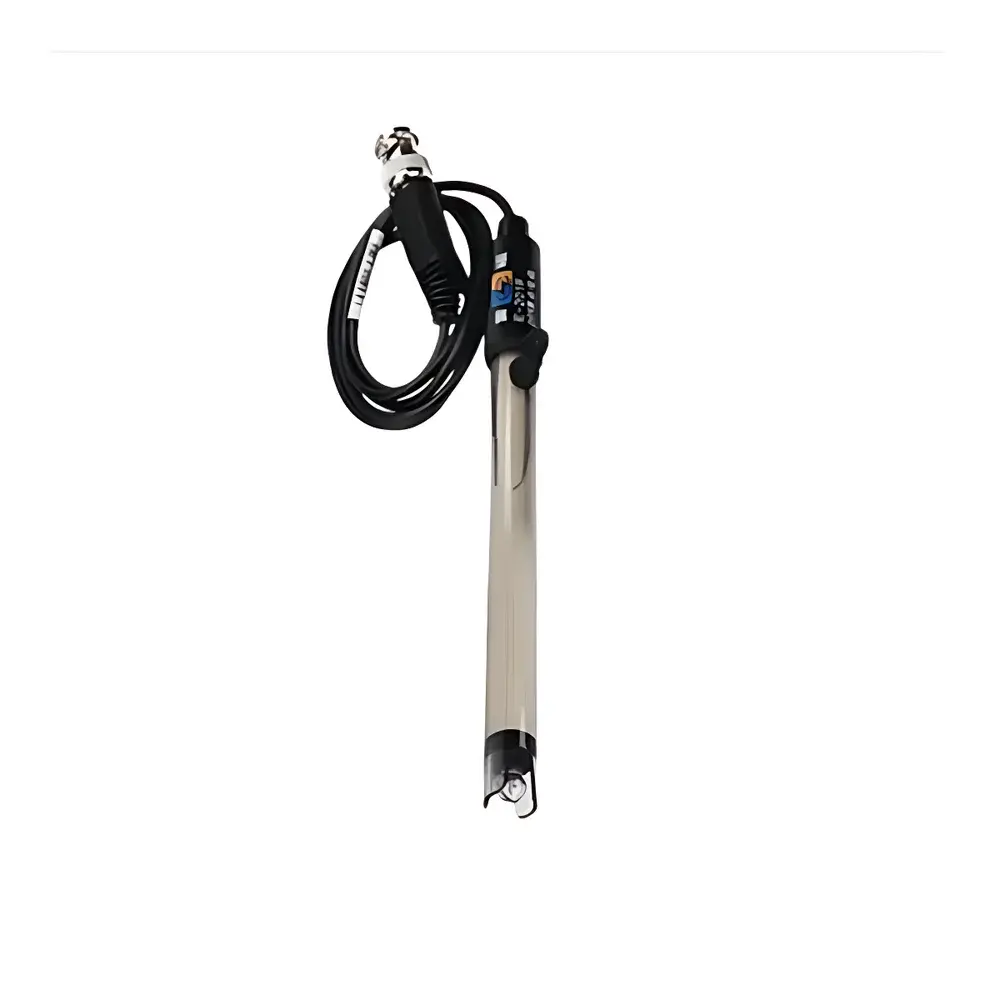
Leici E-201F Refillable Combination pH Electrode
| Brand | Leici |
|---|---|
| Origin | Shanghai, China |
| Model | E-201F |
| Electrode Type | Single-Unit Combination |
| Application | In Vivo & Routine Aqueous Solutions |
| Electrode Dimensions | 12 mm diameter × 120 mm total length |
| Inter-electrode Spacing | 10 mm |
| Electrode Configuration | Integrated Ag/AgCl Reference + Glass pH-Sensing Element |
| Housing Material | Polycarbonate |
| Junction Type | Fibrous Liquid Junction |
| Connector | BNC (Q9) |
| Temperature Range | 5–60 °C |
| pH Range | 0–14 |
| Refillable Reference Chamber | Yes |
| Protective Foot | Fixed, Non-removable |
| Included Accessories | Electrode Storage Bottle + KCl Fill Powder Kit |
Overview
The Leici E-201F is a refillable combination pH electrode engineered for reliable, stable potentiometric pH measurement in both routine laboratory and controlled in vivo applications. It integrates a pH-sensitive glass membrane and an internal Ag/AgCl reference element within a single polycarbonate body, eliminating the need for separate reference and measuring electrodes. Its design adheres to conventional electrochemical principles of the hydrogen ion activity measurement via Nernstian response (−59.16 mV/pH at 25 °C), with inherent compensation for liquid junction potential through a fibrous ceramic junction. Unlike sealed or gel-filled variants, the E-201F features an open, refillable reference chamber—enabling continuous replenishment of saturated KCl electrolyte to maintain stable junction potential and minimize drift during extended monitoring or low-conductivity sample analysis. The fixed protective foot ensures mechanical stability during insertion into soft tissues or semi-solid matrices, while the BNC (Q9) connector ensures universal compatibility with Leici’s full range of benchtop and portable pH meters—including PHS-3C, PHS-3G, and PHSJ-3F series—without signal attenuation or grounding interference.
Key Features
- Refillable Ag/AgCl reference system with dedicated KCl fill port and included KCl powder kit for on-site reconstitution of saturated electrolyte
- Fibrous liquid junction providing consistent, low-resistance electrolyte outflow—optimized for reproducible potential stability across variable sample viscosities
- Robust polycarbonate housing rated for repeated sterilization (autoclavable up to 121 °C for 15 min, non-continuous cycles) and resistant to common organic solvents and biological fouling agents
- Fixed 12-mm-diameter cylindrical sensing tip with integrated 10-mm inter-electrode spacing—designed to minimize spatial averaging error in heterogeneous or layered biological samples
- BNC (Q9) connector with gold-plated contacts ensuring low-noise signal transmission and long-term corrosion resistance
- Integrated protective foot (non-removable) for standardized insertion depth control and physical shielding of the glass membrane during in vivo tissue penetration
Sample Compatibility & Compliance
The E-201F is validated for use in aqueous solutions, cell culture media, tissue homogenates, and low-to-moderate conductivity biological fluids (conductivity ≥50 µS/cm). It meets ISO 3696:1987 Grade 3 water purity requirements for calibration and rinsing protocols. While not certified for implantation under ISO 10993, its materials comply with USP Class VI biocompatibility testing for short-term (<24 h) in vivo contact per ASTM F748 guidelines. The electrode supports GLP-compliant workflows when used with Leici pH meters equipped with audit-trail logging (e.g., PHSJ-5E with firmware v2.4+), enabling traceable calibration records, electrode ID tagging, and temperature-compensated slope verification per USP and EP 2.2.3.
Software & Data Management
When paired with Leici’s PHSJ-series meters, the E-201F enables automated electrode diagnostics—including asymmetry potential check (±30 mV tolerance), slope validation (≥95% theoretical Nernstian response), and junction resistance estimation via impedance sweep. Raw mV and pH data are exportable via USB or RS-232 to Leici LabLink Pro software (v4.2+), which supports CSV/TXT output, time-stamped multi-channel logging, and compliance-ready PDF report generation with embedded calibration certificates. All data files retain embedded metadata (electrode ID, date/time, operator tag, ambient temperature), satisfying FDA 21 CFR Part 11 requirements for electronic records when deployed with appropriate system validation documentation.
Applications
- In vivo extracellular pH monitoring in rodent brain slices or subcutaneous tumor xenografts under acute experimental conditions
- Quality control of buffered saline formulations, fermentation broths, and cell culture media in bioprocessing labs
- Stability testing of pH-sensitive biologics (e.g., monoclonal antibodies, mRNA-LNPs) across accelerated storage conditions
- Educational demonstrations of Nernst equation derivation and liquid junction potential effects in undergraduate analytical chemistry labs
- Field-deployable pH verification in environmental water sampling where electrode longevity and recalibration frequency are critical constraints
FAQ
Is the E-201F suitable for long-term implantation in live animals?
No—it is intended for acute, non-permanent in vivo use only (≤4 hours). Chronic implantation requires ISO 10993-certified electrodes with hermetic sealing and chronic biocompatibility validation.
What is the recommended storage solution for the E-201F between measurements?
Store upright in 3 M KCl solution inside the supplied protective bottle; avoid distilled water or dry storage to prevent glass membrane dehydration and reference junction clogging.
Can this electrode be used with non-Leici pH meters?
Yes—any meter with standard BNC (Q9) input and compatible input impedance (>10¹² Ω) will function correctly; however, advanced diagnostics and auto-recognition features require Leici-compatible firmware.
How often should the reference electrolyte be refilled?
Refill when the electrolyte level drops below the fill port mark—or at minimum before each daily calibration cycle—to ensure junction stability and measurement reproducibility.
Does the fixed protective foot affect measurement accuracy in homogeneous solutions?
No—the foot does not interfere with diffusion equilibrium at the sensing surface; it primarily serves mechanical protection and insertion depth consistency, with negligible impact on response time (<15 s to ±0.02 pH in stirred buffer).



