
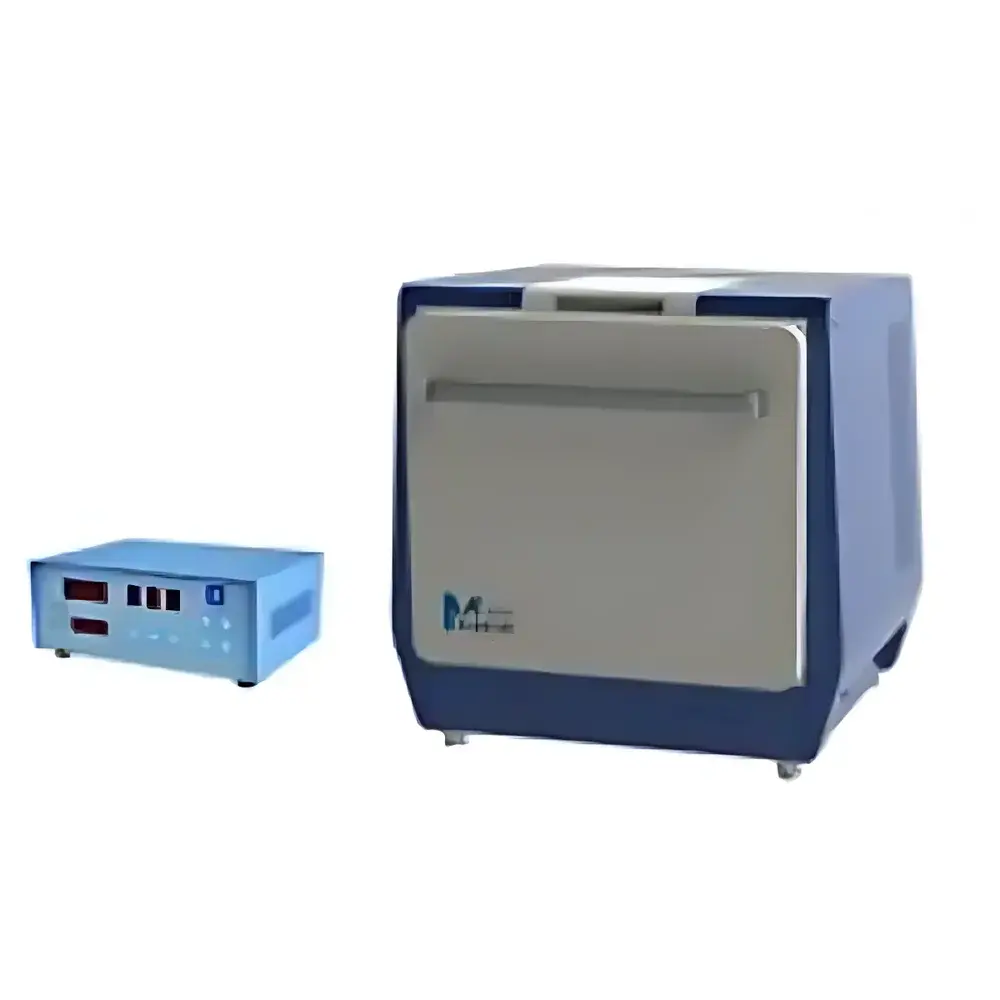
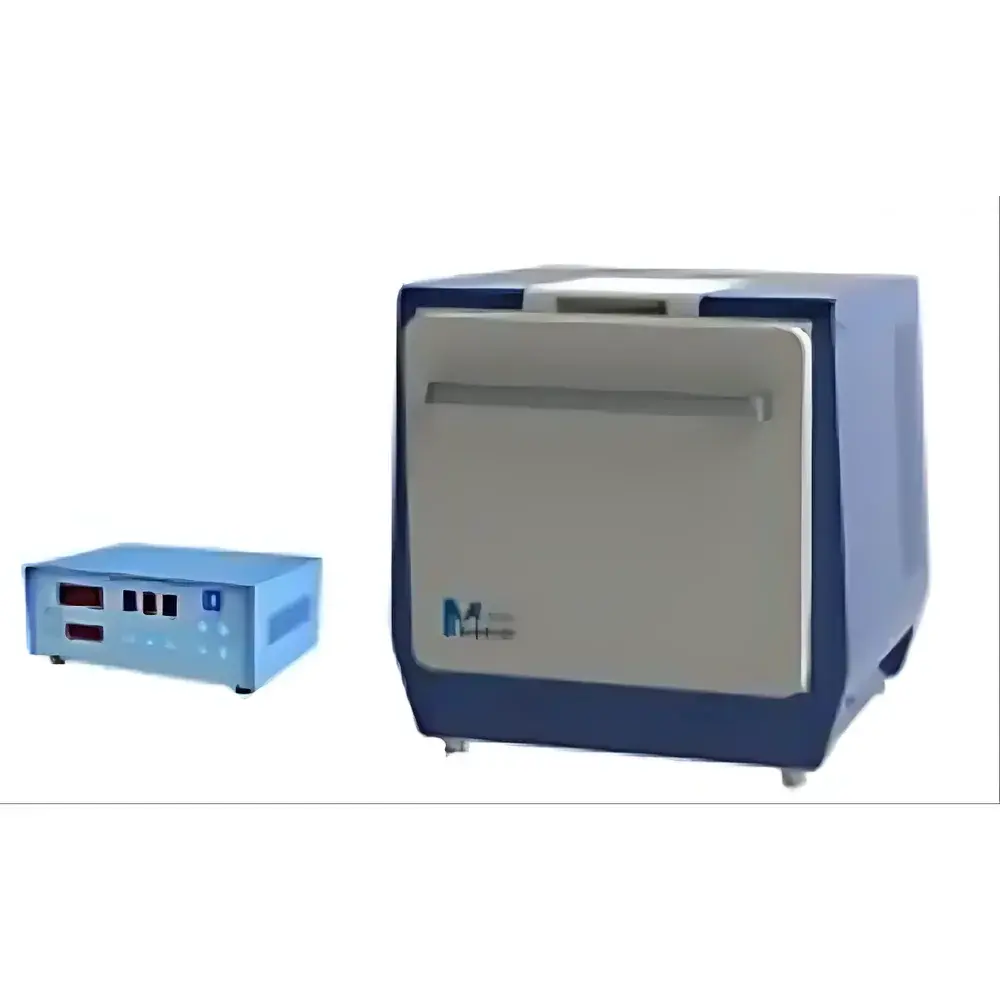
Ying’an Meicheng MICHEM ME Series Microwave Digestion System
| Brand | Ying'an Meicheng |
|---|---|
| Origin | Beijing, China |
| Manufacturer Type | Authorized Distributor |
| Product Origin | Domestic (China) |
| Model | ME Series |
| Pricing | Available Upon Request |
| Cavity Rating | Industrial-Grade |
| Sample Capacity | Up to 10 Vessels per Run |
| Microwave Source | Magnetron-Based, Frequency-Variable (PID-Controlled) |
| Max Temperature | 300 °C |
| Temp Measurement Accuracy | ±0.5 °C |
| Max Pressure | 6 MPa (870 psi) |
| Pressure Measurement Method | Direct Contact, Real-Time Transducer |
| Pressure Control Resolution | 0.01 MPa |
| Safety Features | Dual Interlock Door Lock, Rupture Discs (200 psi & 400 psi), Overpressure/Overtemperature Auto-Shutdown, Pt100 Integrated Temperature Monitoring |
Overview
The Ying’an Meicheng MICHEM ME Series Microwave Digestion System is an industrial-grade sample preparation platform engineered for high-efficiency, reproducible, and trace-metal-safe digestion of diverse matrices—including soils, biological tissues, polymers, foodstuffs, and environmental samples. It operates on the principle of microwave-assisted acid digestion, where controlled electromagnetic energy (2.45 GHz) couples directly with polar molecules (e.g., HNO₃, HCl, HF) to induce rapid, volumetric heating within sealed quartz or TFM-lined PTFE vessels. This non-contact, internal heating mechanism—combined with pressurized containment up to 6 MPa—enables accelerated reaction kinetics, reduced reagent consumption, and minimized volatilization losses of analytes such as As, Hg, Se, and Pb. Unlike conventional hotplate or block digesters, the ME Series achieves complete matrix decomposition in minutes rather than hours, aligning with modern laboratory demands for throughput, accuracy, and regulatory compliance.
Key Features
- Industrial-class stainless-steel cavity with reinforced waveguide shielding and forced-air cooling for sustained operation under high-power duty cycles.
- 360° reversible rotating turntable ensures uniform microwave field distribution across all sample positions—critical for inter-vessel precision and method reproducibility (RSD < 3% for certified reference materials).
- Real-time dual-parameter monitoring: integrated Pt100 platinum resistance thermometer (±0.5 °C accuracy, 0–300 °C range) and direct-contact pressure transducer (0–6 MPa, 0.01 MPa resolution).
- Multi-stage safety architecture: electromechanical door interlocks, redundant pressure relief discs (200 psi and 400 psi thresholds), automatic power cutoff at overtemperature (>305 °C) or overpressure (>6.2 MPa), and continuous cavity leakage monitoring.
- Frequency-variable magnetron control via PID algorithm—dynamically adjusts output power without duty-cycle interruption—improving energy efficiency by >20% versus fixed-frequency systems and reducing acoustic noise during operation.
- Modular vessel compatibility: supports standard 55 mL TFM-PTFE digestion vessels; optional quartz or high-pressure alloy configurations available for specialized applications (e.g., HF-resistant mineral digestion).
Sample Compatibility & Compliance
The ME Series is validated for use with EPA Methods 3051A, 3052, and ASTM D5511 for solid waste digestion, as well as ISO 11466 for soil and sediment analysis. Its closed-vessel design meets GLP requirements for trace-element integrity and minimizes blank contributions—achieving typical HNO₃ blanks < 0.5 ppb for Cd, Pb, and Cu. All digestion protocols are fully compatible with downstream instrumentation including ICP-MS, ICP-OES, AAS, and HG-AFS. The system’s pressure and temperature logging functionality supports audit-ready data trails compliant with FDA 21 CFR Part 11 when paired with validated third-party LIMS integration.
Software & Data Management
Controlled via a dedicated embedded touchscreen interface (no external PC required), the ME Series provides intuitive method programming with up to 20 customizable digestion ramps per protocol—including hold time, ramp rate, power profile, and safety threshold overrides. All thermal and pressure profiles are timestamped and stored internally (≥10,000 runs). Export options include CSV and PDF reports with digital signatures, supporting laboratory accreditation under ISO/IEC 17025. Optional Ethernet connectivity enables remote monitoring and centralized fleet management across multi-instrument labs.
Applications
- Routine heavy metal analysis in environmental monitoring (soils, sludges, airborne particulates)
- Trace element quantification in clinical and pharmaceutical samples (tissues, serum, excipients)
- Digestion of refractory materials—e.g., silicates, ceramics, and catalysts—prior to ICP-MS analysis
- Protein hydrolysis and peptide mapping for proteomics workflows
- Green chemistry applications: solvent-reduced extraction and catalytic synthesis under controlled microwave conditions
- Quality control testing in food safety labs (As, Cd, Pb in rice, seafood, infant formula)
FAQ
What types of digestion vessels are supported?
Standard 55 mL TFM-PTFE vessels are included; quartz and high-pressure alloy vessels are available as optional accessories for aggressive chemistries (e.g., HF/HNO₃ mixtures).
Is method validation documentation provided?
Yes—each instrument ships with a Factory Acceptance Test (FAT) report, calibration certificates for Pt100 and pressure sensors, and application notes aligned with EPA, ASTM, and ISO standards.
Can the ME Series be integrated into a LIMS environment?
Via optional Ethernet module and OPC UA-compliant data export, enabling seamless transfer of run logs, metadata, and QC flags to enterprise laboratory informatics platforms.
What maintenance is required for long-term reliability?
Annual verification of temperature and pressure sensor calibration is recommended; cavity cleaning and waveguide inspection should be performed quarterly per the user manual.
Does the system support unattended overnight operation?
Yes—programmable start delay, auto-shutdown upon completion, and real-time fault logging allow secure 24/7 batch processing with minimal supervision.



