
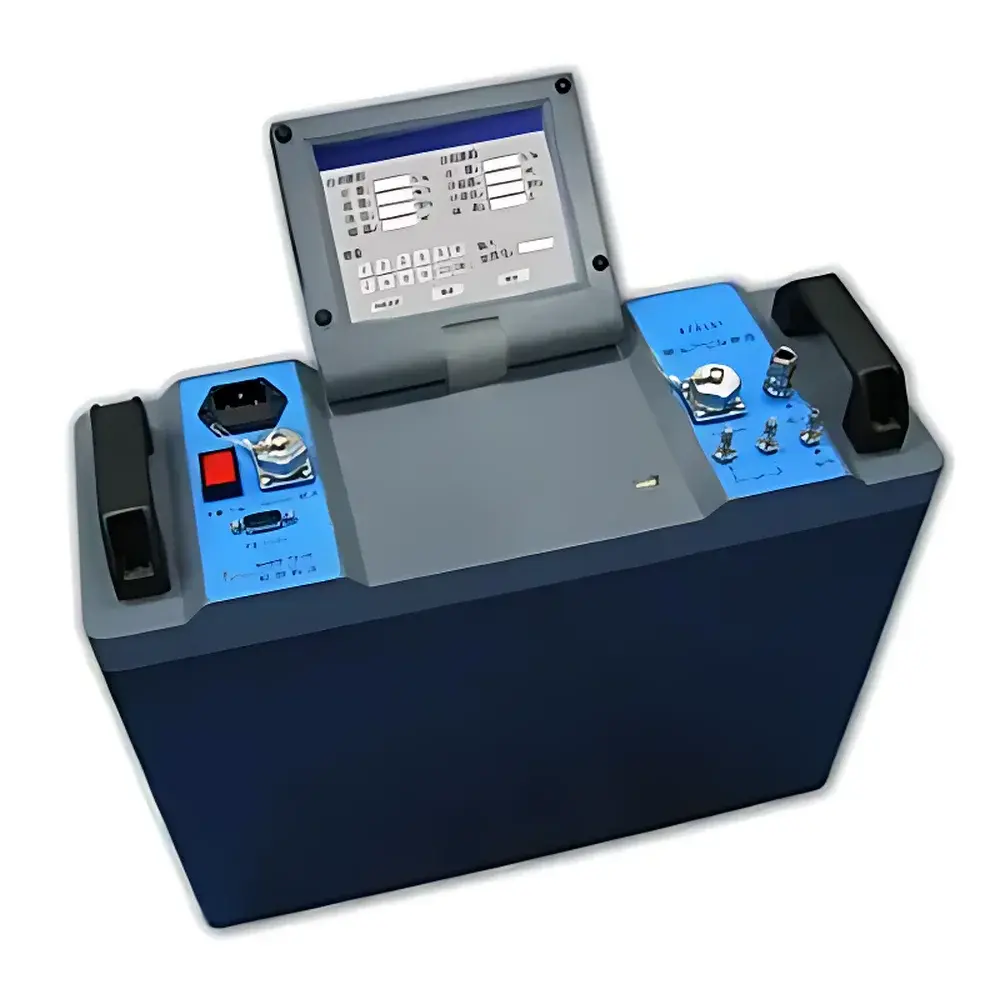
ET5101 Integrated Automatic Flue Gas and Particulate Matter Analyzer
| Origin | Beijing, China |
|---|---|
| Manufacturer Type | Authorized Distributor |
| Origin Category | Domestic (China) |
| Model | ET5101 |
| Price Range | USD 7,000–14,000 |
| Instrument Type | Continuous Emission Monitoring System (CEMS) Compliant Portable Analyzer |
| Indication Error | ±0.2% FS |
| Repeatability | <2% RSD |
| Response Time | ≤15 s (T90) |
| Stability | <5% drift over 8 h |
| Measured Parameters | Particulate Matter (PM) concentration via gravimetric filtration + Flue Gas composition (O₂, SO₂, NO, NO₂, CO, CO₂) |
Overview
The ET5101 Integrated Automatic Flue Gas and Particulate Matter Analyzer is a field-deployable, CEMS-compliant portable instrument engineered for simultaneous, real-time measurement of stack particulate matter (PM) mass concentration and flue gas composition under industrial emission monitoring conditions. It operates on the principle of isokinetic sampling coupled with gravimetric filter weighing for PM quantification, and electrochemical or NDIR sensor-based detection for gaseous pollutants (O₂, SO₂, NO, NO₂, CO, CO₂). Designed to meet the technical requirements of China’s HJ/T 48–1999, HJ 629–2011, and HJ 836–2017 standards—and aligned with international reference methods including EPA Method 5 (PM) and EPA Methods 3A/6C/7E/10 (gases)—the ET5101 delivers traceable, legally defensible data for regulatory reporting, process optimization, and environmental compliance verification.
Key Features
- Integrated dual-function architecture: Combines isokinetic particulate sampling (filter-based gravimetric analysis) and multi-gas flue gas analysis in a single, ruggedized platform.
- Isokinetic flow tracking system with dynamic velocity compensation ensures representative PM sampling across variable stack velocities (5–45 m/s), minimizing bias from particle inertia effects.
- Modular gas sensor configuration supporting up to six simultaneously installed electrochemical or NDIR sensors—enabling flexible deployment for site-specific regulatory requirements.
- Industrial-grade embedded computer with fanless design, EMI-hardened circuitry, and wide-temperature operation (−40 °C to +50 °C), validated for continuous use in harsh plant environments.
- High-brightness, sunlight-readable 7-inch capacitive touch display with tilt-and-swivel mounting; intuitive Chinese GUI with context-sensitive prompts and real-time parameter visualization.
- Large-capacity non-volatile memory storing ≥8,000 complete test records—including raw sensor outputs, calibration logs, isokinetic correction factors, and environmental metadata (Tdry, Twet, Pstatic, Pdynamic, humidity).
Sample Compatibility & Compliance
The ET5101 is validated for use in coal-fired boilers, cement kilns, steel reheating furnaces, waste incinerators, and other high-temperature combustion sources with flue gas temperatures up to 500 °C and moisture content up to 95% RH. Its probe assembly integrates thermocouples (±2.5 °C accuracy), piezoresistive pressure transducers (±2% FS for static/dynamic pressure), and a heated sampling line to prevent condensation-induced analyte loss. The system complies with national emission standards for particulate matter (GB 13223–2011, GB 16297–1996) and supports data traceability required under ISO/IEC 17025-accredited laboratories. While not FDA 21 CFR Part 11 certified out-of-the-box, audit-ready data export (CSV/Excel) and full calibration history logging facilitate integration into GLP/GMP workflows.
Software & Data Management
Data acquisition, calculation, and reporting are handled by proprietary firmware running on the onboard ARM Cortex-A9 processor. The system automatically computes standardized parameters per regulatory protocols: normalized dry flue gas volume (at 101.325 kPa, 273.15 K), excess air ratio (λ), pollutant emission concentrations (mg/m³nd), and mass emission rates (kg/h). All calculations apply built-in stoichiometric corrections and dilution factor adjustments. Exported datasets include timestamps, operator ID, calibration certificate IDs, and uncertainty estimates derived from sensor specifications and flow measurement error propagation. Firmware supports USB and RS232 interfaces; optional Bluetooth module enables wireless data transfer to external PCs or cloud-based emission management platforms.
Applications
- Regulatory stack testing for PM10/PM2.5 and gaseous pollutants in accordance with local environmental protection bureau (EPB) mandates.
- Performance evaluation of particulate control devices (e.g., ESPs, baghouses) and desulfurization systems (e.g., wet FGD, circulating fluidized bed scrubbers).
- Periodic validation and linearity verification of fixed CEMS installations per HJ 75–2017 and HJ 76–2017.
- Determination of combustion efficiency via O₂ and CO co-monitoring, and excess air coefficient (λ) derivation from measured O₂ and flue gas composition.
- Comprehensive flue gas characterization for heat balance calculations, boiler efficiency audits, and carbon accounting support.
FAQ
Does the ET5101 meet international CEMS validation protocols such as EN 15267 or US EPA PS-11?
The ET5101 is designed to fulfill the functional and performance criteria outlined in China’s HJ 75–2017 for CEMS QA/QC but is not formally certified to EN 15267 or EPA PS-11. Its measurement uncertainty, response time, and stability metrics align with Tier 2 performance benchmarks for portable reference analyzers used in relative accuracy testing (RAT).
Can the particulate sampling module be used independently without gas analysis?
Yes—the gravimetric sampling train (including S-type pitot tube, filter holder, and heated probe) operates autonomously; gas sensors may be deactivated or physically removed without affecting PM collection integrity.
What is the recommended calibration frequency for field use?
Gas sensors require zero/span calibration before each sampling campaign; particulate flow meters and pressure transducers should be verified annually against NIST-traceable standards. Full system calibration (including isokinetic controller) is advised every 6 months or after 200 operational hours.
Is remote firmware update supported?
Firmware updates are performed via USB flash drive using signed binary packages; over-the-air (OTA) updates are not implemented due to industrial cybersecurity requirements.
How is moisture interference managed during SO₂ and NOₓ measurement?
The sampling line includes a thermoelectric cooler (TEC) condenser stage maintaining dew point <5 °C, followed by a Nafion™ dryer membrane. This reduces water vapor to <100 ppmv prior to sensor inlet, minimizing cross-sensitivity and acid gas absorption losses.







