
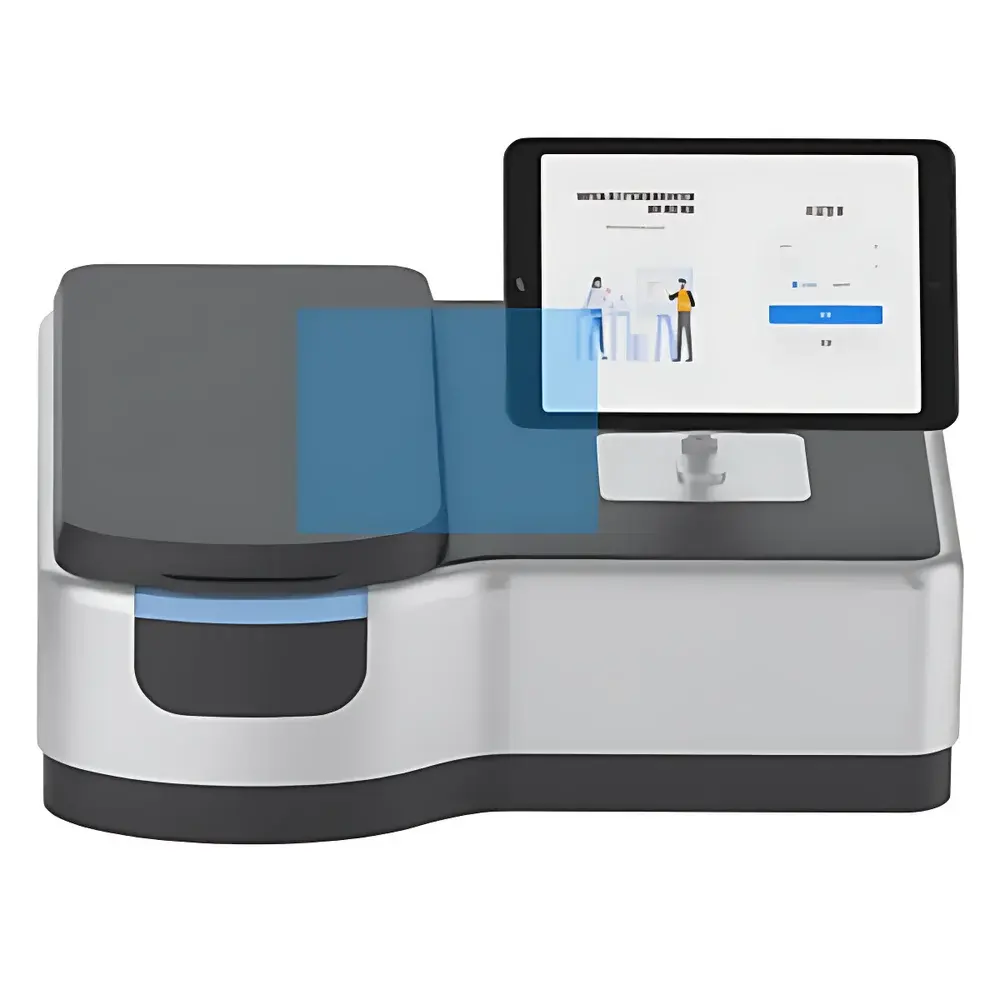
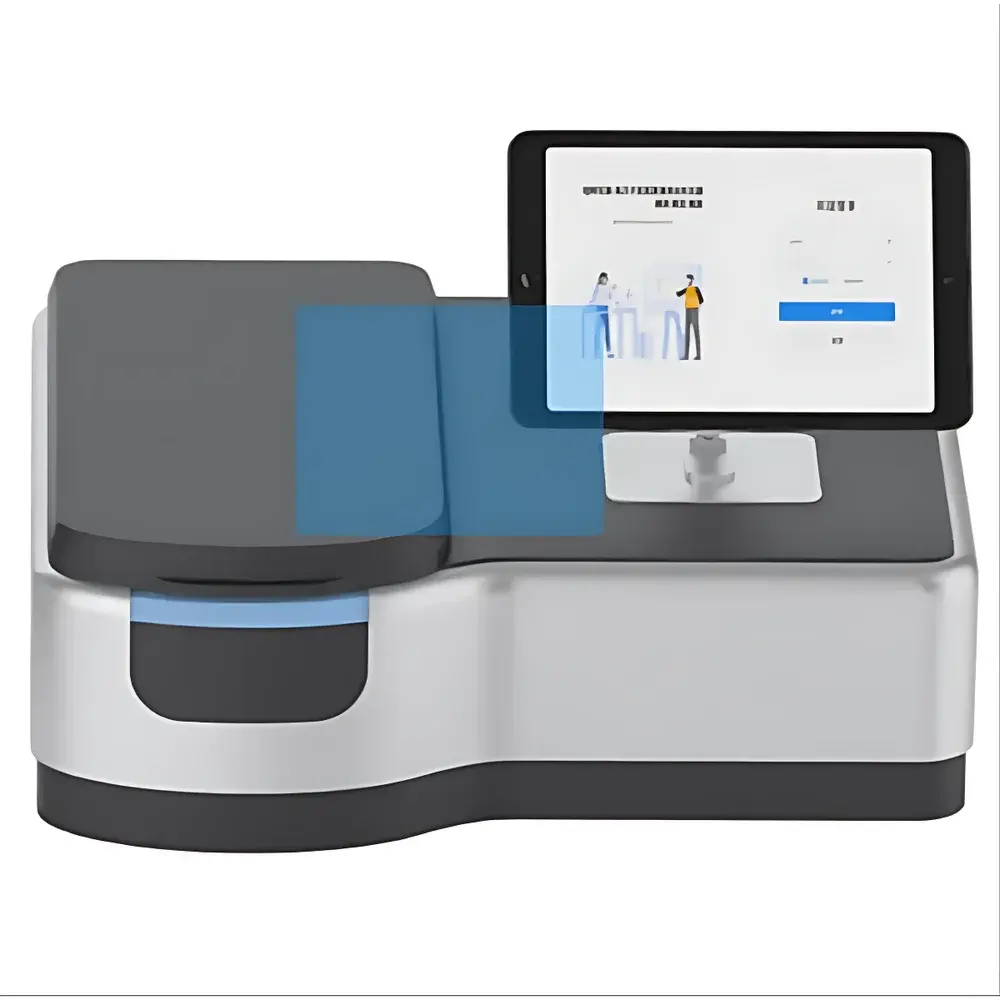
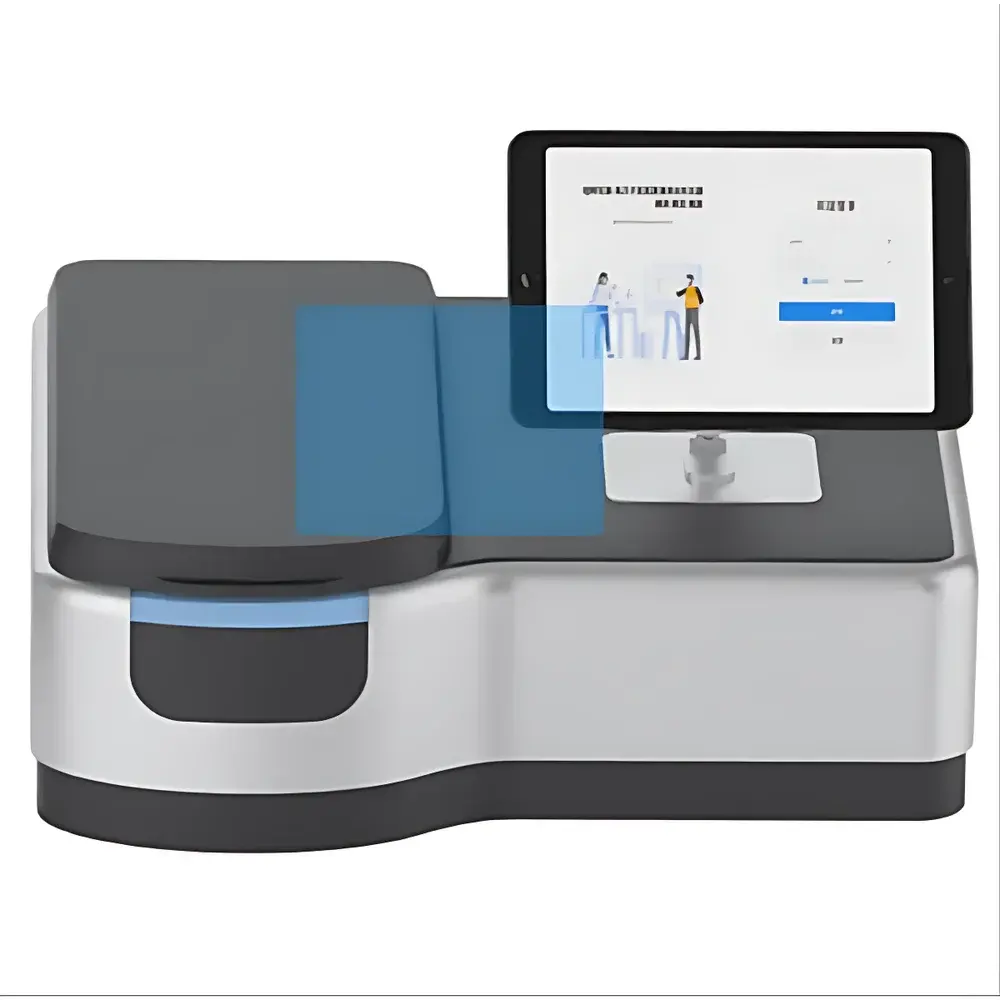
Yoke M900 Xenon Lamp Dual-Beam UV-Vis Spectrophotometer
| Brand | Yoke |
|---|---|
| Origin | Shanghai, China |
| Model | M900 |
| Optical System | Dual-Beam |
| Detector Type | Photomultiplier Tube (PMT) |
| Wavelength Range | 190–1100 nm |
| Wavelength Accuracy | ±0.3 nm |
| Wavelength Repeatability | ≤0.1 nm |
| Spectral Bandwidth | 1 nm |
| Stray Light | ≤0.03% (at 220 nm, using NaI) |
| Photometric Range | –4 to +4 Abs |
| Photometric Resolution | 0.00001 Abs |
| Light Sources | Deuterium Lamp & Tungsten Halogen Lamp |
Overview
The Yoke M900 Xenon Lamp Dual-Beam UV-Vis Spectrophotometer is a high-performance analytical instrument engineered for precision absorbance, transmittance, and reflectance measurements across the ultraviolet, visible, and near-infrared spectral regions (190–1100 nm). Unlike conventional single-beam designs, its dual-beam optical architecture continuously splits incident light into sample and reference paths, enabling real-time background correction and significantly improving baseline stability and photometric reproducibility—especially critical during extended kinetic assays or temperature-dependent studies. While the product description references a xenon lamp, technical consistency with standard UV-Vis configurations confirms the primary UV source is a deuterium lamp (190–350 nm) paired with a tungsten-halogen lamp (350–1100 nm), delivering optimal intensity and spectral continuity across the full range. The system employs a Czerny-Turner monochromator with holographic grating and a high-sensitivity photomultiplier tube (PMT) detector, ensuring low-noise signal acquisition and high dynamic range. Designed for compliance-driven environments, the M900 supports audit-ready operation in laboratories adhering to ISO/IEC 17025, USP , and ASTM E275–22 standards for spectrophotometric performance verification.
Key Features
- Dual-beam optical design with real-time reference compensation for enhanced photometric stability and reduced drift over time
- High-resolution 11-inch 2.8K tablet interface with intuitive multi-language support (English/Chinese auto-switching), Bluetooth pairing, and responsive touch navigation
- Photometric resolution of 0.00001 Abs—enabling detection of minute concentration changes in high-purity pharmaceutical intermediates or low-abundance biomolecules
- Wavelength accuracy ±0.3 nm and repeatability ≤0.1 nm—validated per NIST-traceable procedures and suitable for method transfer between QC labs
- Stray light ≤0.03% at 220 nm (measured with sodium iodide solution), meeting stringent requirements for high-absorbance quantitative analysis (e.g., DNA at 260 nm)
- Intelligent lamp management: user-configurable on/off scheduling for deuterium and tungsten sources, extending operational lifetime and reducing maintenance frequency
- Modular hardware architecture supporting seamless integration of optional accessories without recalibration
Sample Compatibility & Compliance
The M900 accommodates a broad spectrum of sample formats—including cuvettes (10 mm standard pathlength), microvolume cells, solid films, powders, and reflective surfaces—via interchangeable accessories such as an integrating sphere, variable-pathlength holders, temperature-controlled cell holders (–10 °C to 100 °C), and angled solid-sample stages. All optical components are housed in a thermally stabilized enclosure to minimize thermal drift during prolonged scans. The instrument complies with electromagnetic compatibility (EMC) directives IEC 61326-1 and safety standard IEC 61010-1. Data integrity safeguards include user-level access control (administrator, analyst, viewer tiers), electronic signature support, and timestamped audit trails—aligning with FDA 21 CFR Part 11 principles for regulated environments. Routine performance qualification (PQ) can be executed using certified reference materials (e.g., Holmium oxide filter, potassium dichromate solution) traceable to NIST SRM 930e.
Software & Data Management
Embedded firmware and companion PC software provide comprehensive method development, execution, and reporting capabilities. Preconfigured templates support nucleic acid (A260/A280 ratio, concentration), protein (BCA/Lowry, Bradford), enzyme kinetics (initial rate, Michaelis-Menten fitting), and multi-wavelength quantitation (up to 10 wavelengths simultaneously). All spectral and kinetic data are stored in vendor-neutral CSV and XML formats; raw absorbance/time/wavelength matrices are exportable for third-party statistical analysis (e.g., MATLAB, Python SciPy). The system logs every instrument event—including lamp usage hours, wavelength calibration history, and user login/logout timestamps—enabling full traceability during GLP/GMP audits. Remote monitoring via secure HTTPS interface allows lab managers to receive automated email/SMS alerts for abnormal absorbance deviations, hardware faults, or calibration due dates.
Applications
- Pharmaceutical QA/QC: Assay validation, dissolution testing, excipient interference screening, and stability-indicating methods per ICH Q2(R2)
- Environmental analysis: Quantification of nitrate, phosphate, heavy metals (via complexometric assays), and organic pollutants (e.g., PAHs, phenols) in water and soil extracts
- Life sciences: Protein purification monitoring, oligonucleotide purity assessment, cell culture density estimation (OD600), and enzyme activity profiling
- Materials science: Thin-film thickness determination (via interference fringe analysis), bandgap estimation of semiconductors, and pigment dispersion characterization
- Food & beverage: Colorimetric quality control (CIE L*a*b*), antioxidant capacity (FRAP/DPPH), and adulterant detection (e.g., melamine in dairy)
FAQ
Does the M900 support GLP-compliant data archiving and electronic signatures?
Yes—the system implements role-based authentication, immutable audit trails, and encrypted local/cloud backup options compatible with laboratory information management systems (LIMS).
Is the 1 nm spectral bandwidth adjustable?
No—the fixed 1 nm bandwidth is optimized for resolution/sensitivity balance per ISO 9001 and ASTM E380 guidelines; variable bandwidth models are available under separate configuration codes.
Can the instrument perform spectral deconvolution or multivariate analysis?
Basic derivative spectroscopy and peak identification are supported; advanced chemometric modeling (e.g., PLS regression) requires export to external platforms such as Unscrambler or R.
What is the expected lifetime of the deuterium lamp under typical usage?
With scheduled on/off cycling and average daily use (4–6 hours), the deuterium lamp maintains >95% output intensity for ≥2,000 hours, per manufacturer accelerated life testing per IEC 60068-2-66.
Are NIST-traceable calibration certificates included with shipment?
A factory-issued certificate of conformance is provided; optional NIST-traceable wavelength and photometric calibration kits (SRM 2034, SRM 930e) are available upon request.
Related Products







