
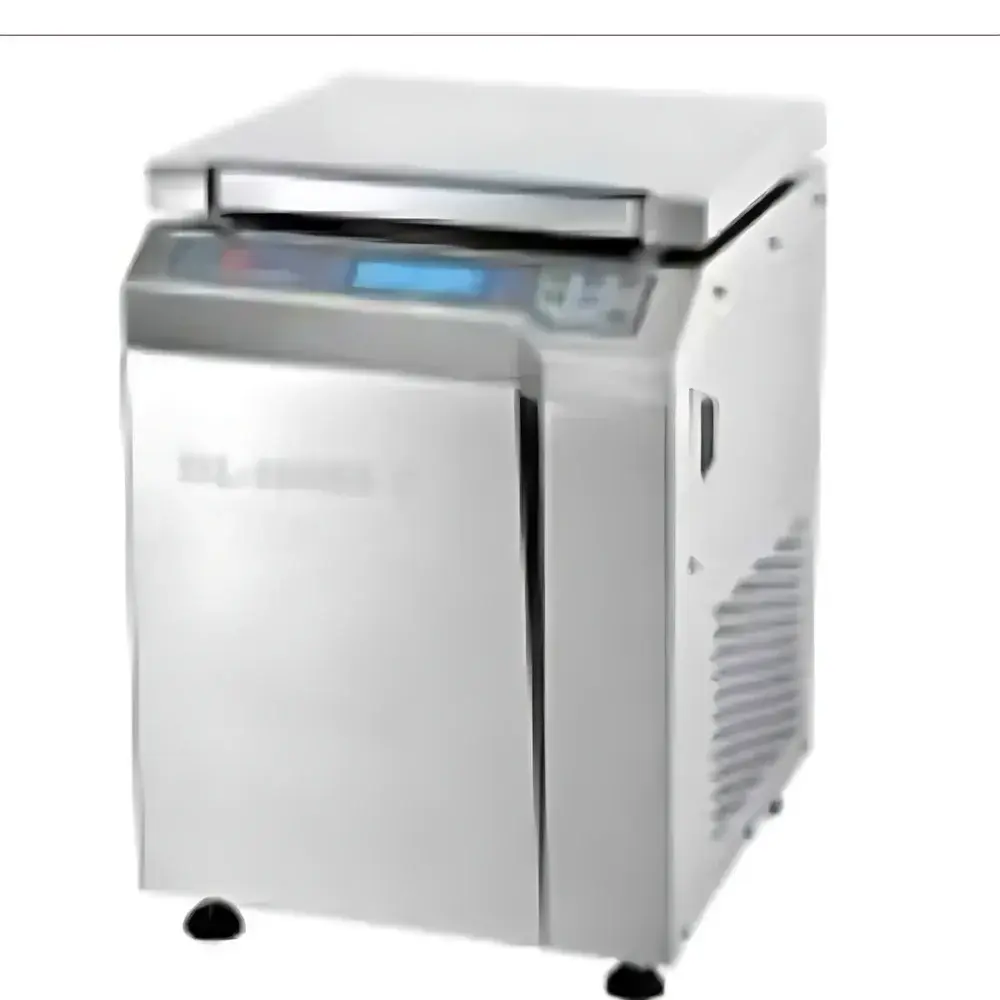
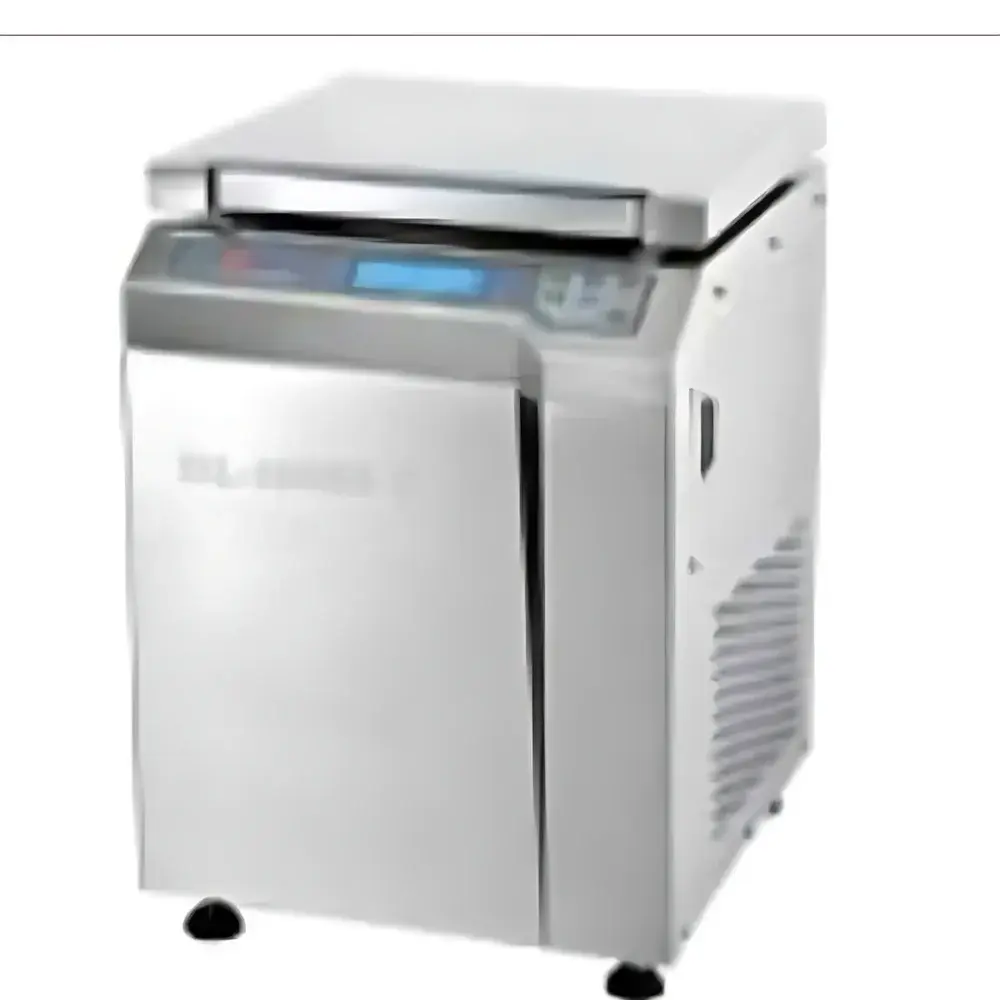
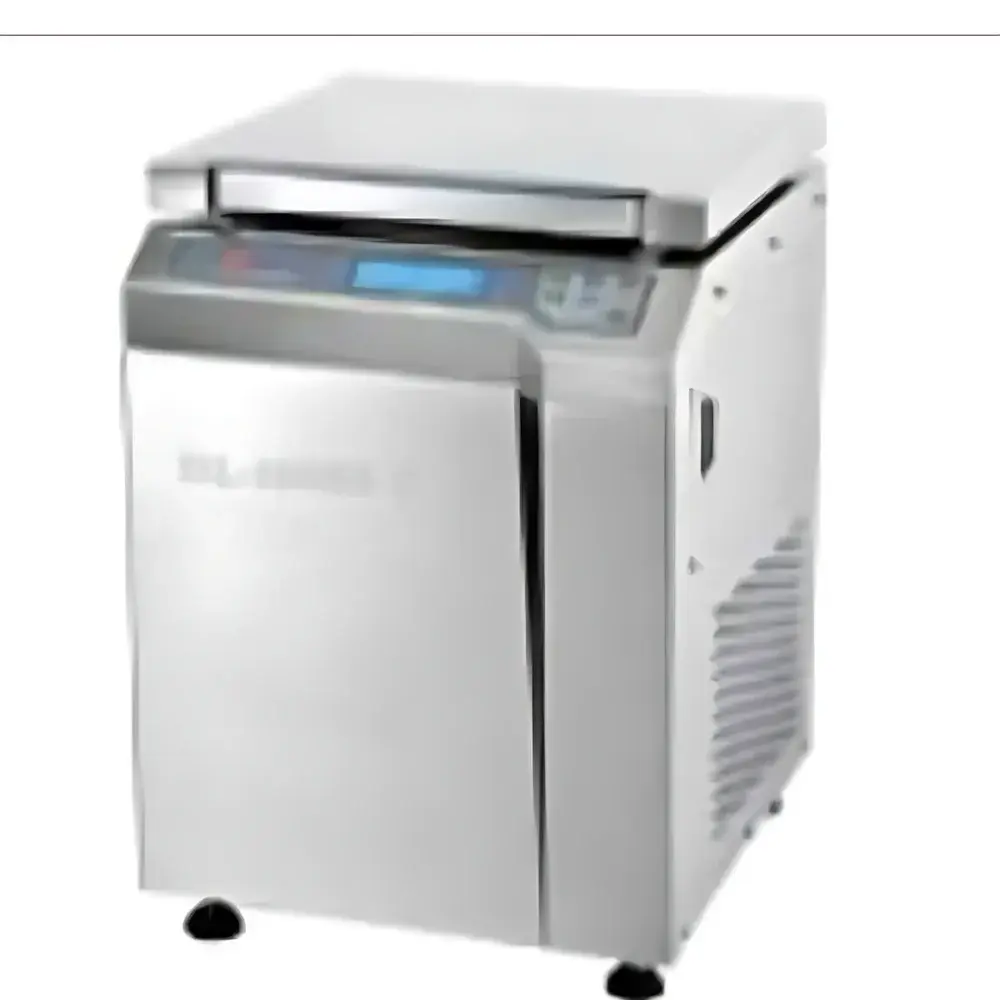
AnTing LXJ-IIC Low-Speed High-Capacity Benchtop Centrifuge
| Brand | AnTing |
|---|---|
| Origin | Shanghai, China |
| Model | LXJ-IIC |
| Type | Benchtop Centrifuge |
| Speed Range | 0–4000 rpm |
| Max RCF | 3000–5000 ×g |
| Max Capacity | 1000 mL × 4 (horizontal rotor) |
| Rotor Configurations | 500 mL × 6, 50 mL × 24, 15 mL × 42, 10 mL × 72, 7 mL × 72, 5 mL × 72, 6 mL × 210, 50 mL × 24, 15 mL × 54, 5 mL × 96, 192-well microplate |
| Timer Range | 0–99 min |
| Power Supply | 220 V, 50 Hz, 750 W |
| Dimensions (L×W×H) | 700 mm × 800 mm × 900 mm |
| Weight | 160 kg |
| Enclosure Material | Reinforced engineering plastic |
| Safety | Electronic door interlock system |
Overview
The AnTing LXJ-IIC is a robust, low-speed benchtop centrifuge engineered for high-capacity sedimentation and phase separation in routine laboratory, quality control, and pilot-scale production environments. Operating on the principle of sedimentation under gravitational acceleration enhanced by rotational force (RCF), it delivers reliable separation of suspensions, cell cultures, blood components, precipitates, and coarse particulates where high g-forces are unnecessary—and potentially detrimental—to sample integrity. Unlike ultracentrifuges or high-speed models, the LXJ-IIC prioritizes mechanical stability, thermal management, and operational safety at moderate rotational speeds (up to 4000 rpm), making it ideal for applications requiring gentle yet efficient pelleting of fragile biological matrices, polymer emulsions, or industrial slurries. Its reinforced engineering plastic housing minimizes vibration transmission while maintaining structural rigidity across extended run cycles—critical for reproducible batch processing in GLP-compliant workflows.
Key Features
- High-capacity horizontal rotor configuration supporting up to 4 × 1000 mL tubes per run—optimized for scalable sample throughput without compromising balance tolerance.
- Electronically interlocked safety lid with automatic rotor deceleration upon door opening, meeting IEC 61010-1 requirements for laboratory equipment safety.
- Precision-machined aluminum rotor carriers with corrosion-resistant anodized finish; compatible with standardized conical and round-bottom centrifuge tubes (5–500 mL) and 192-well microplates.
- Digital timer with 1-minute resolution and auto-stop functionality; supports repeatable timing protocols essential for SOP-driven operations.
- Low-noise brushless DC motor coupled with dynamic balancing system ensures stable operation below 65 dB(A) at maximum load—suitable for shared lab spaces.
- Thermal management via passive convection cooling; no refrigeration system required, reducing energy consumption and maintenance overhead.
Sample Compatibility & Compliance
The LXJ-IIC accommodates a broad spectrum of sample containers—including polypropylene and polycarbonate tubes, glass centrifuge bottles, and standard microtiter plates—enabling direct integration into existing assay workflows. Its rotor geometry maintains uniform radial distribution across all tube positions, minimizing cross-run variability in pellet morphology and supernatant clarity. While not designed for sterile or biosafety-level containment, the unit complies with ISO 13485-aligned manufacturing practices and meets CE marking requirements under Directive 2014/30/EU (EMC) and 2014/35/EU (LVD). It supports documentation traceability for internal audit purposes and is routinely deployed in facilities adhering to ISO/IEC 17025 and FDA 21 CFR Part 11–aligned recordkeeping frameworks when paired with validated external data loggers.
Software & Data Management
The LXJ-IIC operates as a standalone instrument with no embedded software or network interface. All operational parameters—speed, time, and rotor identification—are set manually via front-panel controls and retained only during active runtime. For laboratories requiring electronic records, integration with third-party laboratory information management systems (LIMS) or electronic lab notebooks (ELN) is achieved through external USB or RS-232 data loggers (sold separately), enabling timestamped capture of start/stop events, cycle counts, and operator IDs. This architecture aligns with ALCOA+ principles (Attributable, Legible, Contemporaneous, Original, Accurate, Complete, Consistent, Enduring, Available) when implemented within documented validation protocols.
Applications
- Routine blood fractionation (serum/plasma separation) in clinical support labs.
- Harvesting mammalian and microbial cells prior to lysis or cryopreservation.
- Sedimentation of activated sludge in environmental testing laboratories.
- Clarification of fermentation broths, plant extracts, and food emulsions.
- Preparative isolation of extracellular vesicles, liposomes, and synthetic nanoparticles where shear-sensitive integrity must be preserved.
- Quality assurance testing of suspension-based pharmaceutical formulations (e.g., oral suspensions, topical gels).
FAQ
What is the maximum relative centrifugal force (RCF) achievable with the LXJ-IIC?
The LXJ-IIC generates a maximum RCF of 5000 ×g at 4000 rpm with the 1000 mL horizontal rotor.
Is this centrifuge suitable for use with infectious or hazardous samples?
No—this model lacks sealed rotor chambers, aerosol containment, or biosafety certification; it is intended for non-hazardous, low-risk samples only.
Can the LXJ-IIC accommodate custom rotors or third-party adapters?
Only factory-certified AnTing rotors and tube carriers are supported to maintain mechanical balance and safety compliance.
Does the unit include calibration documentation?
Calibration certificates are available upon request and require separate validation service engagement per ISO/IEC 17025 guidelines.
What maintenance intervals are recommended?
Visual inspection and cleaning every 3 months; rotor lifetime monitoring and bearing assessment every 12 months or after 5000 operating hours, whichever occurs first.



