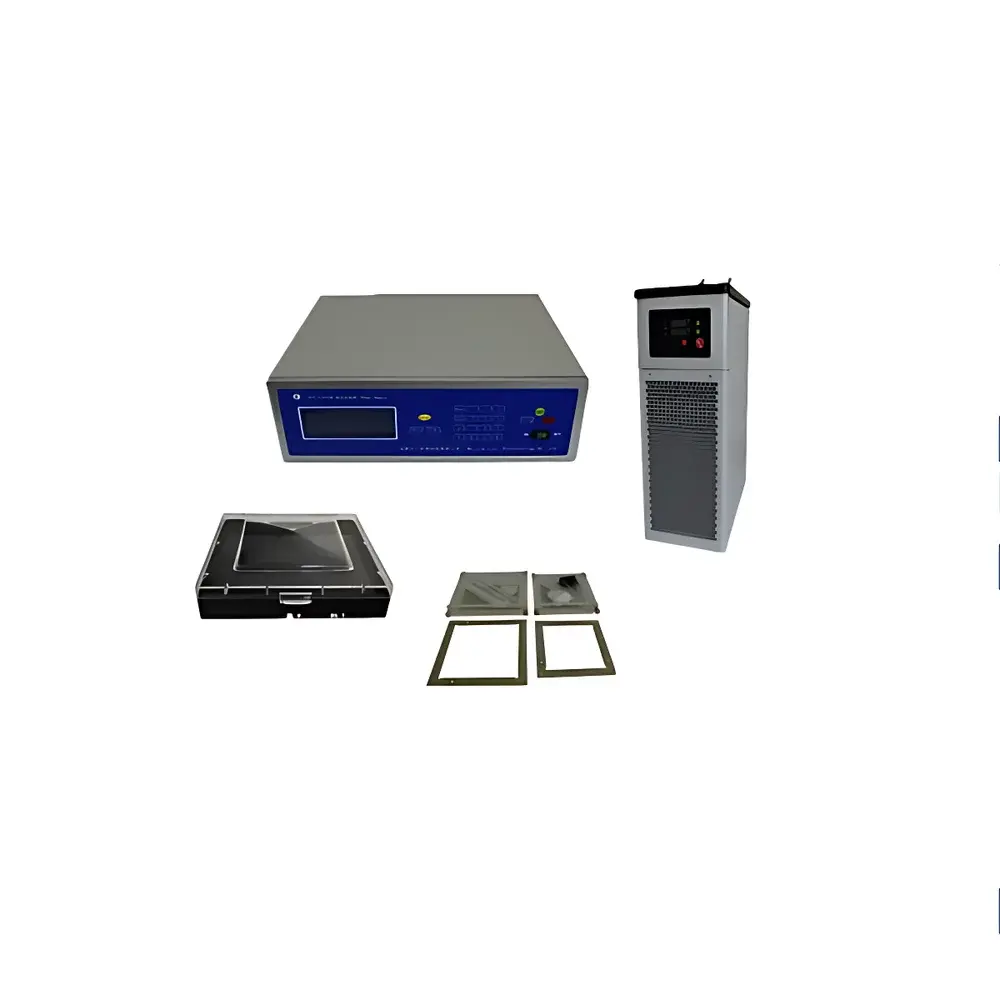
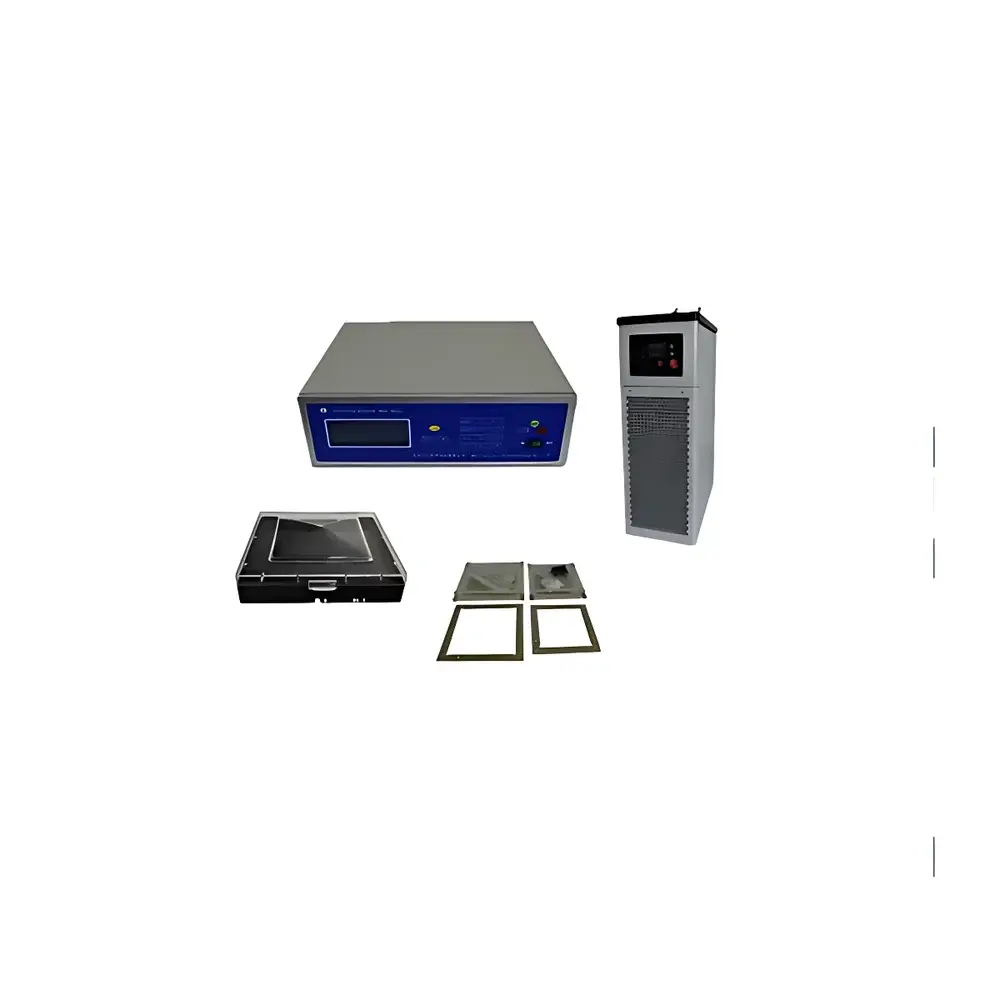
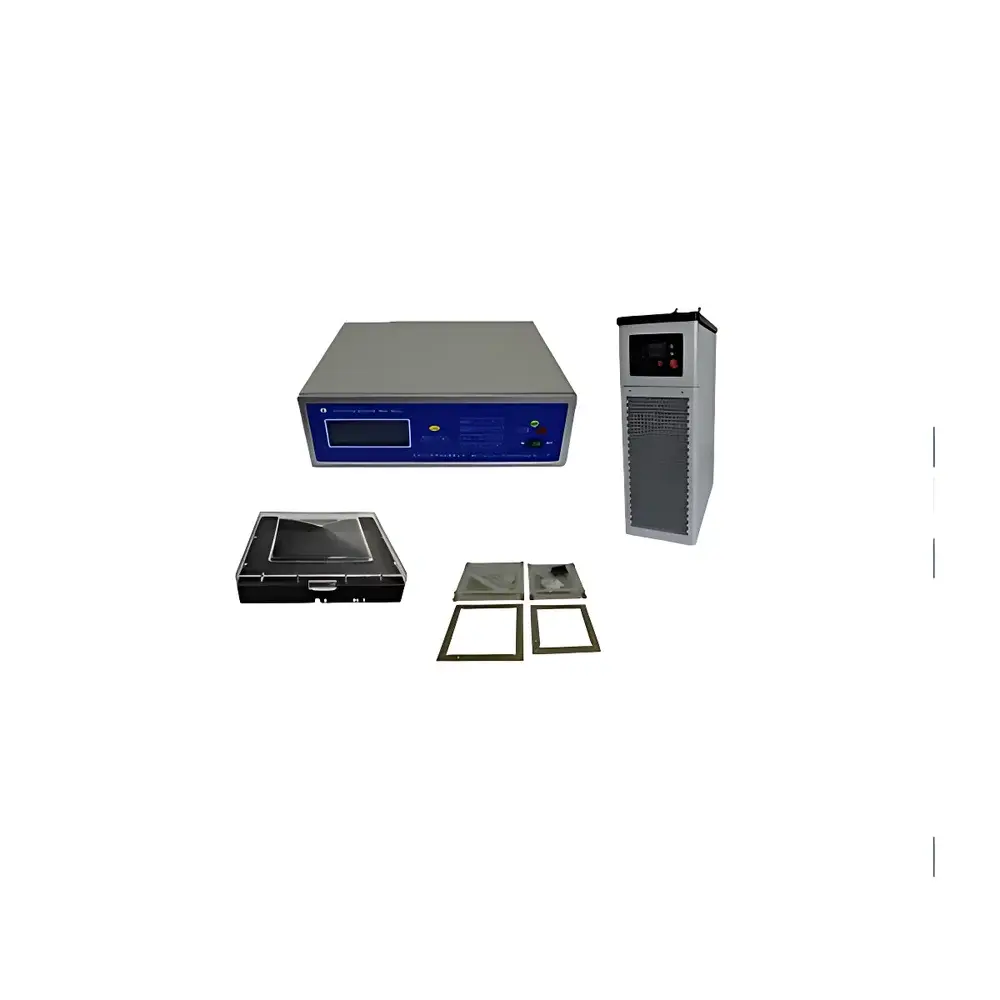
LY WD-2101A Pulsed-Field Electrophoresis System (Model 131-0110)
| Brand | LY (Beijing Liuyi) |
|---|---|
| Origin | Beijing, China |
| Manufacturer Type | Authorized Distributor |
| Product Category | Domestic |
| Model | 131-0110 |
| Instrument Type | Nucleic Acid Pulsed-Field Electrophoresis System |
| Main Unit | Integrated PFGE Apparatus with Hexagonal Electrode Array |
| Gel Tray Dimensions | 125 × 140 mm and 165 × 160 mm |
| Voltage Gradient Adjustment | 0.1 V/cm increments |
| Max Output Current | 0.5 A |
| Pulse Angle | Fixed 120° |
| Switching Time Range | 1–9999 s (start & end) |
| Operating Modes | Multi-step Linear and Modular (1–9 modules) |
| Run Time per Module | 0.11–99.9 hours |
| Buffer Volume Capacity | Up to 3000 mL |
| Sample Comb Options | 14×6×1 mm, 14×6×2 mm, 18×6×2 mm, 26×4×3 mm |
| Memory Capacity | 100 programmable protocols |
| Display | VFD (Vacuum Fluorescent Display) with real-time parameter monitoring |
| Fault Detection | Auto-shutdown with error code display and audible alarm |
Overview
The LY WD-2101A Pulsed-Field Electrophoresis System (Model 131-0110) is a purpose-engineered platform for the high-resolution separation of large DNA molecules ranging from 5 kb to 6,000 kb. Unlike conventional slab-gel electrophoresis, which relies on uniform unidirectional electric fields, this system implements a controlled, time-varying electric field geometry via a hexagonal electrode array — enabling precise angular switching (fixed at 120°) and optimized field linearity. The architecture is based on the principle of clamped homogeneous electric field (CHEF) electrophoresis, where alternating voltage vectors applied across spatially distributed electrodes induce directional reorientation of DNA conformation, allowing entangled megabase-sized fragments to reptate through agarose matrices with enhanced resolution and reproducibility. Designed for rigorous genomic applications, the system integrates power control, gel chamber, and active buffer cooling into a single coordinated workflow — ensuring thermal stability (< ±0.5 °C) throughout extended runs exceeding 90 hours.
Key Features
- Hexagonal multi-electrode configuration enabling accurate 120° pulse-angle switching and improved field homogeneity across full gel surface
- Microprocessor-controlled power supply (DY-Y-2101A) with VFD display, supporting both multi-step linear and modular programming modes
- 100-program memory capacity with non-volatile storage; each protocol stores voltage gradient, switch times, run duration, and module sequence
- Precise voltage gradient adjustment from 0.1 to 9.0 V/cm in 0.1 V/cm increments, calibrated for consistent field strength across variable gel dimensions
- Real-time fault diagnostics: automatic shutdown upon overcurrent, temperature excursion (>35 °C), or open-circuit detection, with alphanumeric error codes and audible alert
- Dual-buffer cooling subsystem (WD-2101A-Z) featuring compressor-based refrigeration and closed-loop circulation, maintaining constant buffer temperature during long-duration runs
- Ergonomic 22-key membrane keypad with tactile feedback for rapid parameter entry and editing without reliance on external software
Sample Compatibility & Compliance
The WD-2101A accommodates two standard gel tray formats: 125 × 140 mm and 165 × 160 mm, compatible with standard horizontal agarose or pulsed-field certified agarose gels (e.g., SeaKem® GTG, PulseField Certified Agarose). Multiple comb configurations support diverse sample loading densities and fragment size resolution requirements — including 14-well × 6-lane × 1 mm, 14 × 6 × 2 mm, 18 × 6 × 2 mm, and 26 × 4 × 3 mm formats. The system meets essential functional requirements outlined in ASTM D7250 (Standard Practice for Electrophoretic Analysis of Nucleic Acids) and supports workflows aligned with ISO/IEC 17025:2017 clause 7.2.2 (method validation for nucleic acid sizing). While not FDA 21 CFR Part 11-certified out-of-the-box, its programmable protocol logging, timestamped run records, and error-traceable operation provide foundational auditability for GLP-compliant laboratories performing genome mapping or chromosome karyotyping.
Software & Data Management
This system operates as a standalone instrument with embedded firmware — no host PC or proprietary software is required for routine operation. All experimental parameters are configured directly via front-panel interface and stored in internal EEPROM. Each completed run generates a timestamped log entry containing start time, total runtime, final voltage/current values, and any triggered fault events. Logs are retained for up to 500 runs and can be reviewed in chronological order using the VFD display. For integration into LIMS environments, optional RS-232 serial output (standard) enables automated transfer of run metadata (protocol ID, duration, completion status) to laboratory information systems. Raw image data acquisition is performed externally using compatible gel documentation systems (e.g., UV transilluminators with CCD imaging), and band sizing is conducted using third-party analysis tools such as ImageLab™ or GeneTools® — ensuring interoperability with established bioinformatics pipelines.
Applications
- Genomic DNA fingerprinting and macrorestriction mapping of bacterial, fungal, and mammalian genomes
- Chromosomal karyotype analysis in yeast artificial chromosome (YAC) and bacterial artificial chromosome (BAC) libraries
- Quality control of high-molecular-weight DNA extracted for long-read sequencing (e.g., Oxford Nanopore, PacBio)
- Verification of CRISPR/Cas9-mediated large deletions or chromosomal rearrangements
- Construction and validation of physical maps for de novo genome assembly projects
- Strain typing in epidemiological surveillance (e.g., PFGE-based subtyping of Salmonella, Escherichia coli O157:H7)
FAQ
What is the maximum recommended run time for continuous operation?
The system supports uninterrupted runs up to 99.9 hours per module, with thermal management validated for stable performance under sustained 30–35 °C ambient conditions when paired with the WD-2101A-Z chiller.
Can the pulse angle be adjusted beyond the fixed 120° setting?
No — the hexagonal electrode layout and firmware are engineered exclusively for 120° vector switching to ensure field symmetry and reproducible migration trajectories; variable-angle operation is not supported.
Is this system compatible with CHEF-DRII or FIGE protocols?
It implements a CHEF-derived waveform architecture but does not replicate the proprietary timing algorithms or electrode switching logic of Bio-Rad’s CHEF-DRII; users must optimize parameters empirically per application.
Does the system include gel casting accessories or staining trays?
No — the standard configuration includes only the main apparatus, power supply, chiller unit, and power strip; gel trays, combs, casting frames, and staining equipment are sold separately.
What maintenance is required for the refrigeration module?
The WD-2101A-Z uses a sealed R134a compressor system; annual inspection of condenser coil cleanliness and coolant pressure verification is recommended, with service intervals aligned to ISO 13485 preventive maintenance guidelines.