
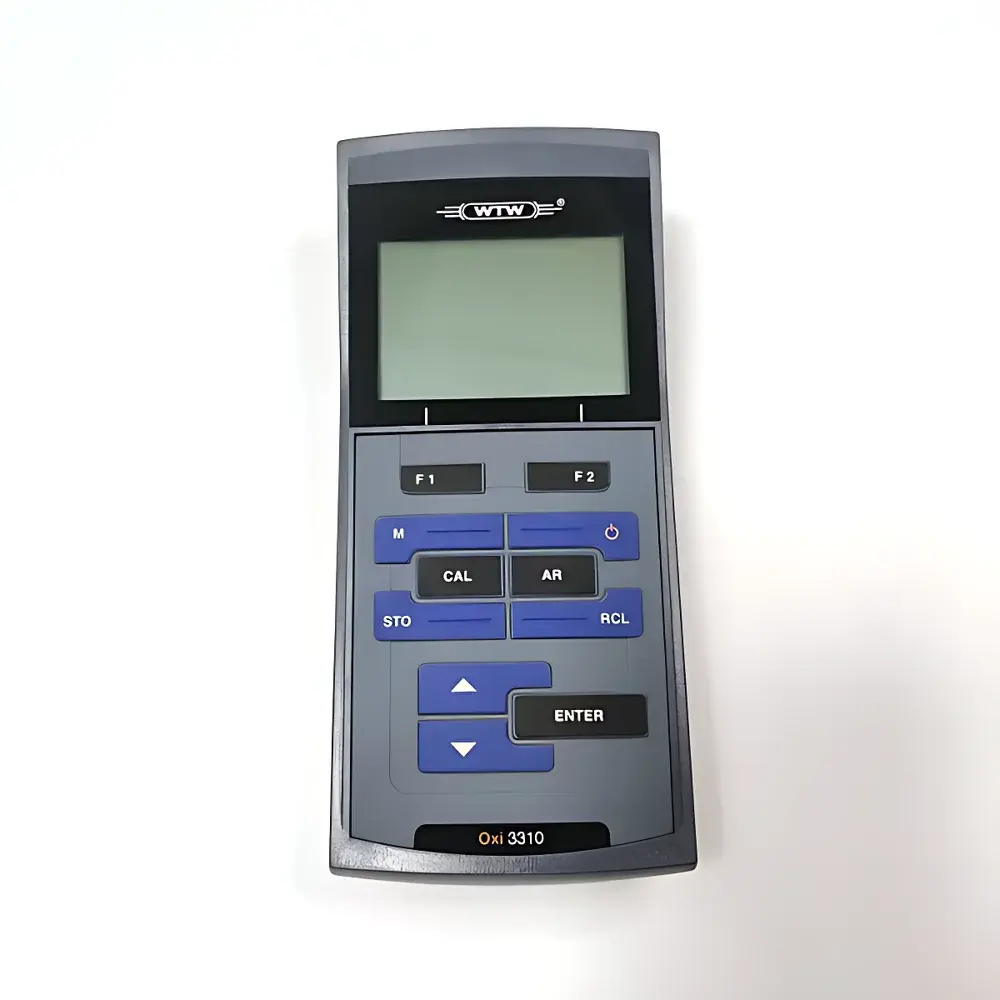
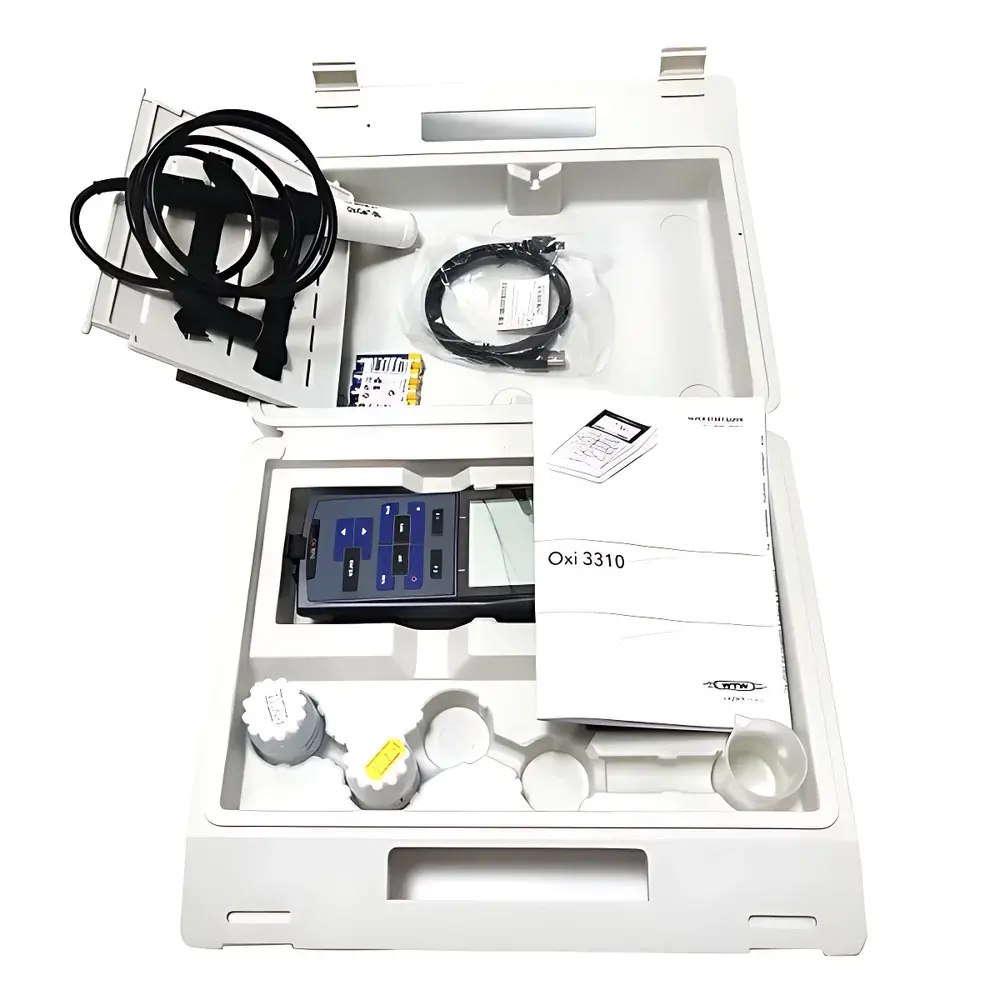
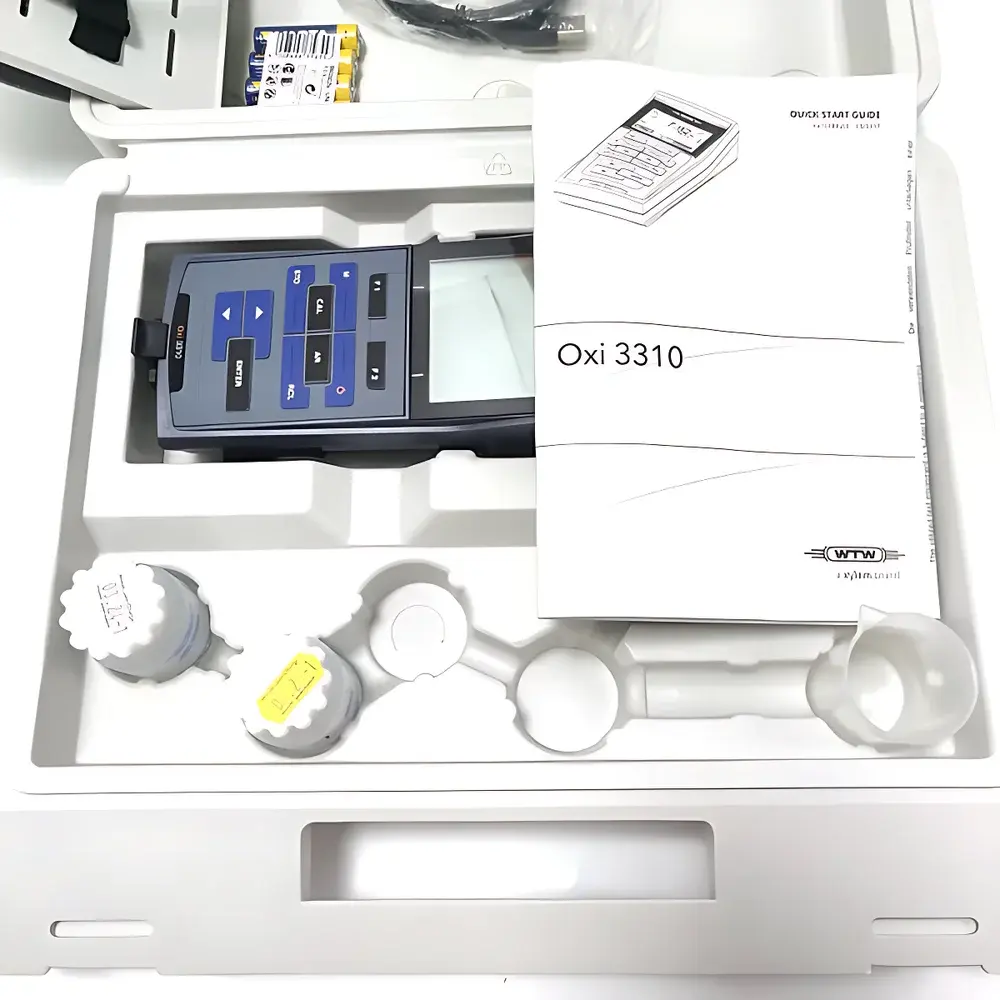
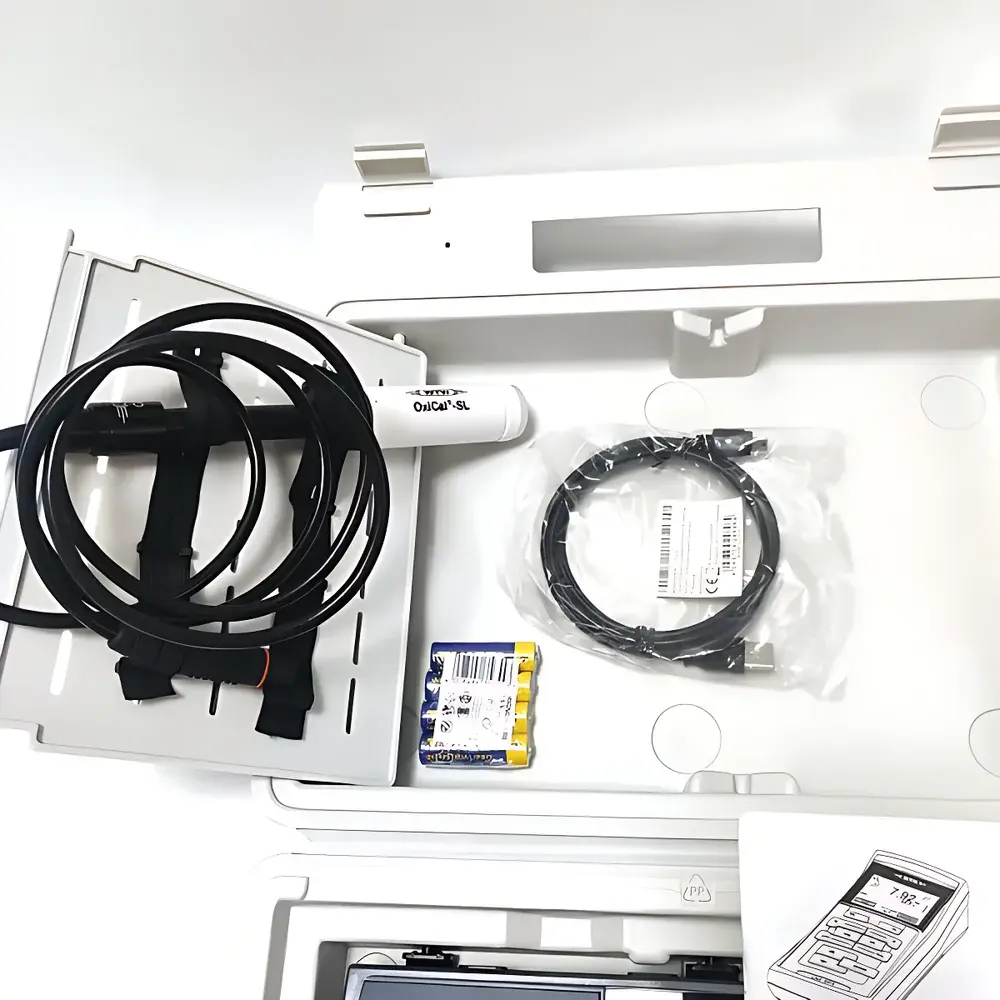
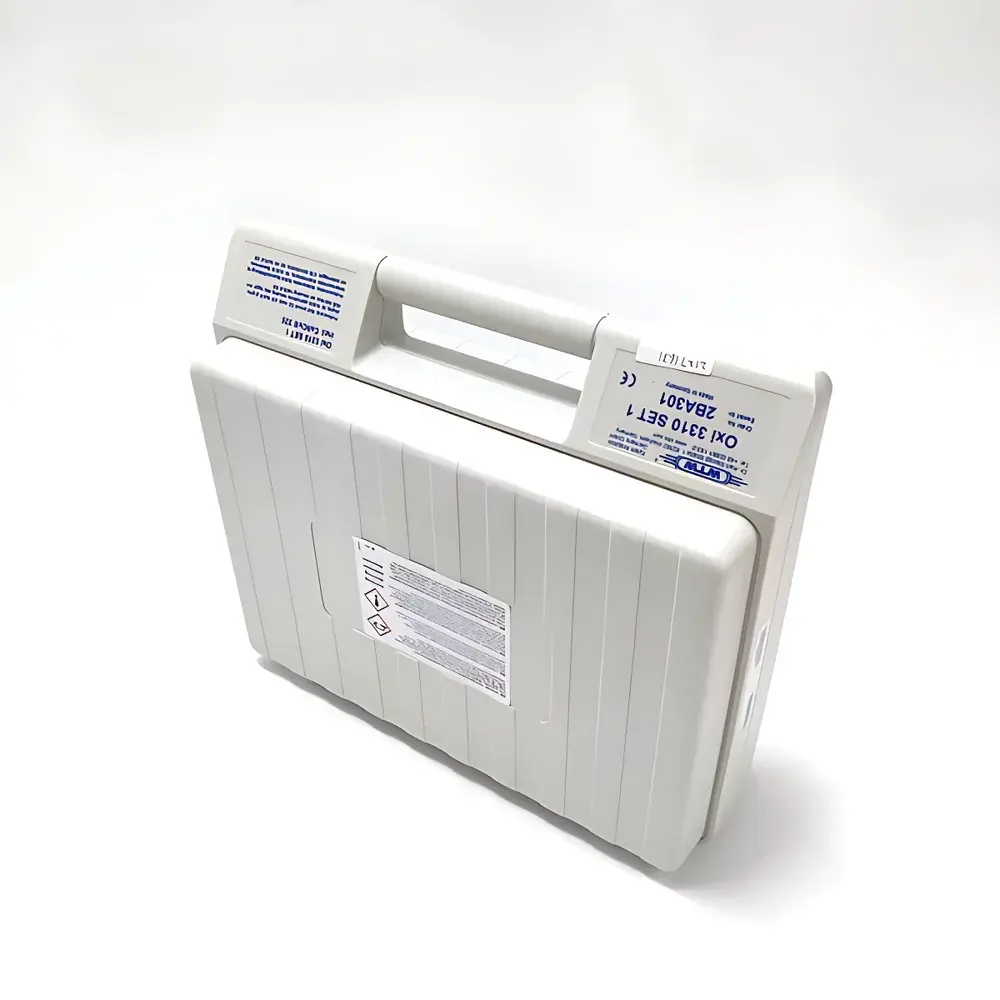
WTW Oxi 3310 Portable Dissolved Oxygen Meter
| Brand | WTW |
|---|---|
| Origin | Germany |
| Model | Oxi 3310 |
| Instrument Type | Portable |
| Measurement Principle | Electrochemical Clark-type Polarographic Probe |
| DO Range | 0.00–19.99 mg/L (extended up to 90 mg/L) |
| Accuracy | ±0.5% of reading |
| Saturation Range | 0.0–199.9% (extended up to 600%) |
| Partial Pressure Range | 0–199.9 hPa / 0–1250 hPa |
| Temperature Range | −5.0 to +105.0 °C |
| Temp. Accuracy | ±0.1 °C |
| Data Storage | 200 manual + 5000 auto-log entries |
| Logging Interval | 1 s – 60 min |
| IP Rating | IP66/IP67 |
| Power Supply | 4 × 1.5 V alkaline or 4 × 1.2 V rechargeable batteries |
| Battery Life | up to 1000 h (150 h with backlight enabled) |
| Interface | Waterproof USB |
| Calibration | Automatic OxiCal protocol with electrode status feedback |
| ATC | Integrated automatic temperature compensation |
| CMC | Continuous Measurement Control with real-time validity indication |
Overview
The WTW Oxi 3310 is a high-precision, field-deployable dissolved oxygen (DO) meter engineered for rigorous environmental and process water quality monitoring. It operates on the Clark-type polarographic principle—utilizing a gold cathode and silver/silver chloride anode immersed in an electrolyte-filled sensor chamber, separated from the sample by an oxygen-permeable membrane. Molecular oxygen diffuses through the membrane, undergoes electrochemical reduction at the cathode, and generates a current linearly proportional to the partial pressure of dissolved oxygen. This signal is converted into concentration (mg/L), saturation (%), or partial pressure (hPa) using built-in algorithms that incorporate automatic temperature compensation (ATC) and barometric pressure correction (500–1100 mbar). Designed for reliability under demanding outdoor conditions, the Oxi 3310 meets IP66/IP67 ingress protection standards and delivers stable, traceable measurements across wastewater treatment plants, surface and groundwater surveys, aquaculture systems, pharmaceutical manufacturing, and food & beverage production environments.
Key Features
- Triple-parameter measurement: simultaneous readout of dissolved oxygen (mg/L), saturation (%), and temperature (°C) with resolution down to 0.01 mg/L and ±0.1 °C accuracy.
- Robust ergonomic housing with 100% waterproof silicone keypad and tactile feedback keys for error-resistant operation in wet or gloved-hand conditions.
- Continuous Measurement Control (CMC): real-time validation system that visually indicates measurement validity during calibration range compliance and triggers audible/visual alerts when readings fall outside calibrated bounds.
- Advanced data management: stores up to 200 manually triggered and 5000 time-stamped automated records—including DO value, temperature, date/time stamp, sequence ID, and calibration status—with logging intervals configurable from 1 second to 60 minutes.
- OxiCal intelligent calibration: fully automated two-point calibration using saturated air and zero-oxygen solutions; post-calibration display confirms electrode health and membrane integrity.
- Waterproof USB interface enables secure, direct transfer of logged datasets to Windows-based PCs or mobile devices without requiring proprietary docking stations.
- Extended-range capability: supports DO quantification up to 90 mg/L and saturation up to 600%, accommodating hyperoxic conditions encountered in ozonation, pure oxygen sparging, or high-altitude applications.
- Long operational endurance: powered by standard AA alkaline or NiMH rechargeable cells, delivering up to 1000 hours of continuous use (150 hours with backlight active).
Sample Compatibility & Compliance
The Oxi 3310 is validated for use with natural waters (freshwater, seawater, groundwater), treated effluents, process streams, and sterile aqueous media in regulated industries. Its CellOx and DurOx probe families comply with ISO 5814:2012 (electrochemical determination of dissolved oxygen) and ASTM D888-20 (standard test methods for dissolved oxygen in water). The instrument’s firmware architecture supports audit-ready data handling per GLP and GMP requirements, including timestamped calibration logs, operator ID fields (via optional software integration), and immutable storage of raw sensor output. While not inherently 21 CFR Part 11 compliant out-of-the-box, its structured data export format (CSV/Excel-compatible) facilitates integration into validated LIMS or ELN platforms meeting FDA regulatory expectations.
Software & Data Management
Data retrieval and reporting are streamlined via WTW’s LabX® Light software (optional) or generic USB mass-storage mode. Logged files contain ISO 8601-formatted timestamps, probe serial numbers, calibration history identifiers, and metadata flags indicating measurement mode (auto/manual), temperature source (internal probe or external Pt100), and pressure compensation status. All stored records retain full traceability: each entry includes the exact moment of acquisition, ambient temperature, atmospheric pressure input (if manually entered), and whether the reading was accepted under CMC validation rules. Exported datasets are compatible with statistical process control (SPC) tools and environmental reporting frameworks such as EPA STORET and EU WISE.
Applications
- Wastewater treatment: monitoring aeration basin DO profiles, nitrification/denitrification control, and final effluent compliance.
- Surface and groundwater assessment: seasonal hypoxia mapping, eutrophication studies, and regulatory reporting under EU Water Framework Directive (WFD) or US Clean Water Act.
- Aquaculture and fisheries: optimizing dissolved oxygen levels in hatcheries, raceways, and recirculating aquaculture systems (RAS).
- Pharmaceutical water systems: verifying DO in purified water (PW) and water-for-injection (WFI) loops per USP <1231> and EU GMP Annex 1.
- Food & beverage processing: controlling oxygen ingress during bottling, fermentation, and cold storage of perishables.
- Swimming pool and aquarium management: ensuring life-supporting DO concentrations and preventing microbial proliferation.
- Industrial cooling water monitoring: detecting corrosion risk associated with low-oxygen or oxygen-pitting scenarios.
FAQ
What calibration methods does the Oxi 3310 support?
It supports two-point calibration using saturated air (100% saturation) and sodium sulfite solution (0% DO), executed automatically via the OxiCal routine with integrated electrode diagnostics.
Can the instrument compensate for altitude or barometric pressure changes?
Yes—built-in pressure compensation adjusts DO calculations across 500–1100 mbar, supporting accurate measurements at elevations up to ~3000 m above sea level.
Is the probe interchangeable between different WTW meters?
CellOx and DurOx probes feature standardized analog output and mechanical coupling, enabling compatibility with other WTW handhelds (e.g., Multi 3410, pH 3310) when configured with appropriate firmware.
Does the Oxi 3310 meet regulatory requirements for environmental reporting?
Its measurement methodology aligns with ISO 5814 and ASTM D888; data integrity features—including time-stamped calibration logs and CMC validation flags—support defensible reporting in EPA, EEA, and national agency submissions.
How often should the membrane and electrolyte be replaced?
Typical maintenance interval is every 2–4 weeks under continuous use; longer service life is achievable with intermittent deployment and proper storage in moistened protective cap.







