
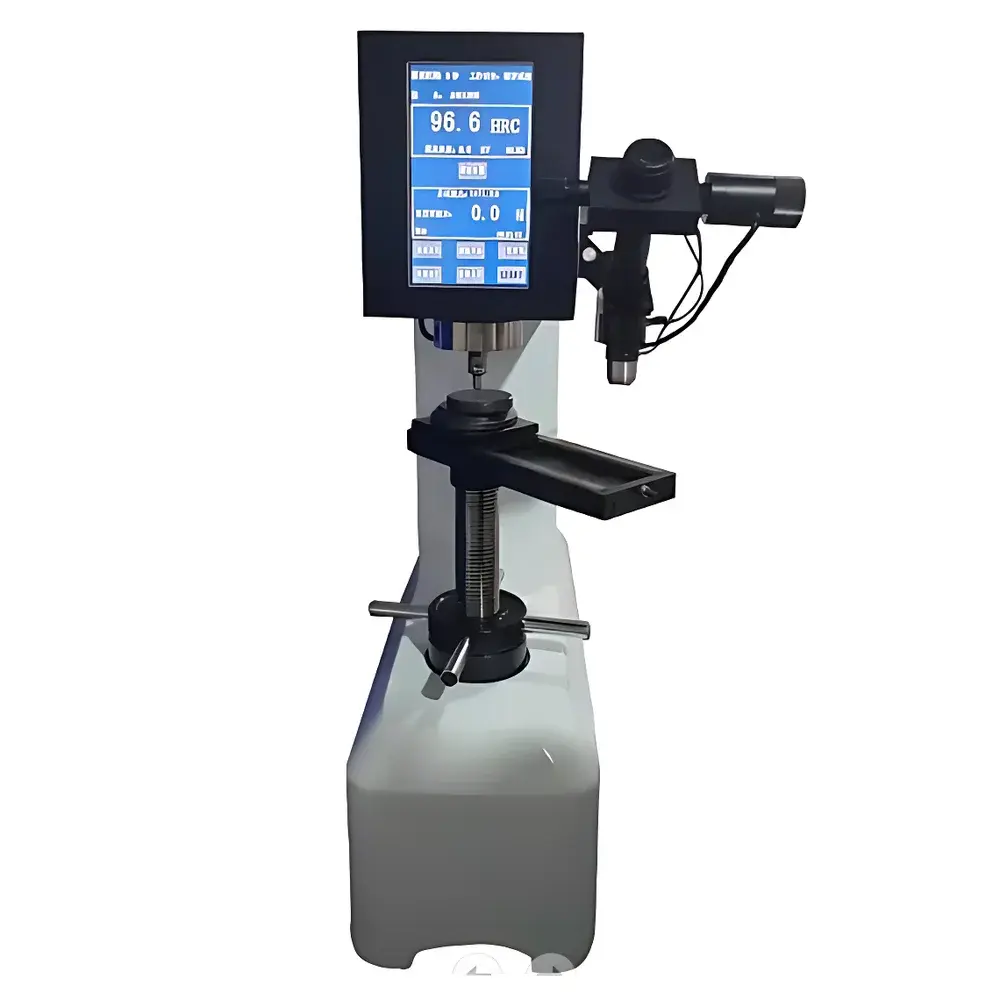
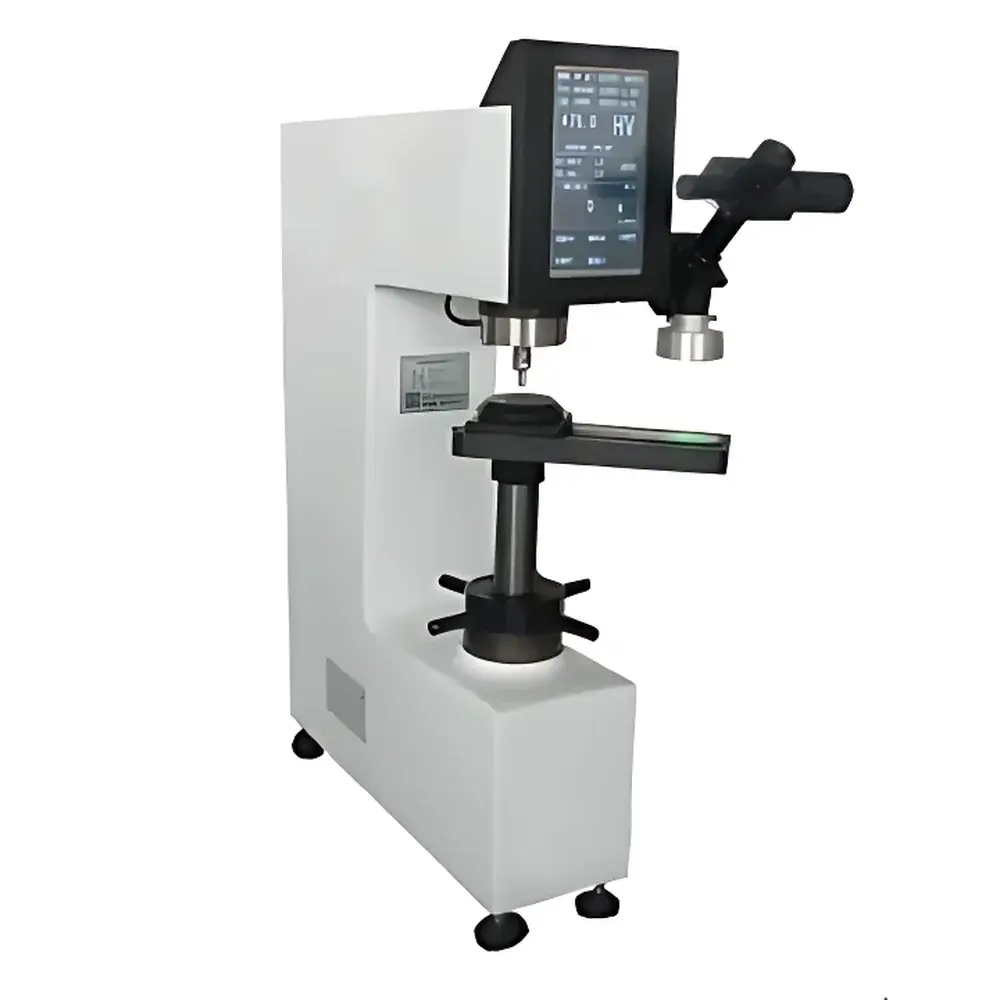
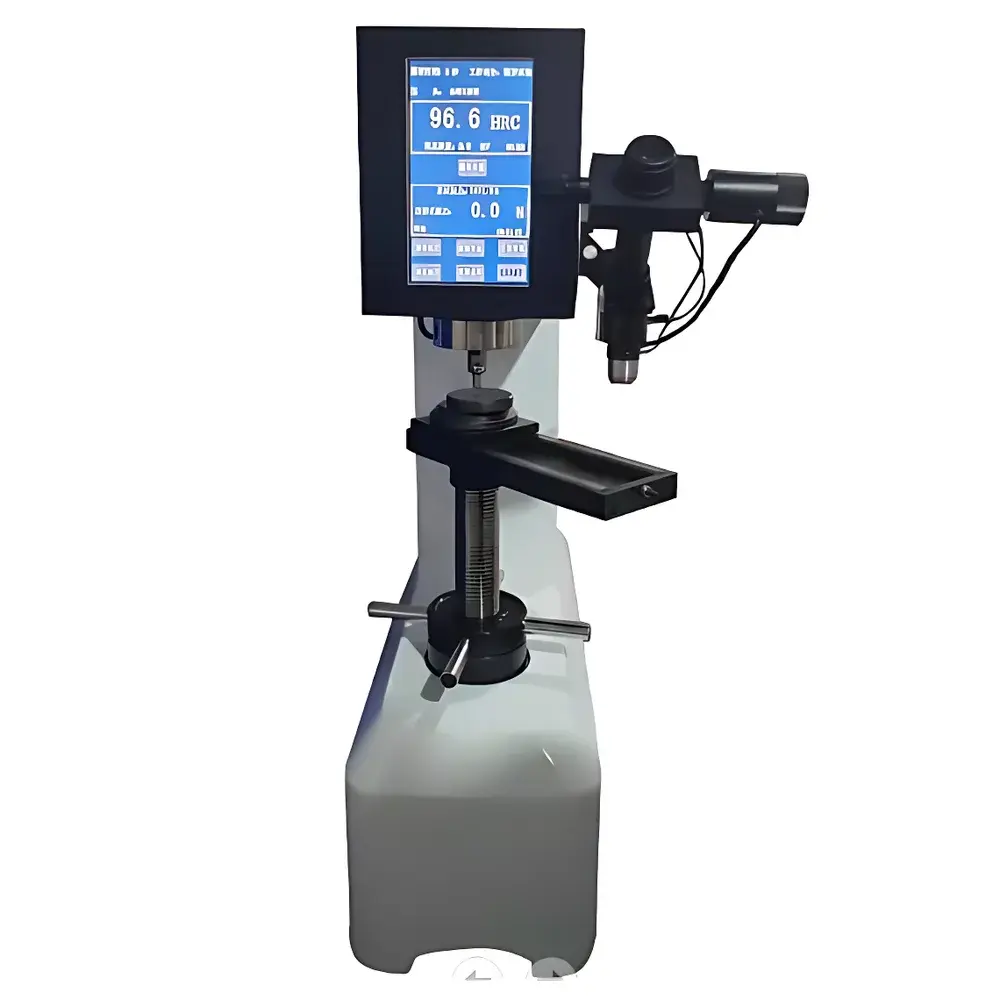
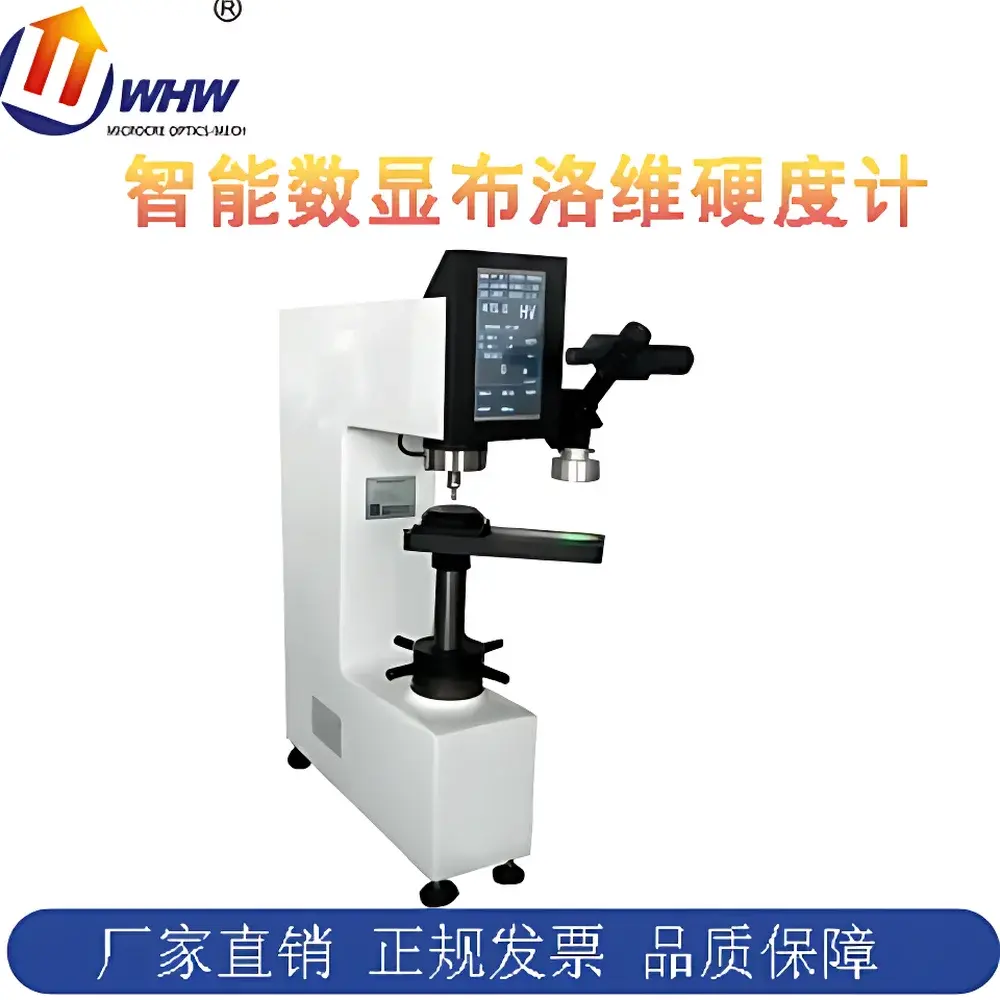
YANRUN HBRVS-187.5 Smart Digital Brinell-Rockwell-Vickers Hardness Tester
| Brand | YANRUN |
|---|---|
| Origin | Shanghai, China |
| Manufacturer Type | Direct Manufacturer |
| Model | HBRVS-187.5 |
| Hardness Scales | Rockwell (HRA, HRB, HRC, HRD, HRE, HRF, HRG, HRH, HRK), Brinell (HBW 2.5/31.25, HBW 2.5/62.5, HBW 5/62.5, HBW 2.5/187.5), Vickers (HV30, HV100) |
| Test Forces | Rockwell — 588 N (60 kgf), 980 N (100 kgf), 1471 N (150 kgf) |
| Testing Space | 180 mm (H) × 160 mm (D) |
| Magnification | Brinell — 37.5×, Vickers — 75× |
| Max Specimen Height | 220 mm (Rockwell), 170 mm (Brinell/Vickers) |
| Dimensions (L×W×H) | 580 × 260 × 780 mm |
| Weight | ~80 kg |
Overview
The YANRUN HBRVS-187.5 Smart Digital Brinell-Rockwell-Vickers Hardness Tester is a fully integrated, microprocessor-controlled multi-method hardness testing system engineered for precision metrology in quality control laboratories, metallurgical R&D facilities, and industrial manufacturing environments. It implements standardized indentation-based hardness measurement principles per ASTM E18 (Rockwell), ASTM E10 (Brinell), and ASTM E384 (Vickers), with full compliance to Chinese national standards GB/T 230.1–2018, GB/T 231.1–2018, and GB/T 4340.1–2009. Unlike legacy dead-weight or manual lever systems, the HBRVS-187.5 employs a closed-loop load cell feedback architecture to deliver traceable, repeatable force application across all three hardness scales—eliminating mechanical hysteresis, reducing operator dependency, and ensuring force accuracy within ±0.5% of setpoint. The instrument features an embedded Windows 8.1 platform with a 10-inch capacitive touchscreen interface, enabling direct method selection, real-time force-time curve visualization, automated hardness calculation, and on-device report generation without external PCs.
Key Features
- Triple-method capability: Simultaneous Rockwell, Brinell, and Vickers hardness evaluation on a single platform—reducing cross-instrument calibration drift and lab footprint.
- Closed-loop electro-mechanical force actuation: Replaces traditional dead-weight stacks with high-stability load cells and servo-controlled loading; eliminates manual preload application and ensures consistent dwell time control (adjustable from 1–60 s).
- Real-time force-time profiling: On-screen graphical display enables immediate verification of load ramping, dwell stability, and unloading behavior—critical for auditing test validity per ISO/IEC 17025 requirements.
- Automated scale-specific indenter guidance: System prompts correct indenter type (e.g., diamond cone for HRC, tungsten carbide ball for HBW 10 mm) upon scale selection—minimizing operator error.
- Dual magnification optical system: 37.5× for Brinell impression assessment and 75× for precise Vickers diagonal measurement, both optimized for digital image capture and edge-detection algorithms.
- Onboard data management: 16 GB internal storage supports timestamped test records, force-time curves, hardness values, and user annotations—exportable via USB to CSV or PDF with embedded metadata.
- Self-contained operation: No external air supply, hydraulic unit, or dedicated foundation required; operates on standard 220 V / 50 Hz power with minimal vibration isolation.
Sample Compatibility & Compliance
The HBRVS-187.5 accommodates specimens up to 220 mm in height under Rockwell configuration and 170 mm for Brinell/Vickers tests, with a maximum testing zone depth of 160 mm and vertical clearance of 180 mm. Its 210 mm indenter-to-column distance permits evaluation of medium-sized forgings, castings, heat-treated bars, and machined components. All hardness scales conform to international standard definitions: Rockwell minor/major loads adhere to ASTM E18 Annex A1; Brinell test forces comply with the F/D² ratio requirements for HBW 2.5/31.25 through HBW 2.5/187.5; Vickers loads meet the 30–100 kgf range specified in ISO 6507-1. The system supports optional plastic Rockwell scales (e.g., HRM, HRR) upon contractual agreement—subject to supplementary calibration and traceable reference blocks per ASTM D785. Full documentation includes factory calibration certificates traceable to NIM (National Institute of Metrology, China), and supports GLP-compliant audit trails when configured with user access controls.
Software & Data Management
The embedded Windows-based software provides intuitive touchscreen navigation with role-based access levels (Operator, Supervisor, Administrator). Each test record captures method, scale, force, dwell time, indenter ID, environmental temperature (via optional sensor input), and operator ID. Hardness values are calculated in real time using standard polynomial interpolation (e.g., ASTM E18 Table 1 for Rockwell) and automatically rounded to 0.1 HR unit resolution. Force-time curves are saved as vector graphics (SVG) for forensic analysis. Reports comply with ISO/IEC 17025 clause 7.8.2: they include uncertainty estimates derived from force cell linearity, indenter geometry tolerance, and optical measurement repeatability—calculated per GUM (Guide to the Expression of Uncertainty in Measurement). Data export supports CSV (for LIMS integration), PDF/A-1b (archival), and XML (for ERP synchronization). Optional 21 CFR Part 11 compliance package includes electronic signatures, audit logs, and secure password policies.
Applications
This hardness tester serves critical applications across aerospace component qualification (e.g., turbine disk surface hardness mapping per AMS 2242), automotive powertrain validation (crankshaft case-hardened layer verification), tool steel heat treatment monitoring (HRC uniformity across batch lots), and academic metallurgy research (correlation of HV vs. grain size in nanocrystalline alloys). Its Brinell capability supports large-grained or heterogeneous materials such as aluminum die-castings, gray iron engine blocks, and weld metal deposits where Rockwell’s shallow penetration is insufficient. The Vickers module enables microstructural hardness profiling—e.g., measuring carburized case depth via stepwise HV30 indentations per ISO 2639. In foundry QA, HBW 5/62.5 testing satisfies EN 1562–1 for ductile iron tensile strength correlation.
FAQ
Does the HBRVS-187.5 require annual recalibration by an accredited lab?
Yes—per ISO/IEC 17025 and manufacturer recommendations, full system verification including force transducer, optical measurement chain, and indenter geometry must be performed annually using certified reference blocks and traceable dead-weight testers.
Can test data be integrated into a central LIMS or MES platform?
Yes—CSV exports include structured headers compatible with common LIMS parsers; optional OPC UA or REST API modules enable real-time bidirectional communication.
Is the system compliant with FDA 21 CFR Part 11 for regulated pharmaceutical or medical device manufacturing?
The base configuration supports ALCOA+ data integrity principles; full 21 CFR Part 11 compliance requires the optional software add-on with electronic signatures, audit trail encryption, and role-based permissions.
What maintenance is required beyond routine cleaning and indenter inspection?
No scheduled mechanical maintenance is required; periodic verification of force cell zero stability and optical focus calibration (every 6 months) is recommended using supplied check tools.
Are certified reference hardness blocks included with shipment?
A set of three NIST-traceable reference blocks (one each for Rockwell C, Brinell 10 mm, and Vickers 30 kgf) is supplied with initial delivery, accompanied by individual calibration certificates.



