
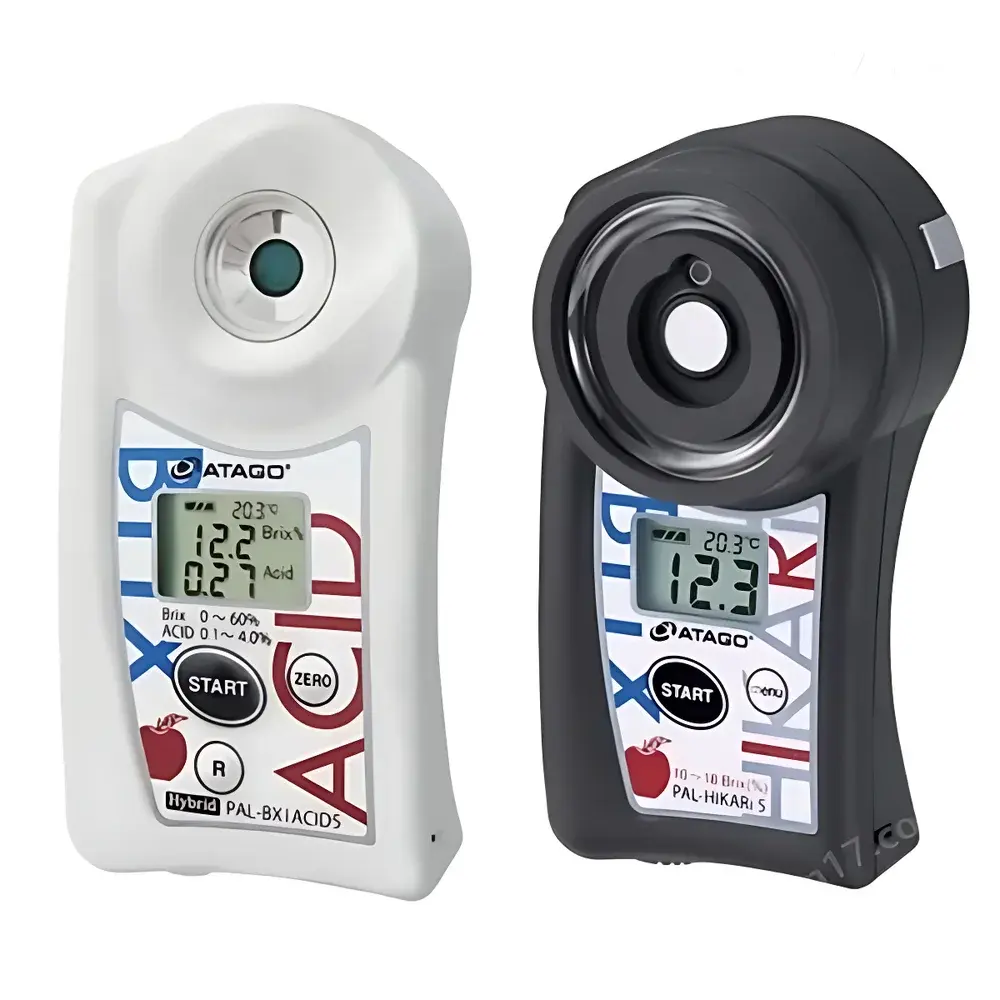
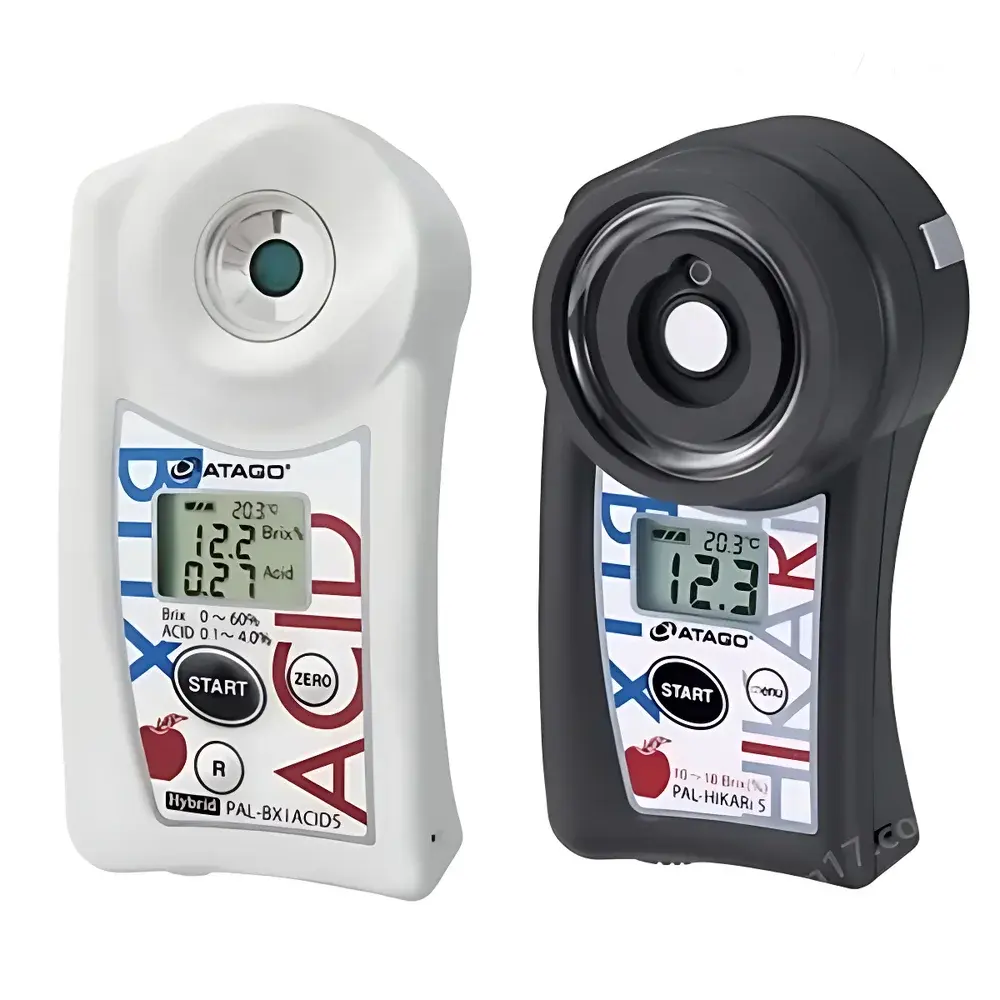
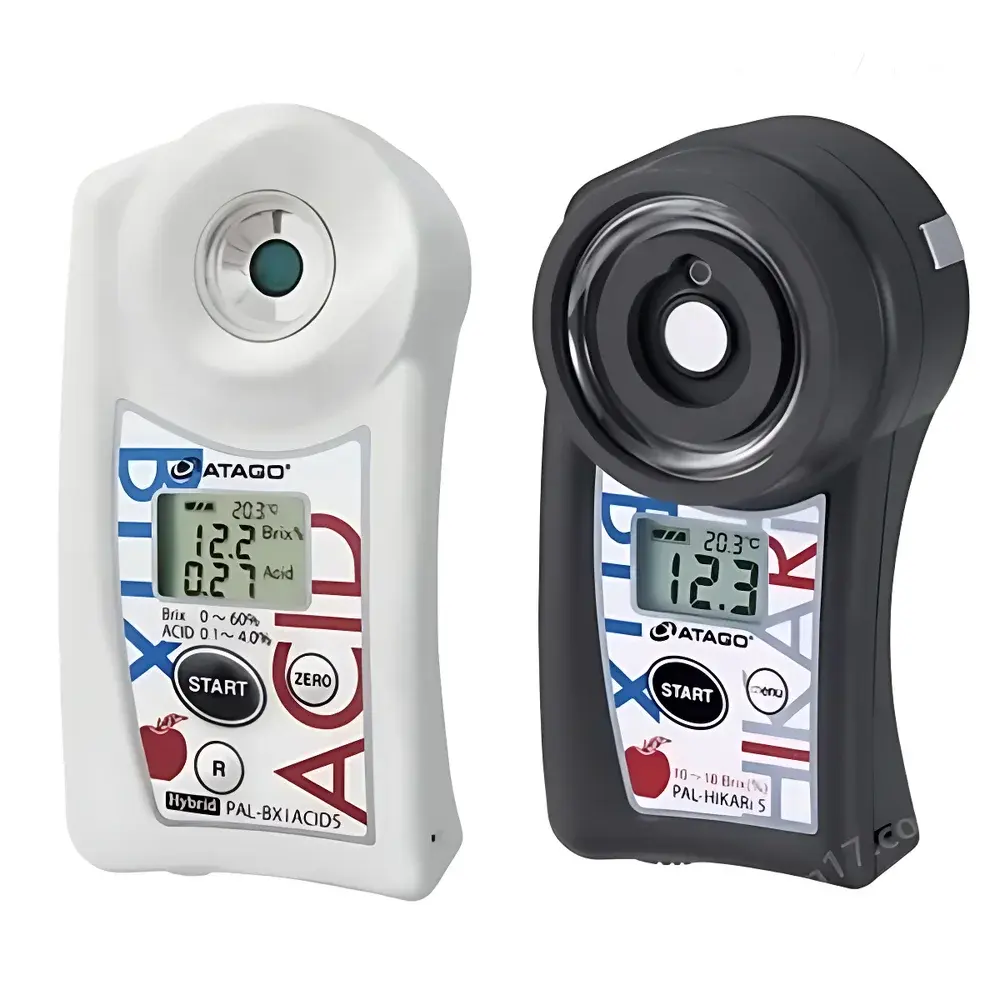
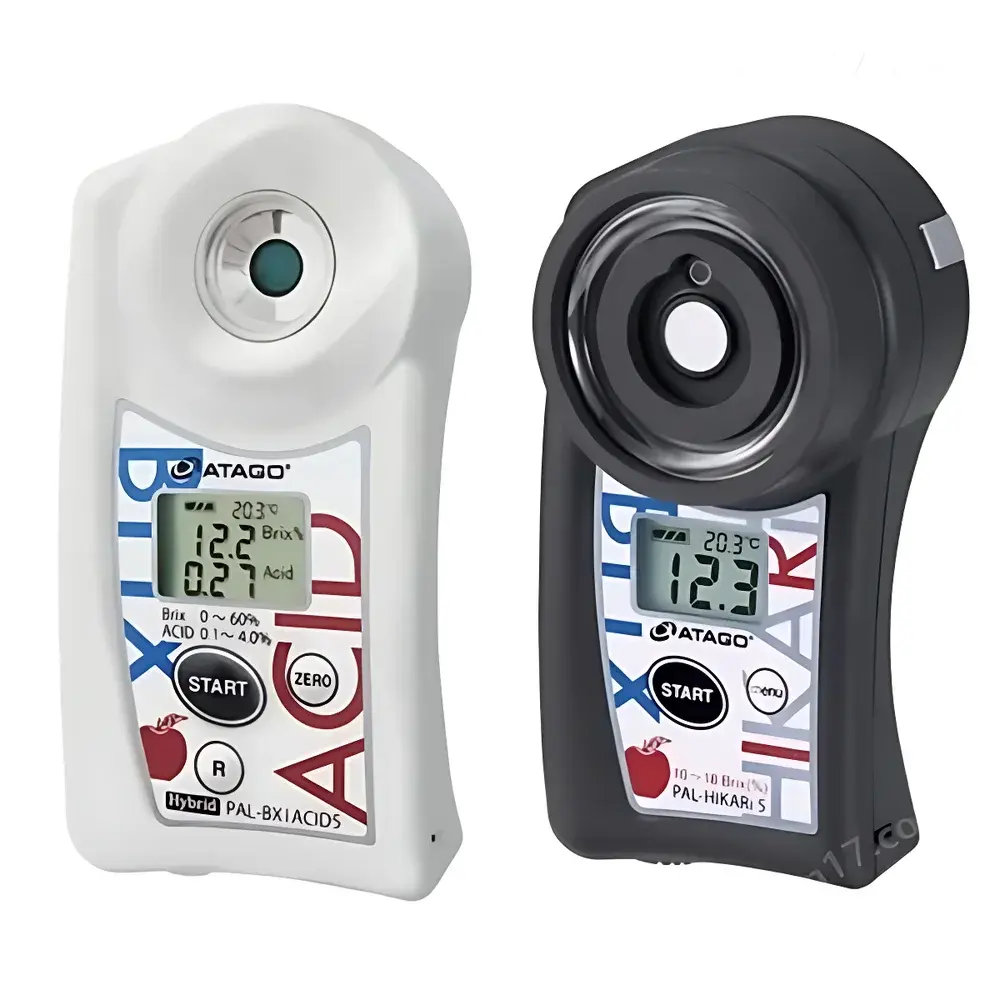
Atago ACID 5 + HIKARi 5 Non-Destructive Fruit Sugar-Acid Analysis Kit
| Brand | Atago |
|---|---|
| Origin | Japan |
| Model | ACID 5 + HIKARi 5 |
| Instrument Type | Portable |
| Parameter Types | Dual (Brix & Titratable Acidity) |
| Brix Range (HIKARi 5) | 10.0–18.0% |
| Brix Range (ACID 5) | 0.0–60.0% |
| Acidity Range | 0.10–4.00% |
| Brix Accuracy (HIKARi 5) | ±1.0% |
| Brix Accuracy (ACID 5) | ±0.2% |
| Acidity Accuracy | ±0.10% (0.10–1.00%), ±0.20% (1.01–4.00%) |
| Brix Resolution | 0.1% |
| Acidity Resolution | 0.01% (0.00–9.99%), 0.1% (≥10.0%) |
| pH Accuracy | ±0.1 pH |
| Calibration Solution Type | USA-standard buffer solutions |
| Compliance | Designed for ISO/IEC 17025-aligned routine quality control workflows |
Overview
The Atago ACID 5 + HIKARi 5 Non-Destructive Fruit Sugar-Acid Analysis Kit is a purpose-engineered dual-instrument system for rapid, non-invasive assessment of soluble solids content (Brix) and titratable acidity in intact apples—without sample preparation, juice extraction, or destructive sampling. The kit integrates two independently validated handheld refractometers: the PAL-HIKARi 5, utilizing near-infrared (NIR) reflectance spectroscopy optimized for apple epidermal measurement, and the PAL-BX/ACID 5, a high-precision digital refractometer with integrated pH-coupled acid quantification algorithm calibrated to standard titration-based reference methods (AOAC 973.17, ISO 2173). Unlike conventional benchtop titrators or enzymatic assays, this system delivers field-deployable, operator-independent results in under 5 seconds per measurement—enabling real-time harvest readiness evaluation, orchard zoning, postharvest sorting, and QC traceability across cold chain logistics.
Key Features
- Non-destructive Brix measurement via PAL-HIKARi 5: NIR optical sensor with wavelength-specific calibration for apple skin reflectance (650–950 nm), eliminating bruising, juice loss, or cross-contamination risks.
- Dual-parameter quantification: Simultaneous Brix (0.0–60.0%) and titratable acidity (0.10–4.00% as malic acid equivalent) from a single juice aliquot using PAL-BX/ACID 5’s temperature-compensated prism-based refractometry and embedded acid calculation engine.
- Automated sugar-acid ratio derivation: On-device computation of dimensionless Brix/Acid ratio (displayed as 0.00–999), a critical maturity index for apple cultivars including Fuji, Gala, Honeycrisp, and Granny Smith.
- Traceable calibration architecture: Pre-loaded USA-type buffer calibration curves (pH 4.01, 7.00, 10.01) compliant with NIST-traceable standards; auto-diagnostic calibration verification with pass/fail flagging.
- Ruggedized field design: IP65-rated housing, rubberized impact protection, and battery life exceeding 10,000 measurements per charge—validated for ambient operation between 5°C and 40°C and relative humidity up to 90% non-condensing.
Sample Compatibility & Compliance
The ACID 5 + HIKARi 5 kit is validated exclusively for intact, commercially mature apples (Malus domestica) with smooth, unblemished skin and surface moisture ≤0.5 g/m². It is not intended for use on waxed, coated, or pre-washed fruit unless surface residue is removed with lint-free cloth. Measurement repeatability (n=10, same fruit, same location) meets ISO 5725-2:2019 criteria for intermediate precision (RSD ≤1.8% for Brix; ≤2.3% for acidity). Data output complies with GLP documentation requirements: each result includes timestamp, instrument ID, operator code (optional), temperature, and measurement mode flag. The system supports audit-ready data export via USB-C to CSV-compatible formats compatible with LIMS integration.
Software & Data Management
No proprietary software installation is required. The instruments store up to 1,000 measurement records locally with automatic time/date stamping and batch tagging capability. Data export is performed via direct USB-C connection to Windows/macOS systems; exported files include UTF-8 encoded headers (Brix_ACID5, Acid_ACID5, Ratio_ACID5, Brix_HIKARi5, Temp_C, DateTime, Instrument_ID). For regulated environments, optional firmware upgrade enables 21 CFR Part 11-compliant electronic signatures, audit trail logging (user login/logout, calibration events, data deletion history), and role-based access control (administrator/operator modes). All firmware updates are distributed via Atago’s secure FTP portal with SHA-256 checksum validation.
Applications
- Pre-harvest maturity monitoring: Correlate non-destructive HIKARi 5 readings with starch-iodine index and firmness to determine optimal picking windows aligned with EU Regulation (EC) No 1221/2008.
- Postharvest grading: Classify apples into commercial grades (e.g., U.S. Extra Fancy, EN 12042:2021) based on Brix/acidity thresholds defined by cultivar-specific specifications.
- Storage condition optimization: Track acid degradation kinetics during controlled-atmosphere (CA) storage at 0.5–1.0°C; detect early-stage physiological disorders (e.g., bitter pit, internal browning) via anomalous acidity drift.
- QC release testing: Validate incoming fruit lots against contractual Brix ≥12.5% and acidity ≥0.35% (Fuji) or ≥0.42% (Granny Smith) prior to processing.
- Research applications: Support phenotyping trials in breeding programs requiring high-throughput, low-variance trait capture without tissue disruption.
FAQ
Is the PAL-HIKARi 5 suitable for other fruit species beyond apples?
No—the optical calibration and contact geometry of the PAL-HIKARi 5 are specifically engineered for apple epidermis thickness (120–180 µm), cuticle refractive index (~1.42), and typical surface curvature (radius 35–55 mm). Use on pears, peaches, or citrus yields non-representative values and voids warranty.
Does the ACID 5 require acid standardization before each use?
No—factory calibration remains stable for ≥12 months under normal handling. However, daily verification using certified 0.50% w/v malic acid reference solution (Atago P/N ACD-REF-05) is recommended for GMP-aligned operations.
Can measurement data be synchronized with enterprise ERP or farm management platforms?
Yes—CSV exports are natively ingestible by SAP S/4HANA QM modules, AgriWebb, and Cropio via API-ready middleware; Atago provides documented field mapping templates for column alignment.
What environmental conditions invalidate HIKARi 5 readings?
Direct solar irradiance >800 W/m², ambient temperature fluctuations >2°C/min, or surface condensation will trigger automatic error code E-12 and suspend measurement until stabilization.
Is the kit compliant with USDA Organic certification recordkeeping requirements?
Yes—audit logs, calibration certificates, and raw measurement files satisfy NOP §205.662 documentation mandates when stored for minimum 5 years with write-protection enabled.





