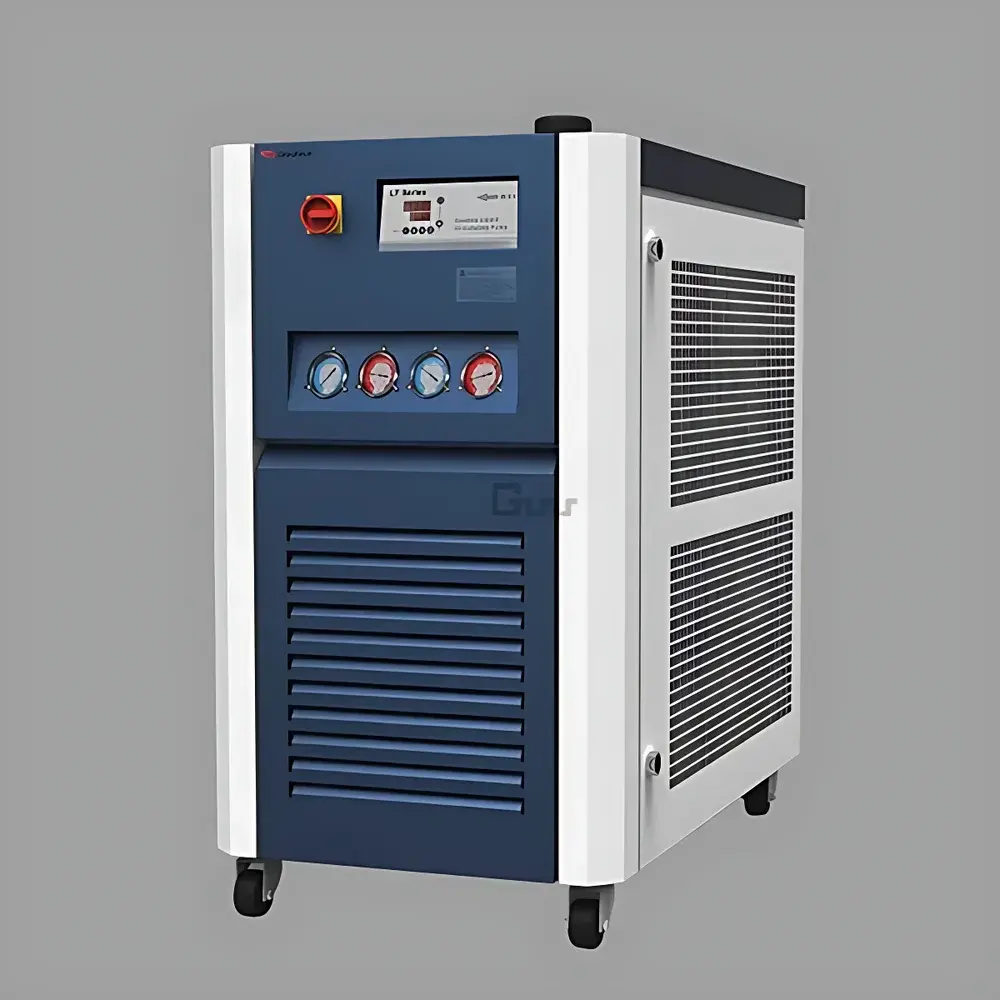
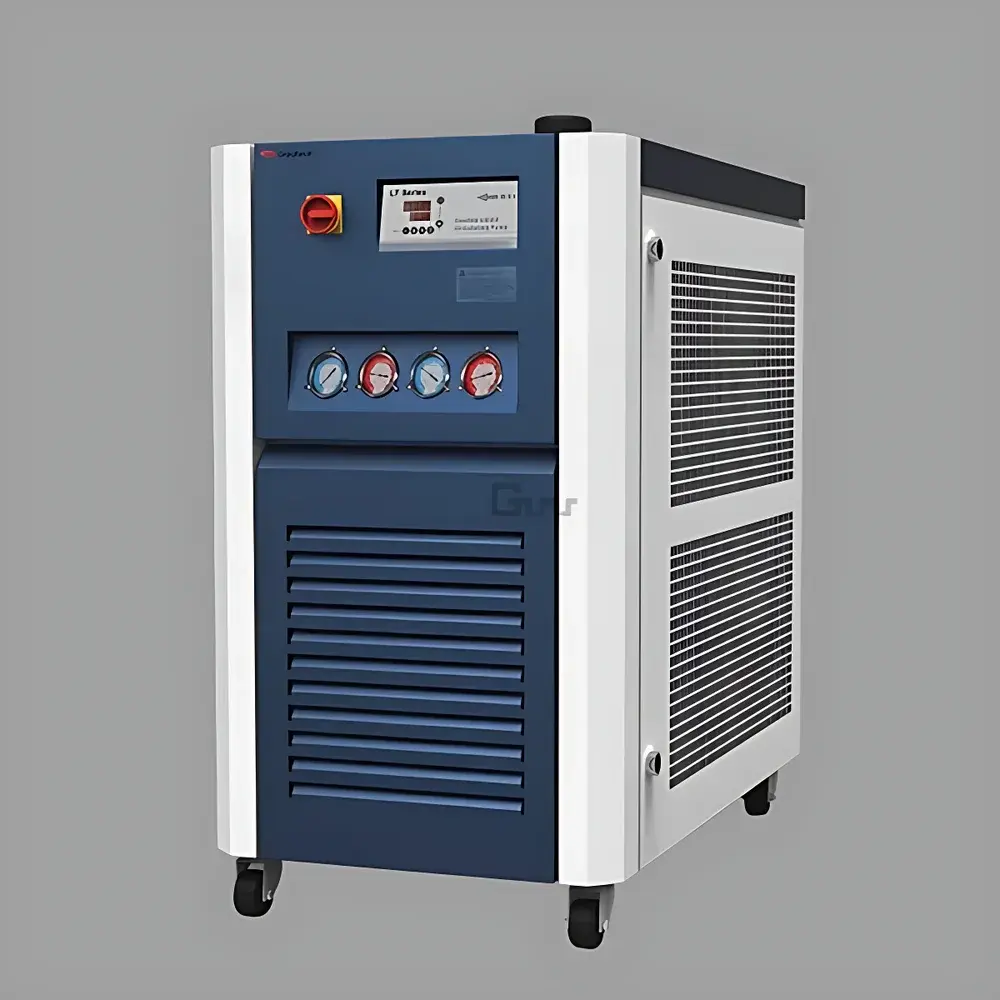
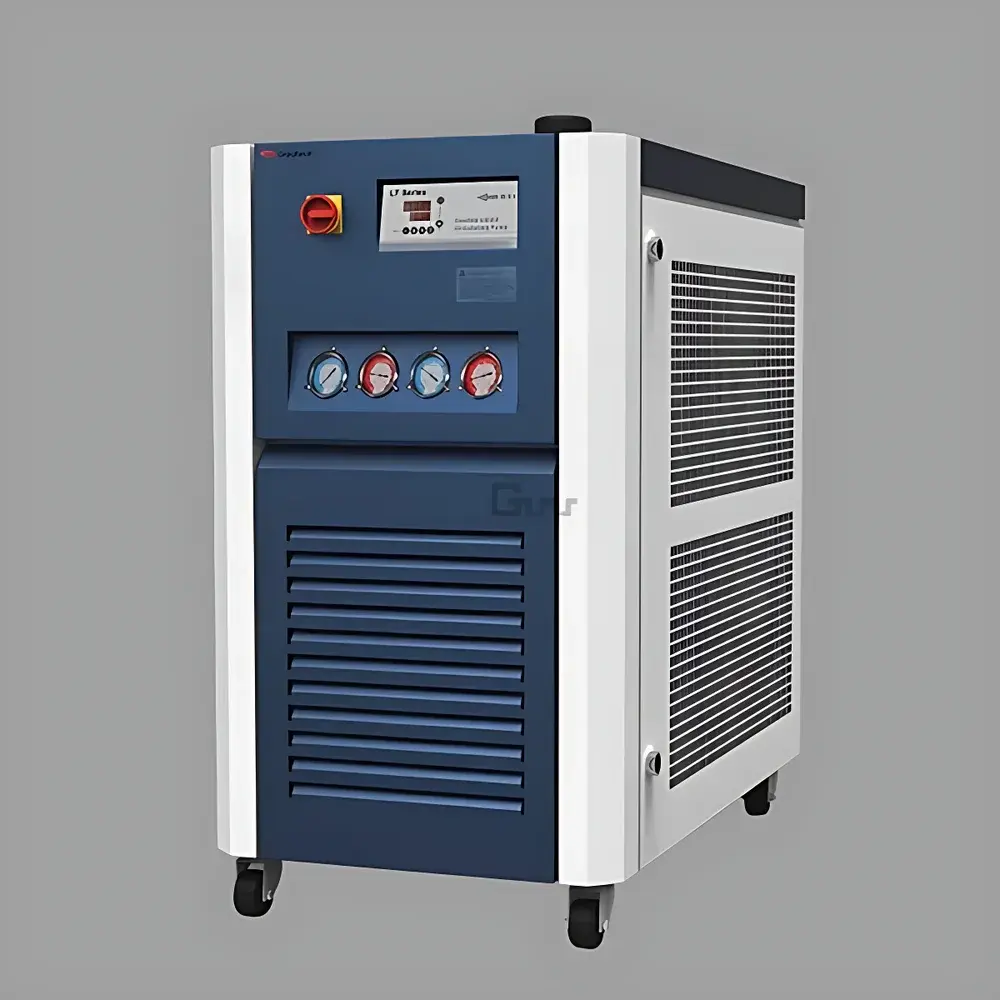
The Great Wall LT-50-80 Low-Temperature Circulating Chiller
| Brand | The Great Wall |
|---|---|
| Origin | Henan, China |
| Manufacturer Type | Authorized Distributor |
| Country of Origin | China |
| Model | LT-50-80 |
| Cooling Capacity at −80 °C | 1000 W |
| Temperature Range | −80 °C to −40 °C |
| Temperature Stability | ±2 °C |
| Power Supply | 3~ 380 V, 50 Hz |
| Total Power Consumption | 9.8 kW |
| Refrigerant | R404A/R23 |
| Pump Flow Rate | 30 L/min |
| Max. Pressure | 1.0 bar |
| Reservoir Volume | 10 L |
| Dimensions (L×W×H) | ≈1200×710×1280 mm |
| Weight | 350 kg |
| Evaporator | Brazed Plate Heat Exchanger |
| Pump Type | Cryogenic-Optimized Magnetic Drive Circulating Pump |
| Construction | SUS304 Stainless Steel Reservoir & Tubing |
| Cabinet Material | SPCC Electrostatic Powder-Coated Steel |
| Cooling Method | Air-Cooled |
| Safety Protections | High/Low Pressure, Oil Pressure, Leakage, Overload, Overheat |
| Refrigerant Compliance | GB/T 7778–2008, EU F-Gas Regulation Compliant |
Overview
The Great Wall LT-50-80 is a high-performance, air-cooled low-temperature circulating chiller engineered for continuous, stable thermal management in demanding laboratory and pilot-scale chemical synthesis environments. Designed around a dual-stage refrigeration cycle using environmentally compliant R404A/R23 mixed refrigerant, the unit delivers precise temperature control from −80 °C to −40 °C with ±2 °C stability—critical for exothermic cryogenic reactions, low-temperature crystallization, and condensation trapping in vacuum systems. Its compact footprint (1200 × 710 × 1280 mm) and 350 kg mass reflect an optimized mechanical architecture integrating brazed plate heat exchange, oil-separation-enhanced compression, and a sealed cryogenic circulation loop—enabling uninterrupted 24/7 operation under GLP-aligned process conditions.
Key Features
- Dual-Refrigerant Dual-Stage Compression System: Combines R404A (medium-temp stage) and R23 (low-temp stage) to achieve reliable −80 °C output without liquid nitrogen dependency; all critical components—including hermetic scroll compressors, high-efficiency oil separators, and stainless steel expansion valves—are sourced from Tier-1 industrial suppliers to ensure long-term refrigeration integrity.
- Cryogen-Optimized Closed-Loop Circulation: Features a SUS304 stainless steel reservoir (10 L capacity) and fully welded tubing path, eliminating volatile organic carrier loss and cross-contamination risk; compatible with ethanol, methanol, ethylene glycol/water, and specialized low-temp heat transfer fluids (e.g., Dowtherm J).
- Intelligent Digital Control Interface: Microprocessor-based controller with high-brightness LED display supports real-time setpoint adjustment, ramp/soak programming, and event logging; embedded safety logic enforces automatic shutdown on high/low pressure deviation, oil pressure drop, ground fault detection, motor overload, or evaporator frost accumulation.
- Air-Cooled Thermal Management: Eliminates dependence on municipal water supply or cooling towers; integrated axial fans with thermostatically modulated speed maintain optimal condenser delta-T across ambient ranges of 5–25 °C, complying with ISO 13732-1 ergonomic surface temperature limits.
- Cryogenic Circulating Pump: Hermetically sealed, magnetically coupled centrifugal pump rated for continuous operation at −80 °C; zero shaft seal leakage, no lubrication degradation, and validated resistance to thermal shock during rapid cooldown cycles.
Sample Compatibility & Compliance
The LT-50-80 is routinely deployed with jacketed glass reactors (20 L, 50 L, and 100 L volumes), rotary evaporators, cold traps, and analytical instrumentation requiring sub-ambient thermal anchoring. Its closed-loop design meets ISO 14001 environmental handling requirements for refrigerant containment, and refrigerant selection complies with China’s GB/T 7778–2008 standard and the EU F-Gas Regulation (EU No. 517/2014) for global export readiness. All electrical subsystems conform to IEC 61000-6-3 (EMC emission) and IEC 61000-6-2 (immunity) standards. Mechanical construction adheres to ASME BPVC Section VIII Div. 1 pressure boundary guidelines for non-fired pressure vessels operating below −50 °C.
Software & Data Management
While the LT-50-80 operates via standalone microcontroller firmware (no external PC dependency), its RS485 Modbus RTU interface enables integration into centralized lab automation platforms (e.g., LabArchives, DeltaV, or custom SCADA). Logged parameters—including setpoint, actual bath temperature, compressor run time, fault codes, and power-on hours—are timestamped and retainable for ≥30 days onboard. Audit trail functionality supports 21 CFR Part 11–aligned validation when paired with qualified data acquisition software, fulfilling GMP/GLP documentation requirements for temperature-critical reaction protocols.
Applications
- Low-temperature Grignard and organolithium reactions requiring sustained −70 °C to −80 °C reactor jacket control
- Cryogenic distillation and fractional condensation in fine chemical purification
- Thermal stabilization of FTIR, Raman, and XRD sample stages during low-T structural analysis
- Cooling of high-power laser diodes and photomultiplier tubes in spectroscopic instrumentation
- Process validation support for ICH Q5C biopharmaceutical stability studies at accelerated cold storage conditions
- Pre-cooling of feed streams prior to supercritical fluid extraction (SFE) systems
FAQ
What is the minimum achievable temperature at full load?
The LT-50-80 maintains −80 °C continuously at rated heat load (1000 W @ −80 °C); lower temperatures are not specified due to thermodynamic limitations of the R404A/R23 cascade system.
Is remote monitoring supported out of the box?
Yes—via RS485 Modbus RTU; optional USB-to-RS485 adapters and OEM-configurable Modbus register maps are available for third-party SCADA integration.
Can this chiller be used with flammable heat transfer fluids?
Only non-flammable, chemically inert fluids certified for −80 °C service (e.g., calcium chloride brine, specific glycol blends) are approved; consult the Fluid Compatibility Matrix (Doc. GW-LT-FLUID-2024) before use.
What maintenance intervals are recommended?
Compressor oil analysis every 3,000 operating hours; refrigerant leak check per ISO 16000-32 annually; heat exchanger fin cleaning every 6 months in dusty environments.
Does the unit comply with FDA requirements for pharmaceutical manufacturing?
The LT-50-80 meets mechanical and electrical safety prerequisites for ancillary equipment in FDA-regulated facilities; full qualification (IQ/OQ/PQ) requires site-specific protocol execution per ASTM E2500 and Annex 15.