
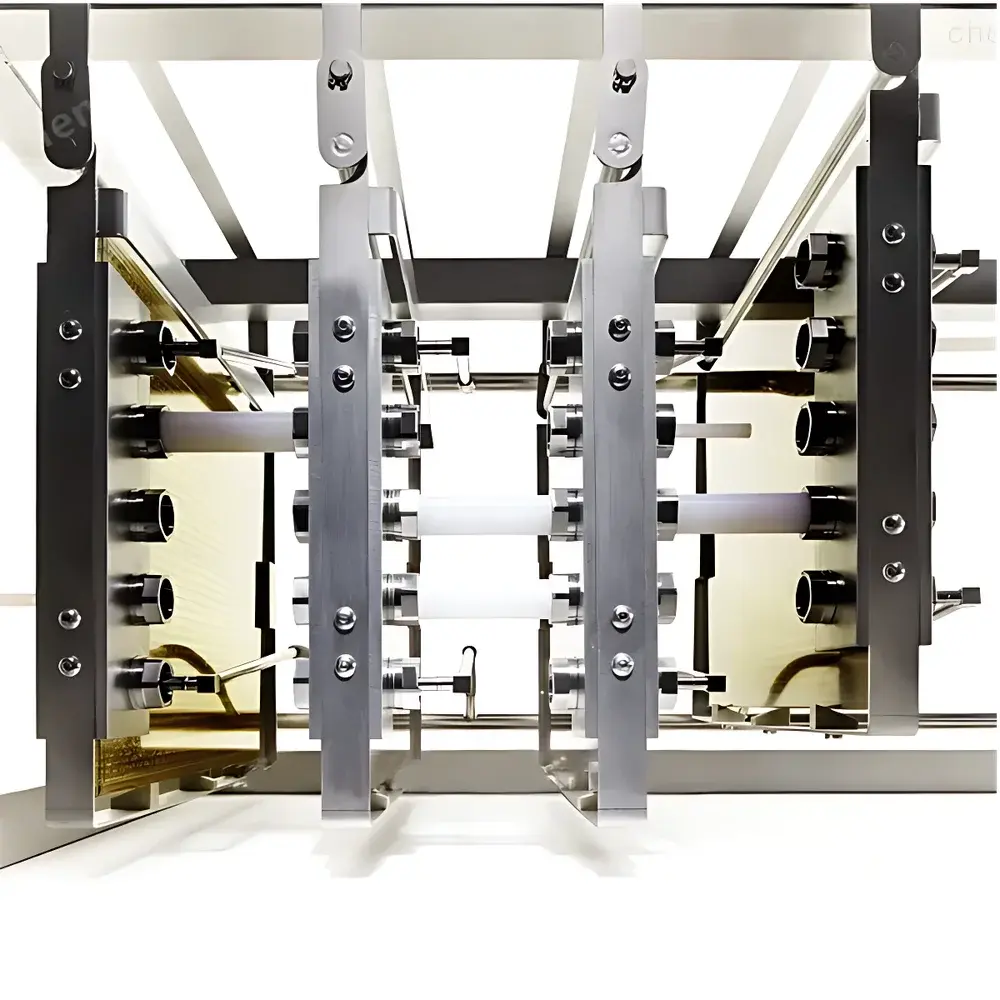
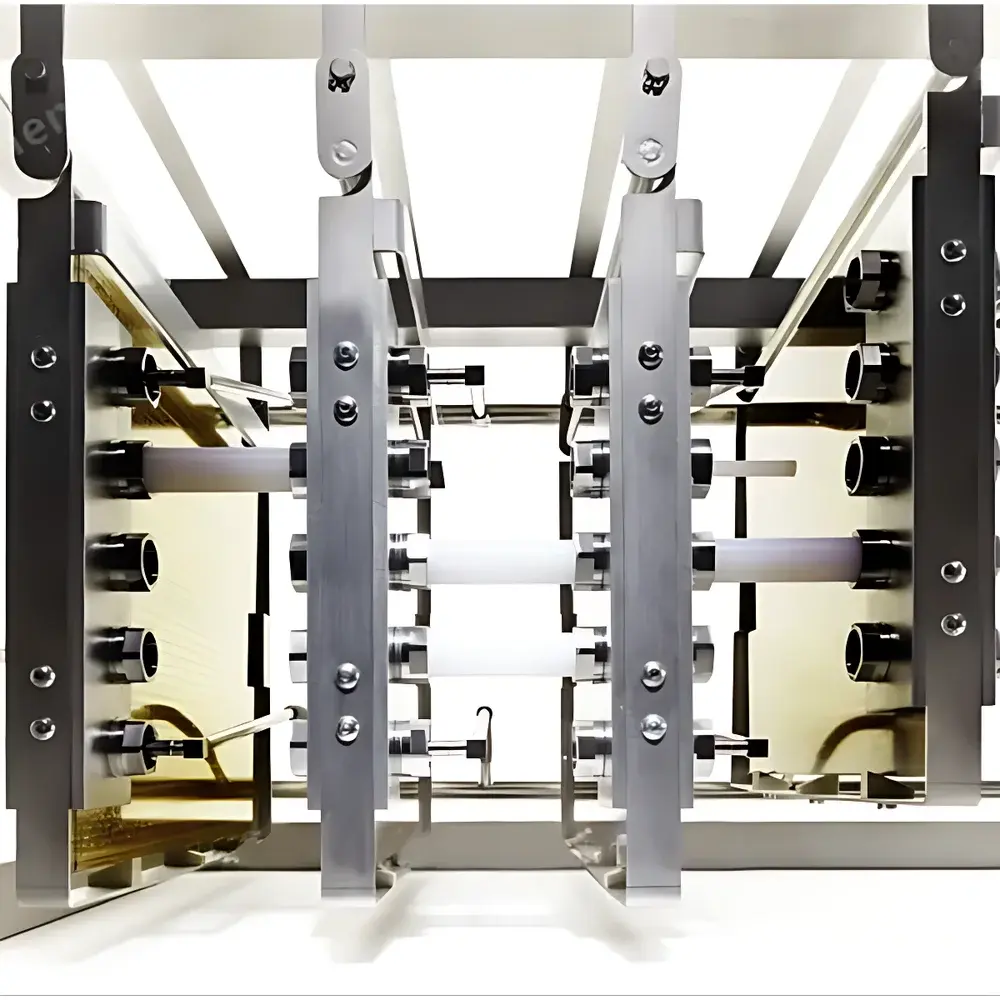
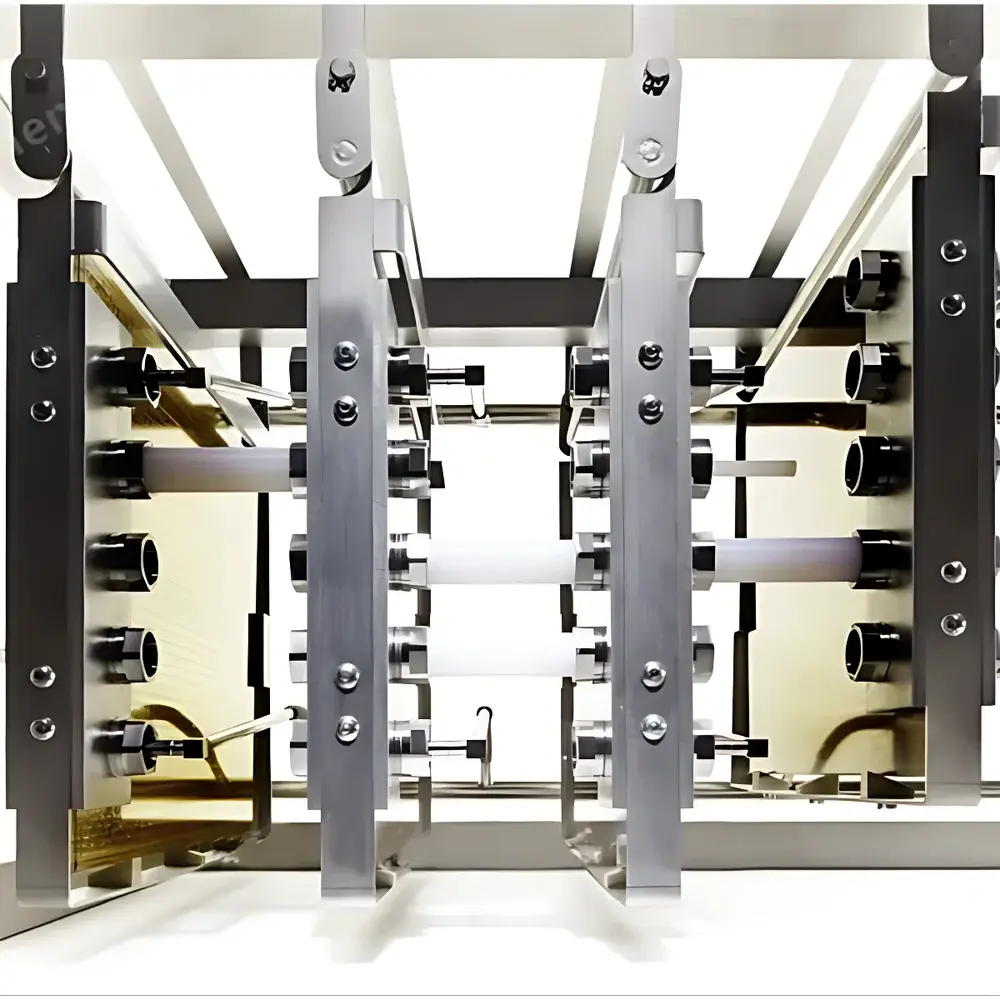
Corning G3 and G3 Photochemical High-Throughput Microchannel Reactor
| Brand | Corning |
|---|---|
| Origin | USA |
| Model | G3 / G3 Photochemical |
| Instrument Type | Microchannel Reactor |
| Construction Material | Borosilicate Glass |
| Operating Pressure | ≤1.8 MPa (260 psi) |
| Temperature Range | −25 °C to 200 °C |
| Fluid Throughput Capacity | Up to 1000 m³/year |
| Illumination Compatibility | LED-based, six discrete wavelengths (365 nm–455 nm), dual-side irradiation |
| Scalability | Direct process transfer from Corning G1 to G3 platform |
| Regulatory Alignment | Designed for GLP-compliant continuous manufacturing environments |
Overview
The Corning G3 and G3 Photochemical High-Throughput Microchannel Reactor is an engineered continuous-flow system built on Corning’s proprietary fused borosilicate glass microchannel architecture. It operates on the principle of laminar flow-enhanced mass and heat transfer within precisely defined, etched microfluidic channels—enabling exceptional control over residence time distribution, mixing efficiency, thermal homogeneity, and photon flux delivery in photochemical transformations. Unlike batch reactors or metal-based flow systems, the all-glass construction eliminates catalytic leaching, metal ion contamination, and UV absorption losses—making it uniquely suited for high-value pharmaceutical intermediates, fine chemical synthesis, and photoredox-catalyzed processes where purity, reproducibility, and regulatory traceability are critical. The G3 platform supports both thermal and photochemical reaction modes, with integrated thermal management and optically optimized channel geometry ensuring uniform irradiance across the entire active reaction volume.
Key Features
- Monolithic borosilicate glass construction—chemically inert, optically transparent (UV–vis transmission >90% down to 300 nm), and resistant to corrosion by strong acids, bases, and halogenated solvents.
- Dual-side LED illumination system with wavelength-selectable modules (365, 385, 405, 420, 435, and 455 nm), calibrated for irradiance uniformity and thermal stability via integrated liquid-cooled heat sinks.
- Modular reactor stack design—individual G3 glass chips can be serially or parallelly configured to adjust residence time, throughput, or multi-step reaction sequencing without revalidation.
- Thermal operating envelope of −25 °C to +200 °C with pressure rating up to 1.8 MPa (260 psi), validated per ASME B31.3 process piping standards for continuous operation.
- Scalable process development pathway—from lab-scale Corning G1 (mL/min range) to G3 (L/min range)—with identical channel geometry, fluid dynamics, and kinetic behavior enabling direct tech transfer and reduced scale-up risk.
- No metallic wetted parts—eliminates concerns over metal-catalyzed side reactions, particulate generation, or extractables in GMP-regulated API synthesis.
Sample Compatibility & Compliance
The G3 reactor accommodates a broad spectrum of chemistries including nitration, halogenation, diazotization, photocycloaddition, asymmetric epoxidation, and transition-metal-catalyzed C–H activation. Its glass surface chemistry ensures compatibility with organolithiums, Grignard reagents, and highly exothermic nitrations when operated under controlled flow and cooling conditions. The system conforms to ISO 14001 environmental management principles and supports compliance with FDA 21 CFR Part 11 (when paired with validated SCADA/DCS data acquisition), ICH Q5A–Q5E biopharmaceutical guidance, and ASTM E2500–22 for verification of pharmaceutical manufacturing equipment. Full material traceability, non-destructive testing (NDT) certification for each glass chip, and documented cleaning validation protocols are available upon request.
Software & Data Management
While the G3 hardware operates as a standalone flow module, it integrates seamlessly with third-party process analytical technology (PAT) platforms—including Real-Time NIR/FTIR spectroscopy, inline Raman probes, and automated back-pressure regulators—for closed-loop control. Corning provides comprehensive engineering documentation packages (EDPs) containing P&IDs, FMEA reports, IQ/OQ templates, and calibration procedures aligned with GAMP 5 guidelines. All operational parameters—including flow rate, temperature setpoints, LED drive current, and pressure feedback—are logged with timestamped audit trails meeting ALCOA+ data integrity requirements. Optional integration with DeltaV, Emerson DeltaV DCS, or Siemens Desigo CC enables centralized batch record generation compliant with Annex 11 and EU GMP Chapter 4.
Applications
- Continuous photoredox synthesis of chiral building blocks for oncology and antiviral APIs.
- Safety-critical nitrations and chlorinations at elevated temperatures without runaway risk.
- Multi-step telescoped synthesis—e.g., imine formation → asymmetric reduction → crystallization—within a single integrated flow train.
- Production of unstable diazonium salts for subsequent azo coupling in dye and pigment manufacturing.
- High-yield singlet oxygen-mediated ene reactions and [2+2] cycloadditions under visible-light irradiation.
- Process intensification of enzymatic reactions requiring precise pH and thermal control across immobilized enzyme cartridges.
FAQ
What is the maximum allowable operating pressure for the G3 reactor?
The Corning G3 microchannel reactor is rated for continuous operation up to 1.8 MPa (260 psi) at 200 °C, verified per ASME Section VIII Div. 1 and Corning’s internal burst testing protocol.
Can the G3 be used for cryogenic reactions below −25 °C?
The standard G3 platform is validated from −25 °C to 200 °C; sub-zero operation beyond this range requires custom thermal jacketing and low-temperature-compatible elastomer seals, subject to engineering review.
Is wavelength tuning possible during operation?
No—each LED module is fixed at a single peak wavelength; however, multiple G3 units equipped with different LEDs can be arranged in parallel or series for sequential wavelength-specific steps.
How is cleaning-in-place (CIP) performed?
CIP is executed using solvent flushes (e.g., acetone, isopropanol, water) at elevated temperature and pressure; Corning supplies validated cleaning cycle parameters and residue detection methods per ICH Q5C.
Does Corning provide process safety documentation for reactive chemistry screening?
Yes—Corning delivers Process Hazard Analysis (PHA) support packages, including RC1e calorimetry correlation data, adiabatic temperature rise projections, and thermal accumulation modeling for client-submitted reaction schemes.



