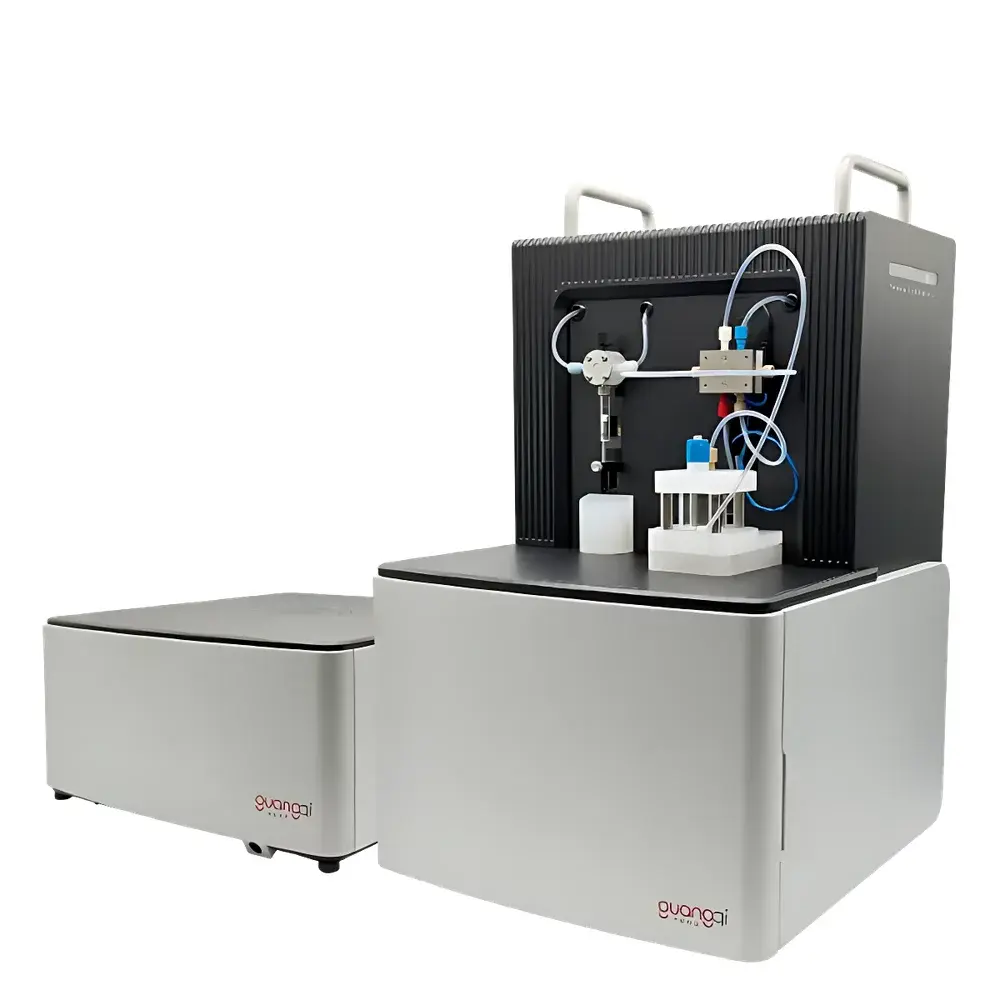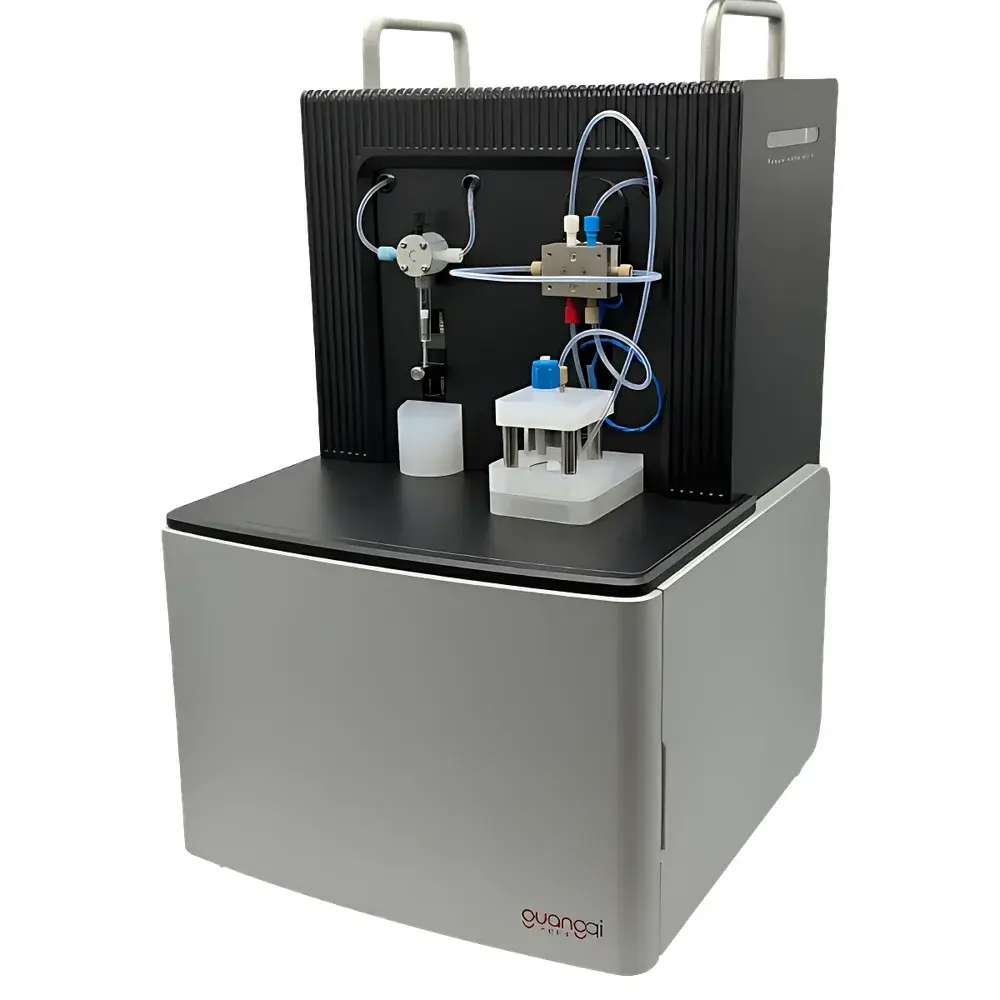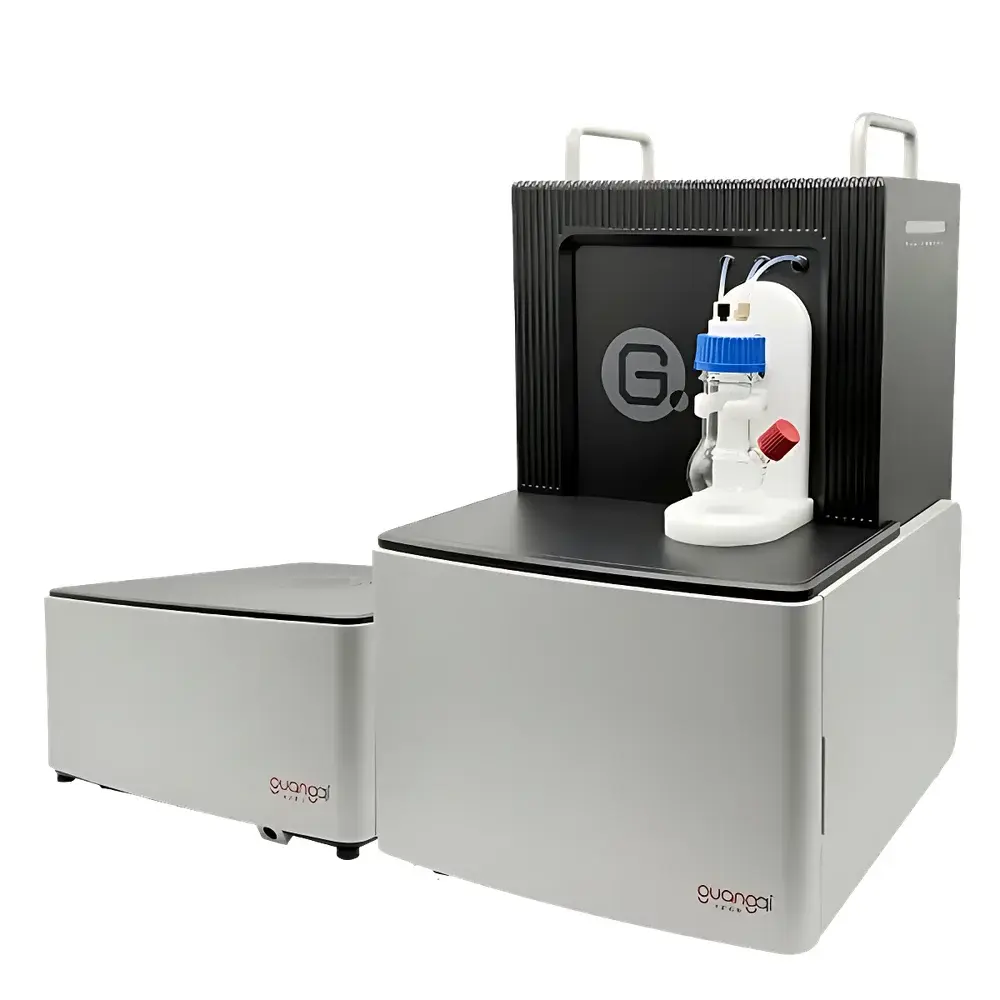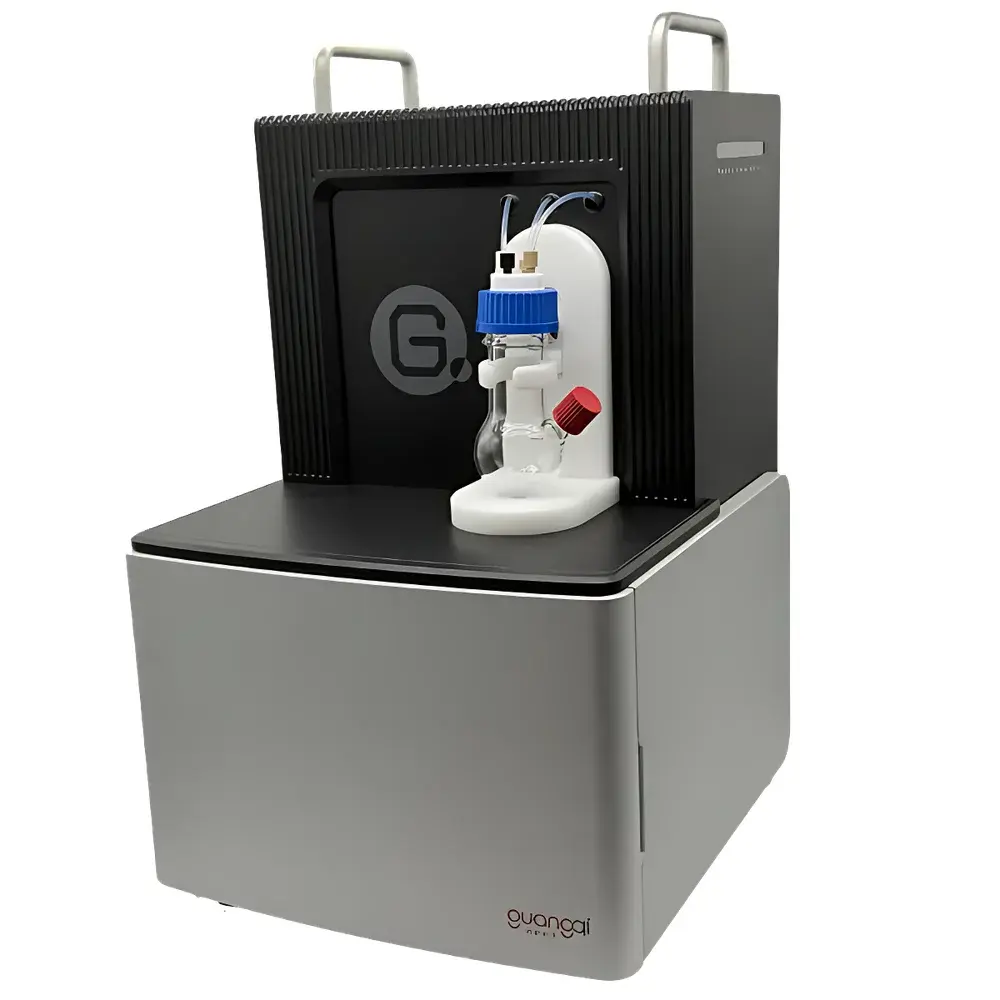
GBITEST GCP-CPX Modular Cryogenic Probe Station
| Brand | GBITEST |
|---|---|
| Model | GCP-CPX |
| Cooling Options | Liquid Nitrogen (LN₂) or Liquid Helium (LHe) |
| Base Temperature | <5 K (with LHe) |
| Sample Stage Diameter | Standard 2-inch, Optional up to 4-inch |
| Cooling Method | Direct cryogen immersion with multi-layer radiation shields |
| Temperature Monitoring | Multiple calibrated Pt sensors with ±10 mK stability |
| Operation Mode | Manual probe positioning |
| Construction | Stainless steel vacuum chamber with optical access windows |
| Vacuum Compatibility | <1×10⁻⁶ Torr typical base pressure |
| Radiation Shield Configuration | Dual-layer (LN₂ and LHe optimized) |
| Visual Access | Integrated quartz viewport on radiation shield |
| Mounting Interface | Standard SM1 (1.035"-40) and kinematic optical breadboard compatibility |
| Electrical Feedthroughs | 24-channel low-noise coaxial + 4-channel triaxial (optional) |
| Compliance | Designed per ISO 14644-1 Class 5 cleanroom handling guidelines for semiconductor lab use |
Overview
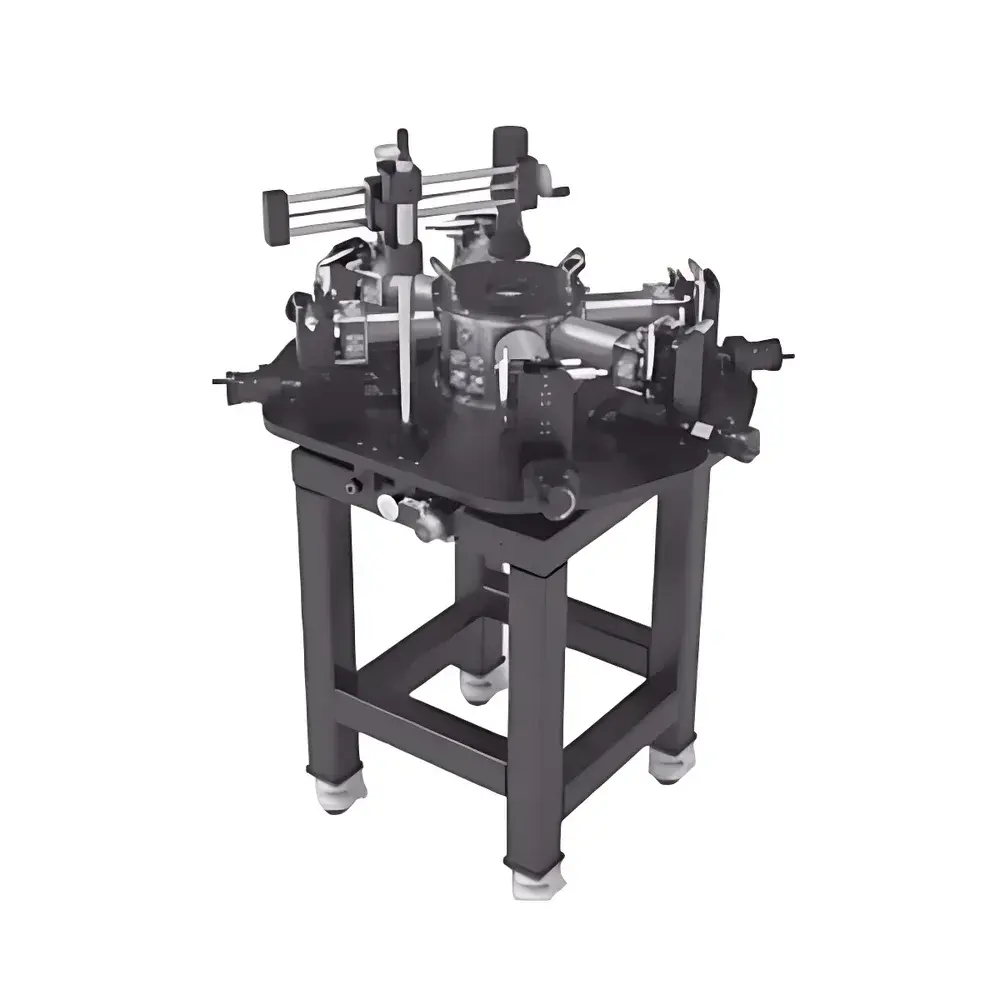
The GBITEST GCP-CPX Modular Cryogenic Probe Station is a manually operated, high-vacuum-compatible platform engineered for low-temperature electrical characterization of semiconductor devices, quantum materials, and nanoscale electronic structures. It operates on the principle of direct cryogen immersion cooling—leveraging either liquid nitrogen (77 K) or liquid helium (4.2 K, extendable to <5 K with pumped LHe)—to achieve stable, vibration-isolated thermal environments within an ultra-high vacuum (UHV)-capable stainless steel chamber. Its core architecture integrates multi-stage radiation shielding with material- and temperature-optimized layers: a primary LN₂-cooled shield for intermediate temperatures and a secondary LHe-cooled shield for sub-10 K operation. This dual-shield design minimizes radiative heat load on the sample stage, enabling thermal stability better than ±10 mK over extended measurement periods. The system is not a closed-cycle refrigerator but a bath-cooled station, offering superior temperature homogeneity and lower thermal noise compared to pulse-tube-based alternatives—critical for DC transport, low-frequency noise spectroscopy, and quantum coherence experiments.
Key Features
- Modular thermal architecture supporting both LN₂ and LHe cooling paths, with field-reconfigurable radiation shield assemblies
- 2-inch standard sample stage (upgradable to 4-inch diameter) with integrated high-precision XYZ micrometer stages (1 µm resolution) and tilt adjustment
- Dual-layer radiation shields featuring optically transparent quartz viewports—enabling real-time optical alignment, laser coupling, and in-situ microscopy
- 24-channel low-noise coaxial feedthroughs (SMA) and optional 4-channel triaxial feedthroughs (for guarded measurements), all hermetically sealed and baked to <1×10⁻⁶ Torr
- Redundant temperature monitoring via multiple calibrated platinum resistance thermometers (PRTs) mounted at critical thermal nodes: cold plate, radiation shields, and sample holder
- Vibration-damped optical table mounting interface compliant with SM1 threading and kinematic dowel pin alignment standards
- Designed for integration with commercial probe cards, RF probes (up to 67 GHz), and cryogenic parameter analyzers (e.g., Keysight B1500A, Keithley 4200-SCS)
Sample Compatibility & Compliance
The GCP-CPX accommodates wafers up to 100 mm (4-inch), diced dies, discrete devices, 2D material flakes (graphene, TMDCs), superconducting qubit test chips, and MEMS/NEMS resonators. All internal surfaces are electropolished stainless steel; no organic adhesives or outgassing polymers are used in vacuum zones. The system conforms to ISO 14644-1 Class 5 cleanroom handling protocols during assembly and packaging. While not certified to IEC 61000-4 electromagnetic immunity standards out-of-box, its grounded metal enclosure and feedthrough filtering support compliance when integrated into shielded laboratory environments. Temperature calibration traceability follows NIST-traceable PRT standards per ASTM E1137/E1142. No FDA or UL certification applies, as the instrument is intended solely for research-grade laboratory use—not clinical or production-line deployment.
Software & Data Management
The GCP-CPX is a hardware-only platform with no embedded controller or proprietary software. It interfaces seamlessly with third-party instrumentation control ecosystems including LabVIEW, Python (PyVISA, QCoDeS), MATLAB Instrument Control Toolbox, and Keysight PathWave. Temperature readouts from PRTs are accessible via standard 4-wire RTD inputs on external DAQ systems (e.g., National Instruments PXIe-4353). All feedthroughs support industry-standard cabling (e.g., Picosecond Pulse Labs 5865-TRIA for triax, Huber+Suhner Sucoflex 104 for RF). Audit trails, calibration logs, and measurement metadata must be managed externally—consistent with GLP/GMP-aligned labs using electronic lab notebooks (ELNs) such as LabArchives or Benchling. No 21 CFR Part 11 compliance is provided natively; users implement digital signature and version-control workflows at the host software layer.
Applications
- Cryogenic DC/AC transport characterization of novel semiconductors (GaAs, InSb, Bi₂Se₃) and topological insulators
- Superconducting device testing: critical current (Ic) mapping, Josephson junction IV curves, kinetic inductance measurements
- Quantum dot and single-electron transistor (SET) spectroscopy below 100 mK (when paired with dilution refrigerator insert)
- Low-frequency 1/f noise analysis in advanced CMOS nodes and wide-bandgap power devices
- In-situ optical excitation and photoluminescence (PL) studies under controlled cryogenic bias conditions
- Reliability stress testing: TDDB, HCI, and NBTI at sub-10 K to isolate phonon-independent degradation mechanisms
FAQ
Does the GCP-CPX include a vacuum pump or cryogen delivery system?
No. The station requires external roughing and turbomolecular pumping systems (not supplied) and user-provided LN₂/LHe dewars with transfer lines.
Can the system be upgraded from LN₂ to LHe operation post-purchase?
Yes—provided the radiation shield set, cold head interface, and thermal anchoring are configured for LHe during initial build; retrofits require factory service and recalibration.
What is the typical base pressure achievable with standard pumping configuration?
<1×10⁻⁶ Torr after 24-hour bake-out at 100°C, verified with cold cathode gauge.
Are custom electrical feedthrough configurations available?
Yes—users may specify mixtures of SMA, triax, SMP, or fiber-optic feedthroughs at time of order; lead time increases by 4–6 weeks.
Is the sample stage compatible with commercial micro-manipulators?
Yes—standard 8-32 UNC threaded holes and SM1-compatible kinematic mounts enable integration with Scientifica, Kleindiek, or Attocube positioners.