
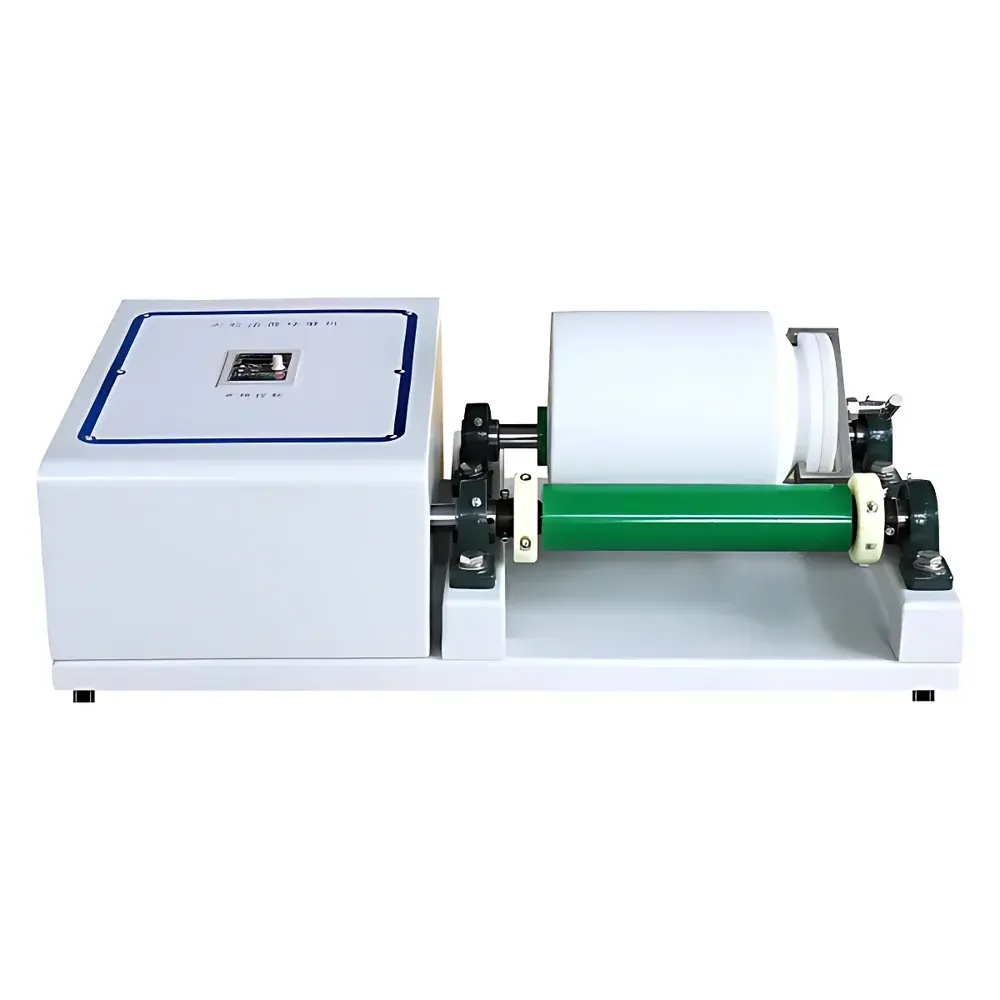
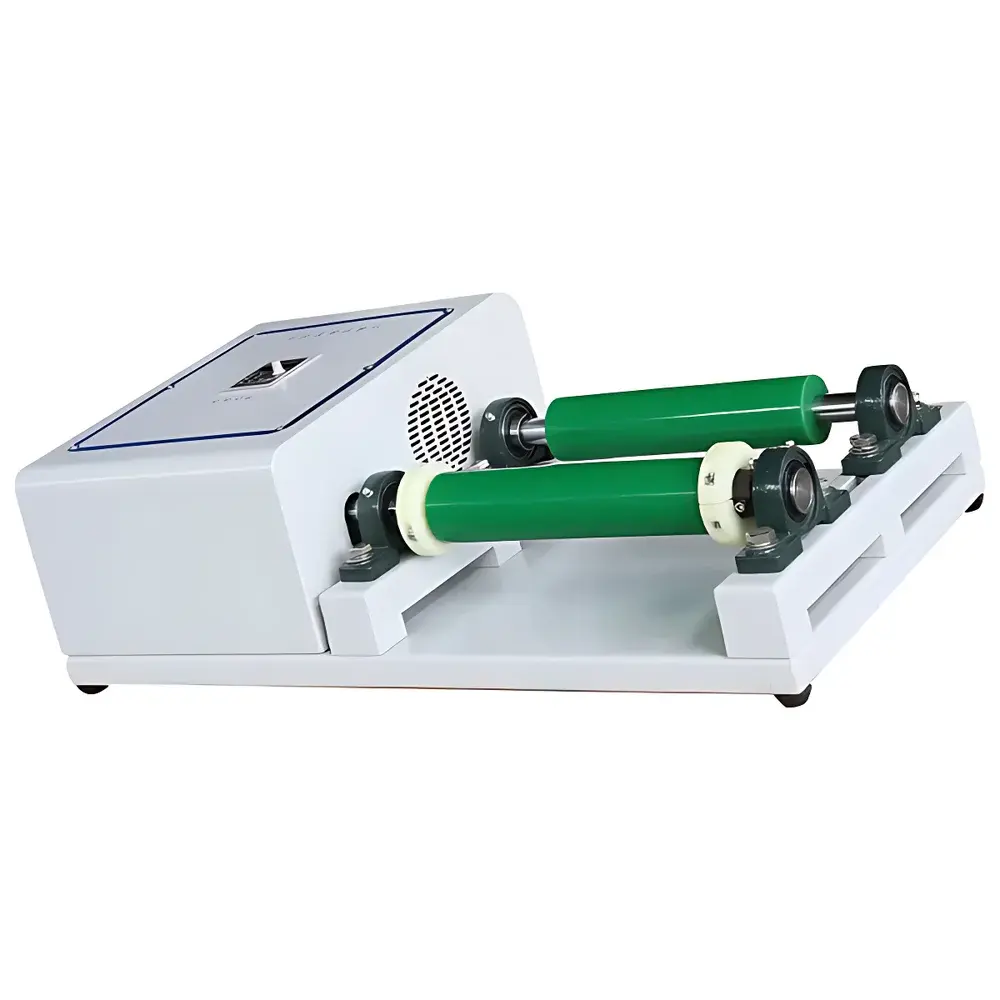
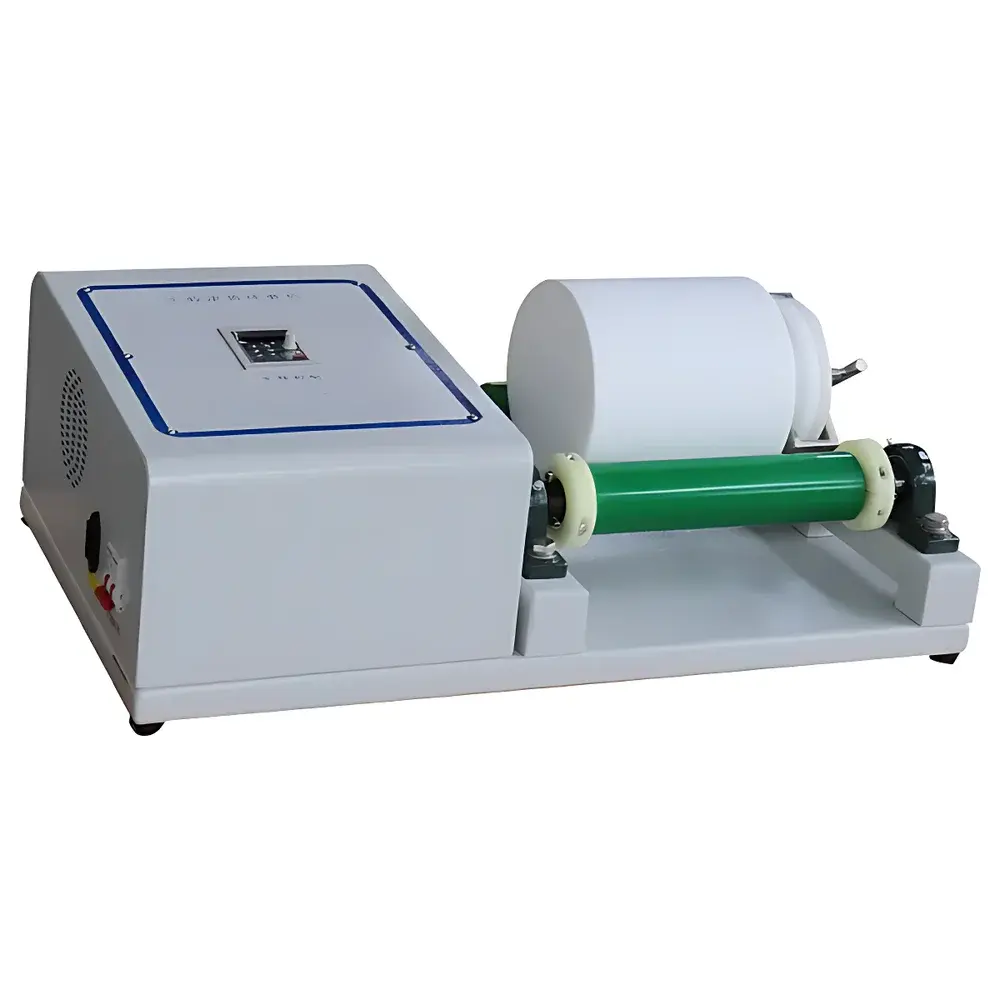
JU CHUANG JC-QMJ-5 Laboratory Roller Ball Mill
| Brand | JU CHUANG ENVIRONMENTAL |
|---|---|
| Origin | Shandong, China |
| Model | JC-QMJ-5 |
| Instrument Type | Roller Ball Mill |
| Sample Applicability | Hard Materials |
| Feed Size | ≤10 mm |
| Final Particle Size | 1–100 µm |
| Batch Capacity | 5 L |
| Drive System | Variable-Frequency Motor with Rubber Roller Transmission |
| Speed Range | 60–570 rpm |
| Power | 370 W / 220 V / 50 Hz |
| Timer Range | 0–999 min |
| Dimensions (L×W×H) | 730 × 415 × 260 mm |
| Net Weight | ~32 kg |
| Grinding Jar Compatibility | 0.5–5 L |
| Jar & Media Materials | Stainless Steel, Alumina, Zirconia, Agate, Polyurethane, Nylon, Tungsten Carbide |
Overview
The JU CHUANG JC-QMJ-5 Laboratory Roller Ball Mill is a precision-engineered batch-type grinding and mixing system designed for controlled size reduction of hard, brittle, and moderately tough solid materials in research laboratories, quality control environments, and pilot-scale production settings. Operating on the principle of cascading impact and attrition, the unit rotates cylindrical grinding jars horizontally around a central axis while simultaneously rotating them about their own longitudinal axis—generating compound motion that enhances energy transfer efficiency and particle breakage uniformity. This dual-axis motion distinguishes roller ball mills from conventional planetary or vibratory mills, enabling reproducible sub-100 µm particle distributions without excessive heat generation or contamination risk. The JC-QMJ-5 is optimized for applications requiring high batch-to-batch consistency, minimal operator intervention, and compatibility with diverse jar and media chemistries—making it suitable for material science R&D, pharmaceutical pre-formulation studies, ceramic slurry development, and advanced functional powder synthesis.
Key Features
- Variable-frequency drive (VFD) enables precise, stepless speed control from 60 to 570 rpm—allowing optimization of grinding kinetics for different material hardnesses and desired fineness.
- Robust rubber roller transmission system minimizes mechanical vibration, ensures smooth jar rotation, and extends service life under repeated loading cycles.
- Programmable digital timer (0–999 minutes) supports unattended operation with automatic shutdown, critical for extended milling protocols and GLP-compliant workflows.
- Compact footprint (730 × 415 × 260 mm) and lightweight design (~32 kg) facilitate integration into fume hoods, glove boxes, or shared lab benches without structural reinforcement.
- Modular jar mounting platform accommodates standard cylindrical jars ranging from 0.5 L to 5 L volume, with quick-release clamping and centering alignment for repeatable positioning.
- Wide selection of jar and grinding media materials—including stainless steel, alumina (Al₂O₃), yttria-stabilized zirconia (YSZ), agate, polyurethane, nylon, and tungsten carbide—ensures chemical inertness and low wear contamination for sensitive applications.
Sample Compatibility & Compliance
The JC-QMJ-5 is validated for processing hard and semi-brittle samples including oxides, carbides, nitrides, metals, minerals, and composite precursors. It meets general laboratory safety standards per IEC 61000-6-2 (EMC immunity) and IEC 61000-6-4 (EMC emission). While not certified to ISO/IEC 17025 or ASTM E1155 for metrological traceability, its mechanical repeatability supports internal method validation under ISO 13320 (laser diffraction particle sizing) and ASTM C136 (sieve analysis). When operated with documented SOPs—including jar cleaning protocols, media-to-sample mass ratios, and speed/time calibration curves—the system supports data integrity requirements aligned with FDA 21 CFR Part 11 Annex 11 principles for electronic records in regulated environments.
Software & Data Management
The JC-QMJ-5 operates as a standalone electromechanical instrument with no embedded software or network interface. All operational parameters—including speed setpoint, runtime, and power status—are managed via front-panel LED display and membrane keypad. For traceable process documentation, users are advised to record settings manually or integrate external logging tools (e.g., LabArchives, ELN systems) using standardized templates. Optional USB-connected data loggers may be deployed to capture real-time RPM and motor current profiles during extended runs, supporting root-cause analysis of grinding inefficiencies or media degradation.
Applications
- Preparation of homogeneous ceramic slurries and glaze formulations with narrow D50 distributions (1–50 µm) for rheological characterization and spray drying.
- Mechanochemical synthesis of metal-organic frameworks (MOFs) and layered double hydroxides (LDHs) where solvent-free activation is required.
- Particle size reduction of battery cathode precursors (e.g., LiCoO₂, NMC) prior to sintering, minimizing lithium loss and phase segregation.
- Homogenization of magnetic nanoparticle dispersions (Fe₃O₄, CoFe₂O₄) for biomedical assay development and hyperthermia studies.
- Grinding of pharmaceutical excipients and active ingredients for dry powder inhaler (DPI) formulation screening under QbD frameworks.
- Production of reference standards for XRD, SEM-EDS, and BET surface area analysis across academic and industrial labs.
FAQ
What is the maximum recommended fill level for the grinding jar?
The optimal loading is two-thirds of the jar’s internal volume to ensure sufficient free space for effective cascading motion and heat dissipation.
Can the JC-QMJ-5 be used for cryogenic milling?
No—it lacks integrated cooling ports or liquid nitrogen compatibility; for sub-ambient grinding, dedicated cryo-mills with Dewar jackets are recommended.
Is the unit compatible with vacuum or inert gas purging?
Yes—jars with sealed lids (e.g., stainless steel or zirconia with O-ring gaskets) can be pre-evacuated or backfilled with argon/nitrogen prior to mounting.
How often should the rubber rollers be inspected or replaced?
Visual inspection every 200 operating hours is advised; replacement is typically required after 1,000–1,500 hours of continuous use under nominal load conditions.
Does the JC-QMJ-5 support multi-jar simultaneous operation?
No—this is a single-jar configuration. For parallel processing, multiple units or larger-capacity models (e.g., JC-QMJ-15) must be deployed.



