Micro SV Acoustic Velocity Sensor
| Origin | Canada |
|---|---|
| Manufacturer Type | Authorized Distributor |
| Origin Category | Imported |
| Model | SV |
| Pricing | Available Upon Request |
Overview
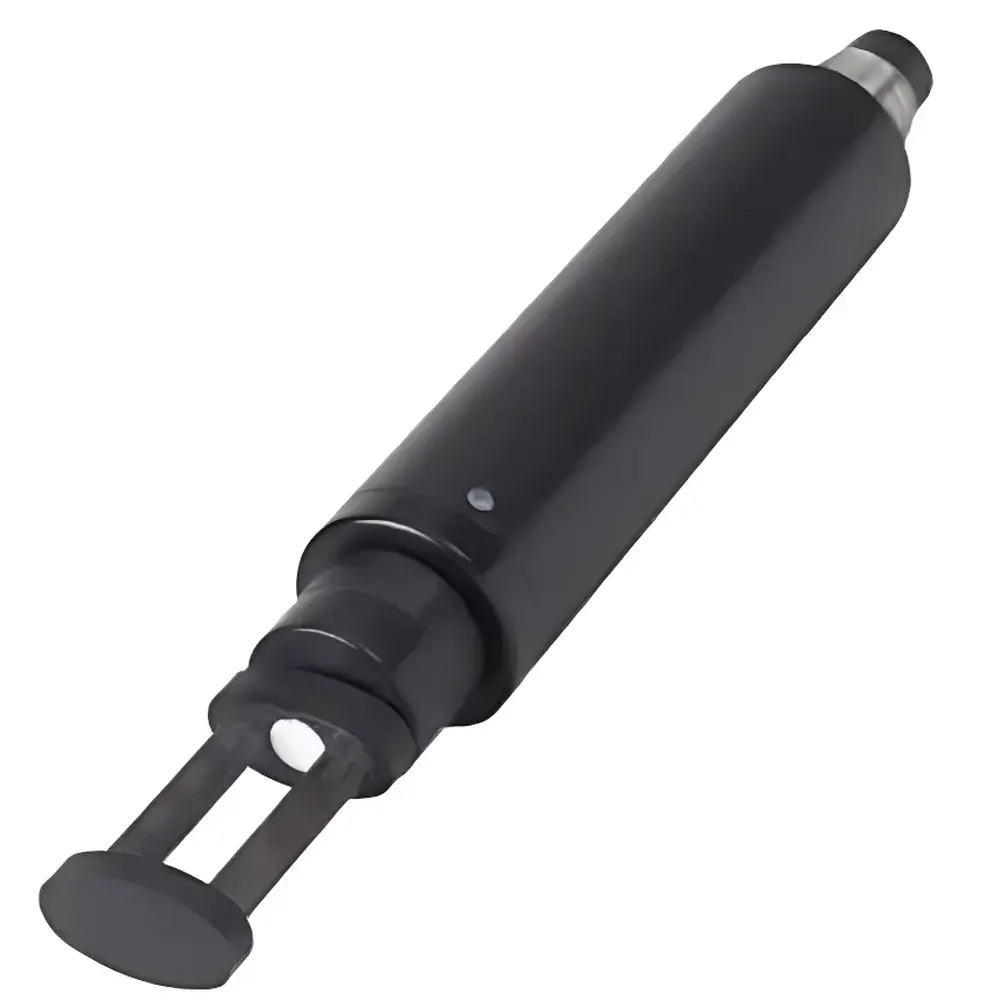
The Micro SV Acoustic Velocity Sensor is a compact, high-precision instrument engineered for direct measurement of sound speed in seawater using the time-of-flight (ToF) principle. Unlike traditional CTD-derived sound speed calculations—which rely on empirical equations (e.g., Chen-Millero or UNESCO algorithms) applied to conductivity, temperature, and pressure inputs—the Micro SV performs first-principles acoustic transit-time measurement across a fixed, thermally stable path. This eliminates propagation errors inherent in indirect estimation methods, delivering an order-of-magnitude improvement in accuracy: ±0.05 m/s typical uncertainty under operational conditions. Designed specifically for marine observational systems, the sensor is optimized for integration into multibeam echosounder (MBES) platforms, autonomous underwater vehicles (AUVs), remotely operated vehicles (ROVs), and moored observatories where space, power, and long-term stability are critical constraints.
Key Features
- Time-of-flight acoustic measurement architecture with calibrated transducer pair and precision timing circuitry
- Stable acoustic path length maintained via monolithic composite sensor housing—immune to thermal expansion, mechanical vibration, and seawater corrosion effects
- Compact cylindrical form factor: 33 mm diameter × 214 mm length; total mass < 450 g (Delrin version)
- Wide input voltage range: 7.5–26 VDC, supporting standard marine DC bus configurations
- High temporal resolution: configurable sampling up to 25 Hz, enabling capture of rapid sound speed gradients in dynamic surface layers
- Dual serial interface: RS-232 (TTL-level compatible) and RS-485 (multi-drop capable), both with ASCII-based command-response protocol
- Three sampling modes: user-triggered, continuous (with programmable interval), and event-triggered (e.g., threshold-based on dC/dt)
Sample Compatibility & Compliance
The Micro SV is designed exclusively for liquid-phase measurements in natural and controlled seawater environments. It operates reliably across salinities from 0 to 42 PSU and pressures up to 10,000 m (full-ocean-depth titanium-housed variant). Its Delrin-housed 500 m version meets ISO 17025 traceability requirements for field-deployable hydrographic sensors when calibrated against NIST-traceable reference standards. The sensor complies with IEC 60529 IP68 ingress protection, MIL-STD-810G environmental stress screening for shock/vibration, and RoHS 2011/65/EU material restrictions. All firmware and calibration data adhere to GLP-compliant metadata tagging—including timestamp, serial number, calibration date, and operator ID—to support audit-ready data provenance in research and regulatory applications.
Software & Data Management
The Micro SV communicates via ASCII command set over serial interface, enabling seamless integration with industry-standard data acquisition frameworks including Sea-Bird Electronics SBE Data Processing Software, QPS QINSy, Teledyne CARIS HIPS & SIPS, and custom Python/MATLAB scripts using PySerial or Instrument Control Toolbox. Calibration coefficients are stored onboard non-volatile memory and automatically applied during data output. Raw transit-time values (ns resolution), computed sound speed (m/s), internal temperature (°C), and diagnostic flags are output as tab-delimited ASCII frames at user-defined intervals. Optional firmware updates support UTC-synchronized timestamps (via external PPS input) and extended logging buffers for autonomous deployments. All data streams are compatible with CF Metadata Conventions v1.8 and comply with NOAA’s NCEI submission requirements for physical oceanography datasets.
Applications
- Real-time sound speed correction for multibeam bathymetric surveys, improving vertical positioning accuracy by up to 0.1% of water depth
- Thermohaline structure profiling in upper-ocean mixed layers (0–200 m), supporting studies of air-sea interaction and climate-relevant heat fluxes
- Dynamic sound channel tracking for AUV-based acoustic communication and navigation systems
- Calibration reference for CTD-mounted sound velocity modules in long-term mooring arrays
- Validation of regional sound speed models used in naval sonar performance prediction and anti-submarine warfare (ASW) planning
FAQ
What is the primary measurement principle used by the Micro SV?
It employs time-of-flight (ToF) measurement between two precisely spaced acoustic transducers, calculating sound speed from the measured transit time and known path length.
How does its accuracy compare to CTD-derived sound speed estimates?
The Micro SV achieves ±0.05 m/s absolute accuracy—5× to 10× better than typical CTD-based estimates, which suffer from algorithmic uncertainty, sensor cross-sensitivity, and pressure hysteresis effects.
Is the sensor suitable for deep-ocean deployment?
Yes: two pressure-rated variants are available—500 m (Delrin housing) and 10,000 m (Grade 5 titanium housing)—both rated for full submergence with appropriate mating connectors.
Can it be powered directly from a standard AUV battery bus?
Yes: the 7.5–26 VDC input range matches common AUV/ROV power architectures, including 12 V and 24 V nominal systems, with undervoltage lockout and reverse-polarity protection.
Does the device support synchronization with external timing sources?
Yes: optional firmware enables pulse-per-second (PPS) input for UTC-aligned timestamps, critical for multi-sensor fusion in mobile platforms.