
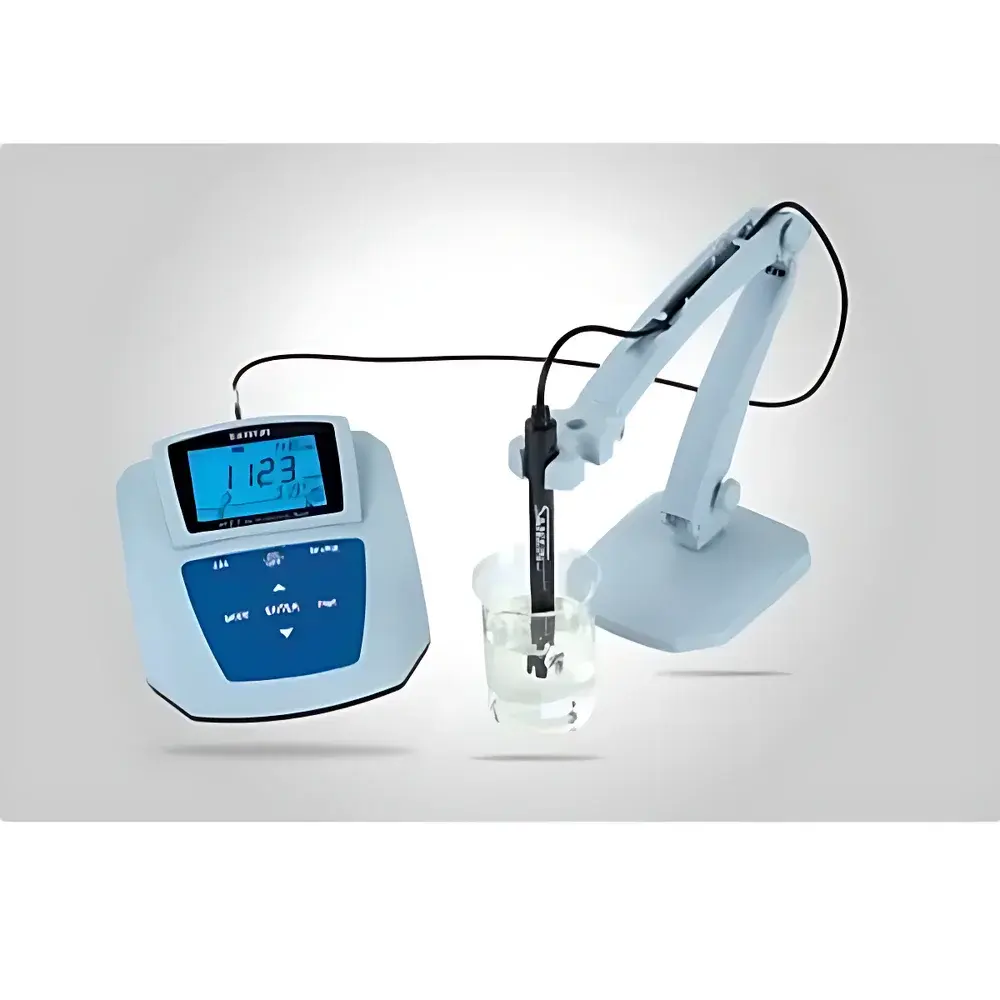
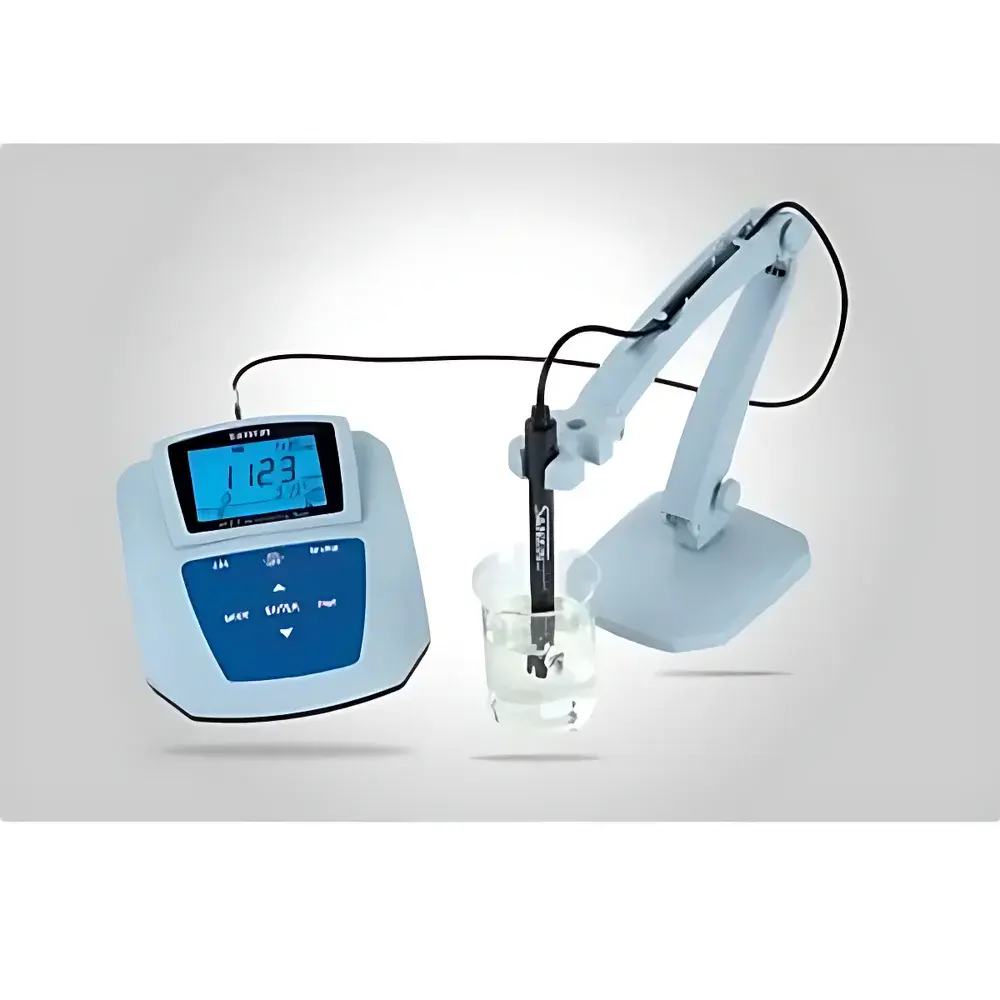
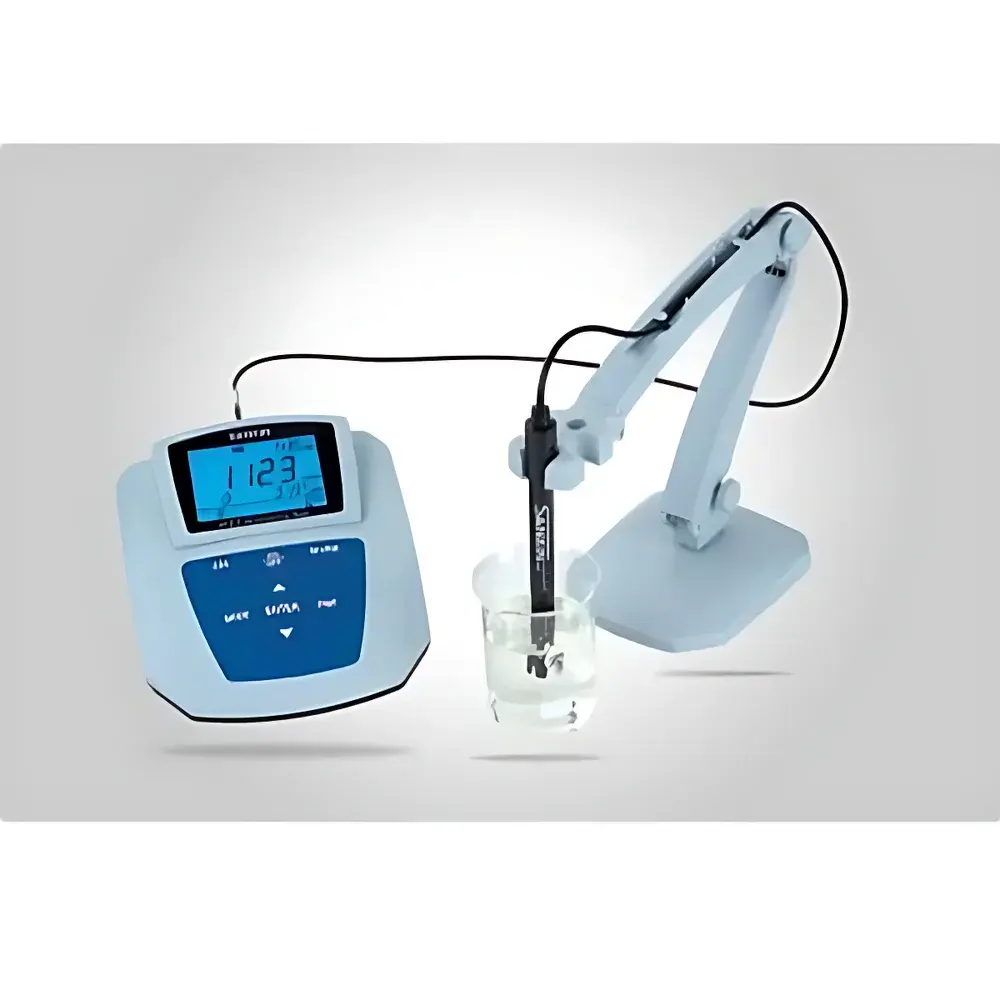
SANXIN MP513 Benchtop Conductivity Meter
| Brand | SANXIN Peirui |
|---|---|
| Origin | Shanghai, China |
| Manufacturer Type | Authorized Distributor |
| Product Origin | Domestic (China) |
| Model | MP513 |
| Detection Parameter | Single-Parameter (Conductivity) |
| Portability | Benchtop |
| Application Environment | Laboratory |
| Conductivity Range | 0–200 mS/cm (5 auto-ranging segments) |
| TDS Range | 0–100 g/L |
| Resistivity Range | 0–100 MΩ·cm |
| Salinity Range | 0–100 ppt |
| Temperature Range | −10 to +110 °C |
| Accuracy | ±1.0% FS (Conductivity), ±1.5% FS (Overall Specification) |
| Minimum Resolution | 0.001 µS/cm |
| Temperature Compensation | Automatic (0–50 °C), ATC-enabled electrode |
| Data Storage | 100 sets |
| Interface | RS232 with GLP-compliant software |
| IP Rating | IP54 |
| Power Supply | DC 9 V / 300 mA |
| Dimensions & Weight | 160 × 190 × 70 mm / 880 g |
Overview
The SANXIN MP513 Benchtop Conductivity Meter is a precision electrochemical instrument engineered for routine, high-reproducibility conductivity measurements of aqueous solutions in regulated laboratory environments. It operates on the principle of two-electrode AC conductometric measurement, applying a low-frequency alternating current across a K = 1.0 cell to minimize polarization effects and ensure stable readings across wide dynamic ranges. Designed for compliance with Good Laboratory Practice (GLP) frameworks, the MP513 integrates automatic temperature compensation (ATC) using a built-in NTC thermistor within its included 2301-M plastic-bodied conductivity electrode. Its five-segment auto-ranging architecture enables seamless coverage from ultrapure water (0.00–20.00 µS/cm) to concentrated brines (20.0–200.0 mS/cm), eliminating manual range selection while maintaining traceable accuracy per IEC 60746-3 and ASTM D1125 guidelines.
Key Features
- Single-point calibration protocol compatible with standard K = 1.0 cells—no multi-point calibration required for full 0–200 mS/cm coverage
- Intelligent auto-ranging with dynamic segment switching: (0.00–20.00) µS/cm, (20.00–200.0) µS/cm, (200–2000) µS/cm, (2.00–20.00) mS/cm, and (20.0–200.0) mS/cm
- Dual-mode display: real-time simultaneous readout of conductivity (µS/cm or mS/cm), resistivity (MΩ·cm), TDS (g/L), and salinity (ppt)—all derived from the same primary measurement
- Digital filtering and sliding-average algorithm to suppress noise and improve stability; visual “stable” indicator appears when deviation falls below ±0.5% over 3 seconds
- Integrated real-time clock with date stamping for all stored data entries—critical for audit trails under ISO/IEC 17025 and FDA 21 CFR Part 11–aligned workflows
- IP54-rated enclosure with silicone-sealed connectors and dust-resistant venting for reliable operation in humid or particulate-prone lab settings
Sample Compatibility & Compliance
The MP513 is validated for use with deionized water, potable water, wastewater effluents, boiler feedwater, pharmaceutical rinse solutions, and saline process streams. Its 2301-M ATC electrode features a rugged polypropylene body and platinum black-plated electrodes optimized for low-maintenance performance in non-aggressive matrices. The instrument meets IP54 ingress protection requirements per IEC 60529 and conforms to electromagnetic compatibility standards IEC 61326-1 (industrial environment). All measurement algorithms adhere to the theoretical basis defined in ISO 7888 (electrical conductivity of water) and support traceability through documented calibration records and timestamped data logs.
Software & Data Management
Equipped with an RS232 serial interface, the MP513 interfaces directly with Windows-based SANXIN data acquisition software (included), enabling export of time-stamped datasets in CSV format. Each record includes conductivity value, temperature, measurement mode (e.g., TDS or resistivity), operator ID field, and GLP metadata (date/time, calibration status, electrode ID). Software supports configurable audit logging, user access levels, and electronic signature prompts—facilitating alignment with GMP/GLP documentation requirements. No cloud dependency or proprietary drivers are required; native COM port communication ensures long-term system compatibility.
Applications
- Quality control of purified water (PW) and water-for-injection (WFI) in pharmaceutical manufacturing per USP
- Monitoring conductivity drift in reverse osmosis (RO) and deionization (DI) systems
- TDS estimation in environmental water sampling (e.g., EPA Method 120.1)
- Salt concentration verification in food processing brines and fermentation media
- Resistivity validation of ultrapure water systems used in semiconductor cleaning protocols
- Educational labs requiring robust, entry-level instrumentation with full GLP functionality
FAQ
Does the MP513 support multi-point conductivity calibration?
No. It is designed exclusively for single-point calibration using a certified 1408 µS/cm standard solution, leveraging adaptive auto-ranging and automatic cell constant application.
Is the included electrode suitable for high-ionic-strength samples above 100 mS/cm?
The 2301-M electrode (K = 1.0) is rated for continuous use up to 200 mS/cm; however, for prolonged exposure to >150 mS/cm brines, periodic cleaning with dilute HNO₃ and recalibration are recommended.
Can the MP513 be connected to LIMS or ELN systems?
Yes—via RS232 ASCII output with configurable delimiter and carriage-return formatting; integration requires middleware or custom script mapping to match target LIMS field structures.
What temperature compensation algorithm does the MP513 implement?
Linear compensation referenced to 25 °C, with user-selectable β coefficient (default 2.0 %/°C), compliant with DIN EN 27888 and ISO 7888 Annex B.
Is firmware upgrade capability available?
Firmware updates are performed via RS232 using SANXIN’s official utility; version history and release notes are provided upon request for regulatory validation purposes.




