
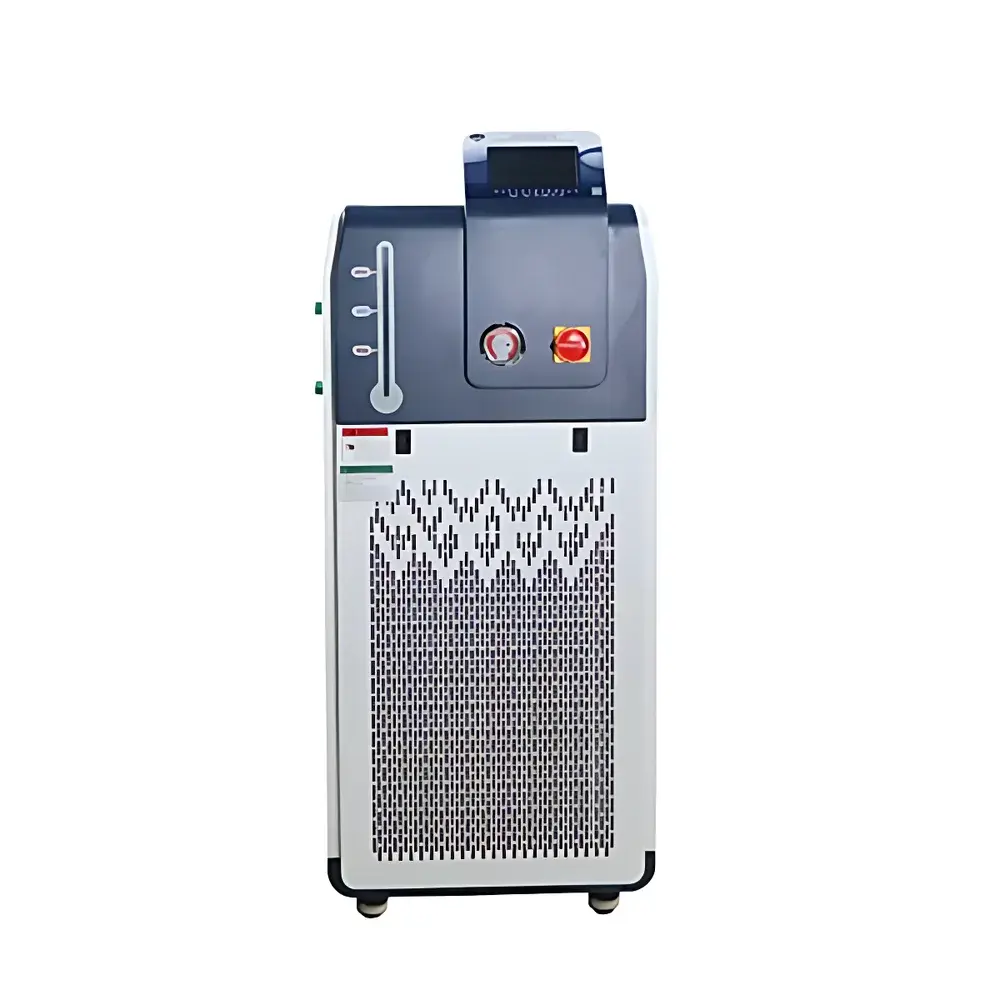
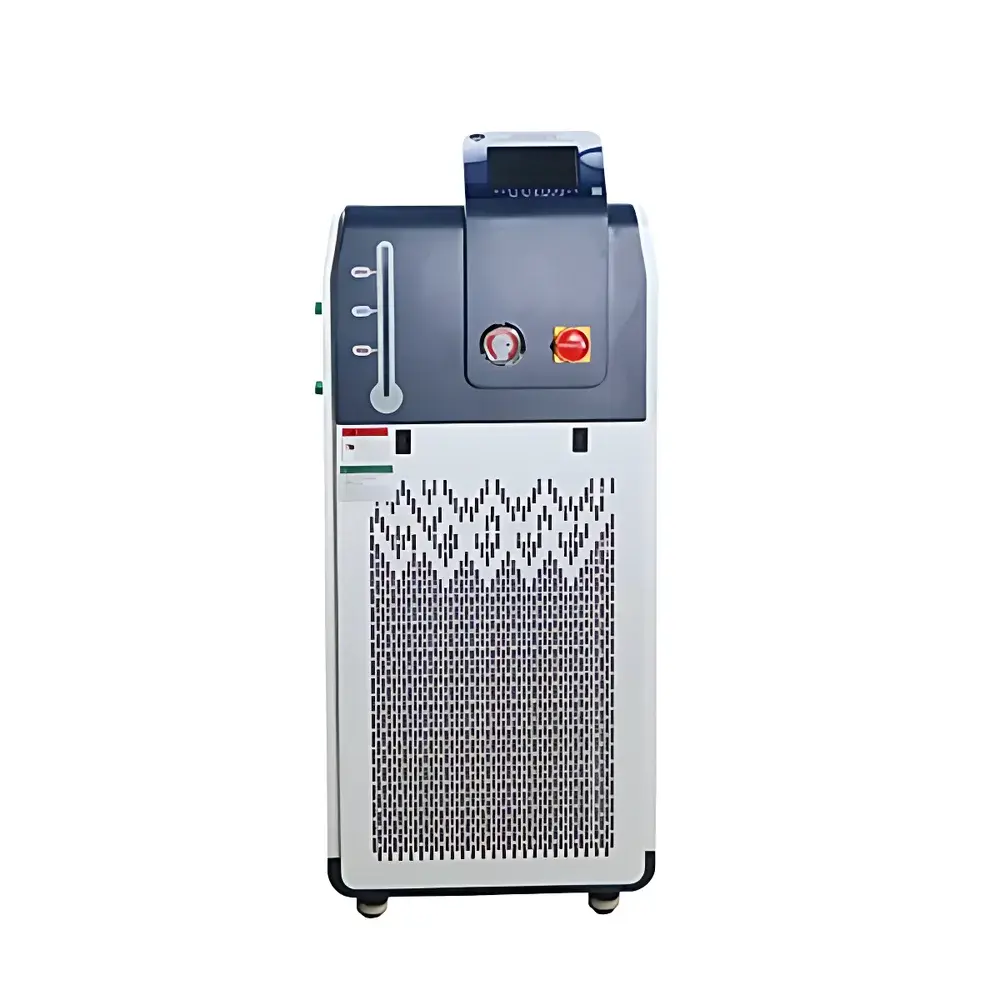
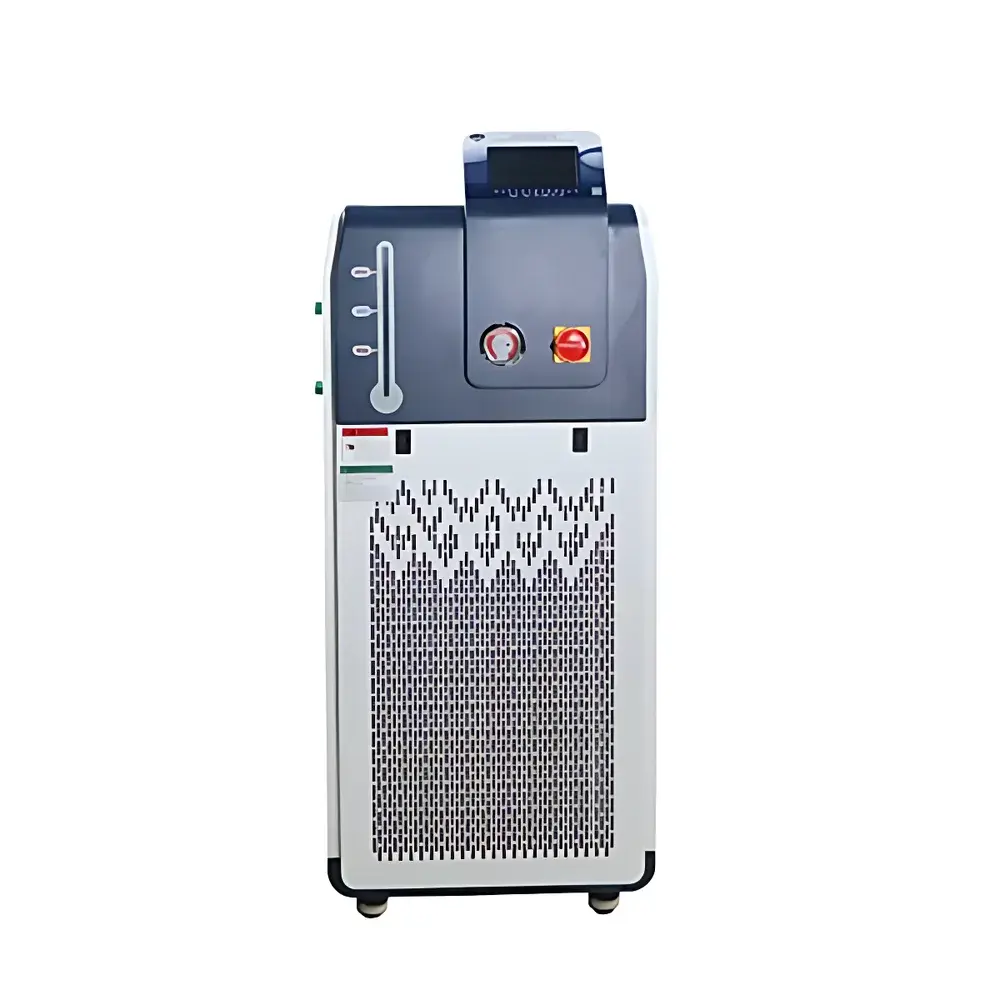
Yuyi Instrument GDSZ Series Integrated Heating and Cooling Circulator
| Brand | Yuyi Instrument |
|---|---|
| Origin | Henan, China |
| Manufacturer Type | Authorized Distributor |
| Country of Origin | China |
| Model Series | GDSZ |
| Pricing | Upon Request |
| Temperature Range | –120 °C to +200 °C |
| Volume Capacity | 5 L to 2000 L (standard models: 10–1000 L) |
| Cooling Power | 4.3 kW to 30 kW |
| Heating Power | 2.0 kW to 12.0 kW |
| Max Flow Rate | 15–70 L/min |
| Max Head | 7 m |
| Control Accuracy | ±0.1 °C (typical, with Pt100 sensor & PID algorithm) |
| Refrigerant | R410A |
| Construction Material | Cr316 stainless steel bath chamber |
| External Interface | 4″ / 6″ circulation ports |
| Power Supply | 220 V/50 Hz or 380 V/50 Hz |
| Ambient Operating Temp. | 5–30 °C |
| Safety Certifications | CE-compliant architecture |
Overview
The Yuyi Instrument GDSZ Series Integrated Heating and Cooling Circulator is an engineered thermal management system designed for precise, dynamic temperature control in laboratory and pilot-scale chemical process applications. Unlike conventional single-function baths or chillers, the GDSZ platform integrates refrigeration and resistive heating within a single, sealed circulation loop—enabling seamless transition between sub-ambient and elevated temperatures without manual intervention or external equipment swaps. Its operation relies on a dual-mode thermodynamic cycle: vapor-compression refrigeration (using R410A refrigerant and hermetically sealed compressors) coupled with Cr316 stainless steel–encased immersion heaters, all regulated by a high-stability Pt100 resistance thermometer and digital PID controller. This architecture supports continuous, stable temperature maintenance across a broad operational envelope—from –120 °C (with optional low-temp configuration) up to +200 °C—making it suitable for exothermic/endothermic reaction control, crystallization studies, catalyst testing, and material stability profiling under programmable thermal stress.
Key Features
- Hermetically sealed, high-efficiency compressors from globally recognized OEM suppliers—ensuring long-term reliability and minimal maintenance intervals.
- Dual LED display controller with independent readouts for setpoint, real-time bath temperature, and user-defined over-temperature alarm threshold.
- 30-segment programmable ramp-soak temperature profiles, supporting complex reaction kinetics protocols requiring multi-stage thermal conditioning.
- Cr316 stainless steel fluid reservoir and heating chamber—resistant to corrosion from organic solvents (e.g., ethanol, silicone oils), acids, and alkalis commonly used in synthetic chemistry.
- Integrated magnetic-drive circulation pump with flow rates up to 70 L/min and head pressure up to 7 m—optimized for compatibility with jacketed glass, stainless steel, and enamel-coated reactors (5–2000 L volume range).
- Comprehensive safety architecture: high-pressure cut-off switch, compressor thermal overload protection, SSR-based zero-crossing heater control, automatic delay restart after power interruption, and real-time self-diagnostic reporting.
- Modular configuration options—including standard, explosion-proof (ATEX-certified variants upon request), and touch-screen HMI versions—to meet diverse facility requirements and regulatory expectations.
Sample Compatibility & Compliance
The GDSZ series is engineered for use with externally jacketed vessels operating under atmospheric or moderate vacuum conditions. It accommodates heat transfer media including silicone oil (up to 200 °C), ethylene glycol/water mixtures, and specialized low-temperature fluids (e.g., ethanol/methanol blends for –80 °C operation). All units comply with CE marking requirements for electromagnetic compatibility (EMC Directive 2014/30/EU) and low-voltage safety (LVD Directive 2014/35/EU). While not inherently 21 CFR Part 11–compliant, data logging via USB interface supports traceable temperature records when integrated into validated laboratory information management systems (LIMS). The device meets general-purpose requirements referenced in ASTM E2912 (Standard Practice for Thermal Stability Testing) and ISO 17025–accredited labs’ internal validation protocols for auxiliary thermal equipment.
Software & Data Management
Standard GDSZ models feature a front-panel controller with non-volatile memory for storing up to 10 user-defined programs and historical temperature logs (time-stamped, with resolution of 1 second). Optional USB data export enables CSV-formatted output compatible with Excel, MATLAB, or LabVIEW for post-acquisition analysis. For integration into automated workflows, analog 0–10 V or 4–20 mA external setpoint inputs are available, allowing synchronization with PLCs or reactor control systems. Firmware supports user-level access control (administrator/operator modes), password-protected parameter modification, and audit-trail–capable event logging—including alarm triggers, power cycles, and manual overrides—facilitating GLP/GMP-aligned documentation practices.
Applications
- Temperature-controlled synthesis in jacketed glass or stainless-steel reactors (e.g., Grignard reactions, hydrogenations, polymerizations).
- Accelerated stability testing per ICH Q1 guidelines, including freeze-thaw cycling and long-term storage simulation.
- Calibration of temperature-sensitive analytical instruments (e.g., viscometers, DSC cells, FTIR sample compartments).
- Thermal conditioning of sensors, electronic components, and battery modules during environmental stress screening.
- Extraction and purification processes in food, pharmaceutical, and essential oil industries requiring precise cryogenic or high-heat solvent management.
- Support of cryo-microscopy sample stages, cold traps, and condenser cooling in vacuum distillation setups.
FAQ
What is the lowest achievable temperature with standard GDSZ configurations?
Standard models achieve –35 °C using R410A refrigerant; optional deep-cold variants (e.g., GDSZ-D series) reach –80 °C or –120 °C with cascade refrigeration and specialized heat transfer fluids.
Can the unit maintain ±0.1 °C stability at 200 °C?
Yes—under static load conditions with appropriate thermal mass and insulation, the system achieves ±0.1 °C short-term stability and ±0.3 °C over 24-hour drift when using Cr316-compatible silicone oil and calibrated Pt100 feedback.
Is external chiller integration required for high-power cooling?
No—the GDSZ is fully self-contained; no external chilled water or dry ice supplementation is needed for rated cooling capacity.
How is leak integrity verified during factory testing?
Each unit undergoes helium mass spectrometry leak testing at 1.5× maximum working pressure, with documented pass/fail reports supplied with shipment documentation.
What maintenance intervals are recommended for compressor oil and filter replacement?
Under continuous operation, compressor oil and drier filters should be replaced every 12 months or 8,000 operating hours—whichever occurs first—as specified in the technical manual (Revision 3.2, 2023).
Related Products




