
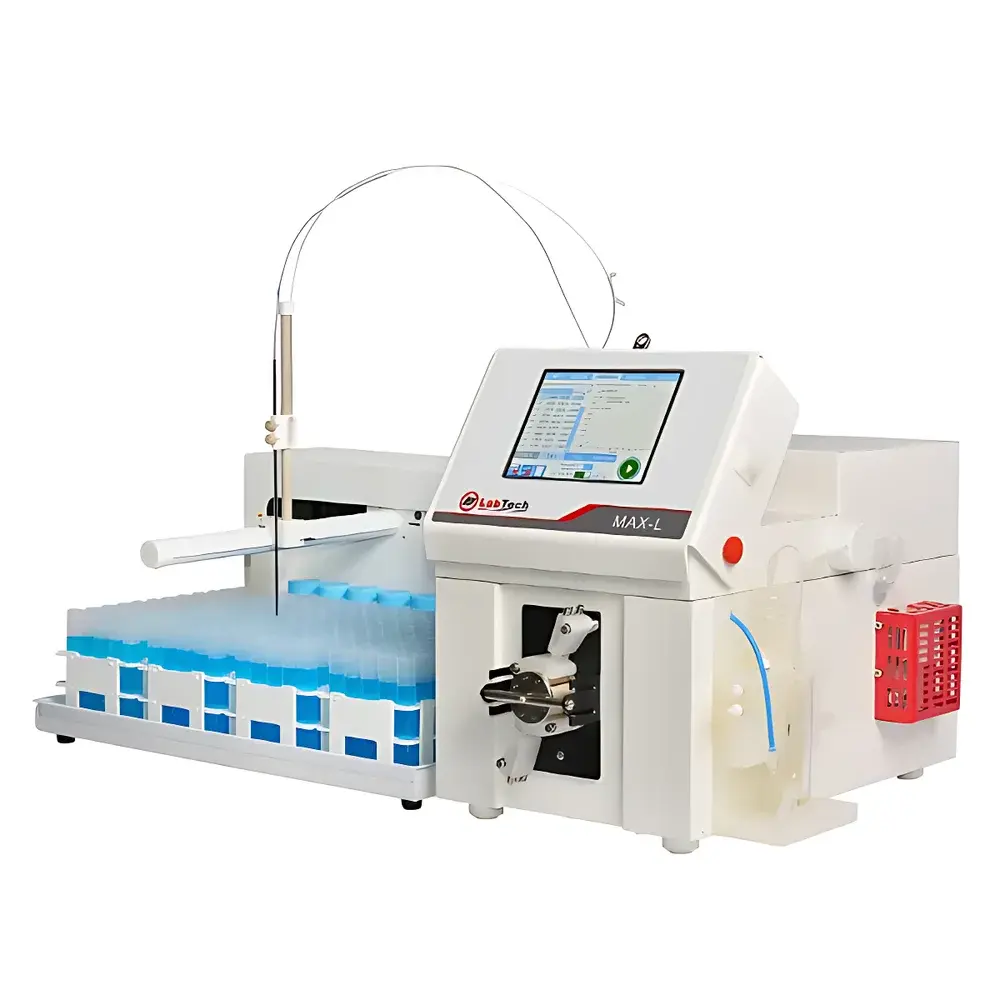
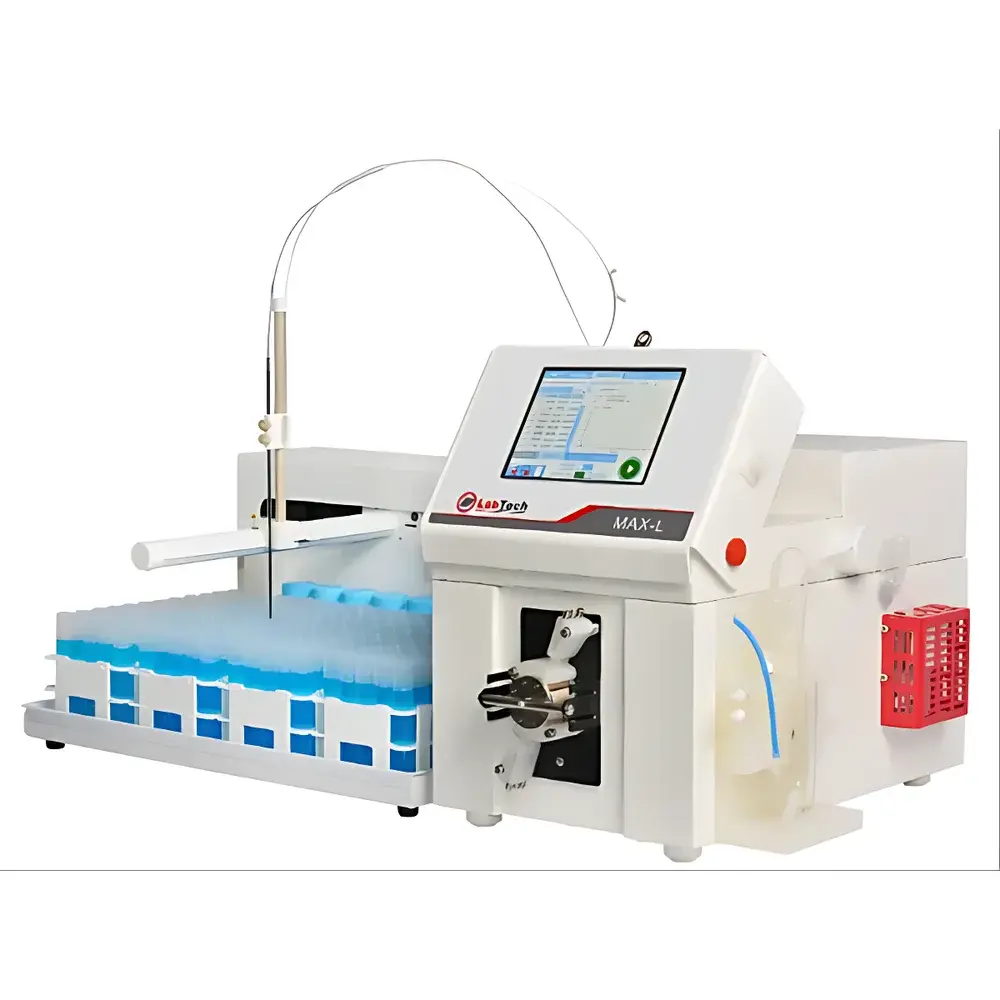
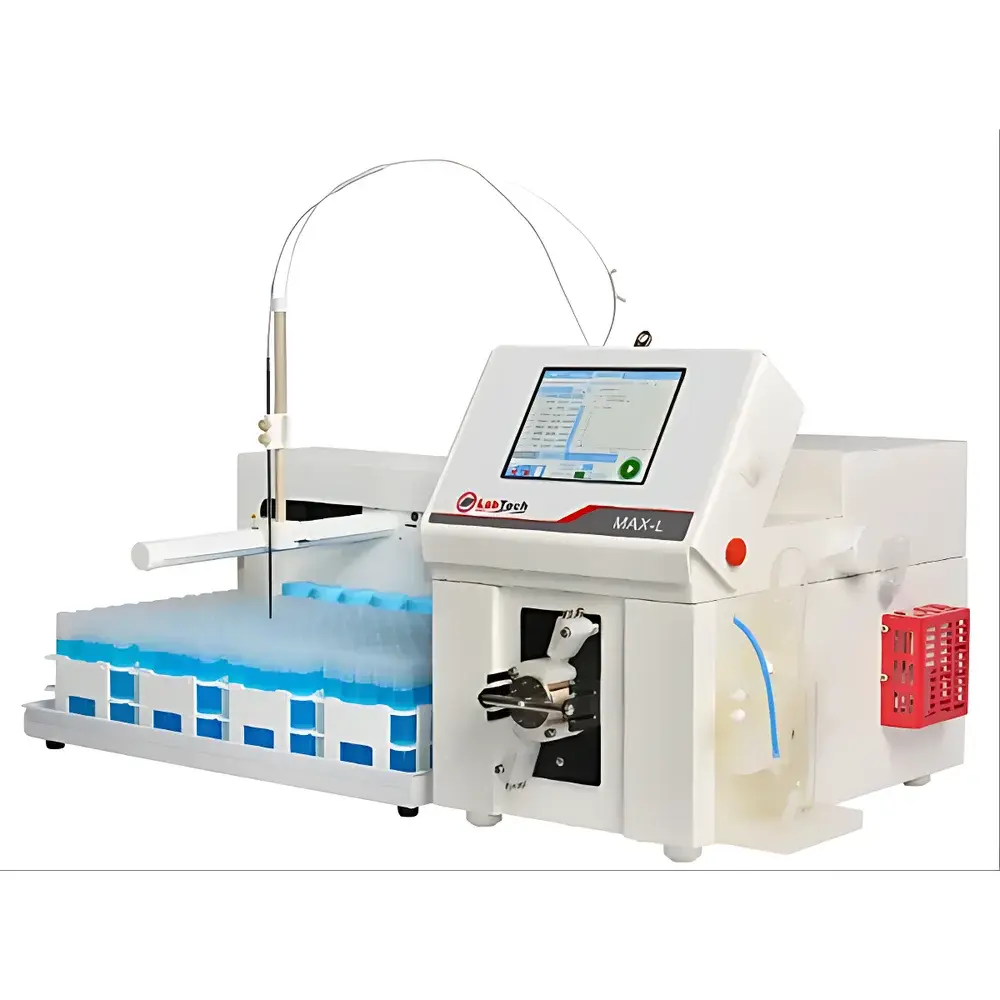
LabTech MAX-L Cold Vapor Atomic Absorption Mercury Analyzer
| Brand | LabTech |
|---|---|
| Origin | Beijing, China |
| Manufacturer Type | Authorized Distributor |
| Country of Origin | China |
| Model | MAX-L |
| Pricing | Upon Request |
| Translation Stage | Contact Manufacturer |
Overview
The LabTech MAX-L Cold Vapor Atomic Absorption Mercury Analyzer is a dedicated instrumental system engineered for the quantitative determination of total mercury (Hg) in aqueous, digested solid, and biological matrices. It operates on the well-established principle of cold vapor atomic absorption spectroscopy (CVAAS), wherein mercury ions are chemically reduced to elemental mercury vapor using stannous chloride (SnCl₂) under controlled acidic conditions. The generated Hg⁰ vapor is swept by a purified carrier gas into a temperature-stabilized quartz absorption cell, where absorbance at the 253.7 nm resonance line is measured against a calibrated hollow cathode lamp. This method delivers high specificity, low detection capability, and excellent reproducibility—making the MAX-L suitable for environmental monitoring laboratories, wastewater treatment facilities, food safety testing centers, and regulatory compliance units requiring adherence to standardized mercury analysis protocols.
Key Features
- Dual-stage mixing system: Integrated pre-mixer and helical mixing coil ensure homogeneous and complete reduction of Hg²⁺ to Hg⁰, minimizing incomplete reaction bias and enhancing measurement repeatability.
- High-surface-area gas–liquid separator: Features a frosted-glass column design that promotes rapid, foam-free mercury vapor generation while achieving efficient liquid phase removal—reducing aerosol carryover and baseline drift.
- Gold amalgamation enrichment: Selective adsorption of elemental mercury onto gold-coated traps enables matrix separation; non-mercury species are purged from the system with carrier gas, significantly suppressing interferences from chloride, organic matter, or transition metals.
- High-temperature thermal desorption: Gold traps are heated to 950 °C for rapid, quantitative release of preconcentrated mercury—yielding sharp, symmetric peaks and contributing to sub-ng/L method detection limits (MDLs).
- Dual thermostatically controlled absorption cells: Maintained at up to 120 °C to prevent condensation and mercury deposition, ensuring stable optical path integrity across extended analytical sequences.
- Intelligent high-mercury rinse protocol: Automatically activates post-high-concentration analysis to purge residual mercury from internal surfaces, mitigating memory effects and enabling reliable trace-level quantification immediately after elevated samples.
- 6-port valve with synchronized cleaning: Valve switching during measurement triggers simultaneous backflushing of the sample introduction line, eliminating manual cleaning steps and reducing cycle time without compromising carryover control.
Sample Compatibility & Compliance
The MAX-L supports direct analysis of filtered water samples (e.g., drinking water, surface water, wastewater effluents) and acid-digested solids (soils, sediments, tissues, sludge). It complies with major international standard methods including EPA Method 1631E (Mercury in Water by Oxidation, Purge and Trap, and Cold Vapor Atomic Fluorescence Spectrometry), ASTM D3223-22 (Standard Test Method for Mercury in Water), ISO 12846:2012 (Water quality — Determination of mercury — Method using cold vapour atomic absorption spectrometry), and Chinese national standards HJ 694-2014 and HJ 597-2011. Its hardware architecture and operational logic support GLP-compliant data handling when integrated with validated laboratory information management systems (LIMS).
Software & Data Management
The analyzer is operated via LabTech’s proprietary Mercury Analysis Control Software (MACS v3.x), which provides real-time signal visualization, automated calibration curve generation (linear and quadratic), QC check integration (blanks, spikes, duplicates), and audit-trail-enabled data logging. All instrument parameters—including valve timing, trap temperature ramp profiles, absorption cell setpoints, and purge durations—are fully configurable and stored with timestamped metadata. Raw absorbance traces, peak integration results, and QA/QC flags are exportable in CSV and PDF formats compatible with 21 CFR Part 11–aligned validation frameworks.
Applications
- Regulatory compliance testing for mercury in municipal and industrial wastewater discharges
- Monitoring of mercury contamination in source water and drinking water distribution systems
- Analysis of mercury in soil and sediment core samples following EPA SW-846 Method 7471B
- Food and feedstuff testing per EU Commission Regulation (EC) No 1881/2006 maximum levels
- Pharmaceutical excipient screening and raw material verification per USP /
- Research applications involving mercury speciation workflows (when coupled with HPLC-CVAAS interfaces)
FAQ
What sample preparation is required prior to analysis?
Aqueous samples require filtration (0.45 µm) and acidification (1% v/v HNO₃); solid samples must undergo closed-vessel microwave-assisted acid digestion (HNO₃/H₂O₂) per EPA Method 3052 or equivalent.
Does the MAX-L support automatic calibration and QC checks?
Yes—the software enables programmable multi-point calibration, continuous blank monitoring, and scheduled QC injections with pass/fail evaluation against user-defined acceptance criteria.
Is the system compliant with 21 CFR Part 11 requirements?
When deployed with validated MACS software, network-secured user authentication, electronic signatures, and full audit trail functionality, the MAX-L meets foundational 21 CFR Part 11 expectations for electronic records and signatures.
Can the MAX-L be integrated with an autosampler?
Yes—it features standard RS-232 and Ethernet interfaces compatible with third-party XYZ autosamplers supporting TTL-triggered start commands and status feedback.
What maintenance intervals are recommended for routine operation?
Gold traps should be replaced every 500–1,000 analyses depending on matrix complexity; quartz absorption cells require periodic inspection and cleaning with dilute nitric acid; carrier gas filters should be changed quarterly or after 500 hours of operation.



