
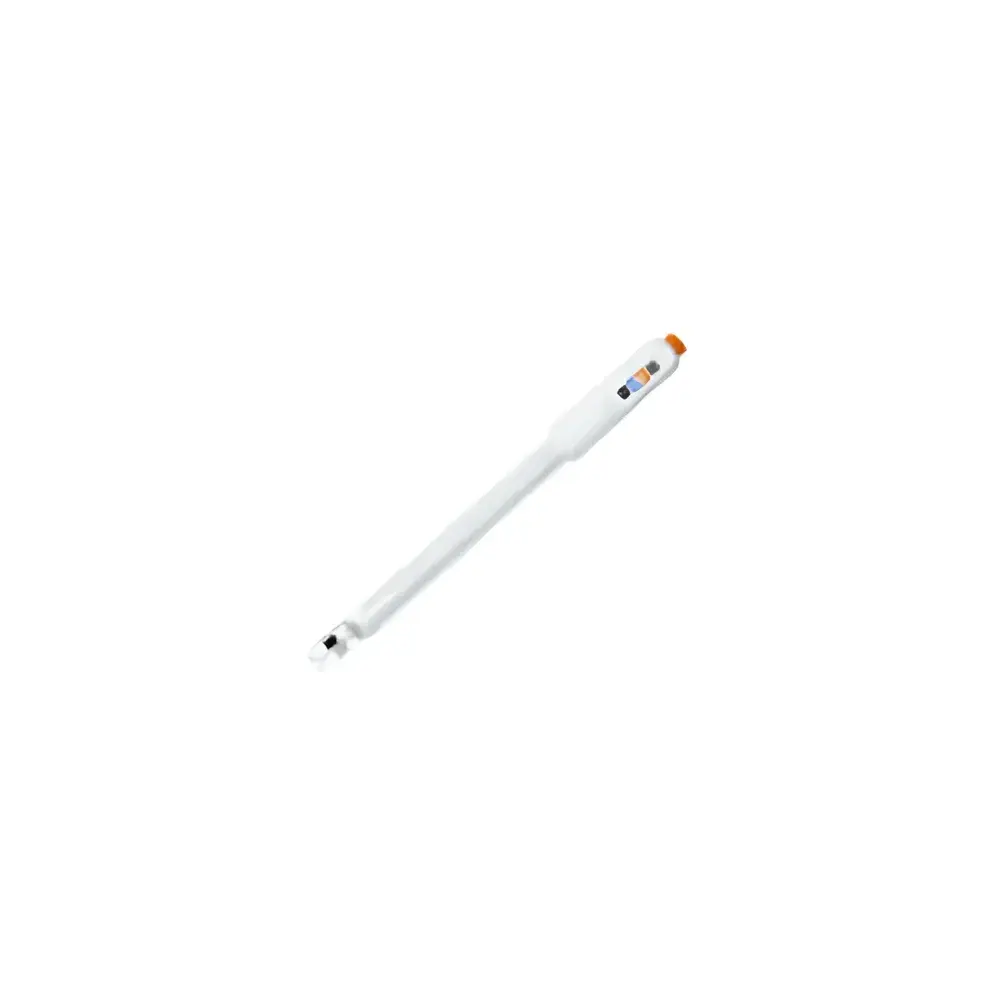
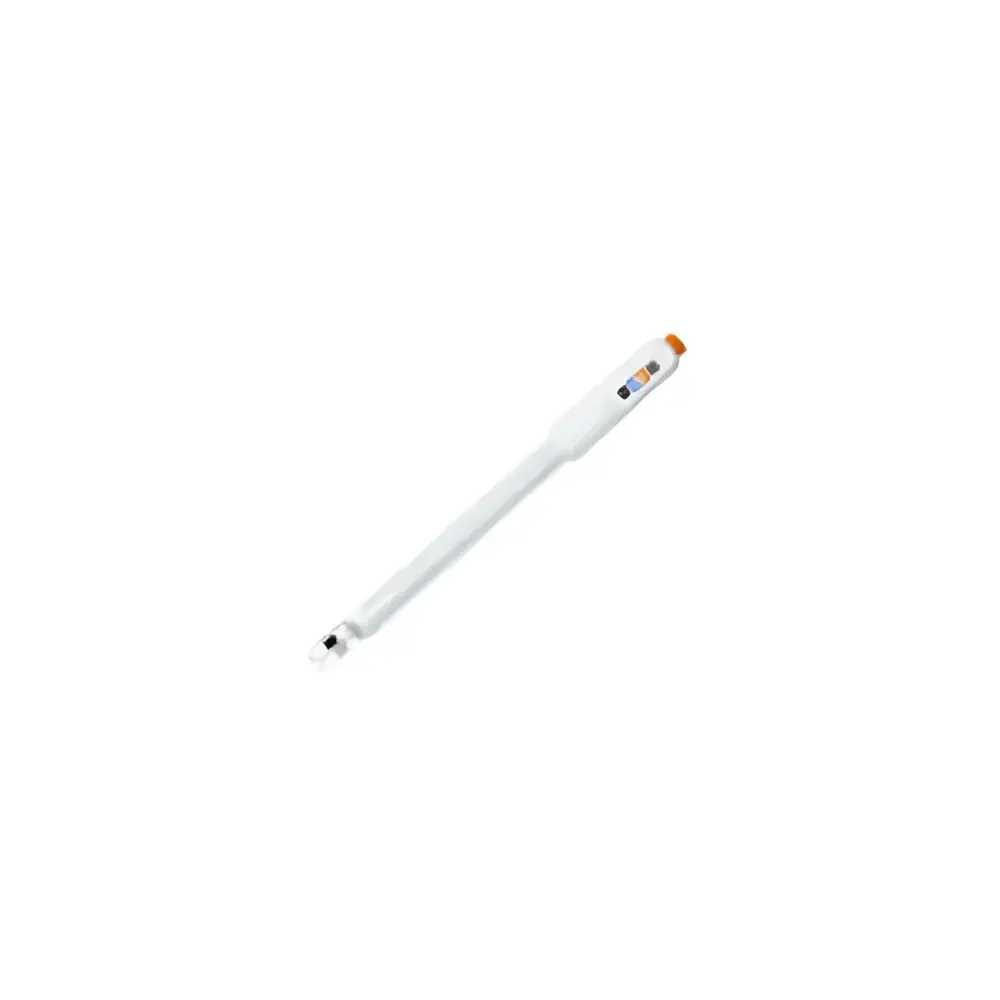
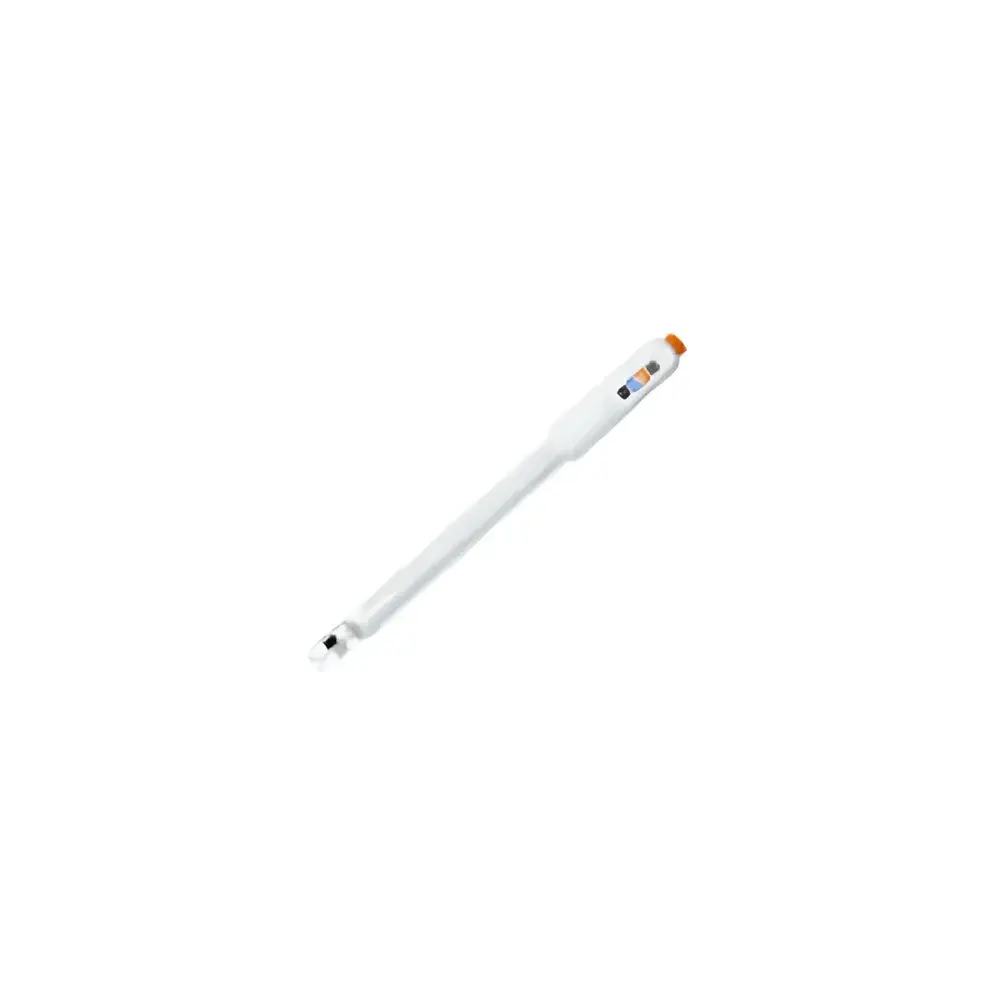
Leici DJS-0.1VTG Bright-Surface Conductivity Electrode
| Brand | Leici |
|---|---|
| Origin | Shanghai, China |
| Model | DJS-0.1VTG |
| Conductivity Range | (2–20,000) µS/cm |
| Temperature Range | (0–80) °C |
| Accuracy | ±1.0% FS |
| Minimum Resolution | 0.01 µS/cm |
| Cell Constant | 0.1 cm⁻¹ |
| Probe Material | Borosilicate Glass |
| Connector | 5-pin Aviation Plug |
| Dimensions | Φ12 × 120 mm |
| Application | Lab-based Low-Conductivity Aqueous Solutions |
| Calibration Compatibility | 84 µS/cm and 146.5 µS/cm Standard Solutions |
Overview
The Leici DJS-0.1VTG Bright-Surface Conductivity Electrode is a precision-engineered two-electrode sensor designed for accurate, stable measurement of low-conductivity aqueous solutions in controlled laboratory environments. Based on the principle of AC conductometric measurement at a fixed frequency (typically 1 kHz), this electrode operates with a certified cell constant of 0.1 cm⁻¹—optimized to minimize polarization effects and ensure high reproducibility in dilute electrolyte systems. Its borosilicate glass body provides chemical inertness against organic solvents and mild acids/bases, supporting compliance with routine cleaning protocols without degradation of surface integrity or geometric consistency. The electrode is intended for integration with Leici multi-parameter benchtop analyzers (e.g., DDS-307A, DZB-718 series) and third-party conductivity meters equipped with compatible 5-pin aviation receptacles. It is not rated for field deployment or continuous immersion in aggressive industrial effluents, but rather calibrated and validated for intermittent use in GLP-aligned quality control workflows.
Key Features
- Borosilicate glass construction ensures resistance to organic solvents and common laboratory reagents, enabling reliable reuse after thorough rinsing with deionized water and ethanol.
- Precision-matched 0.1 cm⁻¹ cell constant enables optimal sensitivity across the 2–20,000 µS/cm range, with enhanced resolution (0.01 µS/cm) critical for monitoring ultrapure water, battery coolant formulations, and pharmaceutical rinse solutions.
- Integrated Pt black-free bright-surface electrodes reduce fouling risk and eliminate need for periodic re-platinization—lowering long-term maintenance burden compared to conventional platinized electrodes.
- 5-pin aviation connector guarantees mechanical stability and electrical continuity during repeated instrument docking, minimizing contact resistance drift and signal noise.
- Thermistor-integrated design supports simultaneous temperature measurement (0–80 °C) with ±0.5 °C typical repeatability, facilitating automatic temperature compensation per ASTM D1125 and ISO 7888 standards.
Sample Compatibility & Compliance
The DJS-0.1VTG is validated for use with low-ionic-strength aqueous matrices including electric vehicle (EV) coolant concentrates, deionized water streams, dialysate solutions, environmental surface waters, and food-grade process rinsates. It is incompatible with highly viscous, particulate-laden, or strongly oxidizing media (e.g., concentrated HNO₃, ClO₄⁻ solutions). When used within its specified temperature window and calibrated using NIST-traceable 84 µS/cm and 146.5 µS/cm KCl standards, the electrode meets accuracy requirements for ISO/IEC 17025-accredited laboratories performing conductivity testing under Clause 5.9 (Equipment Verification). Its design conforms to IEC 60746-3 for electrochemical sensors and supports audit-ready documentation when paired with instruments compliant with FDA 21 CFR Part 11 data integrity provisions.
Software & Data Management
While the electrode itself is analog-output only, its performance is fully leveraged when connected to Leici’s proprietary data acquisition platforms (e.g., Leici LabLink v3.2+), which provide automated calibration logging, real-time temperature-compensated conductivity calculation (using linear or non-linear α-coefficient models), and export-capable CSV/TXT reports. All calibration events—including date, standard used, measured value, deviation, and operator ID—are stored with immutable timestamps, satisfying GLP traceability mandates. Instrument firmware enforces mandatory dual-point calibration before sample measurement, preventing unauthorized bypass of verification steps.
Applications
- Quality assurance of EV thermal management fluids per SAE J1991 and OEM-specific specifications (e.g., Tesla SP-102, GM WSS-M99P1111-A).
- Monitoring conductivity drift in purified water distribution loops (USP , EP 2.2.38) for pharmaceutical manufacturing.
- Environmental compliance testing of freshwater bodies under EPA Method 120.1 and ISO 10523.
- Routine QC of buffer solutions and extractables/leachables test media in bioprocessing labs.
- Educational demonstrations of Kohlrausch’s law and ion mobility relationships in physical chemistry curricula.
FAQ
What is the recommended calibration frequency for the DJS-0.1VTG electrode?
Calibration is required before each analytical session or every 2 hours of continuous use, using at least two NIST-traceable standards bracketing the expected sample range.
Can this electrode be used for high-conductivity samples above 20 mS/cm?
No—its 0.1 cm⁻¹ cell constant and design geometry are optimized for sub-mS/cm measurements; use a 1.0 cm⁻¹ or 10 cm⁻¹ electrode for higher ranges.
Is the electrode suitable for steam sterilization or autoclaving?
No—glass thermal shock limits and thermistor sensitivity preclude exposure to saturated steam; manual cleaning with DI water and isopropanol is sufficient.
Does the electrode support automatic temperature compensation (ATC)?
Yes—when connected to compatible Leici or third-party meters with ATC-enabled firmware, it delivers real-time β-corrected conductivity values referenced to 25 °C.
How should the electrode be stored between uses?
Rinse thoroughly with deionized water, blot dry, and store vertically in a clean, dust-free environment—do not immerse in storage solution, as this may alter surface hydration state.




