
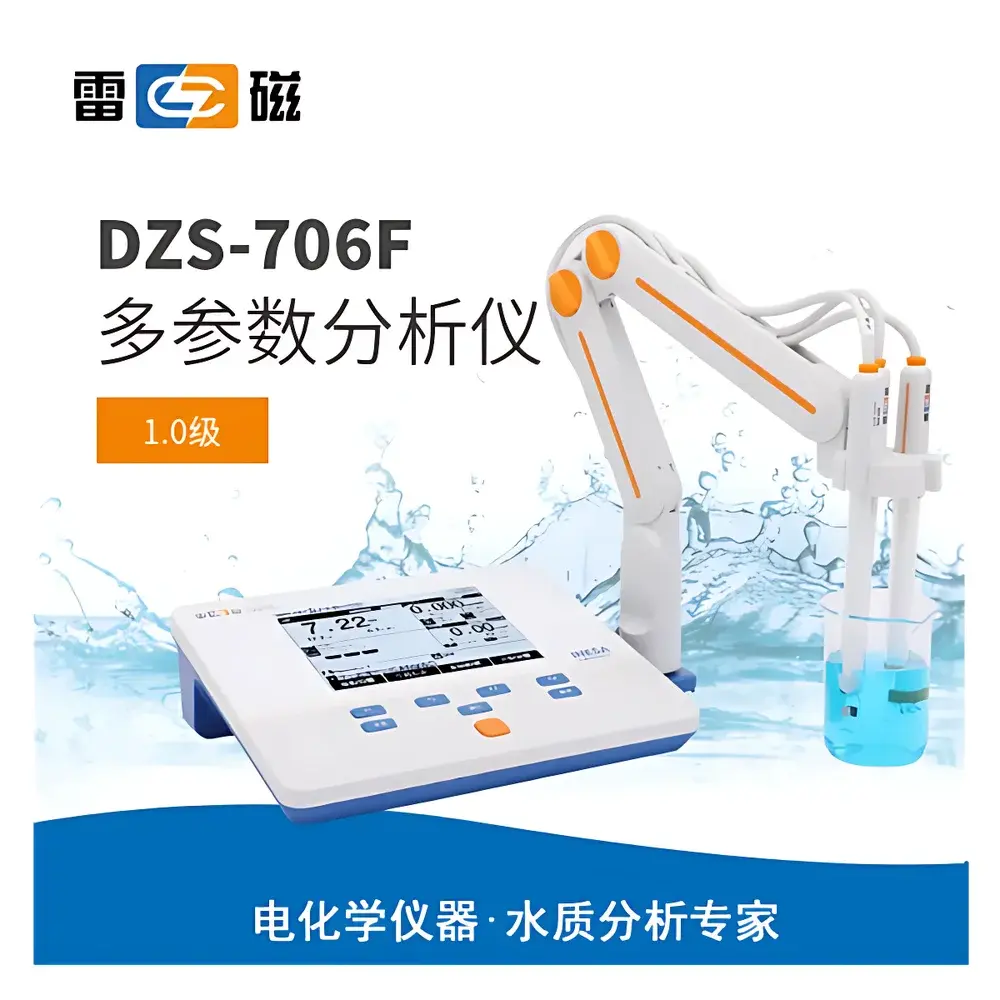
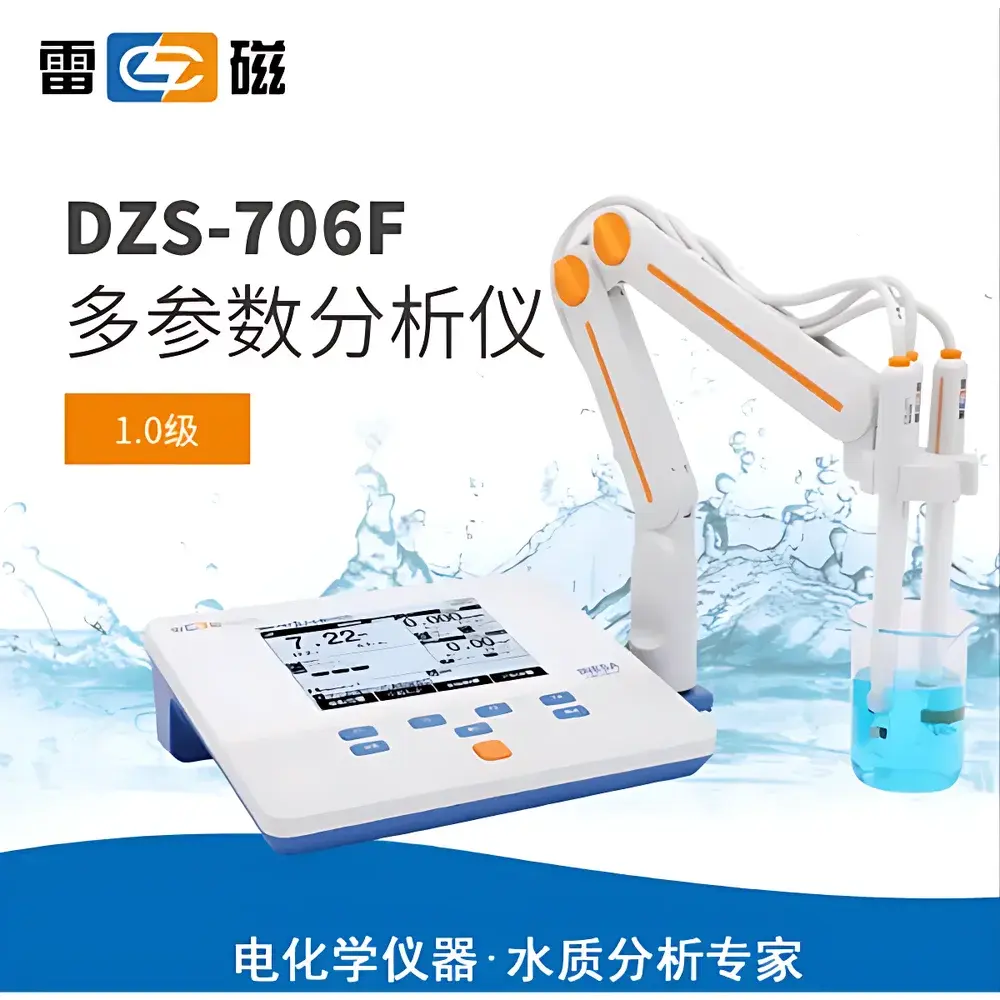
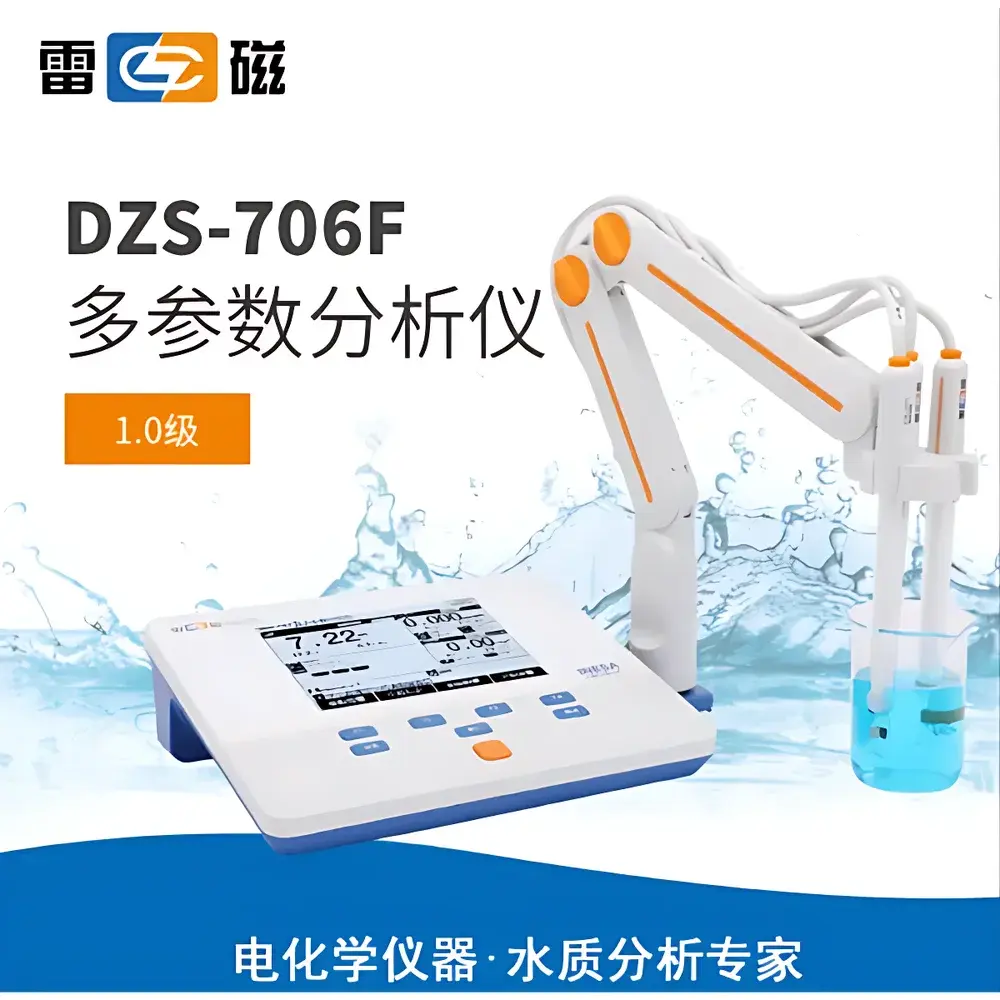
Leici DZS-706F Portable Multi-Parameter Water Quality Analyzer
| Brand | Leici |
|---|---|
| Origin | Shanghai, China |
| Manufacturer Type | Authorized Distributor |
| Origin Category | Domestic (China) |
| Model | DZS-706F |
| Instrument Type | Portable / Handheld Water Quality Analyzer |
| Detection Principle | Spectrophotometry (for COD, TP, TN, NH₃-N) + Electrochemical Sensing (pH/pX, Conductivity, Dissolved Oxygen) |
| Measured Parameters | Total Phosphorus (TP), Low-Range COD (5–200 mg/L), High-Range COD (200–2000 mg/L), Total Nitrogen (TN), Ammonia Nitrogen (NH₃-N), pH, mV, Ion Concentration, Conductivity, Resistivity, TDS, Salinity, Dissolved Oxygen (DO), DO Saturation, Temperature |
| Measurement Ranges | TP: 0.01–20 mg/L |
| COD (Low) | 5–200 mg/L |
| COD (High) | 200–2000 mg/L |
| TN | 0.1–100 mg/L |
| NH₃-N | 0.02–50 mg/L |
| Repeatability | ≤ ±5% |
Overview
The Leici DZS-706F Portable Multi-Parameter Water Quality Analyzer is an integrated field-deployable instrument engineered for simultaneous electrochemical and spectrophotometric analysis of critical water quality parameters in environmental monitoring, municipal wastewater management, surface water assessment, and industrial effluent compliance testing. Its dual-mode architecture combines three embedded sensor modules—pH/pX and ion-selective electrode (ISE) measurement, conductivity/resistivity/TDS/salinity determination, and polarographic dissolved oxygen (DO) sensing—with a dedicated optical module for standardized colorimetric quantification of total phosphorus (TP), total nitrogen (TN), ammonia nitrogen (NH₃-N), and chemical oxygen demand (COD) across two concentration ranges. The system operates on established analytical principles: spectrophotometric detection per ISO 6878 (TP), ISO 11908 (NH₃-N), ISO 15705 (COD low-range), and ISO 8467 (COD high-range); potentiometric pH/ISE measurement per ISO 7888 and ASTM D1293; conductometric analysis per ISO 7888 and ASTM D1125; and polarographic DO measurement per ISO 5814 and ASTM D888. Designed for rugged outdoor use, the analyzer meets IP54 ingress protection standards and supports full GLP-compliant data handling—including audit-trail-capable storage, timestamped calibration logs, and electrode diagnostic records.
Key Features
- High-resolution color LCD display with intuitive icon-based navigation and dual temperature unit selection (°C/°F)
- Integrated triple-sensor platform: combination pH electrode, composite conductivity cell (cell constant 1.0 cm⁻¹), and Clark-type polarographic DO probe—all supplied as standard
- Automated endpoint recognition with configurable read modes: auto-read, timed-read, interval-read, and manual-read
- Comprehensive temperature compensation: automatic for pH, conductivity, and DO; user-adjustable atmospheric pressure compensation for DO (kPa, mbar, Torr, atm)
- Multi-standard buffer recognition (GB, DIN, NIST) with up to 5-point pH/ISE calibration; customizable ion calibration sets for Na⁺, K⁺, NH₄⁺, Cl⁻, F⁻, and user-defined ions
- Flexible conductivity compensation models: non-compensated, linear (α = 2.0 %/°C), and pure-water mode; reference temperature selectable at 20 °C or 25 °C
- Firmware-upgradable architecture enabling future method expansion and regulatory alignment (e.g., US EPA Method 365.4, ISO 15681-1 for TP)
- Robust data integrity framework: 500-entry storage per parameter group, timestamped calibration history, electrode health diagnostics, and GLP-compliant metadata tagging
Sample Compatibility & Compliance
The DZS-706F accommodates aqueous samples across natural waters (rivers, lakes, reservoirs), treated and raw wastewater, drinking water distribution systems, aquaculture environments, and industrial process streams. It complies with key international performance and documentation standards including ISO/IEC 17025:2017 (general requirements for competence of testing laboratories), ISO 5667-3 (water sampling—preservation and handling), and supports adherence to regulatory frameworks such as EU Water Framework Directive (WFD) monitoring protocols, US EPA Clean Water Act (CWA) field screening requirements, and China’s HJ 535–2009 (ammonia nitrogen), HJ 671–2013 (total phosphorus), and HJ 828–2017 (COD) standard methods. All stored data include operator ID, sample ID, location tag (manual entry), ambient temperature, atmospheric pressure, and calibration verification status—enabling full traceability under GLP and pre-audit conditions.
Software & Data Management
Data transfer and reporting are facilitated via dual communication interfaces: RS-232 serial port (compatible with standard ESC/P protocol printers for on-site hardcopy output) and USB 2.0 interface (using Leici’s proprietary PC communication software). The software enables bidirectional synchronization, batch export to CSV/Excel formats, calibration certificate generation, and graphical trend visualization of sequential measurements. Audit trail functionality records all user-initiated actions—including method changes, calibration events, data deletions, and firmware updates—with immutable timestamps and operator identifiers. Exported datasets retain embedded metadata required for regulatory submission under FDA 21 CFR Part 11 (when used in GMP-adjacent environmental monitoring contexts) and ISO 17025 clause 7.7 (result reporting).
Applications
- Field-based compliance monitoring for municipal wastewater treatment plants (WWTPs) against discharge limits for NH₃-N, TP, and COD
- Rapid assessment of eutrophication risk in freshwater ecosystems via concurrent TP and TN quantification
- Source water quality screening prior to drinking water treatment—particularly for ammonia breakthrough and organic load estimation
- Industrial pretreatment verification in food processing, pharmaceutical, and textile facilities
- Educational and research deployments requiring portable, multi-analyte capability with documented metrological traceability
- Emergency response scenarios (e.g., spill incidents) where immediate, on-site characterization of nitrogenous and oxidizable pollutants is critical
FAQ
What spectrophotometric methods does the DZS-706F support for COD measurement?
It implements dichromate digestion-based colorimetry aligned with ISO 15705 (low-range) and ISO 8467 (high-range), using pre-loaded calibration curves validated against certified reference materials.
Can the instrument perform simultaneous pH, conductivity, and DO measurements without manual mode switching?
Yes—the tri-sensor module operates concurrently; real-time values for all three parameters are displayed simultaneously on the main screen during continuous monitoring.
Is electrode calibration traceable to national standards?
Calibration solutions are compatible with GB/T 27503 (Chinese national standard for pH buffers) and NIST-traceable conductivity standards (KCl 0.01 mol/L, 0.1 mol/L); calibration logs store solution lot numbers and expiration dates.
Does the DO module require membrane replacement and electrolyte refilling?
Yes—the polarographic DO probe uses a replaceable Teflon membrane and potassium chloride electrolyte; maintenance intervals depend on field exposure but are typically every 2–3 months under routine use.
How is data security ensured during USB transfer to a Windows PC?
The communication software employs local file encryption (AES-128) for exported datasets and enforces role-based access control when multiple operators share a single PC workstation.
Related Products







