
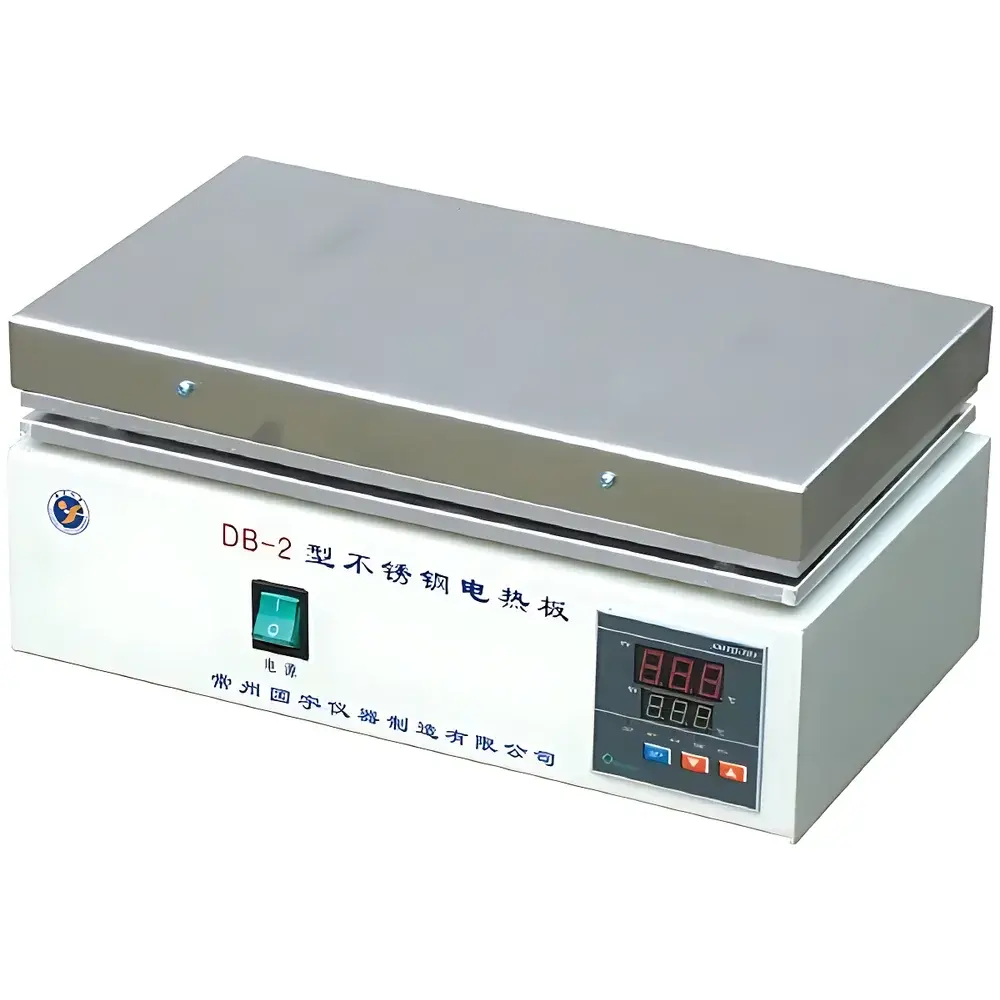
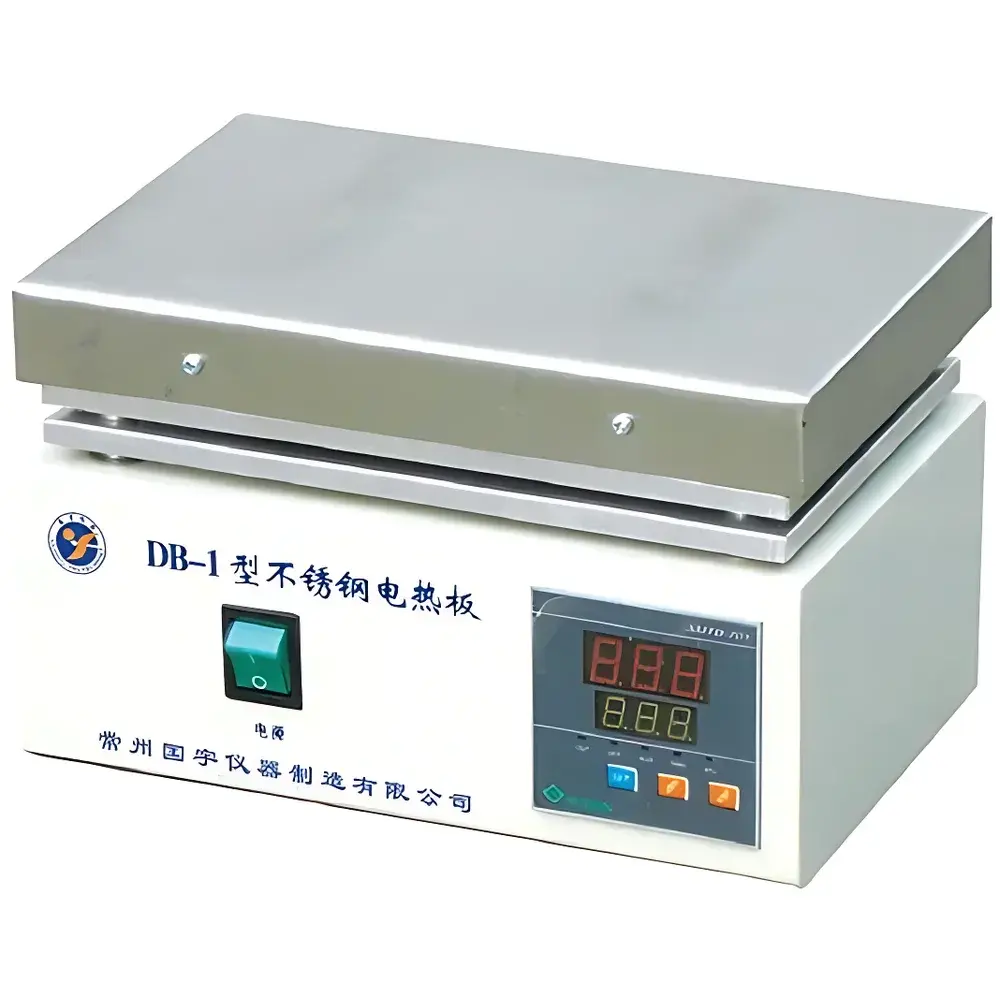
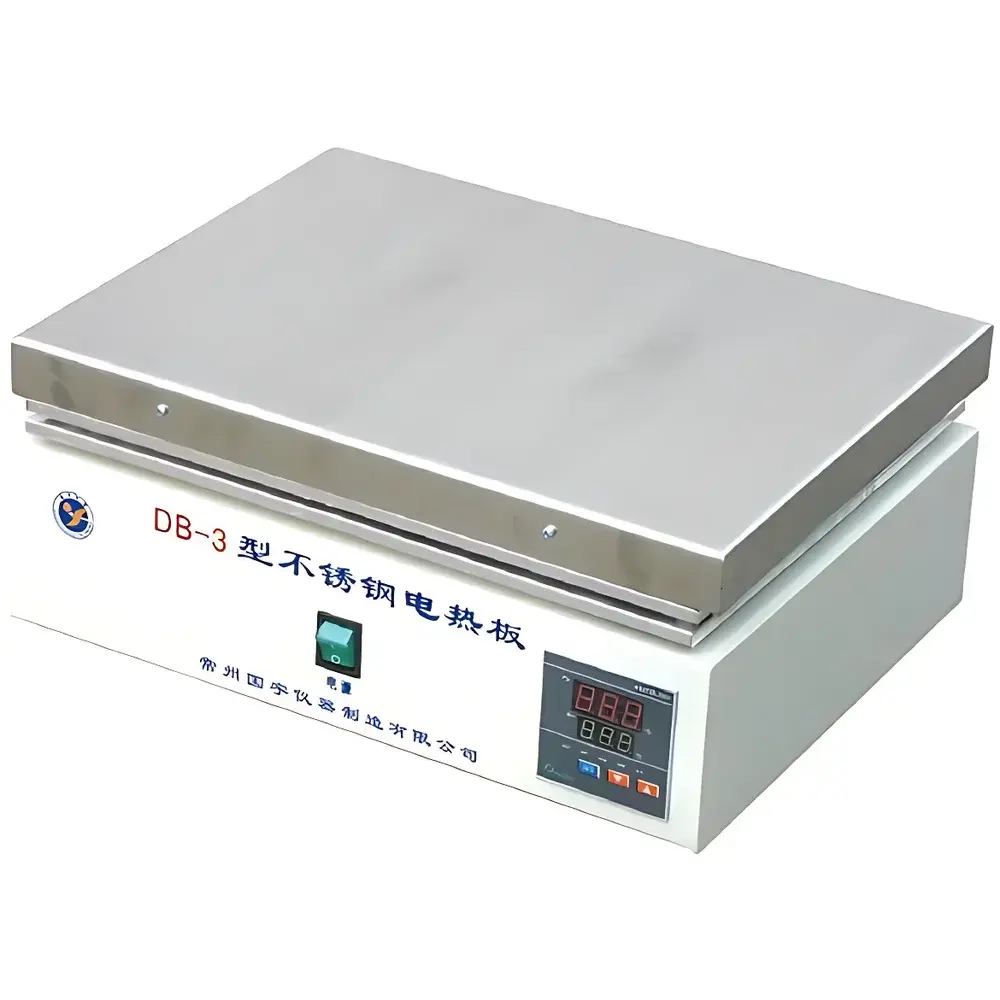
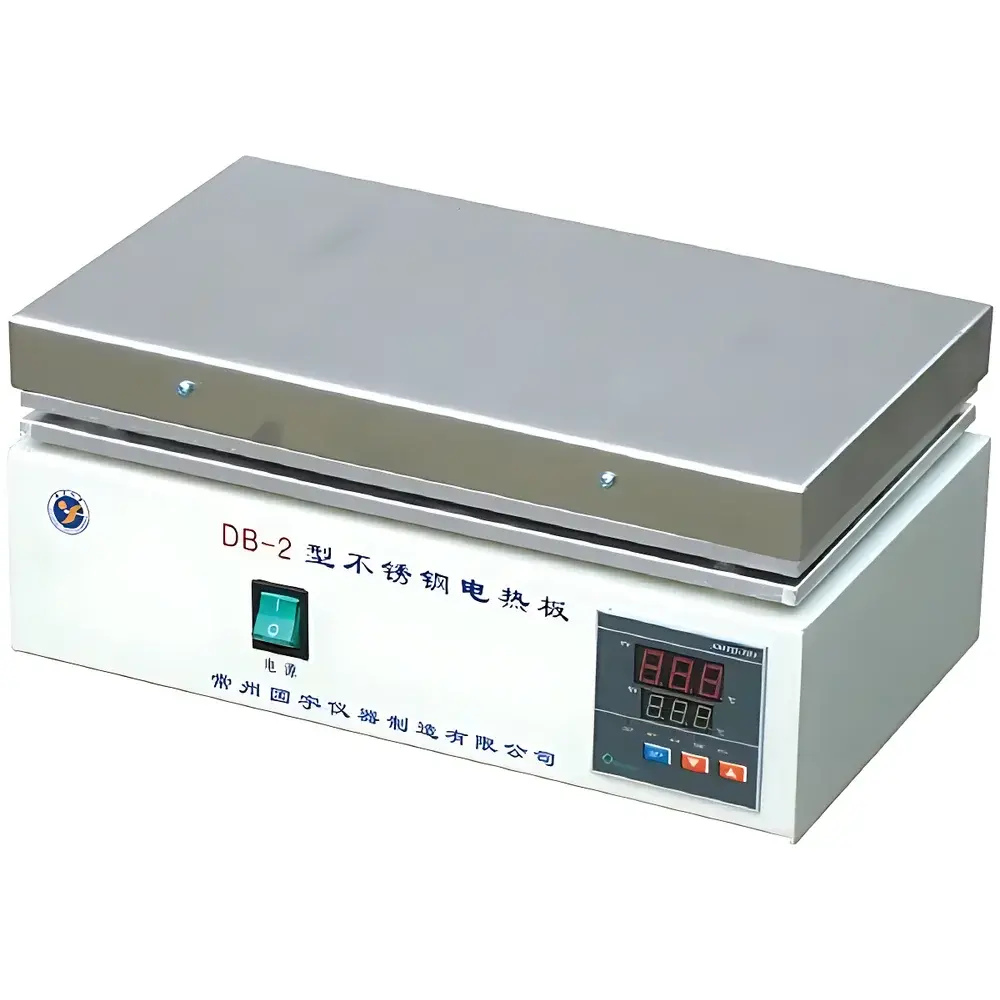
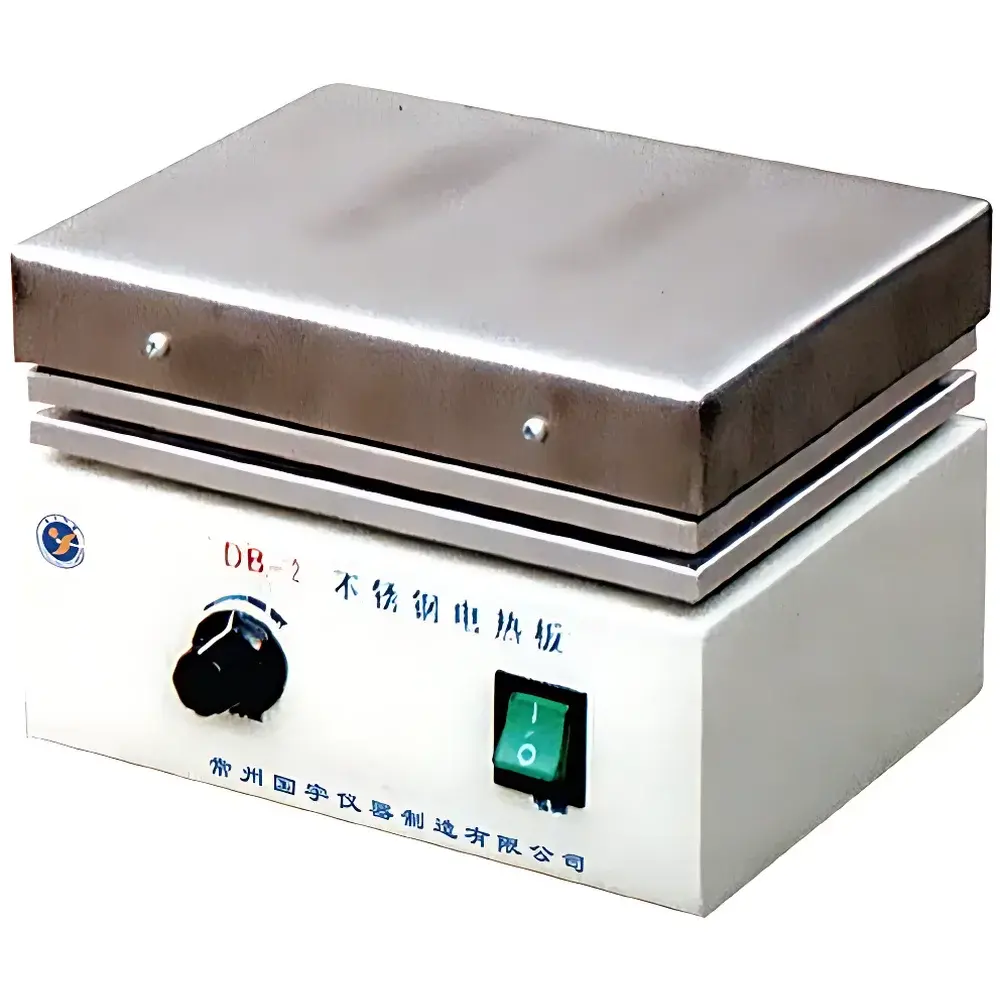
CZGY DB-2A Digital Stainless Steel Electric Heating Plate
| Brand | CZGY |
|---|---|
| Origin | Jiangsu, China |
| Manufacturer Type | Direct Manufacturer |
| Model | DB-2A |
| Working Surface Area | 350 × 200 mm |
| Heating Power | 1000 W |
| Power Supply | 220 V, 50 Hz |
| Temperature Control Range | Ambient to 300 °C |
| Temperature Control Accuracy | ±1 °C (digital PID control) |
| Panel Material | 304 Stainless Steel |
| Sensor Calibration Offset Range | −50 to +50 °C (adjustable via SC parameter) |
Overview
The CZGY DB-2A Digital Stainless Steel Electric Heating Plate is a precision-engineered benchtop thermal platform designed for controlled, uniform heating in sample preparation, digestion, evaporation, drying, and pre-heating applications across analytical, environmental, pharmaceutical, and academic laboratories. Operating on resistive heating principles, the unit delivers stable surface temperatures from ambient up to 300 °C with ±1 °C accuracy—achieved through a digital PID temperature controller paired with a calibrated PT100 or thermistor sensor embedded beneath the heated surface. Unlike open-coil hot plates or ceramic variants, the DB-2A employs a solid, seamless 304 stainless steel working surface, providing exceptional resistance to corrosion, chemical etching, and mechanical abrasion—critical when handling acidic digestants (e.g., HNO₃, HCl, HF mixtures), alkaline reagents, or organic solvents during EPA Method 3050B/3051A, ISO 11466, or USP sample digestion workflows.
Key Features
- Robust 304 stainless steel heating surface (350 × 200 mm) engineered for long-term chemical and thermal stability
- Digital PID temperature controller with real-time LED display—enabling intuitive setpoint entry, immediate feedback, and repeatable thermal profiles
- 1000 W high-power heating element ensuring rapid thermal ramp-up (typical time to reach 200 °C: <12 min) and minimal spatial temperature gradient (<±3 °C across surface at 250 °C)
- User-accessible sensor offset calibration (SC parameter) for traceable correction of thermal drift—supporting GLP-compliant instrument verification per ISO/IEC 17025 requirements
- Over-temperature protection circuit integrated as standard safety feature, automatically cutting power if sensor failure or runaway condition is detected
- Front-panel SET/△/▽ key interface with tactile feedback—designed for gloved operation and minimized accidental adjustment in regulated environments
Sample Compatibility & Compliance
The DB-2A accommodates standard laboratory vessels including borosilicate glass beakers (up to 1000 mL), PTFE digestion vessels, quartz crucibles, and ceramic evaporating dishes. Its inert surface supports direct contact with samples undergoing acid digestion (e.g., soil, tissue, sludge), solvent evaporation (e.g., hexane, acetone, methanol), or moisture content determination per AOAC 950.46 or ASTM D2231. The device complies with IEC 61010-1:2010 safety standards for electrical equipment for measurement, control, and laboratory use. While not intrinsically rated for hazardous locations, it is suitable for use in fume hoods and certified cleanrooms (ISO Class 5–8) when operated within specified ambient conditions (5–40 °C, ≤80% RH non-condensing). Documentation includes factory calibration certificate (traceable to NIM, China) and CE-conformity declaration.
Software & Data Management
The DB-2A operates as a standalone analog-digital hybrid instrument without onboard data logging or PC connectivity. However, its digital controller supports external integration via optional 4–20 mA or 0–5 V analog output modules (sold separately), enabling connection to centralized SCADA systems, LIMS interfaces, or programmable logic controllers (PLCs) for audit-trail-capable process monitoring. For regulatory compliance (e.g., FDA 21 CFR Part 11), users may pair the unit with third-party validated temperature recording systems that capture timestamped setpoint/actual temperature logs—facilitating retrospective review during GMP or ISO 17025 internal audits. Firmware does not store historical data; all operational parameters reset upon power cycle—ensuring no residual configuration conflicts between user sessions.
Applications
- Open-vessel acid digestion of environmental matrices (sediment, wastewater sludge) prior to ICP-OES or AAS analysis
- Controlled evaporation of organic extracts in pesticide residue testing (e.g., SANTE/2023/1258 method)
- Drying of filter papers, gravimetric precipitates, or lyophilized biological samples under defined thermal conditions
- Pre-heating of reaction flasks and reflux assemblies in synthetic chemistry protocols
- Temperature conditioning of viscometry baths, density meters, or refractometer sample blocks
- Calibration support for thermocouple verification rigs and reference thermometer validation benches
FAQ
What is the maximum safe operating temperature for continuous use?
The DB-2A is rated for sustained operation at up to 300 °C. For optimal longevity of the heating element and sensor, prolonged use above 270 °C is not recommended without periodic thermal derating checks.
Can this unit be used inside a fume hood?
Yes—its sealed stainless steel chassis and absence of exposed wiring or ventilation grilles make it suitable for installation in Class I or II fume hoods, provided adequate clearance (≥10 cm) is maintained around all sides for convection cooling.
Is the temperature sensor replaceable by the end user?
The embedded temperature sensor is factory-calibrated and not field-replaceable; however, sensor offset compensation (SC parameter) allows functional correction without hardware intervention.
Does the DB-2A meet RoHS or REACH requirements?
Yes—the unit conforms to EU Directive 2011/65/EU (RoHS2) and Regulation (EC) No 1907/2006 (REACH), with full material declarations available upon request for supply chain due diligence.
How often should calibration verification be performed?
Per ISO/IEC 17025 Clause 6.6, verification against a NIST-traceable reference thermometer is recommended before each critical batch run or at minimum daily in high-throughput QA/QC labs.



