
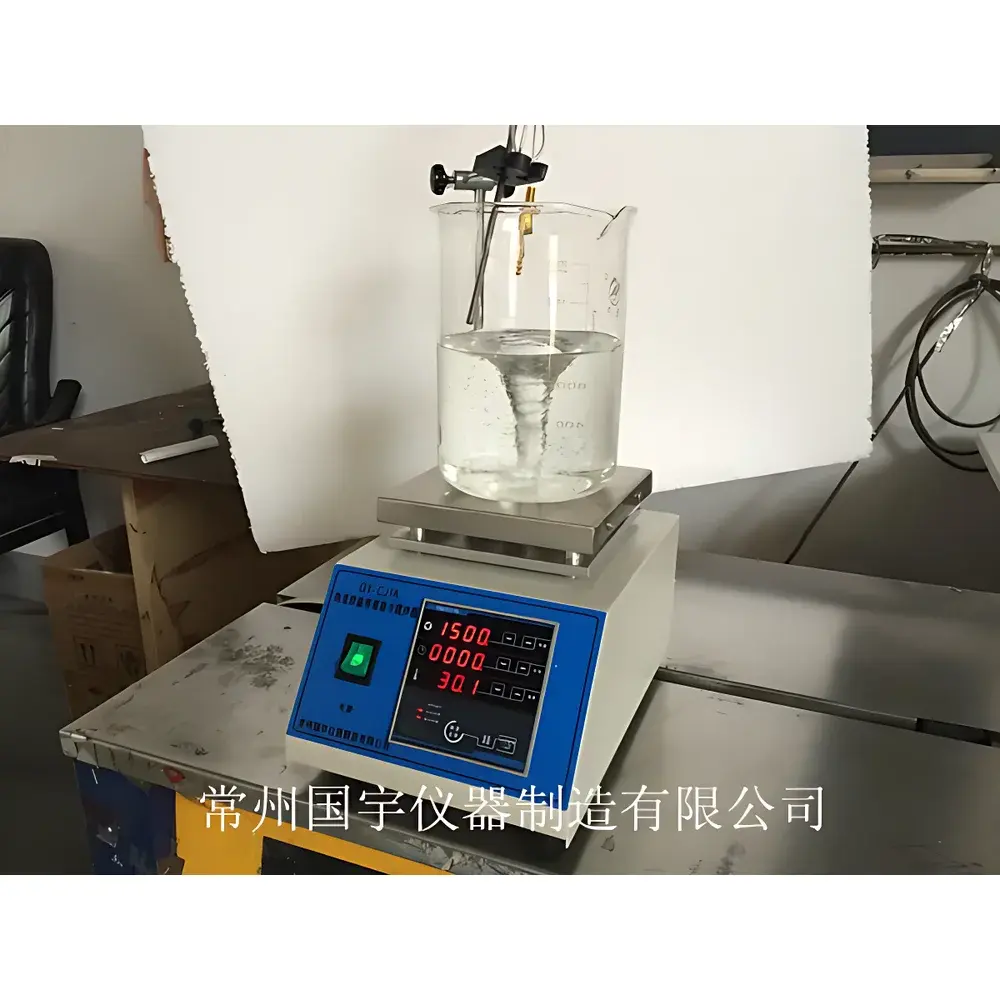
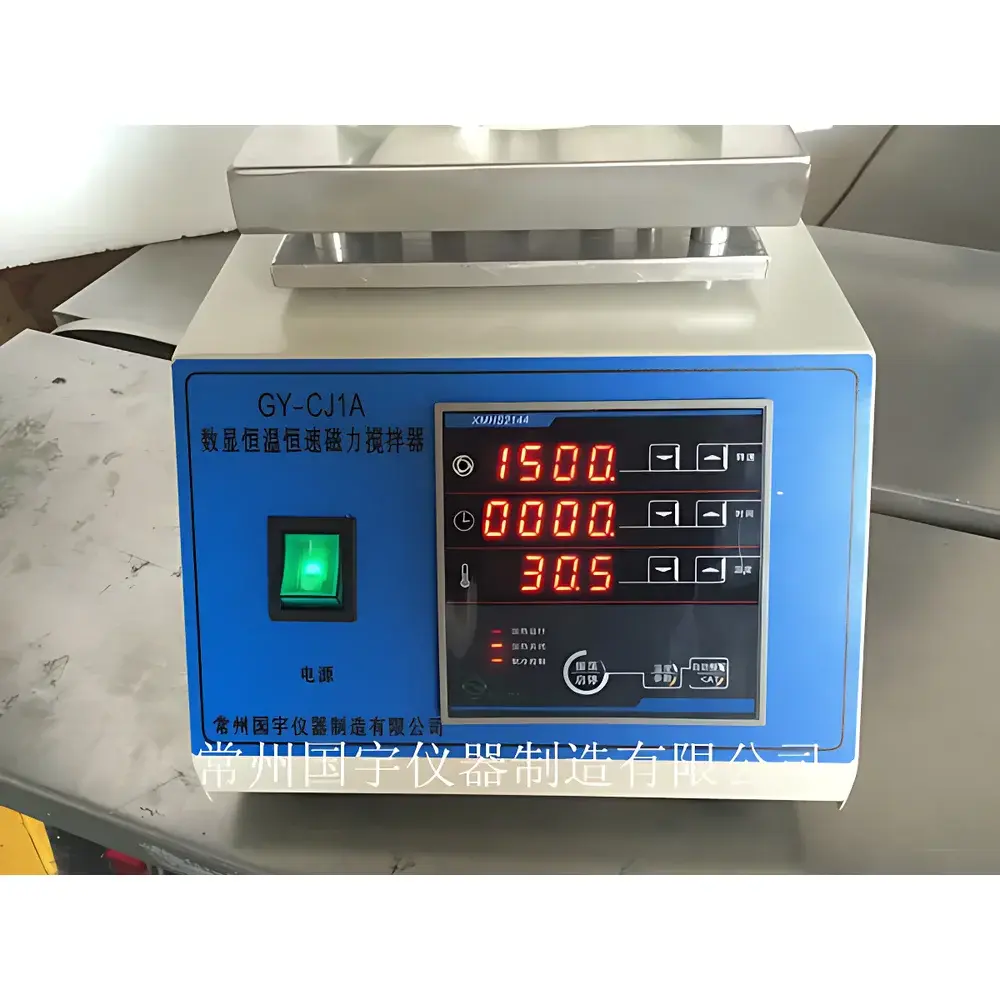
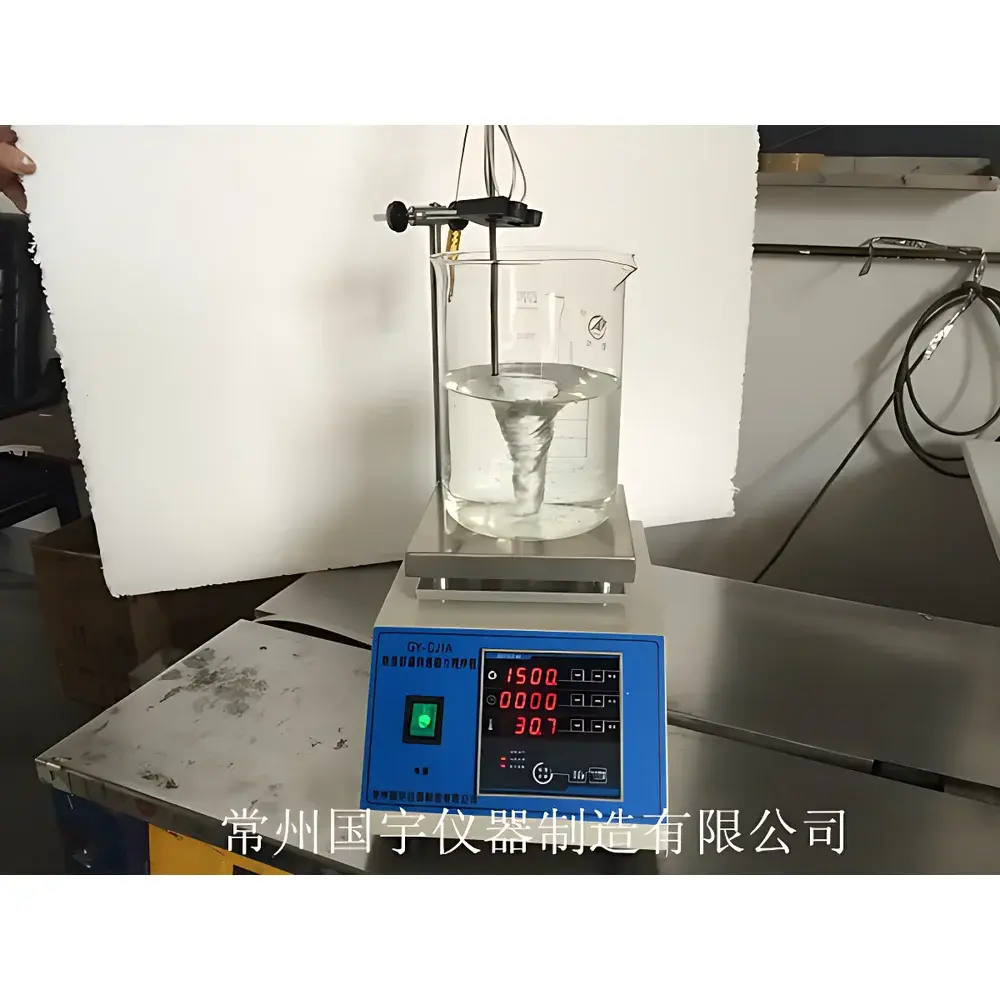
CZGY GY-CJ1A Digital Display Constant-Temperature Constant-Speed Magnetic Stirrer
| Brand | CZGY |
|---|---|
| Origin | Jiangsu, China |
| Manufacturer Type | Direct Manufacturer |
| Model | GY-CJ1A |
| Instrument Type | Magnetic Stirrer |
| Max Stirring Volume | 2000 mL |
| Speed Range | 0–2000 rpm |
| Temperature Control Range | Ambient +10°C to 350°C |
| Power Supply | AC 220 V ±10 V, 50 Hz |
| Motor Power | 30 W |
| Heating Power | 800 W |
| Plate Dimensions | 140 × 140 mm stainless steel |
| Timer Range | 0–999 min |
| Dual Temperature Sensing | Internal and External RTD Probe Compatible |
| Safety | Grounded operation required |
Overview
The CZGY GY-CJ1A Digital Display Constant-Temperature Constant-Speed Magnetic Stirrer is an integrated benchtop laboratory instrument engineered for simultaneous precise temperature regulation and stable rotational agitation of liquid samples. Based on the principle of magnetic coupling—where a rotating permanent magnet beneath a thermally conductive ceramic or stainless-steel plate induces synchronous rotation of a PTFE- or glass-coated stir bar inside the vessel—the device delivers reproducible mixing performance across diverse viscosities and volumes. Its dual-control architecture separates speed and temperature actuation pathways: a brushless DC motor drives the magnetic drive system with closed-loop feedback for speed stability, while a PID-controlled resistive heating element embedded in the platform ensures uniform thermal distribution. Designed for routine analytical workflows in academic teaching labs, QC/QA environments, and R&D settings, the GY-CJ1A supports applications requiring both thermal activation (e.g., dissolution testing, catalyst screening) and homogeneous dispersion (e.g., buffer preparation, reagent synthesis).
Key Features
- Digital dual-display interface showing real-time setpoint and actual values for both speed (rpm) and temperature (°C), with 1 rpm and 1 °C resolution
- Constant-speed control circuitry maintains rotational stability within ±2% deviation over full load range (up to 2000 mL aqueous solution)
- Wide temperature operating envelope: ambient +10°C to 350°C, suitable for low-temperature solvent evaporation and high-temperature reflux support
- Stainless-steel 140 × 140 mm heating plate with corrosion-resistant finish and optimized thermal mass for rapid response and minimal gradient
- Programmable electronic timer (0–999 minutes) with auto-shutdown functionality to ensure protocol compliance and energy efficiency
- Modular temperature sensing architecture: accepts both built-in PT100 sensor and external probe input (standard 2-wire RTD interface), enabling direct in-solution monitoring per ASTM E2465 or ISO 17025 traceability requirements
- Low-noise, vibration-damped mechanical design compliant with ISO 14644 cleanroom-compatible operational thresholds
Sample Compatibility & Compliance
The GY-CJ1A accommodates standard laboratory glassware including beakers (50–2000 mL), Erlenmeyer flasks, and round-bottom flasks with flat bases. Stir bar compatibility spans diameters from 5 mm to 30 mm, supporting both standard and cross-shaped magnetic elements. The unit meets IEC 61010-1:2010 safety standards for electrical equipment used in laboratory environments, including protection class I (grounded) construction and overtemperature cutoff at 380°C. Its digital control system supports audit-ready operation under GLP and GMP frameworks when paired with validated procedures; optional data logging via RS232 output (available on firmware v2.1+) enables alignment with FDA 21 CFR Part 11 requirements for electronic records.
Software & Data Management
While the base GY-CJ1A operates as a standalone instrument with front-panel controls, optional firmware upgrade (CZGY-DCM v2.1) enables serial communication via RS232 port for remote parameter setting, real-time data streaming (speed/temperature/timestamp), and event-triggered logging. Logged datasets export in CSV format compatible with LIMS integration, statistical process control (SPC) software, and Excel-based trend analysis. All configuration changes are timestamped and stored in non-volatile memory, satisfying minimum ALCOA+ data integrity criteria for regulated environments.
Applications
- Standardized dissolution testing per USP using calibrated stir bars and jacketed vessels
- Preparation of homogeneous calibration standards and matrix-matched reference materials
- Controlled-temperature synthesis of metal-organic frameworks (MOFs) and nanoparticle dispersions
- Accelerated stability studies requiring isothermal agitation at elevated temperatures
- Environmental sample digestion protocols (e.g., EPA Method 3050B) where consistent mixing enhances acid contact efficiency
- Teaching laboratories demonstrating Arrhenius kinetics, reaction order determination, and heat transfer principles
FAQ
What is the maximum recommended continuous operating time at 2000 rpm?
Continuous operation at maximum speed is rated for 4 hours; for extended use, operation below 1200 rpm is advised to maintain thermal stability and bearing longevity.
Can the external temperature probe be calibrated independently?
Yes—the instrument supports two-point calibration (ice bath and oil bath reference points) through service mode access, traceable to NIST-certified standards.
Is the heating plate compatible with corrosive solvents such as concentrated HNO₃ or HF?
The stainless-steel surface resists mild acids but is not rated for hydrofluoric acid exposure; use PTFE-coated stir bars and secondary containment for aggressive chemistries.
Does the unit include overload protection for motor or heater circuits?
Yes—integrated thermal fuses and current-limiting circuitry automatically interrupt power during stall conditions or short-circuit events.
How is traceability maintained for temperature measurements?
Each unit ships with a factory calibration certificate listing as-found/as-left values against certified reference thermometers; users may perform in-house verification using ISO/IEC 17025-accredited equipment.



