
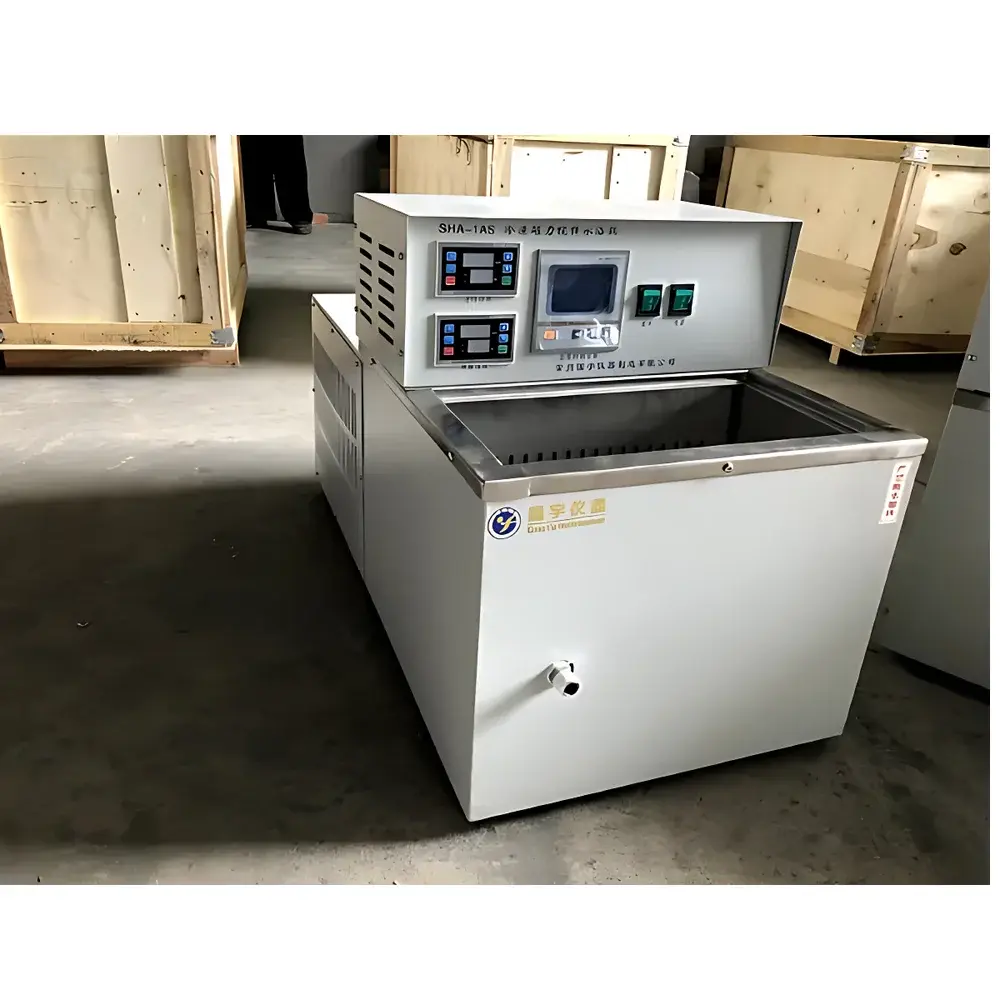
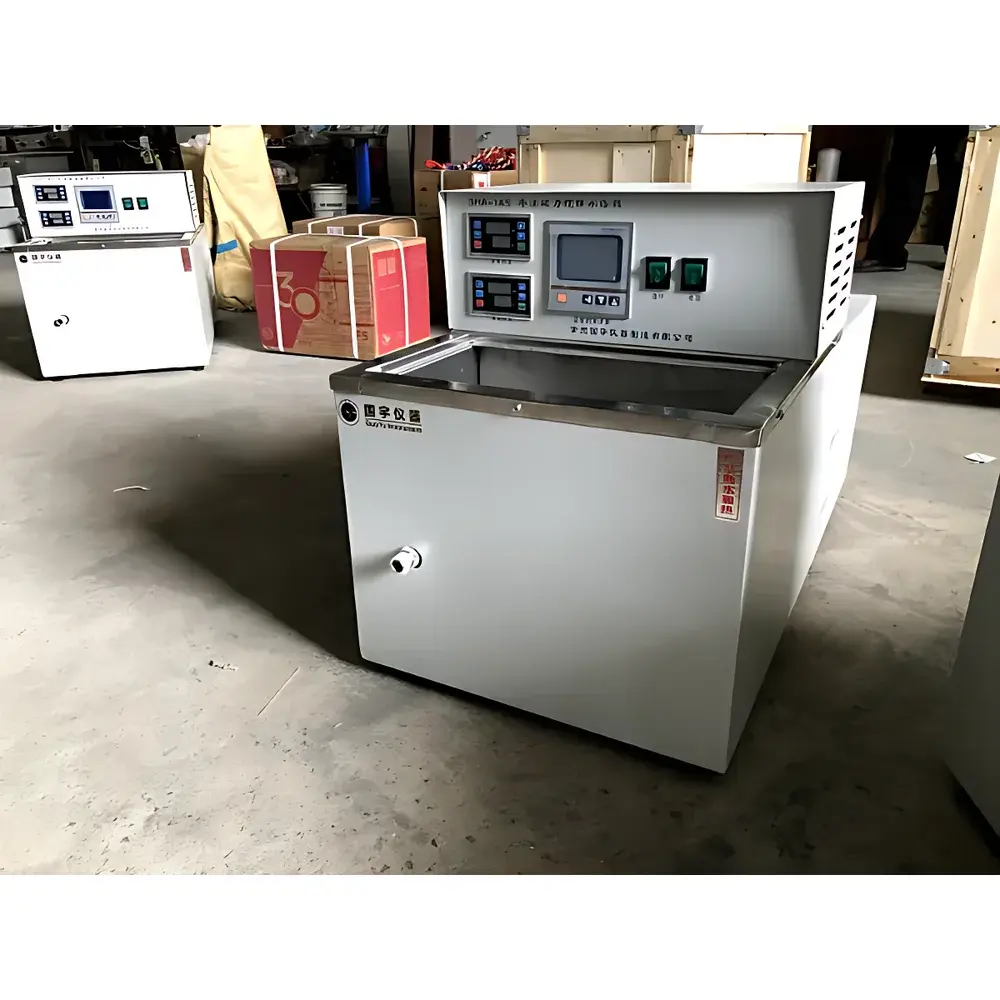
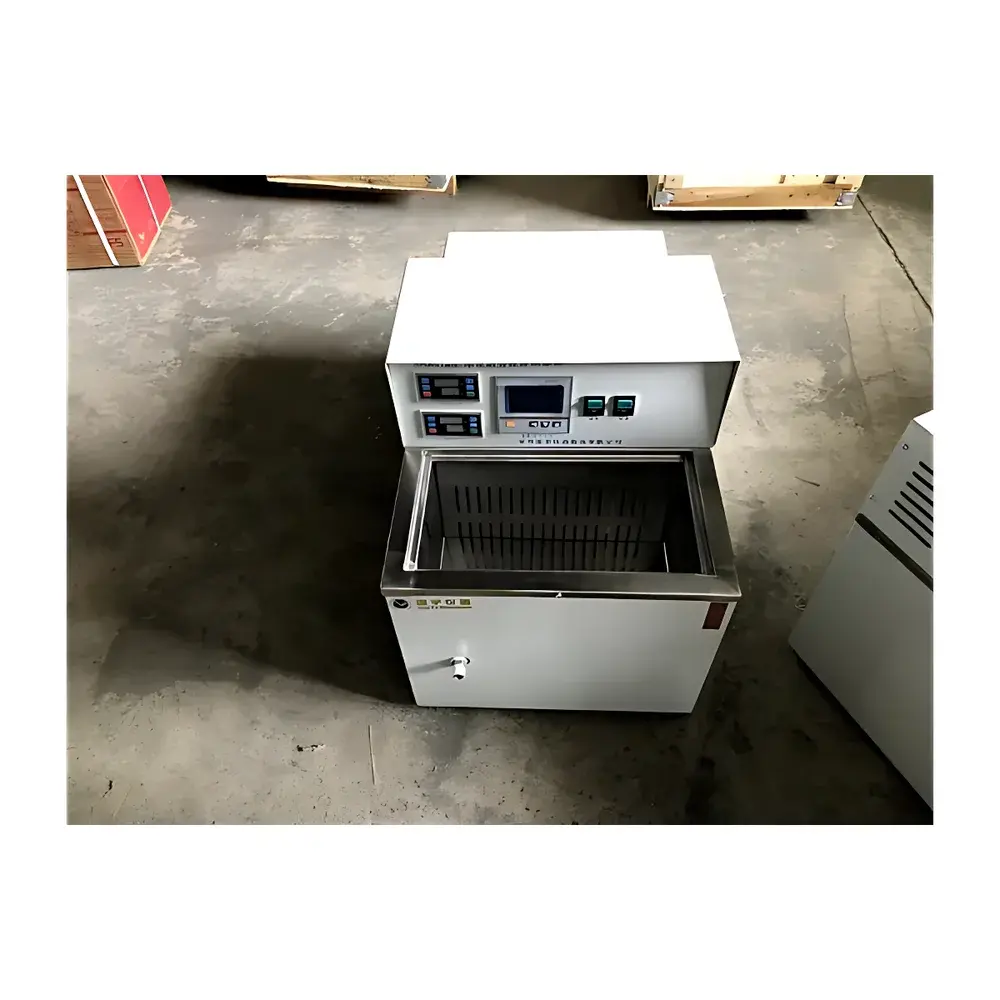
CZGY SHA-1AS Cryogenic Magnetic Stirring Water Bath
| Brand | CZGY |
|---|---|
| Origin | Jiangsu, China |
| Manufacturer Type | Direct Manufacturer |
| Country of Origin | China |
| Model | SHA-1AS |
| Temperature Range | 0 °C to 100 °C |
| Temperature Control Accuracy | ±0.5 °C |
| Bath Capacity | 22 L |
| Heating Power | 1000 W |
| Cooling Compressor Power | 560 W |
| Circulation Pump Power | 50 W |
| Dual Magnetic Stirring Power | 2 × 10 W |
| Stirring Speed Range | 0–2000 rpm |
| Stirring Speed Resolution | 1 rpm |
| Stirring Speed Display | Dual Digital LED |
| Bath Opening Dimensions (W×D×H) | 340 × 360 × 180 mm |
| External Dimensions | Not specified |
| Power Supply | 220 V, 50 Hz |
| Construction | Stainless Steel Inner Tank, Powder-Coated Cold-Rolled Steel Exterior |
Overview
The CZGY SHA-1AS Cryogenic Magnetic Stirring Water Bath is an integrated laboratory thermal control system engineered for precise temperature regulation and simultaneous magnetic agitation across a broad operational range—from sub-ambient cooling (0 °C) to boiling-point heating (100 °C). Unlike conventional water baths, the SHA-1AS incorporates a dedicated refrigeration compressor (560 W), enabling active cooling without external chillers or ice packs—critical for applications requiring thermal stability during exothermic reactions, enzyme kinetics, or low-temperature crystallization studies. Its dual independent magnetic stirring units—each driven by brushless DC motors and monitored via digital RPM readouts—support synchronized or isolated agitation of two samples within the same bath chamber. The unit employs PID-based digital temperature control with 0.1 °C resolution and ±0.5 °C accuracy over the full range, ensuring reproducible thermal conditions compliant with standard laboratory quality protocols.
Key Features
- Dual-zone magnetic stirring: Two independently controlled brushless motor assemblies (2 × 10 W), each with digital speed display (0–2000 rpm, 1 rpm resolution) and constant-speed feedback circuitry for long-duration operation under load.
- Integrated thermoelectric cooling & heating: Hermetic compressor-based refrigeration (560 W) combined with 1000 W resistive heating enables seamless transition between cooling and heating modes without manual intervention or auxiliary equipment.
- High-capacity stainless steel bath: 22 L working volume with corrosion-resistant 304 stainless steel inner tank and electrophoretically coated cold-rolled steel exterior for durability in humid or chemically exposed lab environments.
- Precision digital temperature management: LCD interface with real-time setpoint/actual temperature display, programmable ramp-hold profiles, and over-temperature safety cutoff.
- Forced circulation system: Integrated 50 W recirculation pump ensures uniform thermal distribution (±0.3 °C spatial homogeneity across bath volume) and supports external jacketed reactor connections via standard ½″ BSP ports.
Sample Compatibility & Compliance
The SHA-1AS accommodates standard laboratory glassware—including round-bottom flasks (up to 5 L), beakers, and reaction vessels—within its 340 × 360 × 180 mm open bath cavity. Its wide temperature span and dual-stirring capability make it suitable for ASTM D1298 (density of crude oil), ISO 6271 (rubber vulcanization testing), and USP compounding support workflows where temperature-controlled mixing is required. The device meets IEC 61010-1:2010 safety requirements for laboratory electrical equipment and complies with CE marking directives for electromagnetic compatibility (EMC) and low-voltage operation. While not inherently 21 CFR Part 11–enabled, its analog/digital hybrid architecture permits integration into validated environments when paired with external audit-trail-capable data loggers.
Software & Data Management
The SHA-1AS operates via embedded firmware with no proprietary software dependency. All temperature and stirring parameters are configured locally via front-panel controls and retained in non-volatile memory after power cycling. Optional RS-485 Modbus RTU interface (available on request) allows integration with LabVIEW, MATLAB, or SCADA systems for centralized monitoring and automated protocol execution. For GLP/GMP-aligned labs, third-party validation packages—including IQ/OQ documentation templates and calibration traceability records per ISO/IEC 17025—are available through CZGY’s technical support team.
Applications
- Controlled-rate dissolution testing of pharmaceutical actives under pharmacopoeial conditions (e.g., USP Apparatus I/II simulation).
- Low-temperature enzymatic assays requiring stable 4–10 °C agitation during substrate incubation.
- Synthesis of temperature-sensitive nanomaterials (e.g., quantum dots, metal–organic frameworks) where nucleation kinetics depend on precise thermal ramping and homogeneous mixing.
- Accelerated stability studies per ICH Q1A(R3), including freeze–thaw cycling of biologics formulations using programmable temperature transitions.
- Standardized textile dyeing and finishing trials per AATCC Test Method 61, where bath temperature uniformity directly impacts colorfastness reproducibility.
FAQ
Does the SHA-1AS support external temperature probe input for sample-specific feedback control?
No—the system relies on internal Pt100 sensor feedback only. External probe integration requires optional hardware modification and firmware reconfiguration.
Can both stirrers operate at different speeds simultaneously?
Yes—each stirrer has independent speed control and digital readout, allowing differential agitation for comparative experiments.
What is the minimum recommended liquid level to ensure safe compressor operation?
The bath must be filled to at least 12 L (55% capacity) to prevent dry-run damage to the circulation pump and maintain thermal mass for stable cooling performance.
Is the unit compatible with organic solvent baths (e.g., ethylene glycol/water mixtures)?
Yes—stainless steel construction and sealed motor housings permit use with aqueous-organic mixtures up to 30% v/v glycol; prolonged exposure to chlorinated solvents is not recommended.
How often does the refrigeration system require maintenance or refrigerant recharge?
Under normal laboratory use (≤8 hrs/day), the hermetically sealed R134a system requires no scheduled refrigerant service for ≥5 years; annual inspection of condenser coil cleanliness is advised.



