
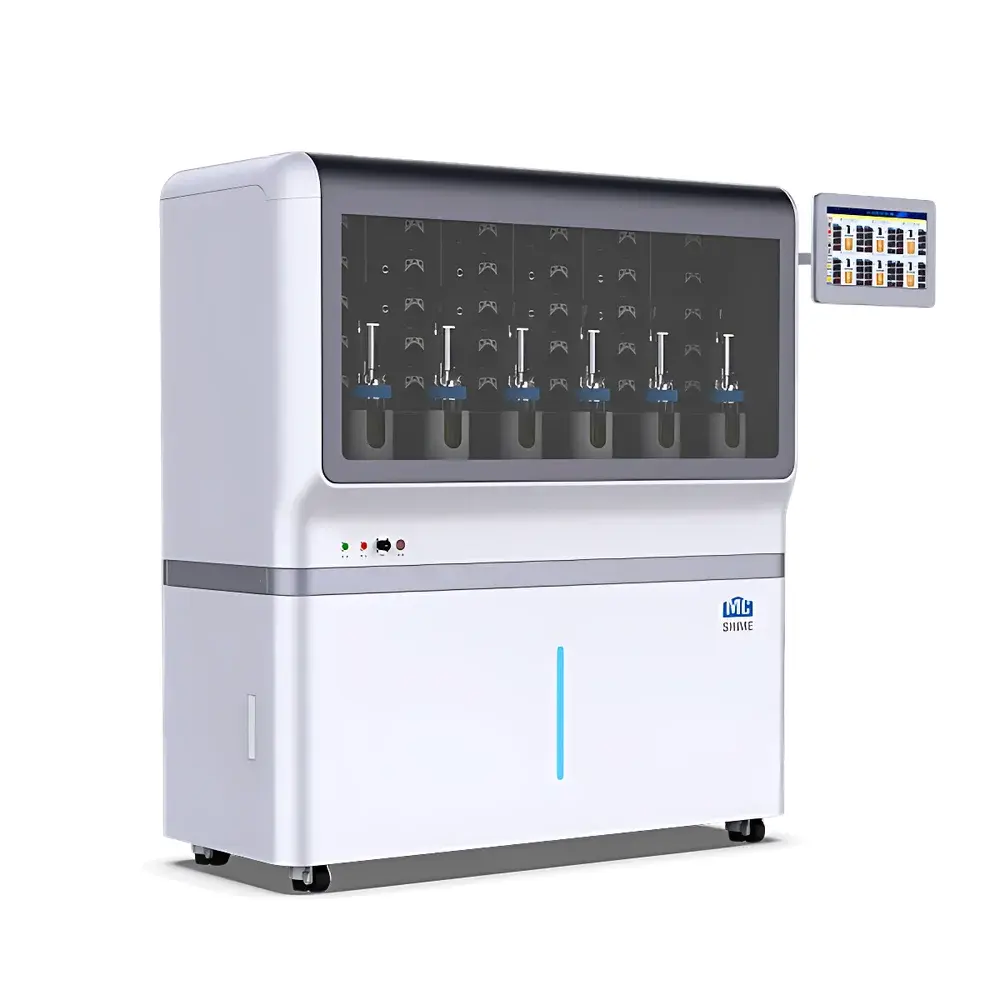
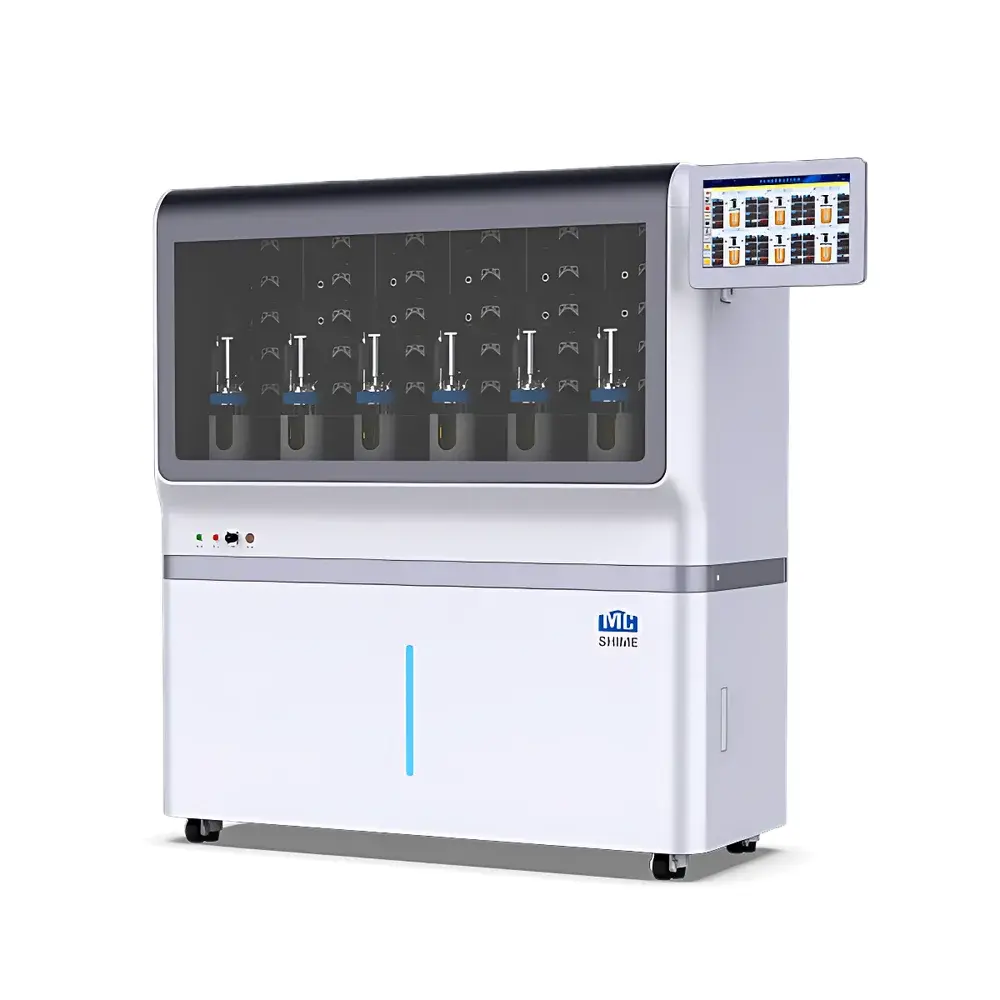
Mancang MC-ABSF-II Six-Compartment In Vitro Gastrointestinal Digestion System
| Brand | Mancang |
|---|---|
| Origin | Beijing, China |
| Manufacturer Type | Direct Manufacturer |
| Regional Classification | Domestic (China) |
| Model | MC-ABSF-II |
| Price Range | USD 70,000 – 112,000 |
| Category | Life Science / Bioengineering |
| Measurement Resolution | 0.01 mL |
| Flow Rate Detection Range | 0–250 mL/h |
| Reactor Volume Options | 0.25 L or 0.5 L per compartment |
| Maximum Parallel Reactors | 1, 2, 3, 4, or 6 channels |
Overview
The Mancang MC-ABSF-II Six-Compartment In Vitro Gastrointestinal Digestion System is an advanced, programmable bioreactor platform engineered to replicate the physiological and biochemical dynamics of the human monogastric digestive tract—spanning six anatomically and functionally distinct segments: stomach, duodenum, jejunum/ileum (small intestine), ascending colon, transverse colon, and descending colon. Based on the validated SHIME® (Simulator of the Human Intestinal Microbial Ecosystem) architecture and extended with enhanced fluidics control and multi-parameter environmental regulation, the system employs continuous-flow, pH-stat, redox-controlled, and enzyme-dosed bioreactor modules to emulate luminal conditions including gastric acidity (pH 1.5–3.0), intestinal neutralization (pH 6.0–7.5), anaerobic colonic fermentation (Eh < −150 mV), peristaltic shear stress, and timed enzymatic hydrolysis (pepsin, pancreatin, bile salts, brush-border enzymes). Designed for rigorous preclinical research, it enables quantitative assessment of digestibility, nutrient release kinetics, bioaccessibility, microbial metabolite generation (e.g., SCFAs, phenolic catabolites), and compound structural transformation—without reliance on in vivo animal models.
Key Features
- Modular six-compartment configuration with independent temperature, pH, redox potential, and flow control per segment
- Semiconductor-based dry-heating system delivering precise thermal regulation (30–40 °C; ±0.1 °C stability) without water baths or condensation risks
- Automated pH-stat titration with real-time acid/base dosing (HCl, NaHCO₃, NH₄OH) and integrated ORP monitoring for strict anaerobic maintenance in colonic vessels
- Programmable peristaltic pump network enabling dynamic flow rates (0–250 mL/h) and secretion profiles (0–150 mL/min) mimicking gastric emptying, pancreatic exocrine output, and intestinal absorption gradients
- Dual-display HMI interface with synchronized local touchscreen and remote PC workstation via Siemens S7-1200 PLC architecture
- Cloud-enabled data acquisition and remote operation via secure WCF-based communication protocol; mobile application support for iOS and Android with encrypted cloud storage
- Preloaded digestion protocols aligned with INFOGEST 2.0 standard methodology and customizable user-defined kinetic profiles
- Reproducibility validated at <1% inter-run CV for digesta composition and <2% deviation for simulated absorption metrics
Sample Compatibility & Compliance
The MC-ABSF-II accommodates diverse sample matrices—including solid foods, powdered nutraceuticals, pharmaceutical tablets, probiotic suspensions, and feed pellets—via standardized loading protocols and automated homogenization integration options. Each reactor vessel supports sterile inoculation of defined microbial consortia (e.g., SIHUMIx, MIH, or custom isolates) under strict anaerobic transfer conditions. The system meets engineering requirements for GLP-compliant studies and supports audit-ready data integrity through timestamped, user-logged parameter changes, electronic signatures, and full traceability of sensor calibrations (pH, ORP, temperature, flow). While not FDA-cleared as a medical device, its operational framework aligns with ISO/IEC 17025 analytical validation principles and supports submissions referencing USP <1089>, ASTM E3221-21 (in vitro digestion methods), and EFSA guidance on bioavailability assessment.
Software & Data Management
Control and analysis are unified within Mancang’s proprietary BioDigest Suite v3.2—a Windows-based application built on .NET Framework with role-based access control and 21 CFR Part 11–compatible audit trail functionality. The software logs all process variables at 1-second resolution, generates real-time kinetic curves (pH vs. time, SCFA accumulation, glucose release), exports CSV/Excel-compatible datasets, and supports batch comparison overlays. Integrated statistical modules calculate first-order hydrolysis rates, Tmax and Cmax analogues for nutrient release, and microbial community shift indices (e.g., Bifidobacterium enrichment ratio) when coupled with optional qPCR or metagenomic sequencing workflows. Raw sensor data is archived in encrypted SQLite databases with automatic daily backup to on-premise NAS or AWS S3 endpoints.
Applications
- Nutritional science: Quantifying protein digestibility, starch hydrolysis index (SHI), glycemic response prediction, and prebiotic fermentation kinetics (e.g., inulin, GOS, resistant starch)
- Pharmaceutical development: Evaluating oral drug stability across GI transit, enteric coating performance, and microbiome-mediated prodrug activation (e.g., sulfasalazine, daidzein→equol)
- Toxicology screening: Assessing foodborne contaminant bioaccessibility (e.g., mycotoxins, heavy metals) and matrix-dependent modulation of absorption
- Animal nutrition research: Modeling monogastric (porcine, murine, avian) digestion for feed formulation optimization and enzyme supplementation trials
- Mechanistic microbiome studies: Investigating antibiotic-induced dysbiosis, phage-bacteria interactions, and strain-specific functional redundancy in SCFA production
- Regulatory dossier preparation: Generating non-animal data packages compliant with OECD TG 458 (in vitro skin corrosion) conceptual frameworks adapted for GI modeling
FAQ
What regulatory standards does the MC-ABSF-II support for method validation?
It facilitates adherence to INFOGEST 2.0 harmonized protocols, ASTM E3221-21, and ISO/IEC 17025 documentation practices—but is not certified for clinical diagnostics or GMP manufacturing.
Can the system operate with fully defined synthetic microbiota?
Yes—each reactor accepts anaerobic inoculation of gnotobiotic communities; vessel headspace gas composition (N₂/CO₂/H₂) is independently programmable per compartment.
Is real-time metabolite sampling possible during operation?
Manual aseptic sampling ports are fitted on all six vessels; optional autosamplers (e.g., Gilson 215) integrate via TTL-triggered I/O ports for timed fraction collection.
How is oxygen exclusion maintained in colonic compartments?
Through continuous N₂/CO₂ sparging, redox-controlled chemical scavenging (cysteine-sulfide system), and sealed reactor lids with magnetic stirrer coupling—achieving Eh < −200 mV sustained over 72 h.
Does the system include data export compatibility with common bioinformatics pipelines?
Yes—CSV outputs conform to MIAME/MIMARKS metadata standards; time-series digesta composition files can be directly imported into R packages (e.g., phyloseq, DESeq2) or Python (pandas, scikit-bio) for multivariate analysis.



