
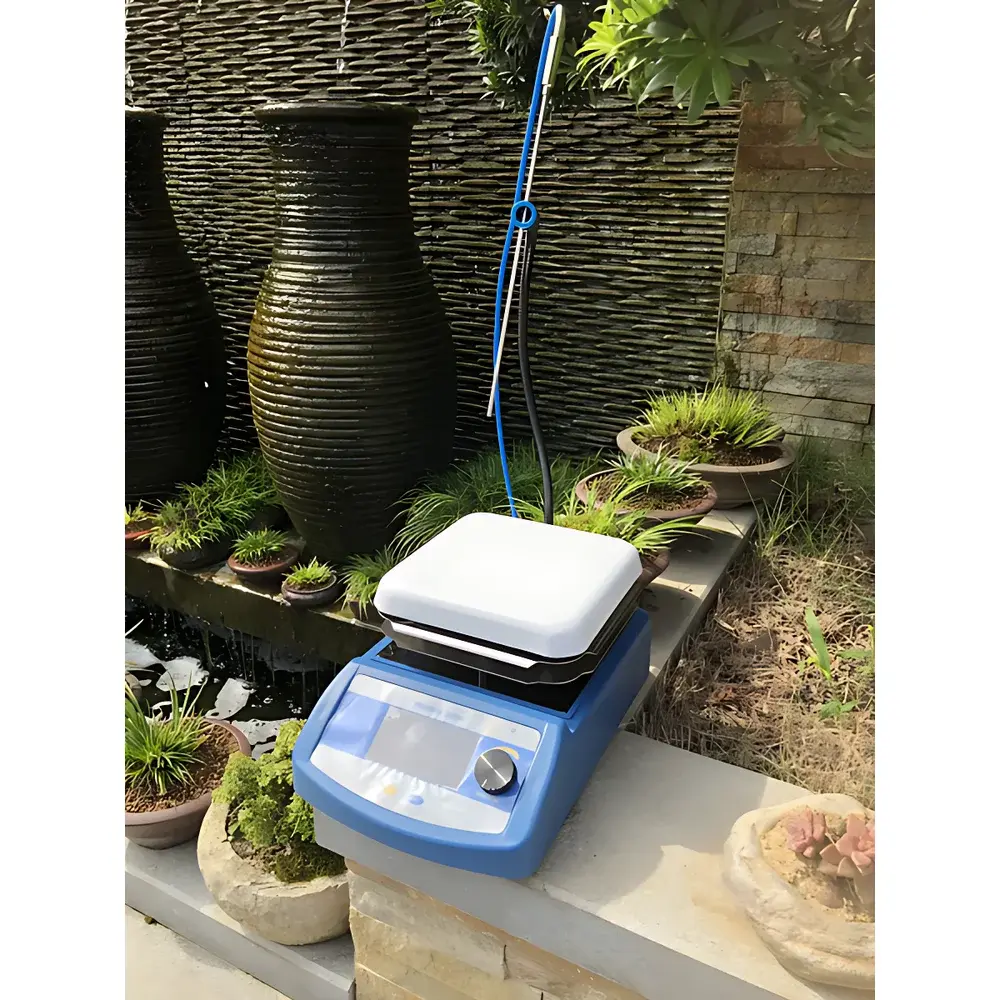
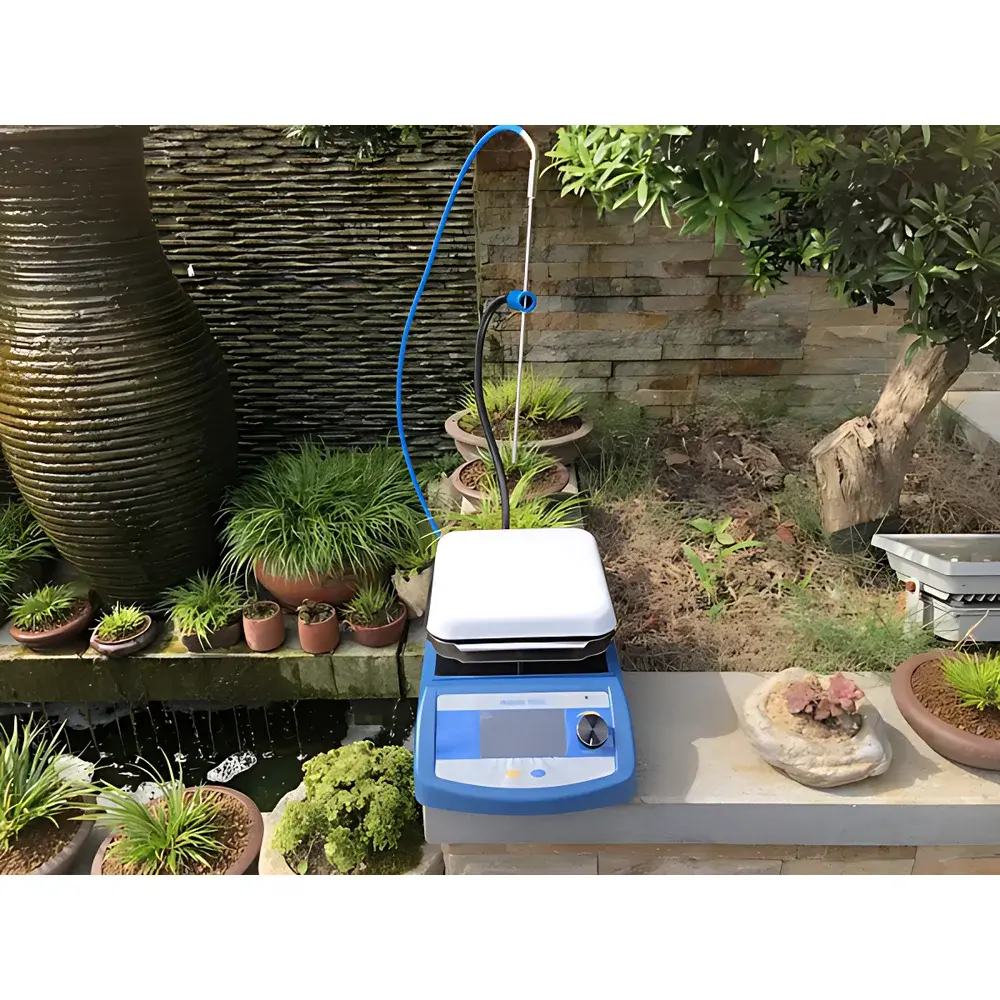
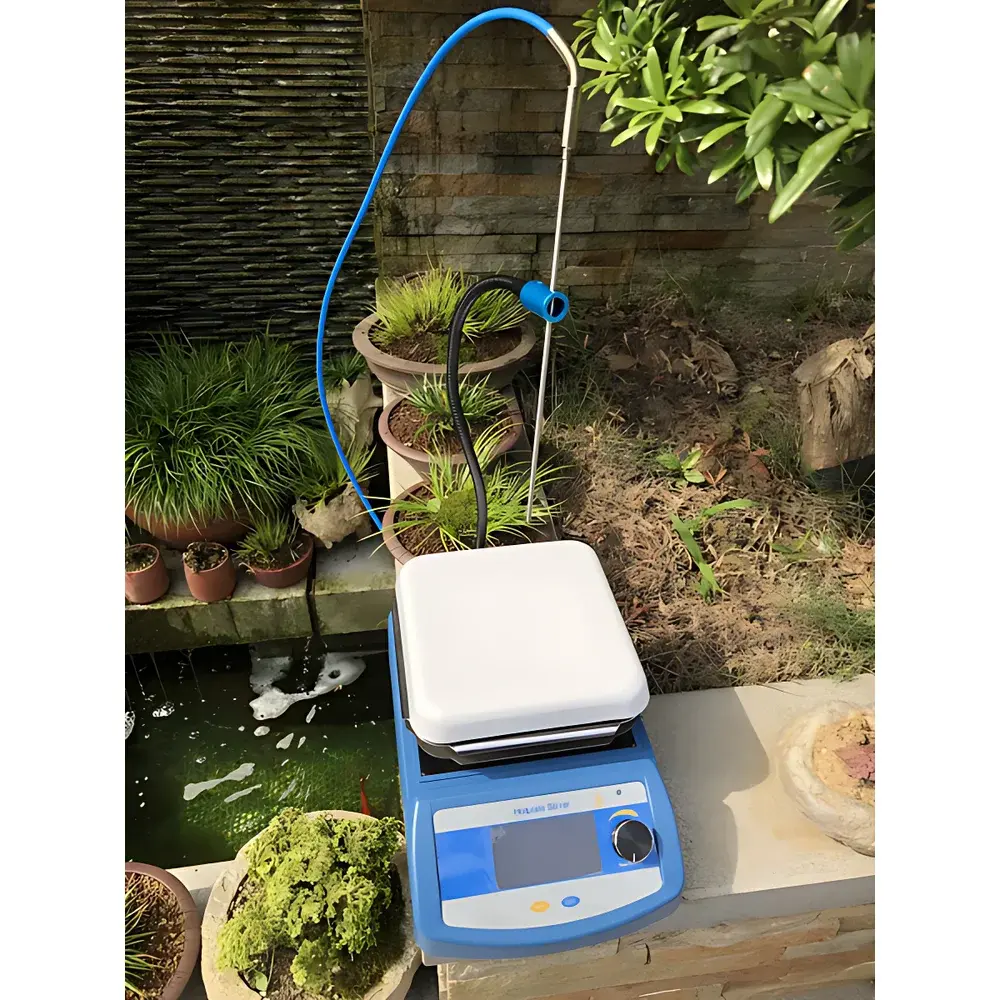
CZGY GY-CJ1B Advanced Magnetic Stirrer with Ceramic Heating Plate
| Brand | CZGY |
|---|---|
| Model | GY-CJ1B |
| Type | Magnetic Stirrer |
| Max Stirring Volume | 5 L |
| Speed Range | 200–2000 rpm |
| Temperature Control Range | Ambient to 400 °C |
| Heating Power | 500 W |
| Control Accuracy | ±0.5 °C |
| Display | LCD |
| Plate Material | Ceramic |
| Plate Dimensions | 160 × 160 mm |
| Sensor Type | PT100 |
| Input Voltage | 220 V AC, 50 Hz |
| Overall Dimensions | 280 × 180 × 110 mm |
| Weight | Approx. 2.8 kg |
Overview
The CZGY GY-CJ1B Advanced Magnetic Stirrer is an engineered solution for precise, reliable, and safe liquid mixing and temperature-controlled homogenization in analytical, quality control, and research laboratories. Designed around a robust permanent-magnet DC motor drive system, it delivers consistent rotational torque without mechanical coupling or exposed moving parts—eliminating wear, sparking, and fire hazards associated with conventional stirrers. The device operates on the principle of magnetic coupling: a rotating external magnet beneath the ceramic plate induces synchronous rotation of a PTFE- or glass-coated magnetic stir bar immersed in the sample vessel. This non-contact mechanism ensures quiet operation (<45 dB(A)), zero maintenance, and compatibility with sealed or inert-atmosphere vessels. Integrated resistive heating via a high-emissivity ceramic plate enables uniform thermal distribution across the work surface, supporting applications requiring simultaneous stirring and controlled thermal activation—such as dissolution testing, catalyst synthesis, buffer preparation, and polymerization initiation.
Key Features
- High-performance DC motor delivering stable speed output from 200 to 2000 rpm with <±2% speed repeatability under load
- Ceramic-coated heating plate (160 × 160 mm) offering exceptional chemical resistance, thermal stability up to 400 °C, and rapid heat-up/cool-down response
- Precision digital temperature control using a calibrated PT100 sensor, achieving ±0.5 °C accuracy over the full ambient-to-400 °C range
- LCD display with dual-parameter readout (speed and temperature), intuitive push-button interface, and real-time parameter locking
- Overheat protection circuitry with automatic cut-off at 420 °C and fault indication
- Compact benchtop footprint (280 × 180 × 110 mm) optimized for fume hood integration and space-constrained lab environments
- Compliance-ready design: CE-marked, RoHS-compliant, and compatible with GLP documentation workflows via manual log recording
Sample Compatibility & Compliance
The GY-CJ1B accommodates standard laboratory glassware including beakers (up to 5 L capacity), Erlenmeyer flasks, round-bottom flasks, and jacketed reactors—provided internal diameter permits effective stir bar engagement. It supports both aqueous and organic solvent systems, including ethanol, acetone, DMF, and dilute acids/bases, thanks to its chemically inert ceramic surface and sealed motor housing. While not intrinsically rated for explosion-proof use, its flameless operation and absence of electrical contacts in the sample zone make it suitable for low-hazard Class I, Division 2 environments when used per local safety protocols. The instrument meets IEC 61010-1:2010 requirements for electrical safety in laboratory equipment and conforms to ISO/IEC 17025-relevant operational consistency standards when operated within specified environmental conditions (15–30 °C, <80% RH, non-condensing).
Software & Data Management
The GY-CJ1B operates as a standalone analog-digital hybrid instrument with no embedded firmware or network connectivity. All operational parameters are set and monitored locally via the front-panel LCD interface. For regulated environments requiring audit trails, users may document settings (speed, target temperature, duration) manually in lab notebooks or integrate the unit into broader electronic lab notebook (ELN) systems via time-stamped procedural entries. Though it does not support FDA 21 CFR Part 11-compliant electronic signatures or automated data export, its deterministic behavior, calibration traceability (via optional external thermometer verification), and stable performance profile support validation under GMP/GLP frameworks when accompanied by appropriate SOPs and periodic performance qualification (PQ) checks.
Applications
- Preparation of homogeneous reagent solutions, culture media, and calibration standards in clinical and environmental labs
- Controlled heating/stirring during titration, extraction, and reflux procedures in organic and inorganic synthesis
- Dissolution rate studies per USP and Ph. Eur. 2.9.3 guidelines (when paired with validated vessels and temperature probes)
- Viscosity reduction and particle dispersion in nanoparticle suspensions, colloidal formulations, and emulsion development
- Accelerated stability testing of pharmaceutical intermediates under elevated temperature conditions
- Supporting ASTM D2196 (viscosity of paints) and ISO 2557-2 (plasticizer homogeneity) sample conditioning steps
FAQ
What is the maximum recommended vessel size for optimal stirring performance?
For consistent vortex formation and uniform mixing, use cylindrical vessels with internal diameters between 60 mm and 120 mm. A 5 L beaker (typically ~150 mm ID) is supported but requires a large-diameter stir bar (≥40 mm) and lower speed settings (≤1200 rpm) to maintain stability.
Can the GY-CJ1B be used with corrosive or halogenated solvents?
Yes—the ceramic plate surface resists attack from most common solvents, including HCl (dilute), NaOH (≤1 M), and chlorinated hydrocarbons. Avoid prolonged exposure to molten alkali metals, HF, or fuming nitric acid.
Is external calibration required for temperature accuracy?
While factory-calibrated, periodic verification using a NIST-traceable immersion thermometer is recommended every 6 months or per internal QA schedule to ensure continued compliance with ±0.5 °C specification.
Does the unit include a stir bar?
No—stir bars are sold separately and must be selected based on vessel geometry, viscosity, and temperature requirements (e.g., PTFE-coated for ≤250 °C; glass-encapsulated for higher temperatures).
What safety certifications does the GY-CJ1B hold?
It carries CE marking per Directive 2014/30/EU (EMC) and 2014/35/EU (LVD), and complies with RoHS 2011/65/EU restrictions on hazardous substances. Full test reports are available upon request for regulatory submission support.



