
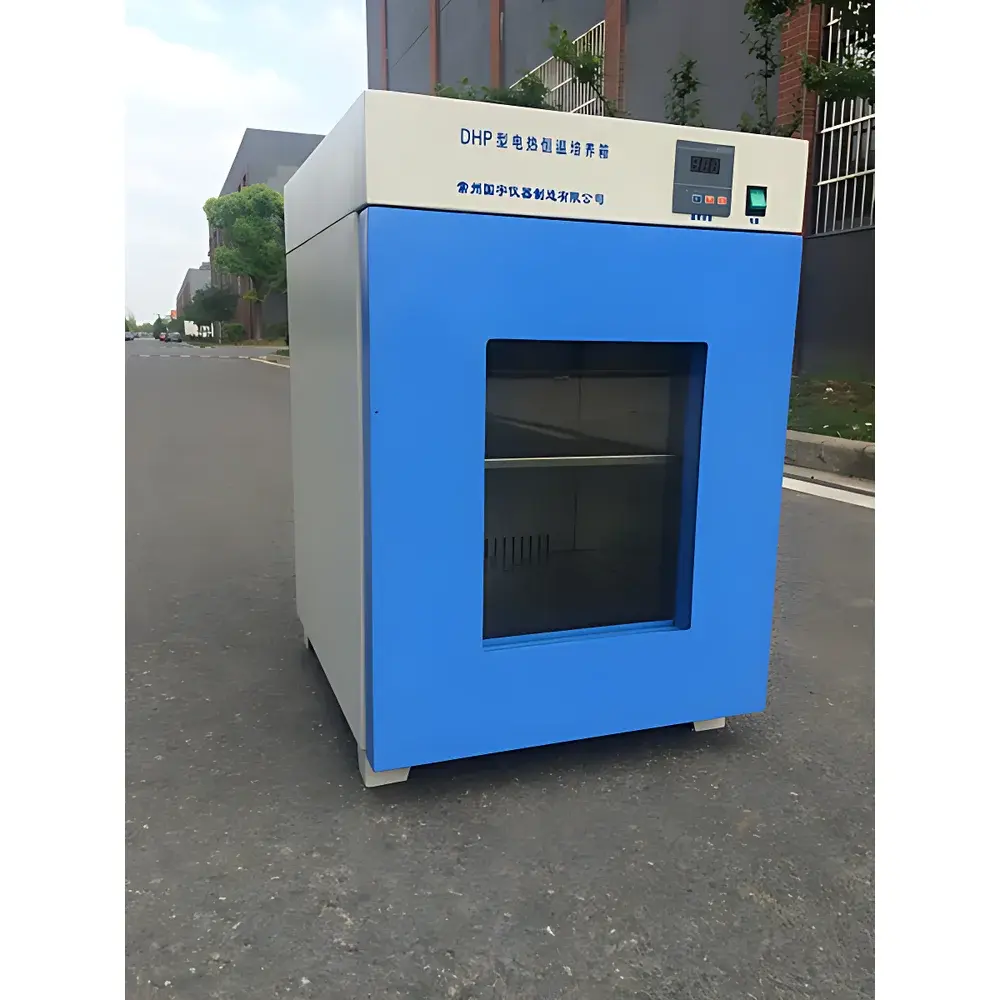
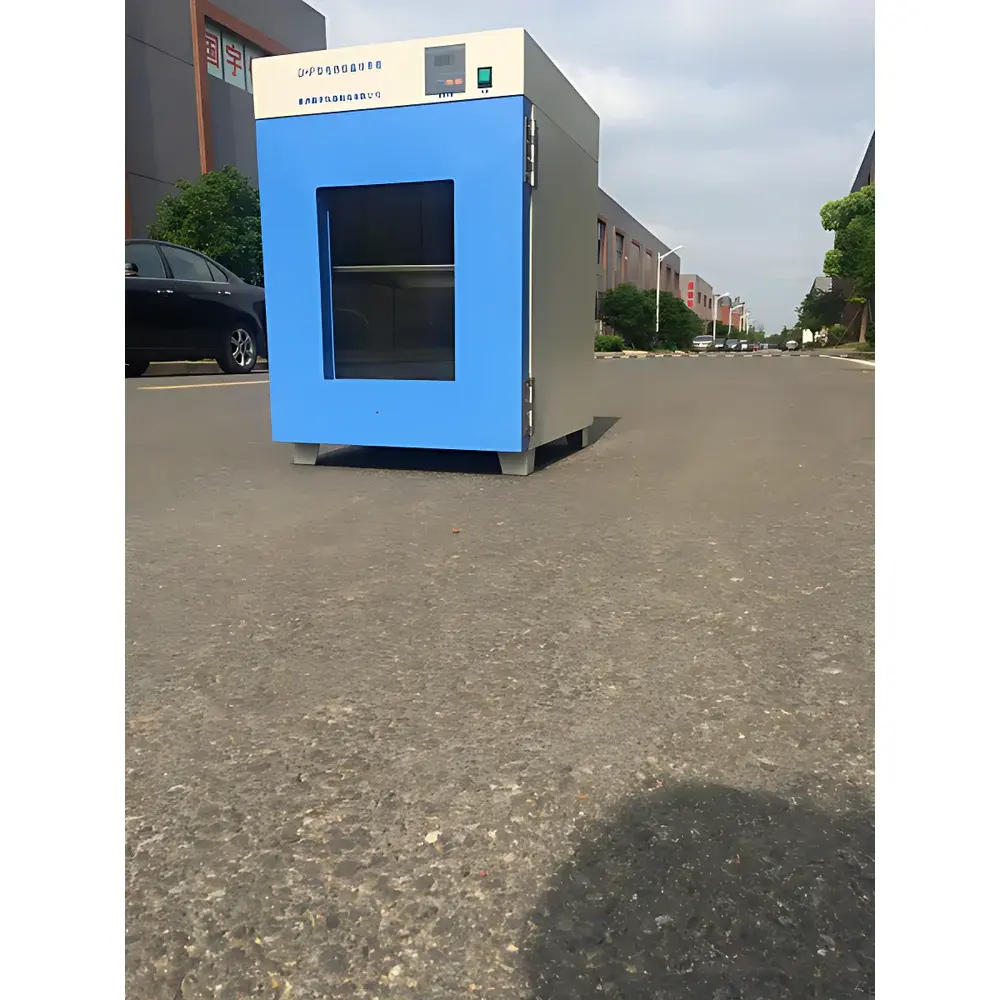
CZGY DHP-260 Electrically Heated Constant-Temperature Incubator
| Brand | CZGY |
|---|---|
| Origin | Jiangsu, China |
| Manufacturer Type | Direct Manufacturer |
| Country of Origin | China |
| Model | DHP-260 |
| Price | Upon Request |
| Temperature Control Range | Ambient +5 °C to 65 °C |
| Temperature Uniformity | ±1 °C |
| Humidity Capability | None |
| Internal Chamber Dimensions | 260 × 260 × 300 mm (W × D × H) |
| Temperature Stability | ≤ ±0.5 °C |
| Shelf Load Capacity | 8 kg |
| Power Supply | 220 V / 50 Hz |
| Rated Power | 150 W |
Overview
The CZGY DHP-260 Electrically Heated Constant-Temperature Incubator is a precision-engineered benchtop incubation system designed for stable, repeatable thermal environments in life science laboratories. It operates on resistive heating with forced-air convection, delivering uniform temperature distribution across its stainless-steel interior chamber without humidity control. The unit employs a microprocessor-based PID temperature controller with digital setpoint adjustment, real-time display, and programmable alarm thresholds—enabling reliable operation for bacterial culture maintenance, enzyme activity assays, cell line propagation, and other non-humidified thermal incubation protocols. Its construction prioritizes thermal integrity, mechanical durability, and ease of decontamination: the exterior features electrostatically applied powder-coated cold-rolled steel, while the seamless, rounded-corner stainless-steel working chamber resists corrosion and facilitates cleaning under GLP-compliant lab hygiene standards.
Key Features
- Stainless-steel interior chamber with fully rounded corners for efficient cleaning and minimal microbial retention
- High-efficiency thermal insulation using ultra-fine glass wool between outer casing and inner chamber, minimizing heat loss and ambient impact
- Forced-air convection system with optimized airflow ducting to ensure ±1 °C temperature uniformity across the entire 260 × 260 × 300 mm workspace
- Microprocessor-controlled PID temperature regulation with 0.1 °C resolution, ≤ ±0.5 °C stability, and adjustable proportional band (1–200 °C), integral time (0–999 s), and derivative time (0–999 s)
- Dual-stage safety protection: independent overtemperature alarm (AL parameter) with visual indicator and hardware cutoff circuitry
- Parameter lock function (LCK: 0/1/2 levels) to prevent accidental modification of operational settings during routine use
- Calibration offset adjustment (SC: –50 to +50 °C) for traceable sensor error correction aligned with internal QA/QC procedures
Sample Compatibility & Compliance
The DHP-260 supports standard microbiological and biochemical applications requiring dry, thermally stable conditions—including agar plate incubation, reagent pre-warming, media solidification, and short-term storage of temperature-sensitive biological reagents. It is not suitable for moisture-dependent cultures (e.g., mammalian cell lines requiring >95% RH) or volatile/flammable substances, per IEC 61010-1 safety guidelines. While not certified to ISO 13485 or FDA 21 CFR Part 11 out-of-the-box, its deterministic control architecture, audit-ready parameter logging capability (via optional RS232 interface), and configurable alarm events support integration into GxP-aligned workflows when validated per user-defined protocols. All electrical components comply with CE-marked low-voltage directive (LVD) and electromagnetic compatibility (EMC) requirements.
Software & Data Management
The DHP-260 operates via an embedded firmware interface with no external software dependency. Temperature setpoints, alarm limits, PID tuning parameters, and calibration offsets are configured directly through the front-panel keypad and dual-line LED display. Real-time measured temperature and setpoint values are continuously visible; alarm status (ALM) is indicated by dedicated LED. Though the base model lacks built-in data logging, its RS232 serial port (optional accessory) enables connection to third-party SCADA systems or custom Python/LabVIEW scripts for time-stamped temperature capture, trend analysis, and CSV export—facilitating compliance with ISO/IEC 17025 documentation requirements. All parameter changes generate implicit timestamps upon confirmation, supporting basic traceability when paired with lab notebook entries.
Applications
- Maintenance of bacterial and fungal stock cultures at defined temperatures (e.g., E. coli at 37 °C, Aspergillus spp. at 28 °C)
- Incubation of nutrient agar, blood agar, and selective media plates for colony isolation and enumeration
- Thermal equilibration of enzymes, antibodies, and diagnostic reagents prior to assay execution
- Controlled drying of non-hygroscopic biological samples where ambient humidity interference must be avoided
- Pre-incubation of PCR master mixes and restriction digestion reactions to minimize condensation artifacts
- Supporting ASTM E2924-22 (Standard Guide for Validation of Thermal Processing Equipment in Laboratories) through documented temperature mapping and stability testing
FAQ
Is the DHP-260 suitable for CO₂-dependent cell culture?
No. This incubator provides only conductive and convective heating with no gas regulation, humidification, or CO₂ monitoring capabilities.
Can the temperature sensor be recalibrated in-house?
Yes—the SC parameter allows user-adjustable offset correction within ±50 °C, provided a NIST-traceable reference thermometer is used for verification.
What safety certifications does this unit hold?
It meets CE marking requirements under the Low Voltage Directive (2014/35/EU) and EMC Directive (2014/30/EU); full IEC 61010-1 compliance documentation is available upon request.
How many shelves can be installed simultaneously?
The chamber accommodates one standard shelf (included) with a maximum load capacity of 8 kg; additional shelves may be ordered separately but must not obstruct airflow pathways.
Does the unit include validation documentation?
Factory calibration certificates are provided; IQ/OQ/PQ protocol templates and temperature mapping guidance are available from CZGY technical support for GMP/GLP implementation.





