
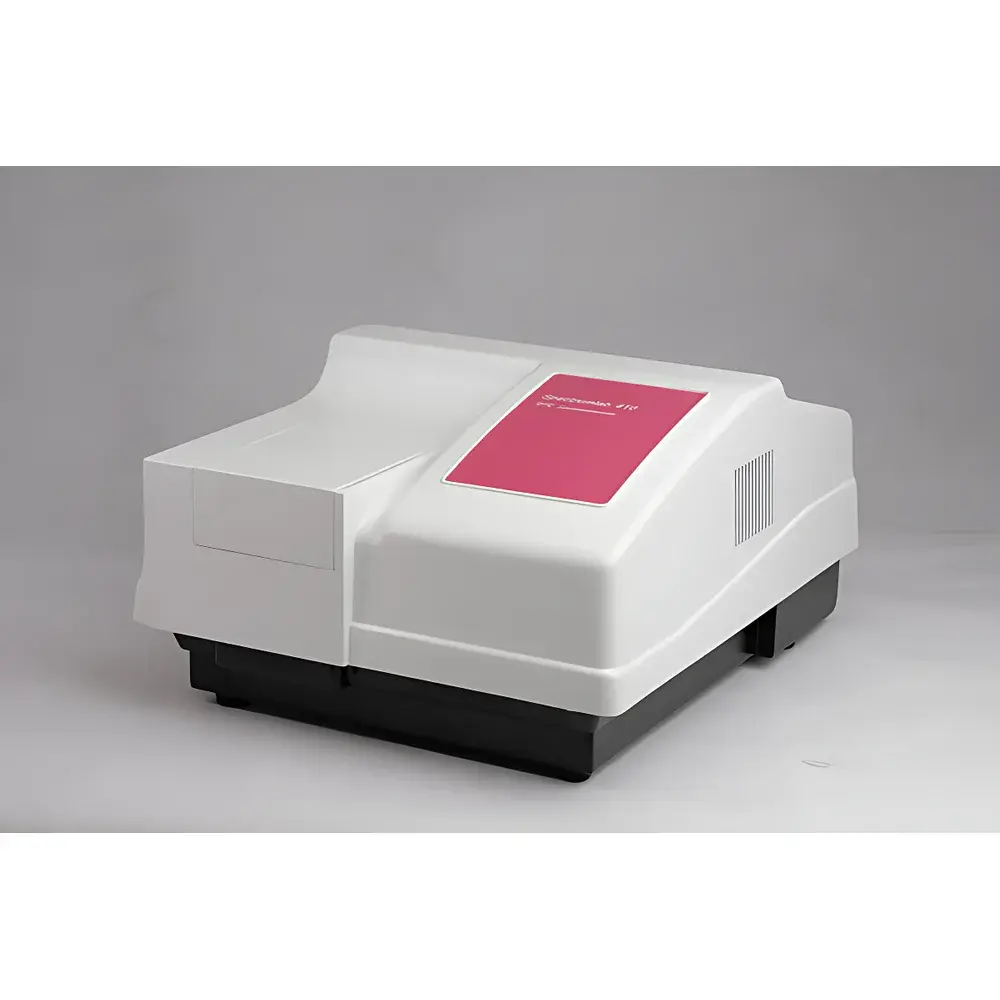
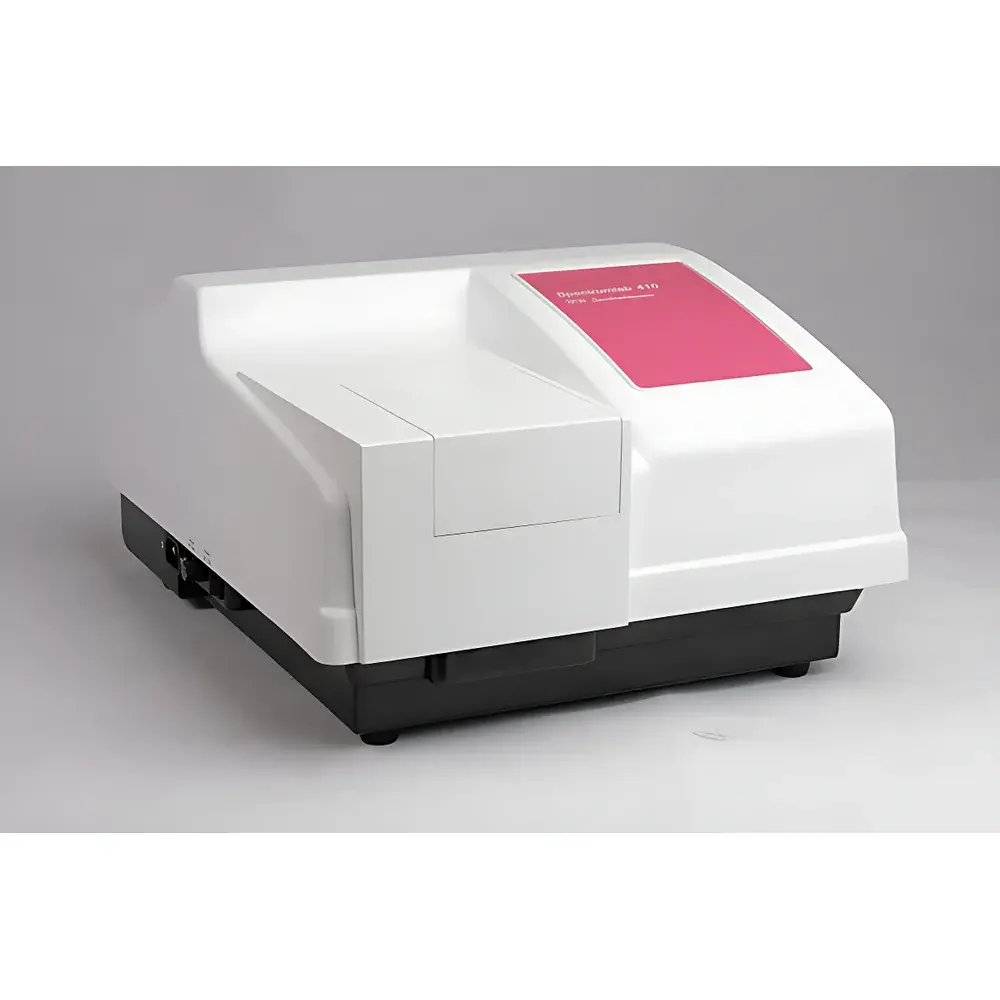
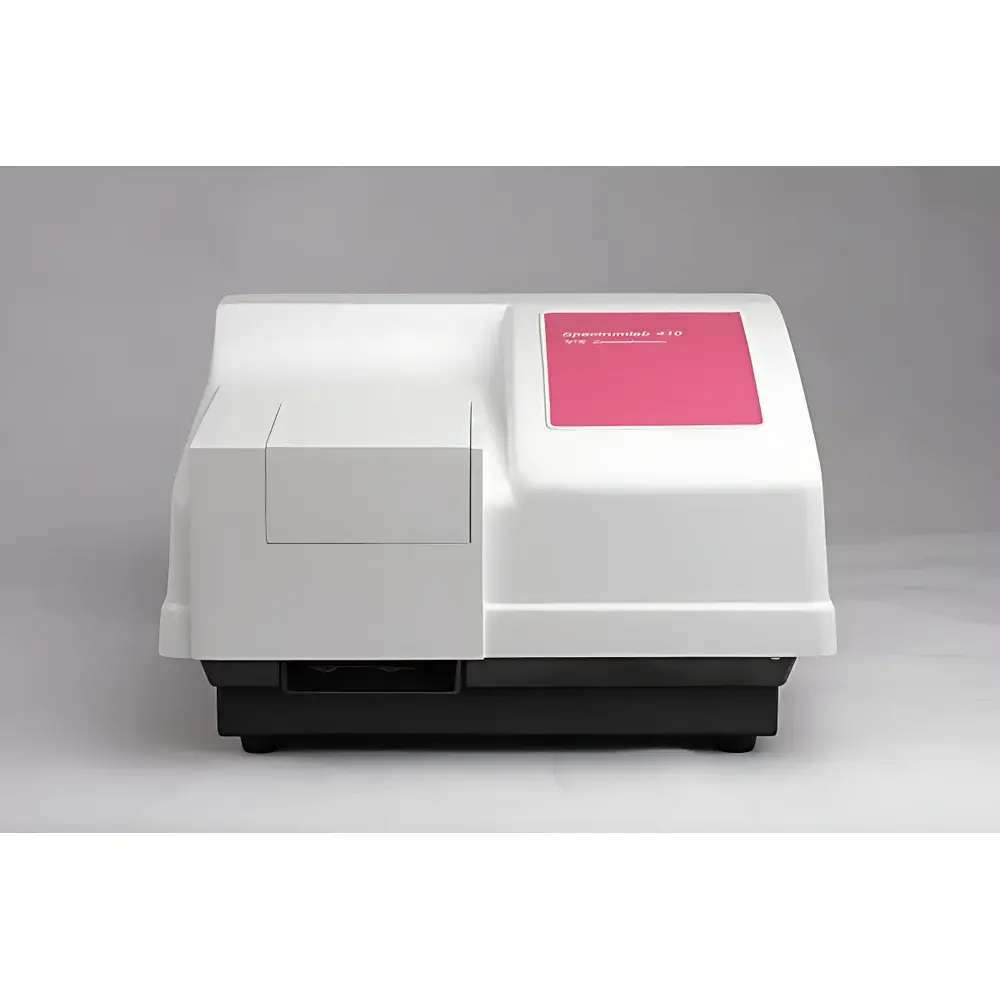
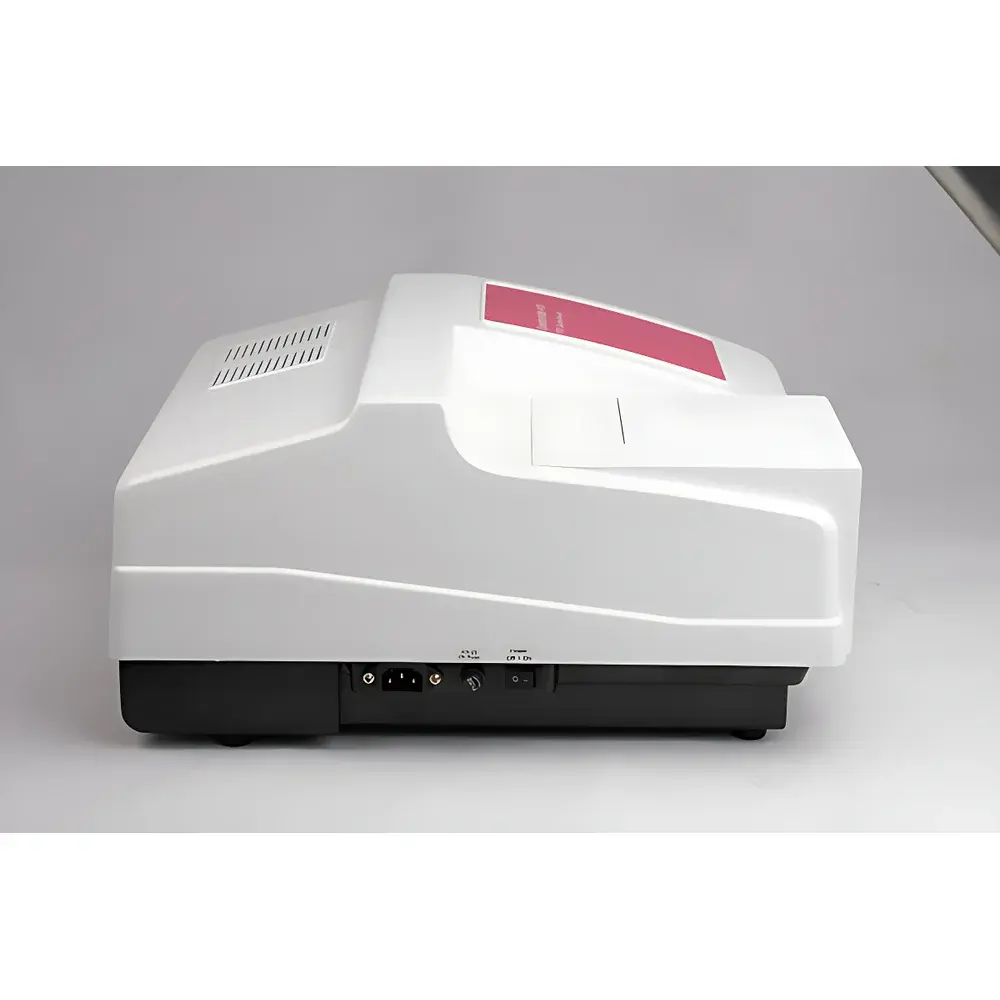
Lengguang Tech S430 Benchtop Near-Infrared Spectrometer
| Brand | Lengguang Tech |
|---|---|
| Origin | Shanghai, China |
| Manufacturer Type | Direct Manufacturer |
| Instrument Type | Laboratory Benchtop NIR Spectrometer |
| Model | S430 |
| Optical Design | Grating Scanning Monochromator |
| Wavelength Range | 900–2500 nm |
| Wavelength Accuracy | ≤0.2 nm |
| Wavelength Repeatability | ≤0.05 nm |
| Spectral Bandwidth | 8 nm |
| Stray Light | ≤0.1% |
| Absorbance Noise | ≤0.0005 Abs |
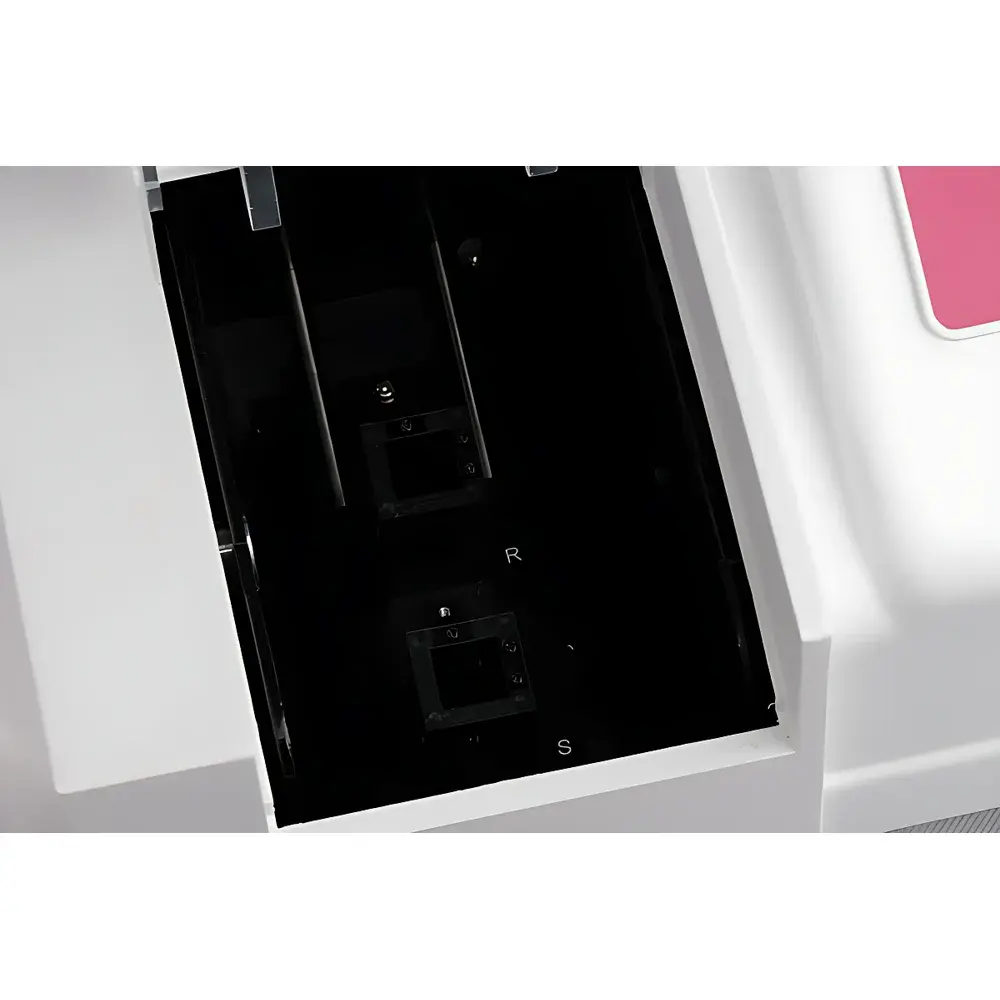
| Measurement Mode | Transmission (Cuvette-Based) |
| Scan Speed | 1 spectrum per minute |
| Data Sampling Interval | 5 s |
| Data Interface | USB 2.0 |
| Dimensions | 360 × 460 × 240 mm |
| Weight | 12 kg |
| Chemometrics Software | CAUNIRS (developed in collaboration with China Agricultural University) |
Overview
The Lengguang Tech S430 is a benchtop near-infrared (NIR) spectrometer engineered for rapid, non-destructive quantitative and qualitative analysis of liquid samples in laboratory and quality control environments. It operates on the principle of grating-based scanning monochromatization, delivering high-fidelity spectral acquisition across the 900–2500 nm range—a region rich in overtone and combination bands of C–H, O–H, and N–H functional groups. Unlike dispersive or Fourier-transform systems, the S430 employs a mechanically scanned diffraction grating to sequentially isolate narrow spectral bands, enabling robust signal-to-noise performance under ambient conditions. Its transmission-mode optical path is optimized for standard 10-mm pathlength quartz or glass cuvettes, supporting routine analysis of oils, alcoholic beverages, soft drinks, dairy emulsions, and other homogeneous liquids without dilution, filtration, or chemical derivatization. The instrument’s design prioritizes operational stability and measurement reproducibility—critical for method transfer between labs and long-term calibration maintenance.
Key Features
- Grating-scanning architecture ensures consistent spectral resolution (8 nm bandwidth) and low stray light (<0.1%), enhancing baseline stability for multivariate modeling.
- High wavelength accuracy (≤0.2 nm) and repeatability (≤0.05 nm) support reliable calibration model deployment across instruments and time.
- Benchtop footprint (360 × 460 × 240 mm) and lightweight construction (12 kg) facilitate integration into QC laboratories, pilot plants, or mobile testing stations.
- USB 2.0 interface enables plug-and-play connectivity with Windows-based host PCs; no external power supply or cooling required.
- CAUNIRS chemometrics software—co-developed with China Agricultural University—provides validated tools for PCA, PLS regression, SIMCA classification, outlier detection, and model validation (e.g., RMSEC, RMSEP, R²).
- Role-based user permissions and audit-ready operation logs align with GLP-compliant workflows and internal SOP enforcement.
Sample Compatibility & Compliance
The S430 is validated for transmission-mode analysis of low-turbidity liquid matrices including vegetable oils, wine, fruit juices, ethanol-water mixtures, and aqueous nutrient solutions. Sample handling requires only standard spectrophotometric cuvettes (10 mm pathlength); no fiber optics or flow cells are needed. While not certified to IEC 61000-4 electromagnetic immunity standards or ISO/IEC 17025 accreditation out-of-box, the system supports traceable calibration via NIST-traceable reference standards (e.g., SRM 2036 for wavelength, SRM 2035 for absorbance). Its software architecture accommodates 21 CFR Part 11–compliant electronic signatures when deployed with validated CAUNIRS configurations and controlled IT infrastructure.
Software & Data Management
CAUNIRS serves as the native data acquisition and chemometric platform, offering full spectral preprocessing (Savitzky-Golay smoothing, multiplicative scatter correction, first/second derivative), model training with cross-validation, and batch prediction reporting. All raw spectra, processed data, and model metadata are stored in encrypted SQLite databases with immutable timestamps. Audit trails record operator ID, session start/end times, parameter changes, and result exports—enabling retrospective review per GLP or internal QA requirements. Export formats include CSV, TXT, and XML for integration with LIMS or enterprise analytics platforms.
Applications
- Real-time monitoring of alcohol content, sugar concentration (Brix), acidity, and polyphenol index in wine production.
- Authentication and adulteration screening of edible oils (e.g., detection of palm oil in olive oil blends).
- QC release testing of beverage formulations—measuring caffeine, citric acid, and preservative levels without HPLC.
- Process analytical technology (PAT) support for fermentation broth characterization in biomanufacturing.
- Teaching and method development in university analytical chemistry and food science laboratories.
FAQ
What sample volume is required for analysis?
Typically 2–3 mL in a standard 10-mm pathlength cuvette. Minimal volume protocols (1.5 mL) are supported with appropriate cuvette positioning.
Can the S430 be used for solid or semi-solid samples?
No—the optical path is configured exclusively for transmission measurements in clear, low-scattering liquids. Reflectance or diffuse transmittance accessories are not available for this model.
Is CAUNIRS compatible with third-party chemometric packages?
Yes—spectral data can be exported in universal formats (CSV, JCAMP-DX) for import into Unscrambler, MATLAB, Python (scikit-learn), or other modeling environments.
How often does the instrument require recalibration?
Wavelength calibration should be verified quarterly using a holmium oxide or didymium reference filter; photometric calibration is recommended before each analytical campaign using a neutral density standard.
Does the S430 meet regulatory requirements for pharmaceutical or food safety testing?
It supports compliance with method validation guidelines (ICH Q2(R2), AOAC 2012.01) when operated within documented SOPs and paired with properly validated CAUNIRS models—but formal regulatory submission requires site-specific qualification (IQ/OQ/PQ) and documentation.
Related Products





